Most “observatories in Wisconsin” lists hand you a name and a city and call it a day. That’s fine if you already know which night the dome opens and whether they’ll actually let you through the door. Most people don’t.
So this is the version that tells you what you need to plan a trip: who runs each site, what they point at the sky, when the public can show up, and roughly what it costs. Wisconsin has a real spread of them, from the 40-inch refractor that put the state on the astronomical map to volunteer-run club domes in a soybean field. Fourteen of them are below, grouped by region so a weekend drive actually makes sense.
A quick word on timing before you go anywhere: observatories are weather-dependent and seasonal. The good ones run open houses on a set schedule (often the first or third Friday/Saturday of the month) and cancel for clouds. Always check the site’s current calendar the week of, and the morning of if rain is in the forecast.
Table of Contents
- Quick Answer: Where to Start
- Southeast Wisconsin & Milwaukee
- Madison Area
- Fox Valley
- Northern & Western Wisconsin
- Door County
- Comparison Table
- Best For: Families vs. Serious Viewing
- Planning Tips
Quick Answer: Where to Start
If you only visit one, make it Yerkes Observatory in Williams Bay. It’s the historic heavyweight, it’s restored, and it runs regular tours and viewing nights for the public.
If you want a free, no-fuss public viewing night and you’re near Madison, Washburn Observatory on the UW campus opens its 15.6-inch refractor on clear Wednesday nights during the school year.
Bringing kids who’ll lose patience fast? A club open house like Modine-Benstead (Union Grove) or the Leif Everson Observatory (Cedarburg) gives you volunteers who love explaining things and multiple scopes pointed at easy crowd-pleasers like the Moon and Saturn.
Southeast Wisconsin & Milwaukee
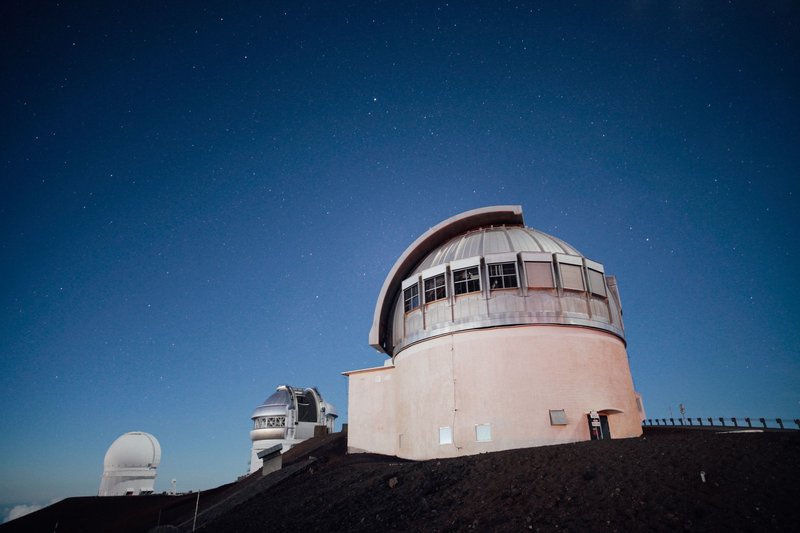
This corner of the state has the densest cluster of public observatories, partly because it’s where the population is and partly because Yerkes anchors the whole region’s astronomy culture.
1. Yerkes Observatory — Williams Bay
The big one. Yerkes opened in 1897 as part of the University of Chicago and houses the largest refracting telescope ever successfully used for astronomy: a 40-inch (102 cm) refractor with a lens that took years to grind. Edwin Hubble worked here. The building itself is an architectural landmark, all carved terracotta and astronomical motifs.
After the university stepped back, the nonprofit Yerkes Future Foundation took over and poured tens of millions into restoration. It’s now open to the public again with guided tours and programs, including evening viewing sessions through the historic instruments when weather cooperates. Tickets are timed and sell out, so book ahead. This is the marquee astronomy destination in the state, full stop.
- Region: Lake Geneva area (Walworth County)
- Telescope: 40-inch refractor (plus 41-inch and 24-inch reflectors)
- Public access: Yes — ticketed tours and viewing events
- Cost: Paid admission; check current pricing
2. Modine-Benstead Observatory — Union Grove
Run by the Racine Astronomical Society, Modine-Benstead is one of the most active club observatories in the state. Its main instrument is a 16-inch reflector, and the society hosts public open houses where members set up additional scopes on the grounds.
The vibe is welcoming and low-key — volunteers who’ve been doing this for decades, happy to let a first-timer look at Jupiter’s moons. Open houses run on a published schedule (typically tied to clear weekend nights), and admission is usually free or donation-based.
- Region: Racine County
- Telescope: 16-inch reflector
- Public access: Yes — scheduled open houses
- Cost: Free / donation
3. Leif Everson Observatory — Cedarburg
Operated by the Northern Cross Science Foundation at a site near Cedarburg, the Leif Everson Observatory is a volunteer-built facility with a roll-off roof and a solid club instrument. Northern Cross runs public nights and educational programs here, and the group is known for being especially good with school and scout groups.
- Region: Ozaukee County
- Telescope: Club reflector (roll-off roof design)
- Public access: Yes — public observing nights
- Cost: Free / donation
4. Manfred Olson Planetarium — Milwaukee
Not an observatory in the dome-and-telescope sense, but worth knowing if you’re in Milwaukee. The University of Wisconsin-Milwaukee runs this planetarium with public shows on Friday evenings during the academic year. Think projected night skies and themed presentations rather than live telescope viewing — a good rainy-night or winter alternative when the real sky is uncooperative.
- Region: Milwaukee (UWM campus)
- Type: Planetarium (dome theater)
- Public access: Yes — Friday public shows
- Cost: Low ticketed admission
5. Daniel M. Soref Planetarium — Milwaukee
Inside the Milwaukee Public Museum, the Soref is one of the larger planetarium domes in the region and a reliable family stop. Same caveat as above: it’s a planetarium, not a viewing observatory, but for an indoor astronomy fix with young kids it’s hard to beat.
- Region: Milwaukee
- Type: Planetarium
- Public access: Yes — daily shows with museum admission
- Cost: Museum + show ticket
Madison Area
6. Washburn Observatory — Madison
Sitting on a hill on the UW-Madison campus with a view over Lake Mendota, Washburn opened in 1881 and houses a 15.6-inch refractor. During the academic year it holds free public viewing nights — historically the first and third Wednesday evenings — staffed by the UW Astronomy department and grad students who’ll walk you through whatever’s up.
It’s free, it’s central, and the historic dome is a genuinely lovely place to look through a 19th-century refractor. Cloudy nights get cancelled, so confirm before you climb the hill.
- Region: Madison (UW campus)
- Telescope: 15.6-inch refractor
- Public access: Yes — free public nights during the school year
- Cost: Free
7. UW Space Place — Madison
The public outreach arm of UW-Madison’s astronomy department, Space Place runs talks, family programs, and occasional observing events from its south-side location. It’s more of an education center than a dome, but it pairs well with a Washburn visit and is a good resource for the department’s public calendar.
- Region: Madison
- Type: Education / outreach center
- Public access: Yes — events and programs
- Cost: Free / low
Fox Valley
8. Barlow Planetarium — Menasha
On the UW-Oshkosh, Fox Cities campus, the Barlow is the first major planetarium built in Wisconsin and a staple of school field trips across the Fox Valley. Public shows run on weekends, ranging from kid-friendly to full-dome astronomy features.
- Region: Menasha (Fox Cities)
- Type: Planetarium
- Public access: Yes — weekend public shows
- Cost: Ticketed admission
9. Fox Valley Astronomical Society Sites — Neenah/Appleton
The Fox Valley Astronomical Society operates observing facilities and runs public star parties around the Neenah/Appleton area, often at darker sites away from city lights. The club is your best bet in this region for actually looking through a telescope rather than at a dome ceiling — watch their calendar for public observing nights and outreach events.
- Region: Fox Valley (Neenah/Appleton)
- Telescope: Club instruments at dark-sky sites
- Public access: Yes — public star parties
- Cost: Free / donation
Northern & Western Wisconsin
10. Hobbs Observatory — Fall Creek (near Eau Claire)
Operated jointly by the Chippewa Valley Astronomical Society and UW-Eau Claire at Beaver Creek Reserve, Hobbs is the anchor public observatory for western Wisconsin. It has two domes housing a 24-inch reflector and a smaller scope, set on reserve land with darker skies than you’ll find near any city.
The society runs public viewing nights, and the surrounding nature reserve makes it an easy combined day-and-night trip. The darker location genuinely matters — you’ll see fainter objects here than from a campus dome.
- Region: Eau Claire area (Beaver Creek Reserve)
- Telescope: 24-inch reflector + secondary scope
- Public access: Yes — scheduled public nights
- Cost: Free / donation
11. Whitewater Observatory — Whitewater
UW-Whitewater maintains a campus observatory with a rooftop dome used for student labs and periodic public outreach nights tied to notable sky events. Hours are limited and event-driven, so it’s worth a check on the department calendar rather than a standing weekly opening.
- Region: Whitewater (UW campus)
- Telescope: Campus reflector
- Public access: Occasional — event-based
- Cost: Free
12. Thompson Observatory — River Falls
UW-River Falls operates an observatory in the western part of the state near the Minnesota border, used for coursework and the occasional public viewing event. If you’re in the Twin Cities exurbs on the Wisconsin side, it’s the closest campus dome.
- Region: River Falls (UW campus)
- Telescope: Campus reflector
- Public access: Occasional — event-based
- Cost: Free
Door County
13. Stonecipher Astronomy Center — Sturgeon Bay
Door County’s dark skies along the Lake Michigan shoreline make it some of the best stargazing real estate in the state. The Door Peninsula Astronomical Society operates the Stonecipher Astronomy Center and the adjacent Astronomy Education Center near Sturgeon Bay, including a dome with a club telescope and an attached planetarium.
This is the rare spot where you get both a planetarium show and real telescope viewing in one trip, paired with genuinely dark surrounding skies. Public nights run on a regular schedule in season.
- Region: Sturgeon Bay (Door County)
- Telescope: Club reflector + planetarium
- Public access: Yes — public nights and shows
- Cost: Free / donation
14. Newport State Park — Ellison Bay (Dark Sky Park)
Not an observatory, but the natural complement to one. Newport State Park at the tip of Door County is a certified International Dark Sky Park, one of the few in the Midwest. You bring your own scope or binoculars (or just your eyes), and on a clear, moonless night the Milky Way is genuinely overhead. The park hosts occasional astronomy programs and star parties.
If you want the sky rather than the telescope, this is where you go in Wisconsin.
- Region: Door County (Ellison Bay)
- Type: Dark Sky Park
- Public access: Yes — open to visitors; bring your own optics
- Cost: State park admission sticker
Comparison Table
| Observatory | Region | Main Instrument | Public Access | Cost |
|---|---|---|---|---|
| Yerkes | Williams Bay | 40-in refractor | Ticketed tours/viewing | Paid |
| Modine-Benstead | Union Grove | 16-in reflector | Open houses | Free/donation |
| Leif Everson | Cedarburg | Club reflector | Public nights | Free/donation |
| Manfred Olson Planetarium | Milwaukee | Dome theater | Friday shows | Low |
| Soref Planetarium | Milwaukee | Dome theater | Daily shows | Museum + show |
| Washburn | Madison | 15.6-in refractor | Free Wed. nights | Free |
| UW Space Place | Madison | Outreach center | Events | Free/low |
| Barlow Planetarium | Menasha | Dome theater | Weekend shows | Ticketed |
| Fox Valley AS sites | Neenah/Appleton | Club scopes | Star parties | Free/donation |
| Hobbs | Fall Creek | 24-in reflector | Public nights | Free/donation |
| Whitewater | Whitewater | Campus scope | Event-based | Free |
| Thompson | River Falls | Campus scope | Event-based | Free |
| Stonecipher (Door Peninsula AS) | Sturgeon Bay | Club scope + planetarium | Public nights | Free/donation |
| Newport State Park | Ellison Bay | Dark Sky Park (BYO) | Open visiting | Park sticker |
Best For: Families vs. Serious Viewing
Best for families with young kids: Planetariums win here because they don’t depend on weather and the seats are comfortable. The Soref in Milwaukee and the Barlow in Menasha are built for it. For an outdoor option, a club open house at Modine-Benstead or Leif Everson gives kids a real look through a scope with patient volunteers nearby.
Best for serious viewing: Darker skies beat bigger telescopes near city glare. Hobbs Observatory at Beaver Creek and the Door County sites near Newport State Park combine decent aperture with skies dark enough to actually use it. Yerkes is in a class of its own historically, but go for the instrument and the building, not for faint deep-sky objects — Williams Bay isn’t remote.
Best free option: Washburn in Madison. A historic refractor, no admission, regular nights during the school year.
Planning Tips
A few things that’ll save your trip:
- Check the calendar and the forecast. Open houses cancel for clouds, often with little notice. Confirm the morning of.
- Aim for a new moon. Especially at dark-sky sites. A full moon washes out everything but the Moon itself (which, to be fair, is great through a telescope).
- Dress warmer than you think. Observatory domes aren’t heated, and standing still in the dark in Wisconsin gets cold fast — even in summer near the lakes. Bring a layer beyond what the daytime temperature suggests.
- Bring a red flashlight. White light kills your night vision and annoys everyone at the eyepiece. Most clubs will appreciate it.
- Reserve for Yerkes. It’s the one place that genuinely sells out. Don’t show up assuming you can walk in.
- Lower your expectations on weeknights for campus domes. University observatories run on academic calendars — many close for summer and holidays.
Wisconsin punches above its weight for a state without true wilderness darkness. Between a world-historic refractor in the south, free university viewing nights, active clubs in nearly every region, and certified dark skies up in Door County, there’s a clear-sky night and an open dome within reach of almost anyone in the state. Pick a region, check the calendar, and go look up.