
TLDR
Most star names in use today trace back to Arabic astronomers who catalogued the sky a thousand years before telescopes existed — that’s why so many, like Betelgeuse and Aldebaran, start with “Al.” The brightest star in Earth’s night sky is Sirius, the “Scorcher,” and the most mythologically loaded is probably Betelgeuse, Orion’s shoulder and a star so large it would swallow Jupiter’s orbit if you dropped it into our solar system. Below: how naming actually works, then 15 stars worth knowing by name.
Table of Contents
- How Stars Actually Get Their Names
- 15 Famous Stars and What Their Names Mean
- Quick Comparison Table
- The New Names Being Added Right Now
How Stars Actually Get Their Names
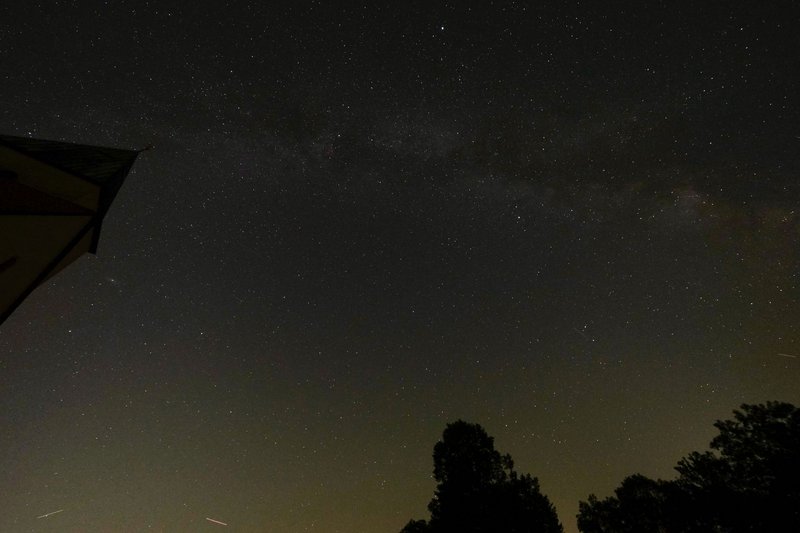
There’s no single naming committee that’s existed since antiquity. Star names accumulated in layers, and you can still see the seams.
The oldest layer is Babylonian and Greek — a handful of the brightest stars got names tied to myth and agriculture thousands of years ago, often referring to entire constellation figures rather than individual points of light.
The thickest layer is Arabic. Between roughly the 9th and 13th centuries, Islamic astronomers translated Ptolemy’s Almagest and then vastly improved on it, cataloguing star positions with far more precision than anything before. Most names beginning with “Al-” (the Arabic definite article) — Aldebaran, Algol, Alnilam, Altair — come from this era, and a lot of them are literal descriptions: “the follower,” “the demon,” “the string of pearls.”
Then came the Bayer system in 1603. German astronomer Johann Bayer published Uranometria, assigning Greek letters to stars within each constellation roughly by brightness — Alpha Centauri, Beta Orionis, and so on. This is why a star can have both a proper name and a Bayer designation; Betelgeuse is also Alpha Orionis.
The final layer is modern and bureaucratic. The International Astronomical Union (IAU) is the only body with the authority to assign official star names, and it didn’t formally standardize the ~450 traditional names in use today until 2016, through its Working Group on Star Names. Before that, plenty of “official-sounding” names floated around with no actual governing body behind them — which is part of why star-naming gift services can legally sell you a “named star” that no observatory will ever recognize.
15 Famous Stars and What Their Names Mean
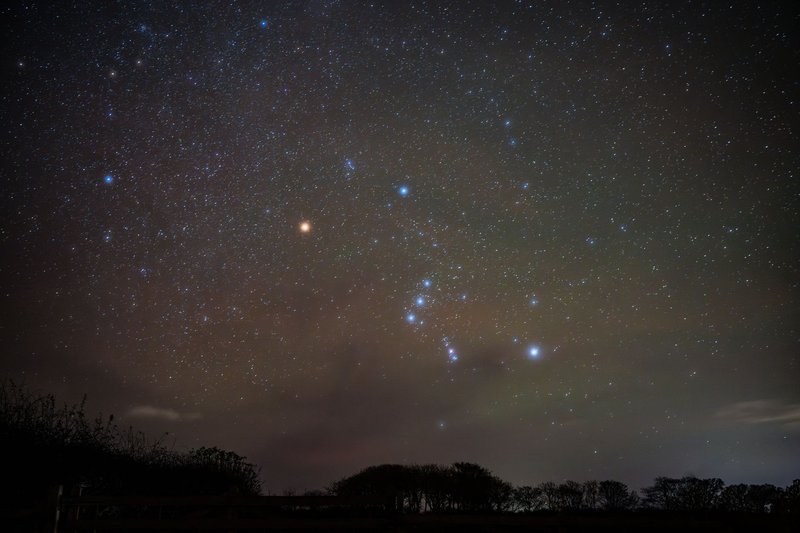
1. Sirius — “The Scorcher”
Sirius comes from the Greek Seirios, meaning “glowing” or “scorching.” At magnitude -1.46, it’s the brightest star in Earth’s night sky by a wide margin, sitting in Canis Major about 8.6 light-years away — close enough that its motion across the sky is measurably faster than most other stars. Ancient Egyptians tracked Sirius’s pre-dawn rise because it lined up with the annual Nile flood, and the “dog days of summer” get their name from the belief that Sirius (the Dog Star) added its heat to the sun’s.
2. Betelgeuse — “The Armpit of the Giant”
Betelgeuse marks Orion’s shoulder and gets its name from a mangled transliteration of the Arabic yad al-jauza, roughly “hand of the giant” (the “B” is a scribal error from centuries of copying). It’s a red supergiant so enormous that if it replaced the sun, its surface would extend past Jupiter’s orbit. At around 700 light-years away, it’s also famous for occasionally dimming enough that astronomers debate, every few years, whether it’s about to go supernova. It hasn’t yet.
3. Rigel — “The Foot”
Rigel comes from the Arabic rijl al-jauza, “the foot of the giant” — Orion’s other anchor point, opposite Betelgeuse. It’s a blue supergiant roughly 860 light-years out and, despite being fainter in the sky than Betelgeuse most of the time, is actually the more luminous of the two by a wide margin; it just looks dimmer because red supergiants radiate more of their light where our eyes are most sensitive.
4. Vega — “The Falling Eagle”
Vega’s name traces to the Arabic al-nasr al-waqi, “the falling” or “swooping eagle.” It’s the fifth-brightest star in the sky and was Earth’s pole star roughly 12,000 years ago, before axial precession moved that job to Polaris — and it will be again in about 13,000 years. Vega also holds a footnote in astronomy history: it was the first star other than the sun to be photographed, in 1850.
5. Polaris — “The Pole Star”
Polaris isn’t especially bright — it doesn’t crack the top 40 — but its position almost directly above Earth’s rotational axis makes it appear nearly motionless while everything else wheels around it, which is why sailors and hikers have used it for navigation for centuries. It’s actually a triple star system roughly 433 light-years away, and it won’t hold the pole position forever; Earth’s wobble means the title rotates through several stars over a 26,000-year cycle.
6. Aldebaran — “The Follower”
Aldebaran, from the Arabic al-dabaran, means “the follower,” because it appears to trail the Pleiades cluster across the sky each night. It marks the eye of Taurus the bull and sits about 65 light-years away — notably, it’s not actually part of the V-shaped Hyades cluster it appears to sit in front of; that’s a chance alignment.
7. Antares — “Rival of Mars”
Antares gets its name from the Greek anti-Ares, “rival of Mars,” because its reddish color and brightness periodically rival the planet’s when both are visible. It’s a red supergiant in Scorpius roughly 550 light-years away and, like Betelgeuse, is a candidate for a future supernova — just not on any timeline anyone can predict.
8. Capella — “The Little She-Goat”
Capella’s name is Latin for “little she-goat,” tied to a constellation myth involving the goat that nursed the infant Zeus. It’s actually a pair of binary star systems — four stars total — bundled close enough to appear as one point of light, roughly 43 light-years from Earth in Auriga.
9. Algol — “The Demon Star”
Algol takes its name from the Arabic ra’s al-ghul, “head of the demon” (yes, the same root behind the Batman villain’s name). Ancient skywatchers noticed it dims noticeably every 2.87 days — we now know it’s an eclipsing binary, where a dimmer companion star periodically blocks the brighter one. Before anyone understood binary stars, that unexplained “blinking” earned it a reputation as an unlucky, almost malevolent star across multiple cultures.
10. Arcturus — “Guardian of the Bear”
Arcturus, from the Greek Arktouros, means “guardian of the bear,” a reference to its position trailing Ursa Major. At about 37 light-years away, it’s the brightest star in the northern celestial hemisphere and one of the closest giant stars to our solar system, which is why it appears so strikingly orange-red even to casual observers.
11. Spica — “Ear of Grain”
Spica’s name is Latin for “ear of wheat,” tied to Virgo’s traditional depiction holding a sheaf of grain. It’s roughly 250 light-years away and is actually a close binary pair of massive, hot stars orbiting each other every four days — far too fast and close to resolve separately without a telescope built for the job.
12. Deneb — “The Tail”
Deneb comes from the Arabic dhanab al-dajajah, “tail of the hen,” marking the tail of Cygnus the swan. What makes Deneb remarkable isn’t its name — it’s the math. At an estimated 2,600 light-years away, it’s one of the most distant stars visible to the naked eye, and for it to still appear this bright from that far off, it has to be genuinely enormous: tens of thousands of times more luminous than the sun.
13. Fomalhaut — “Mouth of the Fish”
Fomalhaut comes from the Arabic fum al-hut, “mouth of the whale” or “mouth of the fish,” marking Piscis Austrinus. About 25 light-years away, it’s notable in modern astronomy for hosting one of the first exoplanets ever directly imaged, back in 2008 — a rare case where you can actually see a dot of reflected light that is, itself, a planet.
14. Regulus — “Little King”
Regulus is Latin for “little king,” a name coined by Copernicus based on older traditions treating this star, at the heart of Leo, as a royal or “kingly” star in several ancient cultures. It’s about 79 light-years away and spins so fast — roughly once every 16 hours — that it’s noticeably flattened into an oblate shape rather than a sphere.
15. Alnilam — “String of Pearls”
Alnilam, from the Arabic al-nitham, “the string of pearls,” is the middle star of Orion’s Belt. It’s a blue supergiant around 2,000 light-years away, and despite looking like a modest twin to its belt companions Alnitak and Mintaka, it’s actually the most luminous of the three — its extra distance just cancels the difference out from where we’re standing.
Quick Comparison Table
| Star | Name Meaning | Constellation | Apparent Magnitude | Distance |
|---|---|---|---|---|
| Sirius | The Scorcher | Canis Major | -1.46 | 8.6 ly |
| Betelgeuse | Armpit of the Giant | Orion | ~0.5 (variable) | ~700 ly |
| Rigel | The Foot | Orion | 0.13 | ~860 ly |
| Vega | The Falling Eagle | Lyra | 0.03 | 25 ly |
| Polaris | The Pole Star | Ursa Minor | 1.98 | 433 ly |
| Aldebaran | The Follower | Taurus | 0.85 | 65 ly |
| Antares | Rival of Mars | Scorpius | 1.06 (variable) | ~550 ly |
| Capella | Little She-Goat | Auriga | 0.08 | 43 ly |
| Algol | The Demon Star | Perseus | 2.1 (variable) | 93 ly |
| Arcturus | Guardian of the Bear | Boötes | -0.05 | 37 ly |
| Spica | Ear of Grain | Virgo | 1.04 | ~250 ly |
| Deneb | The Tail | Cygnus | 1.25 | ~2,600 ly |
| Fomalhaut | Mouth of the Fish | Piscis Austrinus | 1.16 | 25 ly |
| Regulus | Little King | Leo | 1.36 | 79 ly |
| Alnilam | String of Pearls | Orion | 1.69 | ~2,000 ly |
The New Names Being Added Right Now
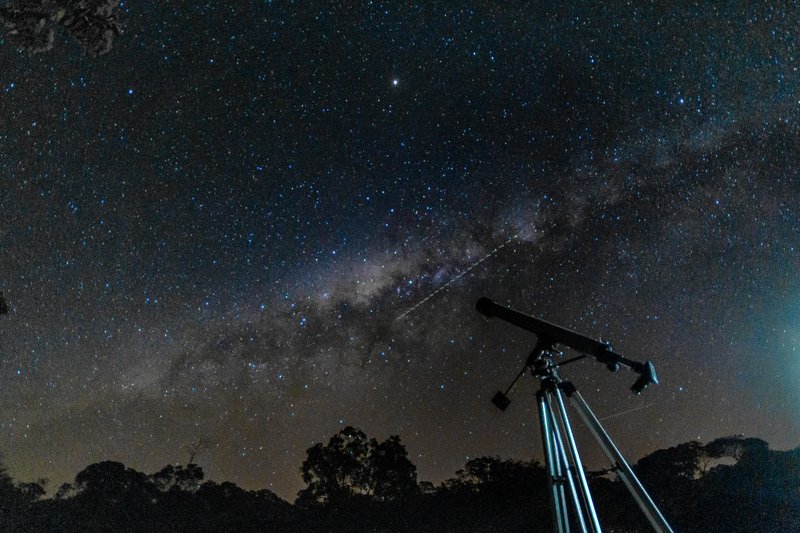
The list of “famous” star names isn’t frozen in antiquity — it’s still growing, just through a very different process. Since 2015, the IAU has run public NameExoWorlds campaigns, inviting countries and astronomy clubs to submit and vote on names for stars hosting confirmed exoplanets and their planets together. That’s how stars like 14 Andromedae became “Veritate” and its planet became “Spe” — Latin for truth and hope, submitted by a university team in Portugal.
It’s a smaller, more democratic echo of what the Babylonians and Arab astronomers were doing centuries ago: giving a fixed point of light a name specific enough that other people, generations later, would still know exactly which one you meant. If you want to see the current official list, the IAU maintains a public catalog — no purchase required, unlike the gift-registry sites that sell “star names” carrying no scientific recognition at all.
None of that diminishes what those 450-odd traditional names carry, though. Every “Al-” prefix is a thousand-year-old fingerprint of an astronomer who looked up, measured carefully, and wrote something down that outlasted every empire that came after.