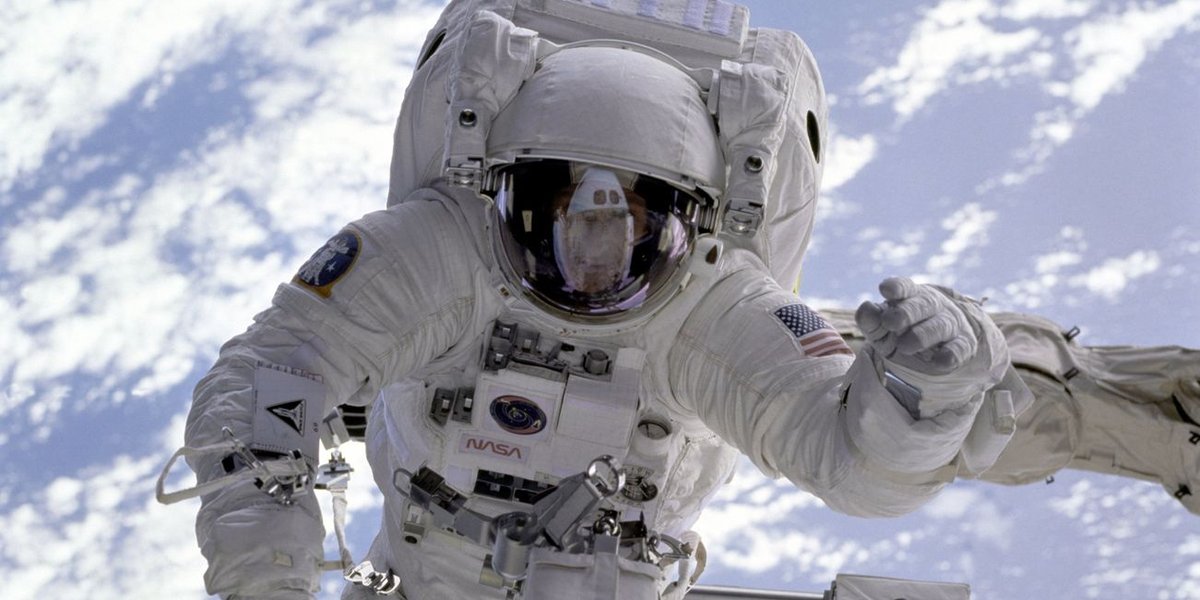
Kansas doesn’t get much credit as a spacefaring state. No launch pads, no mission control, just a lot of wheat fields and wide sky. And yet the state has quietly produced a disproportionate number of people who left the atmosphere entirely — Apollo command module pilots, shuttle commanders, a Space Force astronaut who came home from the ISS this year, and a man who trained for space in 1963 and had to wait six decades to actually get there.
Table of Contents
- Ron Evans — Apollo 17’s Command Module Pilot
- Joe Engle — The Man Who Flew Two Different Spacecraft
- Steve Hawley — Five Shuttle Missions and a Telescope
- Nick Hague — Kansas’s Current Astronaut
- Ed Dwight — The First Black Astronaut Candidate
- Kansas’s Astronaut Connection, By the Numbers
Kansas Astronauts at a Glance
| Astronaut | Kansas Tie | Known For |
|---|---|---|
| Ron Evans | Born in St. Francis | Command Module Pilot, Apollo 17 |
| Joe Engle | Born and raised in Chapman | Flew the X-15 rocket plane and commanded two Space Shuttle missions |
| Steve Hawley | Born in Ottawa, raised in Salina | Deployed the Hubble Space Telescope on STS-31 |
| Nick Hague | Born in Hoxie | Returned from a 6-month ISS mission in March 2025 |
| Ed Dwight | Trained in Kansas as an Air Force test pilot candidate | First Black astronaut candidate, finally flew to space in 2024 |
Ron Evans — Apollo 17’s Command Module Pilot
Ron Evans was born in St. Francis, a town of a few thousand people tucked in the far northwest corner of Kansas, close enough to Colorado and Nebraska that you can see both from a decent hill. He grew up wanting to fly, joined the Navy, and flew 100 combat missions over Vietnam before NASA ever looked at his file.
In December 1972, Evans orbited the moon alone for three days while Gene Cernan and Harrison Schmitt worked the lunar surface below him during Apollo 17 — the last crewed moon mission to date. While circling, he photographed a nearly fully-lit Earth from about 18,000 miles out, a picture that became known as The Blue Marble, one of the most reproduced photographs ever taken. Evans also holds the record for the longest time spent in lunar orbit, and his spacewalk to retrieve film canisters on the return trip remains one of the more nerve-wracking moments in the Apollo program — done in deep space, far past any hope of rescue if something had gone wrong.
Joe Engle — The Man Who Flew Two Different Spacecraft
Joe Engle grew up in Chapman, a small town outside Abilene, and started flying before he could legally drive a car. He earned his wings in the Air Force and became one of a handful of pilots to fly the X-15 rocket plane, a program that pushed pilots past the edge of the atmosphere on suborbital hops that technically qualified as spaceflight.
Engle’s career is unusual because he flew two entirely different kinds of spacecraft. He commanded the third Space Shuttle mission, STS-2, and later commanded STS-51-I. He’s also one of the last surviving X-15 pilots and one of the only astronauts to manually fly a Space Shuttle from orbital entry all the way to touchdown — done partly to test whether a human pilot could handle it without full computer assistance. It worked, and NASA logged the data for future missions.
Steve Hawley — Five Shuttle Missions and a Telescope
Steve Hawley was born in Ottawa, Kansas, and grew up in Salina, where his father ran a photography studio. He went on to fly five Space Shuttle missions, more than almost any other astronaut of his era, spanning a career from 1984 through 1999.
His most famous flight, STS-31 in 1990, put the Hubble Space Telescope into orbit — Hawley operated the robotic arm that released it. Hubble has since returned some of the most consequential images in the history of astronomy, and Hawley is the guy who let it go. He later returned to Kansas to teach physics and astronomy at the University of Kansas, closing the loop between the state that raised him and the science he helped make possible.
Nick Hague — Kansas’s Current Astronaut
Nick Hague was born in Hoxie, a town of about 1,100 people in western Kansas, and is currently the state’s most visible astronaut. A Space Force colonel and NASA astronaut, Hague returned to Earth in March 2025 after roughly six months aboard the International Space Station as part of the SpaceX Crew-9 mission — a flight that got extra attention because his crew’s return was delayed by the Boeing Starliner situation, keeping Hague in orbit longer than originally planned.
This wasn’t Hague’s first close call with spaceflight drama. In 2018, a rocket booster failure forced his Soyuz capsule to abort mid-launch, and he and his crewmate had to make an emergency ballistic descent back to Earth — a survivable but violent ride that most astronauts never experience. He went back up anyway, becoming the first person to fly on a Soyuz that survived a launch abort and then complete a full mission later. NASA’s mission logs confirm Hague as the first Space Force Guardian to complete a long-duration ISS mission, a small but real milestone for the newest branch of the U.S. military.
Ed Dwight — The First Black Astronaut Candidate
Ed Dwight’s Kansas connection runs through his Air Force career rather than his birthplace — he trained as a test pilot and moved through military postings that included time in Kansas, and in 1961 President Kennedy’s administration selected him as the nation’s first Black astronaut candidate, training him at the Air Force’s elite test pilot school.
He never flew during the Space Race. Politics inside NASA and the Air Force kept him grounded, and he eventually left the program and the military, going on to build a respected career as a sculptor, with public works installed across the country. Then, in May 2024, at age 90, Dwight finally flew to space aboard a Blue Origin New Shepard suborbital flight — becoming the oldest person to ever go to space, more than six decades after he first trained for the job. Blue Origin’s flight records list him as a crew member on NS-25, closing a gap that NASA’s own history had left open for generations.
Kansas’s Astronaut Connection, By the Numbers
Kansas isn’t an aerospace hub in the way Texas or Florida is, but its astronaut pipeline runs deeper than trivia lists usually capture. Beyond the five names above, several astronauts completed graduate training or officer schooling at Kansas institutions without being born there, which is why Wikipedia’s University of Kansas list and a true “born or raised in Kansas” list don’t match up — they’re answering different questions.
What ties Evans, Engle, Hawley, Hague, and Dwight together isn’t a shared hometown. It’s a shared starting point in small, unglamorous Kansas towns — St. Francis, Chapman, Salina, Hoxie — followed by military flight training that happened to be the on-ramp NASA has always preferred. Hague’s 2025 return keeps that pipeline current, and Dwight’s 2024 flight finally closed a sixty-year-old chapter the state can now claim in full.