Florida isn’t the first place anyone thinks of for stargazing. The humidity hazes the horizon, the coasts glow orange with light pollution, and hurricane season eats half the calendar. And yet the state has a surprising number of working observatories, several of which throw open their domes to the public on a regular schedule and won’t charge you a dime.
The catch is that most directories list these places like phone-book entries. Name, city, telescope size, done. They don’t tell you whether you can walk in, when the doors actually open, or what you’ll see once you’ve got your eye on the eyepiece. This guide fixes that, sorted by region so you can find the one closest to you.
Table of Contents
- The Short Version
- Before You Go: Florida’s Sky Conditions
- North Florida
- Central Florida
- South Florida
- Comparison Table
- Planetariums Worth Knowing
- Frequently Asked Questions
The Short Version
If you just want the verdict: the Robinson Observatory at UCF (Orlando) and the Seminole State College Planetarium and Observatory anchor the public-access scene in Central Florida, while the Bird-Wattenbarger Observatory run by the Southern Cross Astronomical Society serves South Florida’s Miami crowd. For genuinely dark skies, nothing beats a club star party at Kissimmee Prairie Preserve State Park, Florida’s only certified Dark Sky Park.
University research domes like the one at the University of Florida exist, but most don’t run regular public nights. Your best bet for actually looking through a telescope is a college observatory’s open house or an astronomy-club event. Both are usually free.
Before You Go: Florida’s Sky Conditions
A few things to know before you drive an hour for nothing.
Light pollution is the enemy. The I-4 corridor between Tampa and Orlando is one continuous smear of light. To see anything beyond the Moon, planets, and the brightest deep-sky objects, you want to be well outside the metro glow. The interior of the state and the rural stretches north of Lake Okeechobee are darkest.
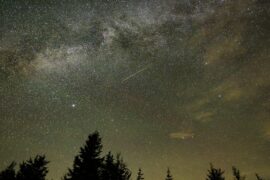
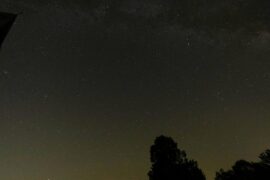
Winter is prime time. From roughly November through April, the humidity drops, the air steadies, and the famous winter constellations — Orion, Taurus, the Pleiades — ride high. Summer brings the Milky Way’s bright galactic center, but also afternoon thunderstorms that often clear only after midnight.
Check the moon phase. A full moon washes out everything faint. Plan around the new moon if galaxies and nebulae are the goal. Planets and the Moon itself, of course, are happy to be seen any night.
For a sense of how dark a given spot really is, the International Dark-Sky Association maintains the certification standards that places like Kissimmee Prairie meet.
North Florida
Bryan-Gooding Planetarium & the University of North Florida area (Jacksonville)
North Florida leans more toward planetariums than public observatory domes, but the region’s astronomy scene is anchored by the Museum of Science & History (MOSH) in Jacksonville, home to the Bryan-Gooding Planetarium. The northeast corner of the state also benefits from genuinely dark sites once you get away from the coast.
University of Florida Campus Teaching Observatory (Gainesville)
UF operates a teaching observatory used primarily for undergraduate labs, but the Department of Astronomy periodically opens it for public viewing nights tied to notable celestial events — eclipses, bright comets, planetary oppositions. It’s not a walk-in facility, so check the department’s events page before making the trip. When it’s open, you’re looking through instruments maintained by a serious research department.
The wider Gainesville area, sitting in north-central Florida away from major coastal cities, offers some of the better seeing in the northern half of the state.
Central Florida
This is where the public-access action is concentrated.
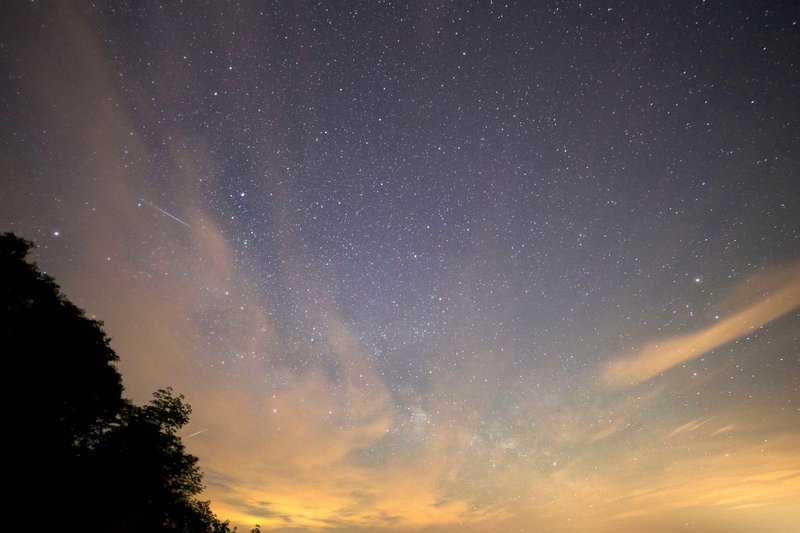
Robinson Observatory — University of Central Florida (Orlando)
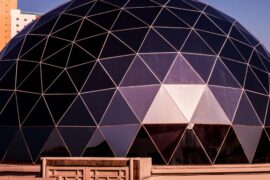
UCF’s Robinson Observatory runs scheduled public knights tied to the academic calendar, typically free and staffed by faculty and graduate students who’ll point the scope and answer questions. It houses a research-grade reflector under a classic dome. Because it sits on a busy campus inside Orlando’s light dome, expect great views of the Moon and planets and a more limited menu of deep-sky objects. The trade-off is convenience: it’s the most accessible serious telescope for millions of Central Floridians. Confirm dates on the UCF Physics department calendar, since sessions are weather-dependent and fill up.
Seminole State College Planetarium & Observatory (Sanford)
Just north of Orlando, Seminole State pairs a planetarium with a rooftop observatory and runs regular public observing sessions, often coupled with a planetarium show. The combination makes it one of the most family-friendly stops in the state: kids get the dome show indoors, then everyone heads up to the telescope. Admission is modest, and the staff are used to first-time stargazers.
Orlando Science Center — Crosby Observatory
The Crosby Observatory atop the Orlando Science Center holds one of the largest publicly accessible refracting telescopes in Florida. Access comes with general museum admission, and the observatory typically opens during evening “Science Live” hours and special events. The downtown location means light pollution limits the deep-sky view, but for lunar craters, Saturn’s rings, and Jupiter’s moons, the big refractor delivers a memorable look.
Kissimmee Prairie Preserve State Park (Okeechobee)
Not an observatory, but the single best place to actually see stars in Florida. Kissimmee Prairie is the state’s only International Dark Sky Park, with an “Astronomy Pad” set aside for telescope setups. Amateur astronomy clubs hold star parties here under genuinely black skies where the Milky Way casts shadows. Bring your own gear or join a scheduled event — and a red flashlight, since white light is frowned upon.
South Florida
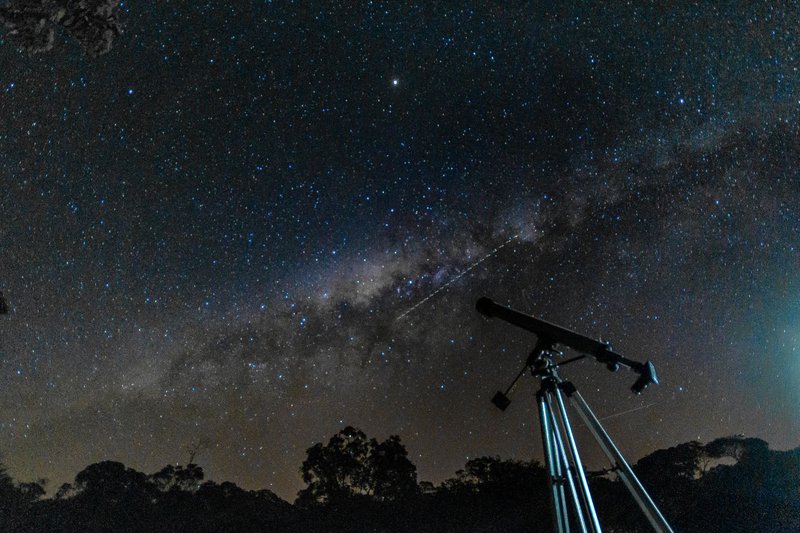
Bird-Wattenbarger Observatory — Southern Cross Astronomical Society (Miami area)
The Southern Cross Astronomical Society, one of the oldest astronomy clubs in the Southeast, operates the Bird-Wattenbarger Observatory and hosts public star parties at Bill Sadowski Park and at dark-sky sites in the Everglades. SCAS is the engine of public astronomy in South Florida, and their events are the most reliable way for Miami and Fort Lauderdale residents to get behind a telescope. Membership isn’t required to attend most public nights.
Fox Observatory — Markham Park (Sunrise, Broward County)
Run by the South Florida Amateur Astronomers Association, the Fox Observatory sits inside Markham Park west of Fort Lauderdale and is one of the few permanent club observatories in the region open to the public. The association holds regular star parties on weekend nights near the new moon, weather permitting. Markham Park’s western edge of the metro location gives it a slightly darker western horizon than you’d expect this close to the coast. Park entry fees apply on weekends.
Buehler Planetarium & Observatory — Broward College (Davie)
Broward College’s Buehler facility combines a planetarium with an observatory and runs public shows plus telescope viewing. It’s a solid, low-cost option for families in the Davie and Fort Lauderdale area who want a structured introduction rather than a field setup under the stars.
Comparison Table
| Observatory | Region | Public Access | Typical Cost | Best For |
|---|---|---|---|---|
| Robinson Observatory (UCF) | Central (Orlando) | Scheduled public nights | Free | Planets, Moon, campus convenience |
| Seminole State Observatory | Central (Sanford) | Regular sessions | Low admission | Families, planetarium combo |
| Crosby Observatory (OSC) | Central (Orlando) | With museum admission | Museum ticket | Big refractor, lunar/planetary |
| Kissimmee Prairie Preserve | Central (Okeechobee) | Star parties / DIY | Park entry | Dark skies, Milky Way |
| Bird-Wattenbarger (SCAS) | South (Miami) | Public star parties | Free / donation | Club expertise, Everglades sites |
| Fox Observatory | South (Sunrise) | Weekend star parties | Park entry | Permanent club scope |
| Buehler Observatory | South (Davie) | Public shows | Low admission | Families, planetarium combo |
| UF Teaching Observatory | North (Gainesville) | Event-based only | Free | Research instruments, special events |
Planetariums Worth Knowing
When clouds roll in — and in Florida, they will — a planetarium is the rain-proof alternative. The Bryan-Gooding Planetarium at MOSH in Jacksonville, the Seminole State and Buehler domes already mentioned, and the planetarium at the Orlando Science Center all run regular shows. They’re also the better choice for young kids who haven’t yet developed the patience for a real telescope queue on a cold night.
Frequently Asked Questions
Are any Florida observatories free to visit? Yes. University observatories like UCF’s Robinson and most astronomy-club star parties — including those run by the Southern Cross Astronomical Society and the South Florida Amateur Astronomers — are free or donation-based. You may still pay a park entry fee at venues like Markham Park or Kissimmee Prairie.
Where can I see the darkest skies in Florida? Kissimmee Prairie Preserve State Park, the state’s only certified Dark Sky Park, has by far the darkest skies of any easily reachable site. The rural interior north of Lake Okeechobee and parts of the Everglades also get genuinely dark.
Do I need my own telescope? No. Public observatory nights and club star parties provide telescopes and someone to operate them. Bringing your own is welcome at dark-sky sites like Kissimmee Prairie’s astronomy pad, but it’s never required.
What’s the best time of year for stargazing in Florida? Late fall through early spring — roughly November to April. The air is drier and steadier, the humidity haze thins out, and the bright winter constellations dominate the sky. Summer offers the Milky Way’s core but brings frequent storms.
Can I just walk into a university research observatory? Usually not. Research and teaching observatories like UF’s open only for scheduled public events tied to eclipses, comets, or planetary events. Always check the department’s calendar before driving out.