Kentucky doesn’t get the dark-sky press that Utah or West Texas does, but it has a surprisingly deep bench of telescopes you can actually look through — a 20-inch reflector on a parking-garage roof in Lexington, a computerized 16-inch in the Land Between the Lakes, and a 21-meter radio dish that tracks satellites in Appalachia. The trick is that most lists either name these places without telling you anything useful, or go deep on a single venue and ignore the rest. This one covers the whole map, with the practical stuff: what’s open to the public, what it costs, and when to show up.
Quick Answer
If you just want to look through a real telescope this weekend, your two best public bets are the MacAdam Student Observatory in Lexington (free public nights, 20-inch reflector) and the Golden Pond Planetarium & Observatory in the Land Between the Lakes (16-inch scope, $7 admission, plus summer star parties). Western Kentucky’s Hardin Planetarium runs free dome shows in Bowling Green with occasional telescope viewing outside. Everything else on this list is either research-grade and mostly closed to drop-ins, or a planetarium worth knowing about for a rainy night.
Table of Contents
- MacAdam Student Observatory (Lexington)
- Golden Pond Planetarium & Observatory (Land Between the Lakes)
- Bell Observatory & Hardin Planetarium (Bowling Green)
- Moore Observatory (Louisville)
- Rauch Planetarium (Louisville)
- Haile Digital Planetarium (Highland Heights)
- Morehead State 21-Meter Radio Telescope (Morehead)
- Comparison Table
- Dark-Sky Spots and When to Go
MacAdam Student Observatory — Lexington
The most accessible serious telescope in the state sits on top of a parking garage. The MacAdam Student Observatory, run by the University of Kentucky’s Department of Physics and Astronomy, is perched atop Parking Structure #2 in the middle of UK’s campus, and its dome houses a Planewave 0.5-meter (20-inch) CDK reflector on a Mathis equatorial mount. That’s a genuinely large instrument — bigger than most amateur clubs own — and on public nights you drive right up to the roof and park without risking a citation.
Public observing nights are free and run on a published schedule that shifts with the academic calendar and the weather, so check the observatory site before you commit to the drive. The location is the catch: campus light pollution means you’re better off targeting the Moon, planets, and bright double stars than faint nebulae. For a Saturn-through-a-20-inch experience without a ticket price, though, it’s hard to beat.
Public access: Yes, free public nights (weather permitting) Telescope: 20-inch (0.5 m) Planewave CDK reflector Best for: Moon, planets, bright objects; first-timers
Golden Pond Planetarium & Observatory — Land Between the Lakes
This is the one to plan a trip around. The Golden Pond Planetarium & Observatory sits inside the Land Between the Lakes National Recreation Area, a long peninsula of protected forest between Kentucky Lake and Lake Barkley that’s far enough from any city to give you actually dark skies. The observatory runs a computerized Meade 16-inch Schmidt-Cassegrain, and the planetarium dome shows are the anchor attraction.
Admission is $7 for ages 13 and up, $4.50 for kids 5 to 12, and free for 4 and under; laser light shows run $8. Dome shows last about 45 minutes and typically run hourly from 10 a.m. to 4 p.m. on operating days. The real draw is the summer programming: Observatory Star Parties run on select Saturdays from Memorial Day through Labor Day, where staff aim the 16-inch at the sky and members of the public set up smaller scopes alongside. Everything is weather-dependent and the schedule is seasonal, so confirm before you drive out — this is a two-hour-plus trip from Nashville or Louisville.
Public access: Yes, ticketed Telescope: 16-inch computerized Meade Schmidt-Cassegrain Best for: A full day out; summer star parties; genuinely dark skies
Bell Observatory & Hardin Planetarium — Bowling Green
Western Kentucky University runs a two-part operation. The Bell Observatory houses a 0.6-meter (roughly 24-inch) telescope with a modernized control system that supports manual, remote, and fully robotic operation. It sits about 12 miles southwest of Bowling Green to escape city glow, and its work leans research-grade — monitoring active galactic nuclei, hunting exoplanet transits, multi-color imaging of galaxies. It’s not a casual drop-in venue, so don’t show up expecting a public night.
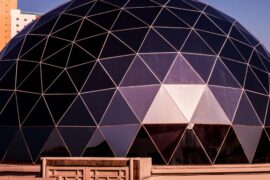
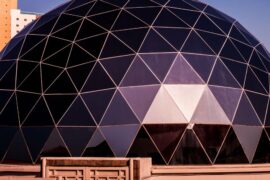
The public-facing side is the Hardin Planetarium at 1501 State Street, which has been running live, astronomer-narrated shows since 1967. Shows are free, the dome is 40 feet across with a Digitalis digital projector, and the theater seats around 200. On select nights, guests can step outside right after the 8:00 p.m. (Central) show to look through telescopes — weather permitting.
Public access: Hardin Planetarium yes (free); Bell Observatory no (research) Telescope: Bell 0.6 m research reflector; planetarium dome projector Best for: Free family dome shows; occasional post-show telescope viewing
Moore Observatory — Louisville
Also run by the University of Louisville’s astronomy program, Moore Observatory sits east of the city in Oldham County and operates as a research and teaching facility with a roll-off roof. Its instruments include a 16-inch Meade reflector and a 14-inch Celestron Schmidt-Cassegrain, used for student projects and remote observing. Public access is limited and event-driven rather than a standing public-night schedule, so it’s worth watching the U of L astronomy and the Louisville Astronomical Society calendars for the occasional open event rather than planning a solo visit.
Public access: Limited, event-based Telescope: 16-inch Meade reflector + 14-inch Celestron SCT Best for: Catching a scheduled open night or society event
Rauch Planetarium — Louisville
The Gheens Science Hall & Rauch Planetarium on the University of Louisville campus is one of the state’s most polished domes — a 169-seat theater under a full dome with 4K-by-4K projection, rebuilt in its current Gheens Science Hall home in 2001. Here’s the honest part: public shows have been suspended since 2020, and the dome has stayed closed to drop-in public programming for budget reasons, though it still runs university functions and scheduled school groups. If you’re a teacher organizing a class trip it’s very much alive; if you’re a casual visitor, check whether public shows have resumed before you count on it.
Public access: University and school groups; public shows suspended Setup: 169-seat dome, 4K full-dome digital projection Best for: Organized school and group programs
Haile Digital Planetarium — Highland Heights
Up in the northern Kentucky / Cincinnati corner, Northern Kentucky University runs the Haile Digital Planetarium on its Highland Heights campus. It’s a digital full-dome theater used for both coursework and public programming, and it’s the obvious option for anyone in the Cincinnati metro who doesn’t want to drive deep into the state. Programming runs on a published schedule, so check NKU’s planetarium listings for current public shows and times.
Public access: Yes, scheduled public shows Setup: Digital full-dome theater Best for: Northern Kentucky and greater Cincinnati visitors
Morehead State 21-Meter Radio Telescope — Morehead
This one is different in kind, and it’s the most unexpected astronomy hardware in the state. Morehead State University’s Space Science Center operates a full-motion 21-meter radio antenna on a ridge above campus. It became operational in 2006 after achieving “first light” in December 2004, and it pulls double duty: doing radio astronomy (it can detect the 1.4 GHz hydrogen line, among others) and serving as the ground station for the university’s KySat satellites.
You won’t peer through an eyepiece here — radio telescopes don’t work that way — and the antenna is a working research and teaching instrument, not a tourist stop. But the 45,000-square-foot Space Science Center building is a real destination for anyone interested in satellites and radio astronomy, and Morehead’s undergraduate space-systems engineering program is a genuine outlier for a school its size. Worth knowing it exists, and worth a look if a tour or open house comes up.
Public access: Research/education; tours by arrangement Instrument: 21-meter full-motion radio antenna (Ku/S/L band) Best for: Radio astronomy and satellite buffs
Comparison Table
| Venue | Location | Main Instrument | Public Access | Cost |
|---|---|---|---|---|
| MacAdam Student Observatory | Lexington | 20-inch (0.5 m) reflector | Free public nights | Free |
| Golden Pond Planetarium & Obs. | Land Between the Lakes | 16-inch Meade SCT | Ticketed, plus star parties | $7 adult / $4.50 child |
| Bell Observatory | Near Bowling Green | 0.6 m research reflector | No (research) | — |
| Hardin Planetarium | Bowling Green | Full-dome projector | Free shows | Free |
| Moore Observatory | Oldham Co. (Louisville) | 16-inch + 14-inch | Limited, event-based | Varies |
| Rauch Planetarium | Louisville | 4K full-dome | Groups; public shows paused | Varies |
| Haile Digital Planetarium | Highland Heights | Digital full-dome | Scheduled shows | Varies |
| Morehead 21-M Radio Telescope | Morehead | 21 m radio antenna | Tours by arrangement | — |
Dark-Sky Spots and When to Go
The campus observatories sit under city light, so the optical wins there are the Moon, the planets, and bright clusters — not the Milky Way. For real darkness, the Land Between the Lakes is Kentucky’s standout: the protected peninsula keeps light domes far on the horizon, which is exactly why Golden Pond’s star parties are worth the drive. The Red River Gorge and Big South Fork areas in the east also get genuinely dark on clear, moonless nights.
A few practical notes for any visit:
- Check the Moon. A bright Moon washes out everything faint. For deep-sky viewing, aim for the week around new moon; for crater and lunar detail, a half-moon is actually better than full.
- Layer up. Standing still at a telescope after dark gets cold fast, even in Kentucky summers — bring more than you think you need.
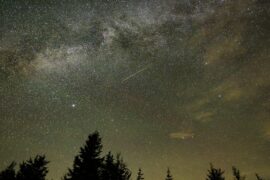
- Time it for an event. Summer is peak season: Golden Pond’s star parties run Memorial Day to Labor Day, and the Perseid meteor shower in mid-August is the most reliable annual show, no telescope required.
- Confirm before you drive. Every public-night and star-party schedule here is weather-dependent and seasonal. A quick check of the venue’s site or social page beats showing up to a locked dome under clouds.
Kentucky won’t give you a Bortle 1 desert sky. But between a free 20-inch in Lexington, a ticketed 16-inch in some of the darkest land in the state, and free planetarium shows on both ends of the map, there’s more to look through here than the thin roundups let on.