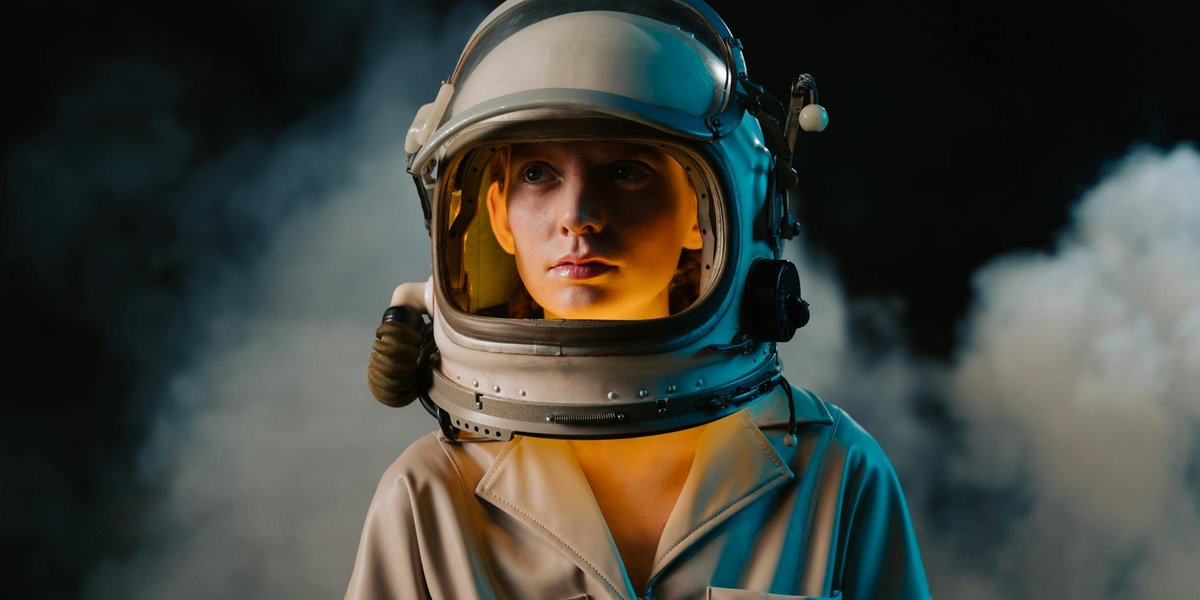
First, a terminology fix that trips up almost everyone searching for this: Russia doesn’t send “astronauts” to space. It sends cosmonauts. Same job, different word — “astronaut” comes from the Greek for “star sailor,” “cosmonaut” from “universe sailor.” NASA uses one, Roscosmos (and the Soviet space program before it) uses the other. So if you came here looking for Russian female astronauts, what you actually want are the Soviet and Russian female cosmonauts.
There have been exactly five of them. Not five hundred. Five. In over six decades of human spaceflight, only five women have flown to orbit on a Russian or Soviet program — a number that says as much about the program’s politics as its engineering.
Here’s every one of them, what she flew, and the record she earned.
Table of Contents
- The Five at a Glance
- Valentina Tereshkova — The First Woman in Space
- Svetlana Savitskaya — First Woman to Spacewalk
- Elena Kondakova — First Long-Duration Flight
- Elena Serova — First on the ISS for Russia
- Anna Kikina — The Only Active One
- The 1962 Group and the 19-Year Gap
- Why So Few?
The Five at a Glance {#the-five-at-a-glance}
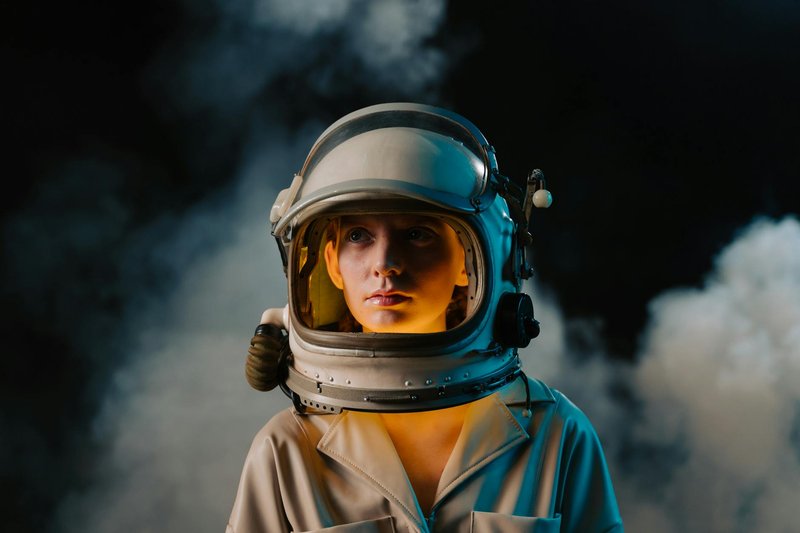
If you only want the scannable version, here it is. The full profiles are below.
| Cosmonaut | Year(s) | Mission(s) | Spacecraft / Station | Notable First |
|---|---|---|---|---|
| Valentina Tereshkova | 1963 | Vostok 6 | Vostok | First woman in space |
| Svetlana Savitskaya | 1982, 1984 | Soyuz T-7, T-12 | Salyut 7 | First woman to spacewalk |
| Elena Kondakova | 1994–95, 1997 | Soyuz TM-20, STS-84 | Mir | First long-duration flight by a woman |
| Elena Serova | 2014–15 | Soyuz TMA-14M | ISS | First Russian woman on the ISS |
| Anna Kikina | 2022–23 | SpaceX Crew-5 | ISS | First Russian woman on a US spacecraft |
Notice the dates. Two flights in the 1960s–80s, then a 19-year gap on the Soviet side, and only two Russian women in the entire 21st century. We’ll get to why.
Valentina Tereshkova — The First Woman in Space {#valentina-tereshkova}
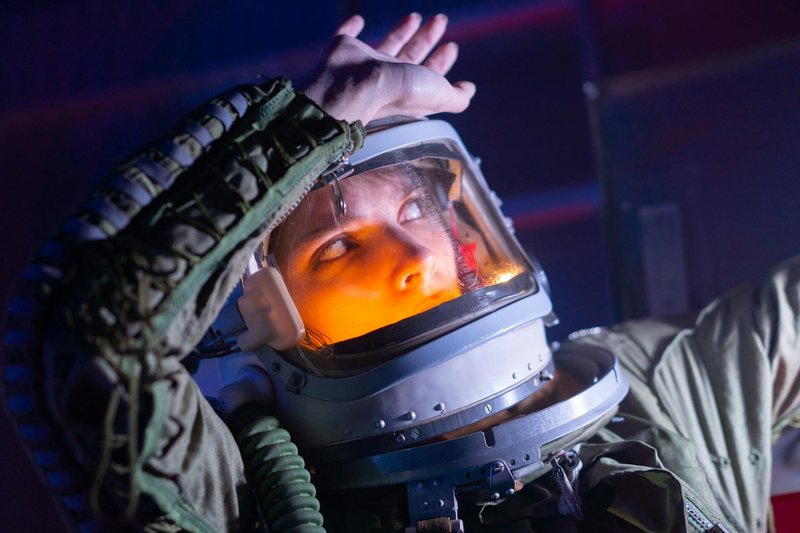
On June 16, 1963, a 26-year-old former textile worker and amateur parachutist climbed into Vostok 6 and became the first woman ever to leave Earth. Tereshkova orbited 48 times over almost three days — longer than all the American Mercury astronauts combined had flown to that point.
She wasn’t a pilot. The Soviets recruited her largely because she had over 90 parachute jumps, and Vostok cosmonauts ejected from the capsule and parachuted down separately during the final descent. Her call sign was Chaika — “Seagull.”
The flight wasn’t smooth. Tereshkova later revealed the spacecraft had been programmed with an error that would have pushed her into a higher orbit instead of bringing her home; engineer Sergei Korolev had her enter a corrected algorithm to fix it. For decades the Soviet program buried any hint of difficulty, and the story only came out years later. You can read the full mission account on BBC Sky at Night Magazine.
Tereshkova never flew again. She went into politics, served in the Soviet legislature, and at 88 remains the only woman in history to have completed a solo space mission. Every other woman who has flown — Russian, American, or otherwise — has had crewmates. Her name still tops most lists of famous astronauts drawn from across the world, a place earned by that single flight.
Svetlana Savitskaya — First Woman to Spacewalk {#svetlana-savitskaya}
It took 19 years for the second Soviet woman to fly. Savitskaya was a different profile entirely: a world-champion aerobatic pilot, a test pilot, and the daughter of a Marshal of the Soviet Air Force. Where Tereshkova was chosen partly as a propaganda first, Savitskaya was an aviator’s aviator.
She flew twice. In 1982 she reached the Salyut 7 station aboard Soyuz T-7. Then in July 1984, on her second mission, she stepped outside the station for 3 hours and 35 minutes — becoming the first woman to perform a spacewalk, beating NASA’s Kathryn Sullivan to it by a few months. During the EVA she tested a tool for cutting and welding metal in vacuum.
The timing wasn’t an accident. With the US about to fly women on the Shuttle, the Soviets moved fast to keep the “firsts” on their side of the scoreboard. Savitskaya was the right cosmonaut at the right moment, and she had the credentials to back it up.
Elena Kondakova — First Long-Duration Flight {#elena-kondakova}
Kondakova was the last Soviet-selected woman to fly and the first to do a real long-haul mission. In October 1994 she launched to the Mir space station and stayed for 169 days — about five and a half months. Until then, the women who’d flown had logged days, not months. Kondakova proved a woman could handle the long-duration grind that orbital stations actually require.
Her second flight, in 1997, was aboard the US Space Shuttle Atlantis (STS-84) on a docking mission to Mir, making her one of the few cosmonauts of her era to fly on both Soviet/Russian and American spacecraft. After Kondakova, Russia would not send another woman to orbit for 17 years.
Elena Serova — First Russian Woman on the ISS {#elena-serova}
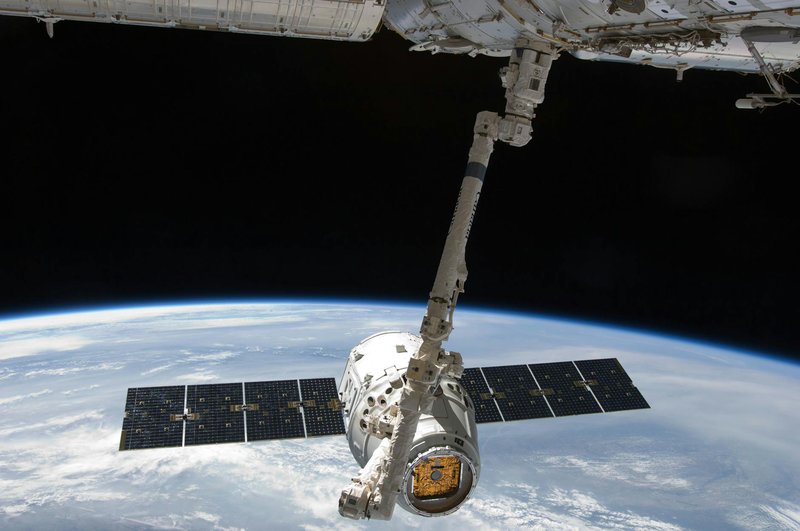
By the time Serova launched in September 2014, the International Space Station had been crewed for nearly 14 years — and not a single Russian woman had been aboard. Dozens of American, European, Japanese, and Canadian women had flown to the ISS. Serova was the first from the country that put the first woman in space.
She spent 167 days on the station. The lead-up to her flight exposed how little had changed since 1963: reporters asked her how she’d wear her hair and how she’d manage being away from her daughter — questions her male crewmates never got. Serova handled it bluntly, pointing out that nobody interrogates men about their families before launch. The exchange became a small flashpoint about how Russia still treated women in the program.
Anna Kikina — The Only Active One {#anna-kikina}
For years, Kikina was the only woman in Russia’s entire active cosmonaut corps — one woman among roughly two dozen men. A former competitive rower and radio engineer from Siberia, she was selected in 2012.
Her flight, in October 2022, came with a twist nobody would have predicted during the Cold War: she launched on a SpaceX Crew Dragon, not a Soyuz. Under a seat-swap agreement between Roscosmos and NASA, Kikina flew on SpaceX’s Crew-5 mission, making her the first Russian woman to ride an American spacecraft to orbit — and the first cosmonaut of any kind on a Crew Dragon. She spent about five months on the ISS before returning in March 2023.
That a Russian cosmonaut flew on an American rocket while the two countries were otherwise barely speaking is one of the stranger footnotes in modern spaceflight. The ISS partnership held even as everything around it frayed.
The 1962 Group and the 19-Year Gap {#the-1962-group}
Tereshkova didn’t train alone. In 1962 the Soviets quietly selected a group of five women for cosmonaut training: Tereshkova, Tatyana Kuznetsova, Irina Solovyova, Zhanna Yorkina, and Valentina Ponomaryova. The plan, at least on paper, was to fly more than one of them.
It never happened. Tereshkova flew, the propaganda victory was won, and interest evaporated. A planned all-female or second female flight was canceled. The group was dissolved in 1969 without any of the other four ever leaving the ground. Several were highly qualified — Ponomaryova was a pilot and engineer — but the program simply stopped caring once it had its first.
That’s the real reason for the 19-year gap between Tereshkova (1963) and Savitskaya (1982). It wasn’t that no women were ready. It was that the institution decided it was done. The “first woman in space” was treated as a box checked, not a door opened.
Why So Few? {#why-so-few}
Five women in 60-plus years. For comparison, NASA has flown more than 50 American women, and women now make up roughly half of recent astronaut classes. The contrast is even starker when you look at the full roster of famous American astronauts, where dozens of women appear across the Mercury-to-ISS era. The gap isn’t about capability — Soviet and Russian women have repeatedly proven they can do the job, and done it first in several cases. It’s structural.
Three things kept the numbers down. First, the early program used “firsts” as Cold War trophies; once a milestone was claimed, the urgency to repeat it vanished. Second, the cosmonaut corps drew heavily from military test pilots, a pipeline that was almost entirely closed to women in the USSR and remained male-dominated in Russia for decades. Third, the culture around the program — visible in the questions Serova fielded in 2014 — never normalized women as routine crew the way NASA gradually did.
So the story of Russian women in space is a series of remarkable individuals against a program that kept treating each one as the exception. Tereshkova flew before any American woman did, by 20 years. Savitskaya walked in space before any American woman did. The talent was there from the start. What was missing was a system that wanted more than one of each.
Enjoyed this article?
Get daily 10-minute PDFs about astronomy to read before bed!
Sign up for our upcoming micro-learning service where you will learn something new about space and beyond every day while winding down.