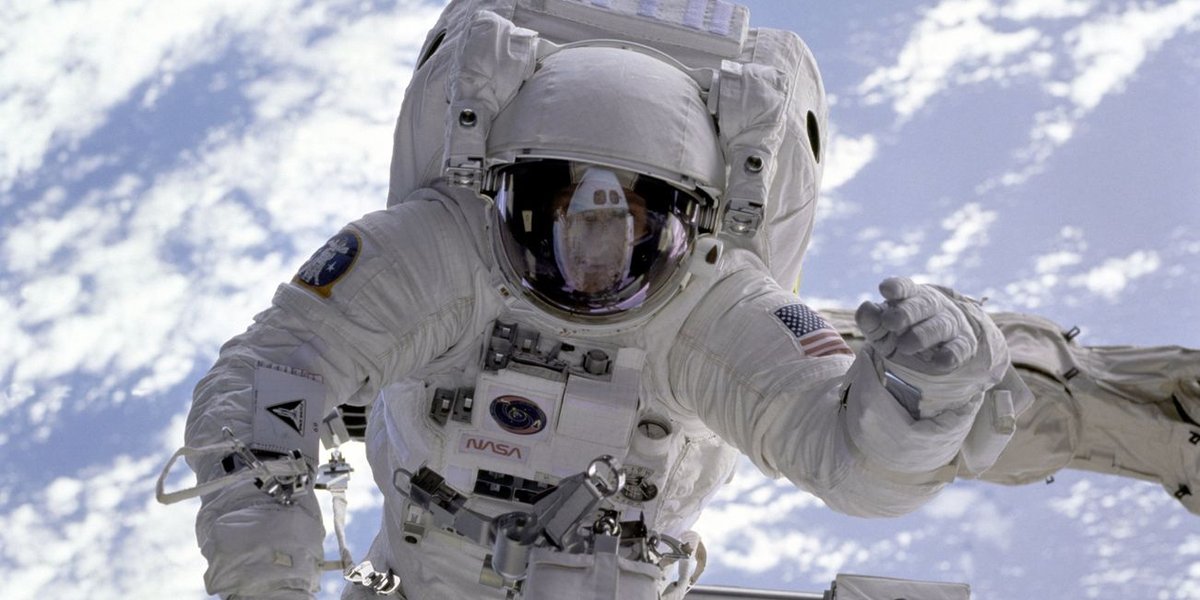
Eight astronauts from Oklahoma have flown in space. Not nine, not “the most of any state” — eight men and women who were born or raised here and actually left the planet. There’s a ninth name people keep adding to the list, Jerrie Cobb, and she deserves a spot in the story even though she never got off the launch pad. That gap between “trained” and “flew” is exactly why the headcount never matches from one website to the next.
So here’s the clean version: the roster, the missions, and a straight answer to how the count keeps getting muddied.
Table of Contents
- The Short Answer
- The Full List at a Glance
- The Eight Who Flew
- Gordon Cooper
- Thomas Stafford
- Fred Haise
- Stuart Roosa
- Owen Garriott
- William Pogue
- Shannon Lucid
- John Herrington
- The Ninth Name: Jerrie Cobb
- Why the Count Keeps Changing
- How Oklahoma Ranks Against Other States
- Where to See It in Person
The Short Answer {#the-short-answer}
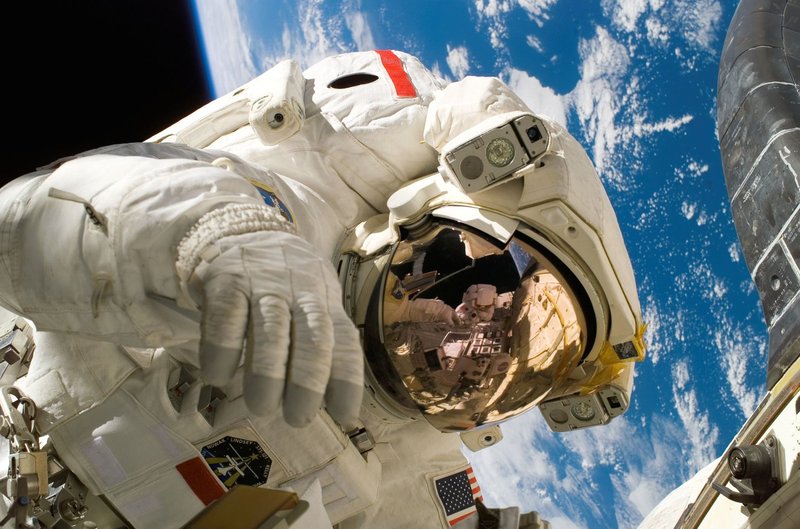
If you only need the number for a report or a bar bet: eight Oklahoma astronauts have flown in space. Two of them — Gordon Cooper and Stuart Roosa — flew to the Moon’s neighborhood during Apollo. One, John Herrington, became the first enrolled member of a Native American tribe to reach orbit. One, Shannon Lucid, held the American record for time in space for years.
Oklahoma claims them through birth (born here) or upbringing (raised here from childhood). Where the website you’re reading lands on the count usually comes down to whether it counts Jerrie Cobb, who trained as hard as any of them but was grounded by a program that got cancelled. More on her below.
The Full List at a Glance {#the-full-list}
| Astronaut | Oklahoma Tie | Key Missions | Claim to Fame |
|---|---|---|---|
| Gordon Cooper | Born, Shawnee | Mercury-Atlas 9, Gemini 5 | Flew the last solo Mercury orbital flight |
| Thomas Stafford | Born, Weatherford | Gemini 6 & 9, Apollo 10, Apollo-Soyuz | “Handshake in space” with a Soviet cosmonaut |
| Fred Haise | Univ. of Oklahoma, OK Air National Guard | Apollo 13 | Lunar module pilot on the aborted Moon landing |
| Stuart Roosa | Raised, Claremore | Apollo 14 | Carried the seeds that became the “Moon Trees” |
| Owen Garriott | Born, Enid | Skylab 3, STS-9 | First ham-radio operator to broadcast from orbit |
| William Pogue | Born, Okemah | Skylab 4 | Flew the longest Skylab mission, 84 days |
| Shannon Lucid | Raised, Bethany | 5 shuttle flights, Mir | Held the U.S. record for cumulative time in space |
| John Herrington | Born, Wetumka | STS-113 | First enrolled Native American citizen in space |
The Eight Who Flew {#the-eight-who-flew}
Gordon Cooper {#gordon-cooper}
Born in Shawnee in 1927, Cooper was one of the original Mercury Seven — NASA’s first astronaut class, the men the country watched on grainy television in 1959. On Mercury-Atlas 9 in 1963 he flew 22 orbits, the longest American spaceflight to that point, and when the automatic systems failed he flew the reentry by hand, lining up the capsule using lines he’d drawn on the window. That was the last time a single American flew alone in orbit. He came back for Gemini 5 in 1965 and logged a then-record eight days up there.
Cooper had the test-pilot swagger that defined the era. He reportedly napped on the launch pad before liftoff. The detail isn’t legend-padding — it tells you exactly what kind of cool the early program selected for.
Thomas Stafford {#thomas-stafford}
Stafford is Weatherford’s favorite son, and the town built a museum around him (we’ll get there). He flew four times: two Gemini missions, then Apollo 10 in 1969 — the dress rehearsal that flew the lunar module to within nine miles of the Moon’s surface without landing, clearing the way for Apollo 11 two months later.
His most quoted moment came in 1975. On the Apollo-Soyuz Test Project, Stafford commanded the American craft that docked with a Soviet Soyuz in orbit, and the famous “handshake in space” through the open hatch became the symbolic thaw of the Cold War’s space rivalry. He logged more than 500 hours off the planet across his career.
Fred Haise {#fred-haise}
Haise is the asterisk on this list, and an honest one. He was born in Mississippi, not Oklahoma — but he graduated from the University of Oklahoma and served in the Oklahoma Air National Guard, which is why the state claims him. Whether that counts is part of the headcount argument below.
What’s not debatable is the mission. Haise was the lunar module pilot on Apollo 13 in 1970, the flight where an oxygen tank exploded on the way to the Moon. He never got to walk on the surface. Instead he helped nurse a crippled spacecraft and three exhausted men back to Earth in the lunar module that was never designed to be a lifeboat. The recovery is one of the most studied survival stories in spaceflight history.
Stuart Roosa {#stuart-roosa}
Roosa was born in Colorado but moved to Claremore as a boy, where he finished high school and attended Oklahoma A&M. On Apollo 14 in 1971 he was the command module pilot — the guy who stays in orbit and doesn’t get to walk on the Moon. He spent 33 hours circling alone while Alan Shepard and Edgar Mitchell were on the surface.
Here’s the part schoolkids remember: Roosa, a former U.S. Forest Service smokejumper, carried hundreds of tree seeds into lunar orbit for a joint NASA and Forest Service experiment. The seeds were germinated back on Earth and planted across the country as “Moon Trees.” A few are still standing.
Owen Garriott {#owen-garriott}
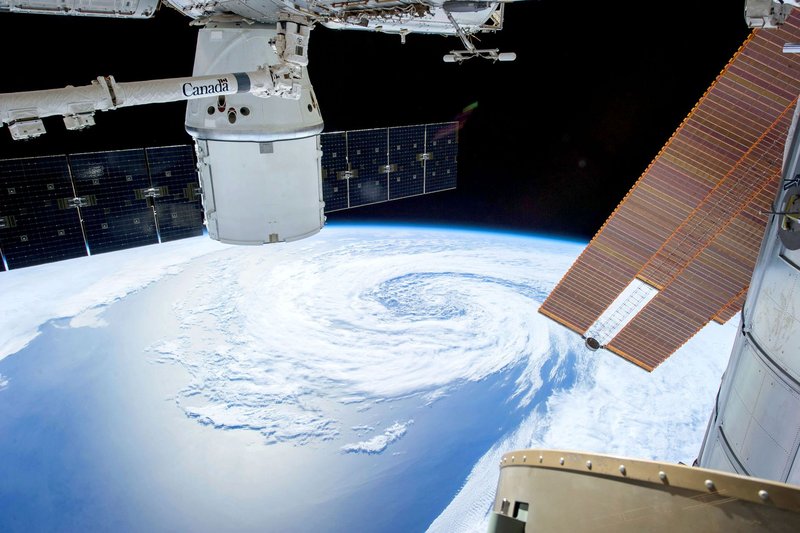
Enid-born Garriott was a scientist-astronaut, not a test pilot, and he brought a different toolkit. On Skylab 3 in 1973 he spent 59 days running experiments on America’s first space station. A decade later, on the 1983 Spacelab 1 shuttle mission, he became the first person to operate amateur radio from space, talking to ham operators on the ground from orbit — a hobby that’s since become a fixture aboard the International Space Station.
Garriott’s legacy didn’t end with him. His son Richard later flew to the ISS as a private astronaut in 2008, making the Garriotts the first American parent-and-child pair to both reach space.
William Pogue {#william-pogue}
Pogue, born in Okemah, flew exactly once — but it was a big one. He was the pilot of Skylab 4 in 1973–74, the third and final crewed Skylab mission, which ran 84 days and held the world endurance record for years. He logged more than 2,000 hours in space on that single flight.
Skylab 4 is also remembered for something more human: an overloaded, exhausted crew that pushed back on Mission Control’s relentless schedule and negotiated for more rest. Some accounts frame it as a near-mutiny. It became a case study in how much you can ask of people working in a sealed can a quarter-million miles from home.
Shannon Lucid {#shannon-lucid}
Lucid was born in China to missionary parents and raised in Bethany. She earned a doctorate in biochemistry, joined NASA’s first class to include women in 1978, and flew five times. The headline flight was 1996, when she spent 188 days aboard the Russian space station Mir — at the time the longest spaceflight by an American and by any woman, a record that stood for years.
She didn’t slow down on the ground, either. In 2002 she served as NASA’s chief scientist. For a generation of girls in Oklahoma, Lucid was the proof the door was open.
John Herrington {#john-herrington}
Herrington, born in Wetumka and an enrolled citizen of the Chickasaw Nation, flew on STS-113 in 2002. The shuttle Endeavour delivered a truss segment to the International Space Station, and Herrington logged three spacewalks totaling nearly 20 hours.
He became the first enrolled member of a Native American tribe to fly in space, and he flew the part. He carried the Chickasaw Nation flag, eagle feathers, and a traditional flute with him into orbit. Since leaving NASA he earned a doctorate in education and has spent years pushing Native youth toward science and engineering careers. If you’ve seen one name from this list in a recent classroom, it’s probably his.
The Ninth Name: Jerrie Cobb {#jerrie-cobb}
Born in Norman, Geraldyn “Jerrie” Cobb was a record-setting pilot before NASA existed in any form a civilian would recognize. In 1960 she became the first woman to pass the same brutal physical and psychological screening given to the Mercury astronauts — and on several tests she outscored the men.
Then the door slammed. Cobb and twelve other women, later known as the Mercury 13, were on the cusp of advanced testing when NASA cancelled the women’s program in 1961. Cobb testified before Congress in 1962, arguing the case for women in space. It didn’t move the agency. She never flew.
So is she an “Oklahoma astronaut”? She trained like one. She was qualified like one. But she never reached space, which is why the careful lists — including the Oklahoma Historical Society’s — count eight who flew and tell Cobb’s story alongside them rather than inside the number. When a site claims “nine astronauts from Oklahoma,” Cobb is almost always the ninth.
Why the Count Keeps Changing {#why-the-count-changes}
Search around and you’ll see “six,” “seven,” “eight,” and “nine” all stated confidently. None of those writers are lying. They’re using different definitions:
- Born in Oklahoma vs. raised in Oklahoma. Roosa and Lucid weren’t born in the state but grew up here. Drop the “raised here” group and your number falls. It’s a reminder that birthplace is only one of the trivia threads people use to sort astronauts — others slice the corps by the month they were born — and each lens produces a different roster.
- Born/raised vs. educated or stationed here. Fred Haise’s tie is the University of Oklahoma and the Oklahoma Air National Guard. Count him and you’re at eight; require birth or childhood and you’re at seven.
- Flew vs. trained. This is the Jerrie Cobb question. Counting her gets you to nine.
The Oklahoma Historical Society settles on eight who reached space and treats Cobb as a contributor to the story. That’s the most defensible line, and it’s the one this list uses. So the honest headline answer is: eight flew, and a ninth trained but never launched.
One myth worth killing outright: Oklahoma does not have “the most astronauts of any state.” It has an impressive count for its population, but Ohio, California, and Texas all sit well ahead by raw numbers.
How Oklahoma Ranks Against Other States {#state-ranking}
By total astronauts produced, the leaders are the usual suspects — Ohio (home of John Glenn and Neil Armstrong), California, and Texas, each with dozens. Oklahoma doesn’t crack that tier on raw count.
Per capita is the more interesting metric, and it’s where the state’s pride is actually earned. Eight spacefarers from a state Oklahoma’s size is a steep ratio, especially given the early-program concentration: two of the original test-pilot generation (Cooper and Stafford) and a scientist (Garriott) who reshaped what a non-pilot astronaut could do. The “most astronauts” claim is wrong; “remarkable density of them” is right.
Where to See It in Person {#where-to-see-it}
If this list sends you anywhere, make it Weatherford. The Stafford Air & Space Museum, named for Thomas Stafford, is a Smithsonian-affiliated collection with real spacecraft, engines, and aviation hardware — the kind of place where the Apollo-era machinery sits close enough to make the scale land. It’s the single best physical anchor for Oklahoma’s spaceflight story, and it’s built around one of the eight names above.
For the broader roster, the Oklahoma Historical Society maintains the most carefully sourced account of all eight astronauts and Jerrie Cobb — the document most of the shorter, sloppier lists are quietly cribbing from anyway.
Enjoyed this article?
Get daily 10-minute PDFs about astronomy to read before bed!
Sign up for our upcoming micro-learning service where you will learn something new about space and beyond every day while winding down.