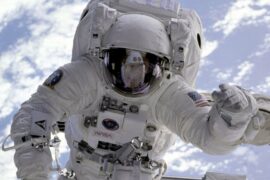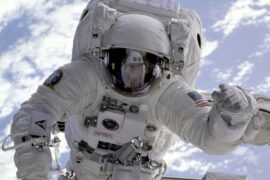
Ask “who was the first Malaysian in space” and most answers stop at one name. The fuller story has four men, a fighter-jet deal, and a set of religious guidelines written specifically so a Muslim could pray while orbiting Earth at 17,500 mph.
Malaysia has sent exactly one person to space: Sheikh Muszaphar Shukor, an orthopaedic surgeon who launched on a Russian Soyuz in October 2007. But he was chosen from a field of finalists, trained alongside a backup who came within a hair of flying instead, and his nine days aboard the International Space Station sparked a genuine theological project back home. Here’s everyone involved and where the program stands now.
Table of Contents
- Quick facts
- Sheikh Muszaphar Shukor: the one who flew
- Faiz Khaleed: the backup who almost went
- The other finalists
- How Malaysia bought its way to space
- Praying in orbit: the Ramadan guidelines
- What he actually did up there
- The candidates at a glance
- Legacy: what happened next
Quick facts {#quick-facts}
- Malaysians who have flown to space: 1 (Sheikh Muszaphar Shukor)
- Mission: Soyuz TMA-11, launched 10 October 2007 from Baikonur Cosmodrome, Kazakhstan
- Time in space: ~11 days, roughly 9 of them docked at the International Space Station (Expedition 16)
- Program name: Angkasawan, from the Malay angkasa (space) plus the suffix -wan (person)
- How it happened: Russia included a Malaysian seat as an offset in a deal to sell Malaysia 18 Sukhoi Su-30MKM fighter jets
- Official label: Malaysia called him a “spaceflight participant”; the title “astronaut” was debated because he didn’t pilot or operate the spacecraft
Sheikh Muszaphar Shukor: the one who flew {#sheikh-muszaphar-shukor}
Sheikh Muszaphar Shukor Al Masrie bin Sheikh Mustapha was 35 when he launched, and he wasn’t a career pilot or a military test subject. He was a part-time model and an orthopaedic surgeon at a Kuala Lumpur hospital, which tells you something about how this program was built: Malaysia wanted a relatable figure as much as a technical operator.
He shared the Soyuz TMA-11 capsule with cosmonaut Yuri Malenchenko and NASA astronaut Peggy Whitson, who was beginning her stint as the first female commander of the ISS. That’s worth pausing on. Muszaphar’s nine days in orbit happened under the command of one of the most experienced astronauts in the world, on a crew that was doing serious station business while he ran his own experiment slate.
He returned to Earth on 21 October 2007 aboard Soyuz TMA-10 with a different crew, the standard musical-chairs arrangement Soyuz missions use. Back home he was a national celebrity overnight, and the government leaned into it hard.
Faiz Khaleed: the backup who almost went {#faiz-khaleed}
Every prime crew member has a backup who trains the entire program in parallel, ready to step in if the primary gets sick, injured, or washed out. Malaysia’s backup was Faiz Khaleed, a dental officer with the Malaysian Armed Forces, who was 27 at the time.
Faiz trained alongside Muszaphar in Star City, Russia, through the full cosmonaut preparation course. He never flew. But “backup” undersells how close that gets you to the rocket. A backup completes the same centrifuge runs, the same survival training, the same months in Russia learning Soyuz systems in a second language. He later pursued doctoral studies, and his name still comes up whenever Malaysia floats the idea of a second mission, because the country technically already has a space-trained candidate on the books.
The other finalists {#the-other-finalists}
The program started with more than 11,000 applicants and narrowed brutally. Beyond Muszaphar and Faiz, two more men made it to the final four after the medical and physical gauntlet:
- Mohammed Faiz Kamaludin — a finalist cut in the later rounds of selection.
- S. Vanajah (Siva) — the other finalist who reached the closing stage of the program.
These two rarely show up in the headline coverage, which is exactly the gap worth filling. The selection process pulled candidates through tests for cardiovascular fitness, psychological resilience, and tolerance for the physical stress of launch and re-entry. Making the final four out of a five-figure applicant pool is its own achievement, even without a launch seat at the end of it.
How Malaysia bought its way to space {#how-malaysia-reached-space}
This is the part most people don’t know, and it’s the most Malaysian thing about the whole story.
Malaysia didn’t build a space agency and a launch program. It bought a seat. In 2003, Malaysia agreed to purchase 18 Sukhoi Su-30MKM fighter jets from Russia in a deal worth around $900 million. As an offset, Russia agreed to train and fly a Malaysian to the International Space Station at no additional charge. The astronaut program was, functionally, a bonus clause in a defence procurement contract.
That origin shaped everything. The timeline was set by jet politics, not by science readiness. The “spaceflight participant” framing existed partly because Muszaphar’s role was a guest seat negotiated by treaty, not a slot earned through a career pipeline like NASA’s or Roscosmos’s. It’s a genuinely unusual route to orbit, and it worked.
Praying in orbit: the Ramadan guidelines {#praying-in-orbit}
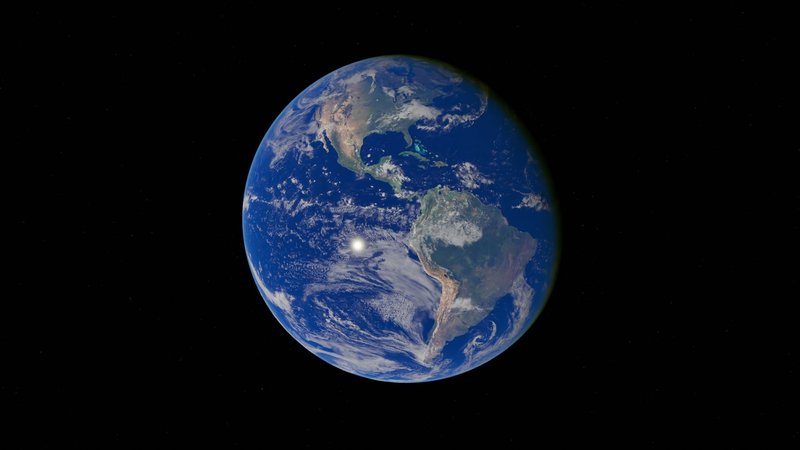
Here’s where Malaysia did something no other space program had needed to. Muszaphar is Muslim, and his mission overlapped with the tail end of Ramadan. That raised real questions: How do you face Mecca when “down” keeps changing? How do you kneel in microgravity? Do you fast when you cross 16 sunrises and sunsets every day?
So Malaysia’s national fatwa council convened scholars and, in 2007, produced an 18-page guidebook titled A Guideline of Performing Ibadah at the International Space Station. It was later translated and distributed by Malaysia’s space agency. The rulings were practical: determine prayer times based on the launch site (Baikonur) rather than the impossible 90-minute orbital day; face the Earth, or Mecca’s direction “to the best of one’s ability,” when exact orientation isn’t feasible; and substitute symbolic gestures where full prostration in microgravity isn’t possible.
On fasting, the guidance allowed Muszaphar to defer the Ramadan fast and make it up after returning, treating an astronaut like a traveller under Islamic law. The document became a quietly significant piece of religious jurisprudence, since it’s one of the first formal attempts to extend a faith’s daily practice into orbit. As Space.com reported at the time, Muszaphar was clear that he intended to observe his faith without making the mission about it.
What he actually did up there {#the-experiments}
The mission wasn’t a sightseeing trip with a flag. Muszaphar ran a research program built around conditions that microgravity changes in useful ways. His experiments included studies on the behaviour of liver and cancer cells in microgravity, the crystallisation of proteins and microbes, and the effects of space conditions on samples relevant to medicine. There were also symbolic touches, including bringing batik cloth aboard and conducting the religious observances the guidebook was written for.
Cancer-cell experiments in orbit aren’t a Malaysian gimmick. Cells grow in three dimensions more naturally without gravity flattening them, which is why microgravity cancer research is a recurring theme on the ISS. Muszaphar’s surgical background made him a sensible person to run that particular slate.
The candidates at a glance {#comparison-table}
| Candidate | Background | Role in program | Outcome |
|---|---|---|---|
| Sheikh Muszaphar Shukor | Orthopaedic surgeon, part-time model | Prime crew | Flew on Soyuz TMA-11, Oct 2007 |
| Faiz Khaleed | Military dental officer | Backup crew | Fully trained, did not fly |
| Mohammed Faiz Kamaludin | Final-stage finalist | Finalist | Not selected for crew |
| S. Vanajah (Siva) | Final-stage finalist | Finalist | Not selected for crew |
Legacy: what happened next {#legacy}
Muszaphar became, briefly, one of the most famous people in Malaysia. He toured schools, fronted campaigns, and turned the flight into a long public-engagement career. The program also handed him a couple of trivia-grade firsts: he’s often cited as the first Malaysian in space and among the first Muslims to observe Islamic practice aboard the ISS during Ramadan.
But the bigger question, raised at the time and never fully answered, was whether one flight justified the attention. Critics argued the seat was a publicity exercise riding on a fighter-jet deal rather than the start of a real space capability. Supporters pointed to the surge of interest in science among Malaysian students and the research that actually got done. Both can be true.
What’s clear is that nearly two decades on, Malaysia hasn’t flown a second person. Faiz Khaleed remains the trained candidate in waiting, and talk of “Angkasawan 2” resurfaces periodically without a confirmed mission. For now, Malaysia’s astronaut story is the story of one launch, one backup who came agonisingly close, two finalists history mostly forgot, and a guidebook that figured out how to pray while falling around the planet. As NASA’s mission records show, Expedition 16 quietly carried a piece of Malaysian history alongside its routine station work.