Titan is the only moon in the solar system with a thick atmosphere and liquid on its surface. Not liquid water — liquid methane. Lakes of it, near the poles. Rivers cutting canyons through water-ice bedrock. Organic chemistry churning in the upper haze layers. It’s the most Earth-like world we know of, and it doesn’t look anything like Earth.
That combination — familiar processes, alien ingredients — is exactly why NASA keeps going back.
Here’s every mission that has ever visited Titan, what each one found, and why the next one is the most ambitious planetary mission in decades.
Table of Contents
- The First Flybys: Pioneer 11 and the Voyagers (1979–1981)
- Hubble’s Contribution: Mapping Titan from Earth Orbit
- Cassini-Huygens: The Mission That Changed Everything (2004–2017)
- The Huygens Probe: 72 Minutes on the Surface (2005)
- Mission Comparison Table
- Dragonfly: A Nuclear Rotorcraft on Titan’s Surface (2028–2034+)
- Why Titan Keeps Drawing Us Back
The First Flybys: Pioneer 11 and the Voyagers (1979–1981) {#the-first-flybys}
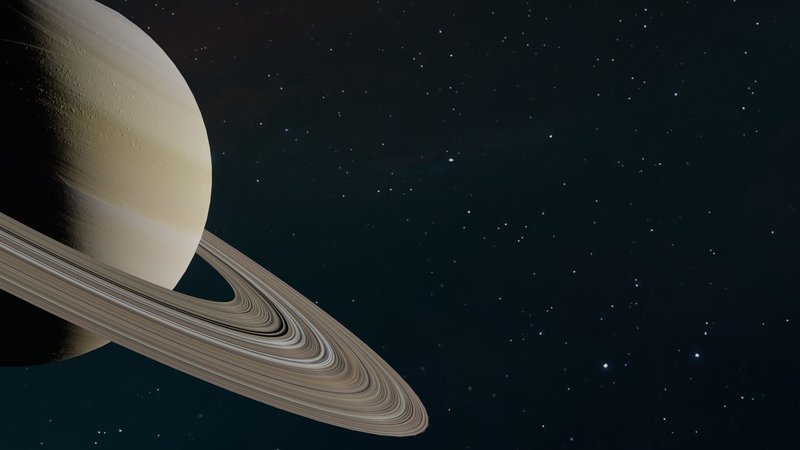
Pioneer 11 passed Titan in September 1979 — the first spacecraft to do so. It confirmed the moon had an atmosphere, but the instruments weren’t sensitive enough to tell much beyond that. Pioneer 11 was doing a Saturn flyby; Titan was a bonus stop.
Then came the Voyagers. Voyager 1 made a targeted close flyby of Titan in November 1980, passing within 6,500 kilometers of the surface. This was a deliberate tradeoff: the encounter geometry meant Voyager 1 couldn’t continue on to Uranus and Neptune the way Voyager 2 later would. Scientists chose Titan over the outer planets. That tells you how interesting they already thought it was.
What Voyager 1 found was both revelatory and frustrating. Titan’s atmosphere was mostly nitrogen — the only other nitrogen-dominated atmosphere in the solar system besides Earth’s. It also confirmed methane, complex organic molecules in the upper haze layers, and surface temperatures around -179°C (-290°F). But the thick orange photochemical smog completely obscured the surface. The cameras got nothing but haze. No one knew whether the surface was solid ice, liquid methane, or something else entirely.
Voyager 2 skipped the close Titan approach so it could continue its Grand Tour. It did pass Titan, but at a much greater distance.
For the next two decades, Titan remained a mystery wrapped in orange fog.
Hubble’s Contribution: Mapping Titan from Earth Orbit {#hubbles-contribution}
Hubble isn’t a Titan mission, but it earned a mention here. In the mid-1990s, infrared observations from Hubble’s NICMOS instrument punched through Titan’s haze just enough to detect surface brightness variations — the first hint that there was actual terrain down there. One bright region, later named Xanadu, showed up repeatedly. It’s now known to be a continent-sized highland region, probably covered in rounded water-ice pebbles worn smooth by methane rain.
This wasn’t a visit. But it told mission planners that Titan’s surface was varied and worth landing on.
Cassini-Huygens: The Mission That Changed Everything (2004–2017) {#cassini-huygens}
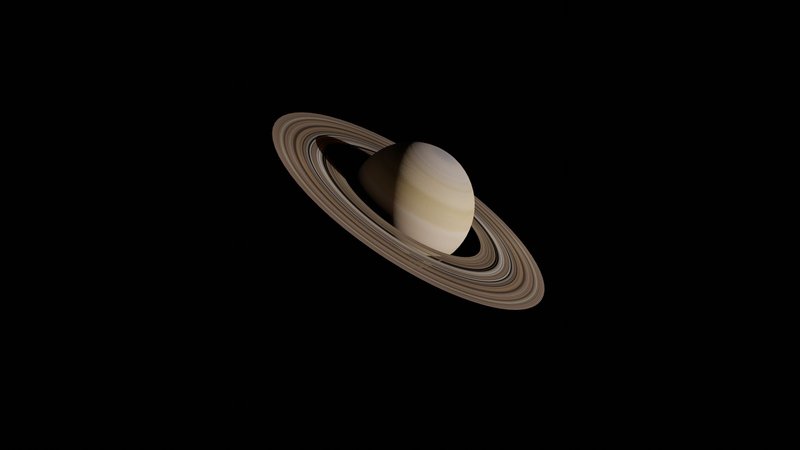
The Cassini-Huygens mission launched in October 1997 and entered Saturn orbit in July 2004. It was a joint project between NASA, ESA, and the Italian Space Agency — one of the largest interplanetary missions ever flown. Cassini was the orbiter; Huygens was a probe designed to enter Titan’s atmosphere and descend to the surface.
Over 13 years and 127 Titan flybys, Cassini transformed Titan from a blurry smudged circle into a mapped world. It’s widely considered one of the most famous space missions of the 21st century — and the science return makes that reputation easy to defend.
What Cassini found:
- Hydrocarbon seas near the north pole. Ligeia Mare and Kraken Mare are among the largest. Kraken Mare alone covers roughly 400,000 square kilometers — larger than the Caspian Sea. These aren’t metaphorical lakes. They are literal bodies of liquid ethane and methane, sitting on the surface.
- River networks carved by methane rain. The rivers aren’t flowing right now — Titan has seasons, and its north pole was in late summer during most of the mission — but the channels are unmistakable. The biggest, Vid Flumina, drains into Ligeia Mare.
- Dunes made of organic particles. Near the equator, Titan has vast fields of longitudinal dunes, likely made of solid organic particles that settled out of the atmosphere over millions of years. They look like Saharan sand seas in radar images.
- Complex organic chemistry. The upper atmosphere is a factory for tholins — organic molecules created when nitrogen and methane get hit with ultraviolet radiation. These same molecules are thought to have been present on early Earth. Titan’s chemistry is a continuous, planetary-scale organic chemistry experiment.
NASA’s Cassini mission page documents the full science return in detail — it’s genuinely worth reading if you want to go deeper than any summary can cover.
Cassini ended deliberately. In September 2017, with fuel running low, mission controllers commanded the spacecraft to dive into Saturn’s atmosphere so it couldn’t accidentally contaminate Titan or Enceladus — two moons with possible subsurface oceans — after losing control.
The Huygens Probe: 72 Minutes on the Surface (2005) {#huygens-probe}
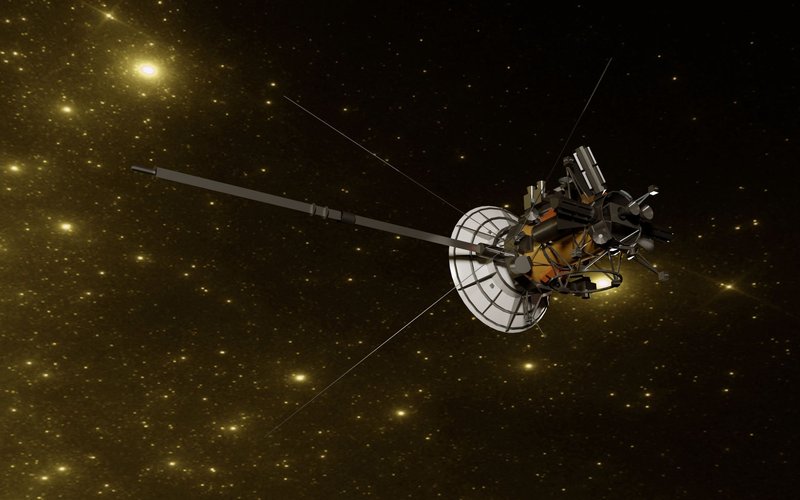
Huygens deserves its own section because it’s one of the most remarkable things humanity has ever done in space.
On January 14, 2005, the Huygens probe separated from Cassini and entered Titan’s atmosphere at about 6 kilometers per second. Over two and a half hours, it parachuted through the atmosphere, taking measurements the whole way down. Then it landed on the surface — and kept transmitting for another 72 minutes before its batteries died.
The descent images showed a shoreline. Dark drainage channels leading down to a bright, flat plain. Rounded pebbles of water ice near the landing site, probably deposited by flowing methane. The surface itself was slightly springy on impact, like wet sand or packed snow.
Huygens measured winds, temperature profiles, the chemical composition of the atmosphere at every altitude layer, and the acoustic properties of the surface. It heard Titan’s wind. The European Space Agency’s Huygens mission archive has the full dataset.
The probe landed near the equator, in the dry terrain between the dune fields. It never saw a lake. But the evidence of past liquid flow was everywhere around the landing site.
No spacecraft has landed on Titan before or since. Until Dragonfly.
Mission Comparison Table {#mission-comparison-table}
| Mission | Agency | Titan Encounter | Type | Key Contribution |
|---|---|---|---|---|
| Pioneer 11 | NASA | Sep 1979 | Flyby | First confirmation of thick atmosphere |
| Voyager 1 | NASA | Nov 1980 | Flyby | Nitrogen atmosphere, organic chemistry, haze layer composition |
| Voyager 2 | NASA | Aug 1981 | Distant flyby | Limited data; chose Grand Tour over close approach |
| Hubble (NICMOS) | NASA | 1994–1998 | Remote observation | First surface brightness maps; identified Xanadu |
| Cassini | NASA/ESA/ASI | 2004–2017 (127 flybys) | Orbiter | Full surface mapping, hydrocarbon seas, dunes, river networks |
| Huygens | ESA | Jan 14, 2005 | Atmospheric probe / lander | First and only surface landing; 72 min of surface data |
| Dragonfly | NASA | Arrival: ~2034 | Rotorcraft lander | Surface mobility, organic chemistry, habitability assessment |
Dragonfly: A Nuclear Rotorcraft on Titan’s Surface (2028–2034+) {#dragonfly}
Dragonfly is unlike any planetary mission ever flown. It’s a dual-quadcopter — eight rotors, roughly the size of a car — that will fly between surface locations on Titan, covering distances of 8 kilometers or more per hop, sampling the surface chemistry at each stop.
This works on Titan because the atmosphere is four times denser than Earth’s, and gravity is about one-seventh of Earth’s. Flying is actually easier on Titan than anywhere else in the outer solar system. The nuclear power source (an MMRTG, the same type used on Curiosity and Perseverance) means it doesn’t need sunlight — irrelevant anyway in Titan’s perpetual orange haze.
The science objectives:
Dragonfly will land first near the equatorial dunes, where Cassini detected complex organics. It will sample the surface chemistry with a mass spectrometer, looking for prebiotic molecules — the chemical building blocks that could, in the right conditions, lead toward biology. It will then fly toward a site called Selk impact crater, where the heat of the impact melted water ice and mixed it with organic surface material. For a brief window after each impact, water and organics coexist in liquid form. That’s as close to a habitable environment as Titan gets. Titan is consistently ranked among the most likely places to find alien life in the solar system, precisely because of this kind of chemistry.
The mission isn’t searching for life. It’s searching for chemistry that could precede life — and finding out how far that chemistry has progressed over billions of years of continuous organic synthesis.
The schedule, plainly:
Dragonfly was selected for NASA’s New Frontiers program in June 2019. It has had budget problems. A 2023 independent cost review pushed the estimated mission cost to roughly $3.35 billion, significantly above the original estimate, and the launch date slipped from 2026 to July 2028. The arrival at Titan is currently projected for 2034. NASA’s Dragonfly mission page carries the current status.
The cost overruns are real and worth acknowledging. They’re also not unusual for this class of mission — Curiosity ran over budget too. The mission is funded and proceeding.
Why Titan Keeps Drawing Us Back {#why-titan}
Every mission to Titan has produced discoveries that justified the next one. Pioneer 11 found an atmosphere; Voyager 1 found nitrogen and organics; Cassini found lakes and dunes and a chemistry more complex than anyone expected; Huygens found a surface you could land on.
Each step made Dragonfly more obviously necessary, not less. That’s a coherent scientific program — the kind that’s rare in planetary exploration, where missions compete for funding against dozens of other compelling destinations.
Titan is not the only place in the outer solar system that might host prebiotic chemistry or subsurface liquid water. Europa and Enceladus have stronger cases for actual habitability right now. But Titan is the only place with this combination: a thick, accessible atmosphere, a surface you can land on, liquid chemistry happening at the surface today, and four billion years of continuous organic synthesis.
Whatever Dragonfly finds when it sets down in those dunes in 2034 — it took 55 years of missions to get there. The orange moon that Pioneer 11 barely glimpsed in 1979 is turning out to be one of the most scientifically valuable places in the solar system.
Enjoyed this article?
Get daily 10-minute PDFs about astronomy to read before bed!
Sign up for our upcoming micro-learning service where you will learn something new about space and beyond every day while winding down.