
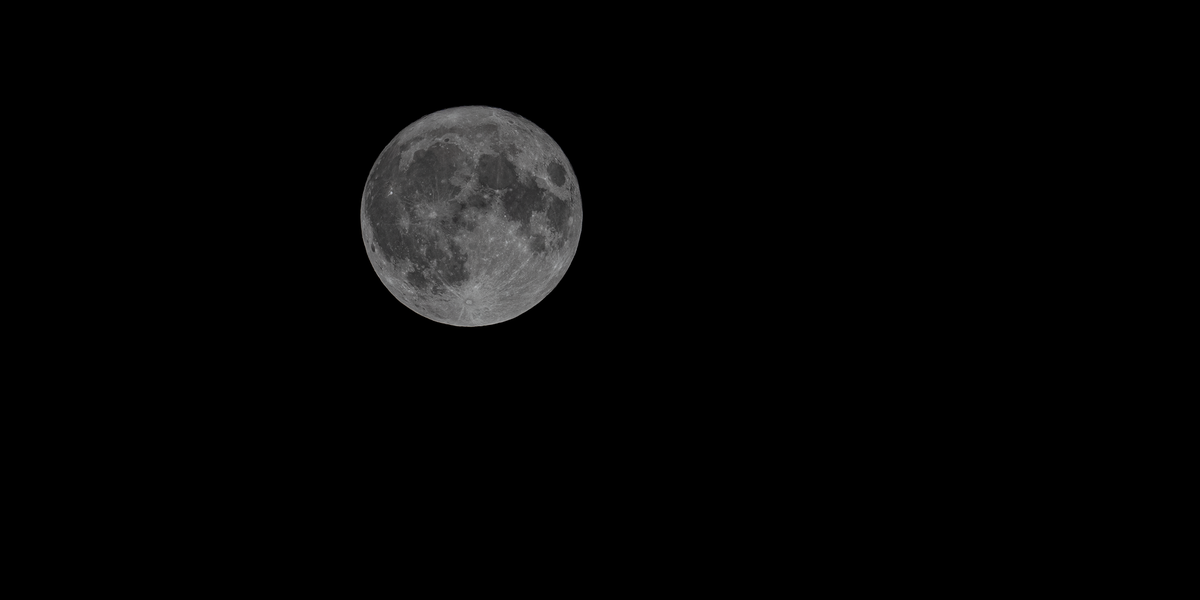
“Types of moons” is one of those searches that means three completely different things depending on who’s typing it.
Some people want the eight phases the Moon cycles through every month. Some want the special full moons with names — Blood Moon, Blue Moon, Supermoon, Harvest Moon. And a few mean the actual moons, plural, orbiting other planets: the 274 around Saturn, the icy ones around Jupiter, the lopsided potato-shaped rocks circling Mars.
Most articles pick one of those and ignore the other two. This one covers all three, because there’s no reason to make you run three more searches. Start with the phases, since that’s what most people are after.
Table of Contents
- The 8 Phases of the Moon
- Named Full Moons by Month
- Special Full Moons (Super, Blue, Blood, Harvest)
- Supermoon vs Micromoon
- Types of Moons in the Solar System
- When to See the Next Full Moon and Eclipse (2026)
The 8 Phases of the Moon
The Moon doesn’t make its own light. It reflects the Sun, and as it orbits Earth roughly every 29.5 days, we see different slices of its sunlit half. That changing slice is a phase. There are eight of them, and they always run in the same order.
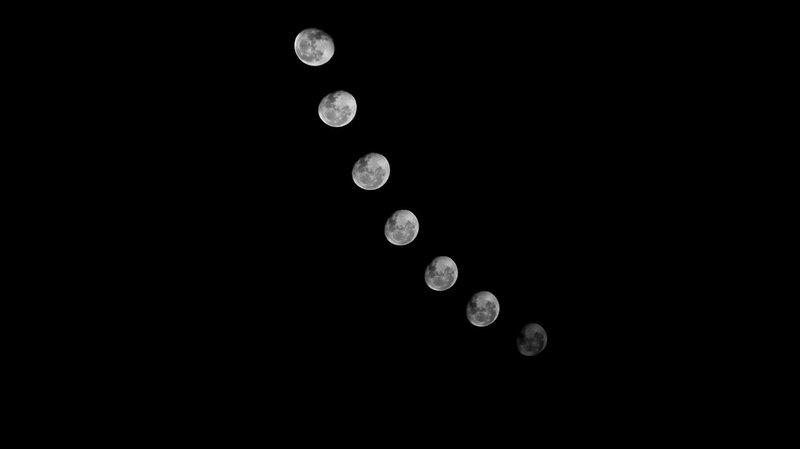
Four of the eight are the “main” phases — new, first quarter, full, last quarter — and they mark specific moments. The other four are the in-between stretches, where the Moon is either filling out (waxing) or shrinking back (waning). Two words worth knowing: gibbous means more than half lit, crescent means less than half.
Here’s the full cycle in order:
| # | Phase | What you see | When it’s up |
|---|---|---|---|
| 1 | New Moon | Nothing — the lit side faces away from us | Daytime (invisible) |
| 2 | Waxing Crescent | Thin sliver on the right, growing | Late afternoon / early evening |
| 3 | First Quarter | Right half lit | Afternoon to midnight |
| 4 | Waxing Gibbous | More than half, still growing | Afternoon to early morning |
| 5 | Full Moon | Entire face lit | All night |
| 6 | Waning Gibbous | More than half, now shrinking | Late evening to morning |
| 7 | Last Quarter | Left half lit | Midnight to noon |
| 8 | Waning Crescent | Thin sliver on the left, fading | Pre-dawn / morning |
One trick that actually sticks: in the Northern Hemisphere, if the lit edge is on the right, the Moon is waxing (heading toward full). Lit on the left means it’s waning. South of the equator, flip it. The light “grows from the right, dies from the left” up north.
A “quarter” moon looks half-lit, which trips people up. The name refers to the Moon being a quarter of the way through its orbit, not a quarter illuminated. NASA’s Moon phase resource breaks the geometry down with diagrams if you want to see why.
Named Full Moons by Month
Every month’s full moon has at least one traditional name, most of them inherited from Native American, Colonial American, and European folk calendars. The names tracked the seasons — what was happening in nature, what to plant, what to hunt. They’re not astronomical categories; they’re a calendar dressed up in nicknames. But they’re genuinely useful for knowing what’s coming. The full moons by month list gives the exact date for each name.
| Month | Full Moon Name | Where the name comes from |
|---|---|---|
| January | Wolf Moon | Wolves howling in deep winter |
| February | Snow Moon | Heaviest snowfall of the year |
| March | Worm Moon | Earthworms reappearing as soil thaws |
| April | Pink Moon | Early-spring wild phlox blooms (not a pink moon) |
| May | Flower Moon | Spring flowers in full bloom |
| June | Strawberry Moon | Strawberry harvest season |
| July | Buck Moon | New antlers on male deer |
| August | Sturgeon Moon | Great Lakes sturgeon easiest to catch |
| September | Harvest / Corn Moon | Main harvest; closest full moon to the autumn equinox |
| October | Hunter’s Moon | Time to hunt and stock up for winter |
| November | Beaver Moon | Beavers finishing their dams before the freeze |
| December | Cold Moon | The long, cold nights of early winter |
The Pink Moon name fools a lot of people. April’s full moon isn’t pink — it’s named for moss pink, an early spring wildflower. The Moon itself looks the same color it always does.
Special Full Moons (Super, Blue, Blood, Harvest)
Beyond the monthly names, a handful of full moons earn extra labels because of how they appear or when they fall. These are the ones that make headlines.
Supermoon — A full moon that lands near perigee, the point in the Moon’s slightly oval orbit where it’s closest to Earth. It looks about 14% bigger and 30% brighter than a full moon at its farthest point. The difference is real but subtle; the famous “huge” moon on the horizon is mostly the Moon illusion, a trick of your brain, not actual size.
Blue Moon — Not blue, and not rare in the “extraordinary event” sense the phrase implies. There are two kinds. A monthly Blue Moon is the second full moon in a single calendar month, which happens because 12 lunar cycles don’t quite line up with 12 months. A seasonal Blue Moon is the third full moon in a season that has four. Either way, you get one roughly every two to three years — that’s literally where “once in a blue moon” comes from.
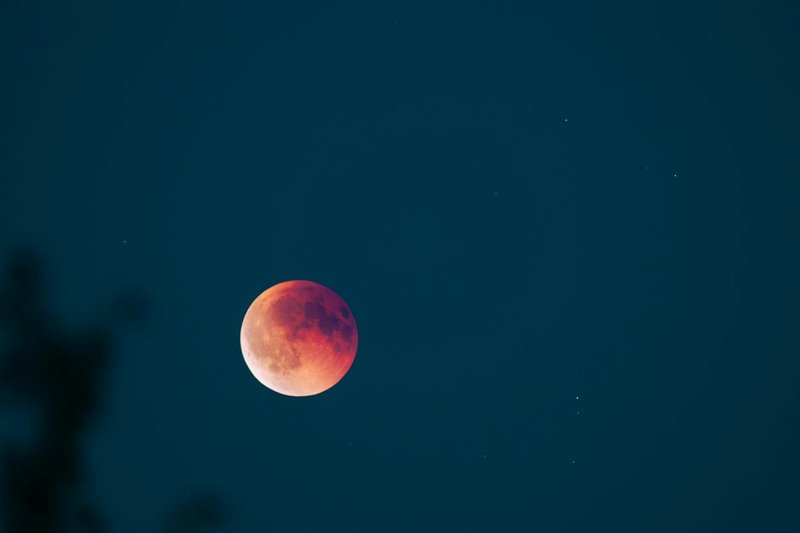
Blood Moon — A full moon during a total lunar eclipse. Earth slides directly between the Sun and Moon, and the only sunlight reaching the Moon bends through our atmosphere first. That atmosphere scatters away the blue light and lets red through — the same physics that makes sunsets red — so the Moon glows a coppery, rusty red. It’s the one “special moon” that genuinely transforms what you see. A total lunar eclipse is just one entry in a wider family; the different types of eclipses, from annular solar to penumbral lunar, each look and behave differently. To see when the next blood moon is and whether you can see it from your city, use our eclipse finder.
Harvest Moon — The full moon closest to the September equinox. What makes it special isn’t color or size, it’s timing: for several nights running, the Moon rises only about 20–30 minutes later each night instead of the usual 50. That gave pre-electric farmers extra evening light to bring in the harvest. Occasionally the Harvest Moon falls in early October.
A single full moon can wear several hats at once. A close, eclipsed full moon in September could legitimately be a Super Blood Harvest Moon — three labels, one Moon.
Supermoon vs Micromoon
If a supermoon is the Moon at its closest, a micromoon is the opposite — a full moon at apogee, the farthest point in its orbit. The two are bookends of the same elliptical path.
| Supermoon | Micromoon | |
|---|---|---|
| Orbit position | Perigee (closest, ~363,000 km) | Apogee (farthest, ~405,000 km) |
| Apparent size | ~14% larger | ~14% smaller |
| Brightness | ~30% brighter | Noticeably dimmer |
| Naked-eye difference | Hard to spot alone, obvious in side-by-side photos | Same |
Here’s the honest part: you almost never notice the difference by eye, because you’ve got nothing to compare it to in the moment. Photographers catch it by shooting a supermoon and a micromoon with identical settings, then placing the images next to each other. The size gap jumps out. On any given night, your brain just sees “the Moon.”
Types of Moons in the Solar System
Now the other meaning of the question. A moon — a natural satellite — is any object locked in orbit around a planet, dwarf planet, or asteroid. Earth has exactly one. The solar system has hundreds more, and they don’t all look like ours.
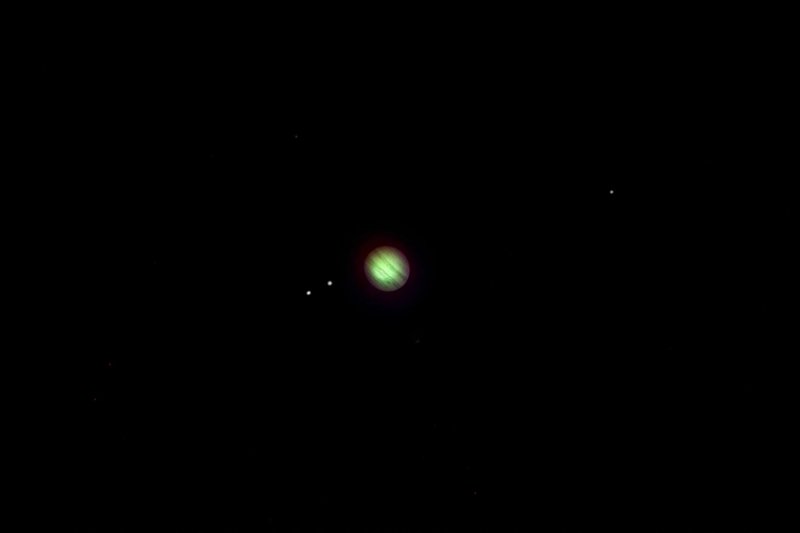
Astronomers sort them into rough types by how they likely formed and how they behave:
| Type | What it means | Examples |
|---|---|---|
| Regular moons | Formed alongside their planet from the same disk of debris; orbit neatly in the same direction the planet spins | Earth’s Moon, Jupiter’s Galilean moons |
| Irregular moons | Captured passing objects; distant, tilted, often backward (retrograde) orbits | Saturn’s Phoebe, many of Jupiter’s outer moons |
| Shepherd moons | Small moons that gravitationally “herd” ring particles into sharp edges | Saturn’s Prometheus and Pandora |
| Trojan / co-orbital moons | Share an orbit with a larger moon, sitting in stable gravitational points | Saturn’s Telesto and Calypso |
A few standouts worth knowing by name:
- Ganymede (Jupiter) — the largest moon in the solar system, bigger than the planet Mercury, and the only moon with its own magnetic field.
- Titan (Saturn) — the only moon with a thick atmosphere, plus lakes and rivers of liquid methane on its surface.
- Europa (Jupiter) — an icy shell hiding a saltwater ocean that holds more water than all of Earth’s oceans combined, which is why it tops the list for places to look for life and why it has drawn a steady stream of space missions to Europa.
- Io (Jupiter) — the most volcanically active body in the solar system, with eruptions visible from orbit.
- Phobos and Deimos (Mars) — two small, lumpy captured asteroids; Phobos orbits so close it’ll eventually crash into Mars or shatter into a ring.
The counts keep shifting as telescopes improve. As of 2026, Saturn leads with 274 confirmed moons, edging out Jupiter, and new tiny ones turn up regularly. NASA’s solar system moons database keeps the running tally if you want the exact current number.
When to See the Next Full Moon and Eclipse (2026)
The point of knowing all this is going outside and seeing it. Here’s the 2026 lineup of full moons and the eclipses worth setting a reminder for. For a live countdown, the next full moon is tracked on its own page, and the full moon calendar for 2027 covers the year ahead.
| Date (2026) | Full Moon | Notable |
|---|---|---|
| January 3 | Wolf Moon | — |
| February 1 | Snow Moon | — |
| March 3 | Worm Moon | Total lunar eclipse (Blood Moon) — visible across Asia, Australia, the Americas |
| April 1 | Pink Moon | — |
| May 1 | Flower Moon | — |
| May 31 | (second May full moon) | Blue Moon (monthly) |
| June 29 | Strawberry Moon | — |
| July 29 | Buck Moon | — |
| August 28 | Sturgeon Moon | Partial lunar eclipse |
| September 26 | Harvest Moon | Closest to the autumn equinox |
| October 26 | Hunter’s Moon | — |
| November 24 | Beaver Moon | Supermoon |
| December 24 | Cold Moon | Supermoon |
To catch any full moon at its best, look east right around sunset — that’s when a full moon rises, and a moon hanging low near the horizon looks dramatically larger thanks to the Moon illusion. For the March 3 total lunar eclipse, you don’t need a telescope, a clear dark sky and patience will do; totality is when the red really sets in. Always confirm exact local times and visibility with a source like timeanddate’s eclipse pages, since both depend heavily on where you’re standing.
Whatever brought you to “types of moons” — the phases, the named full moons, or the moons of other worlds — you’ve now got the full map. Pick a clear night, figure out which phase is up, and go look. The Moon’s been doing this for four and a half billion years. It’s worth a few minutes of yours.