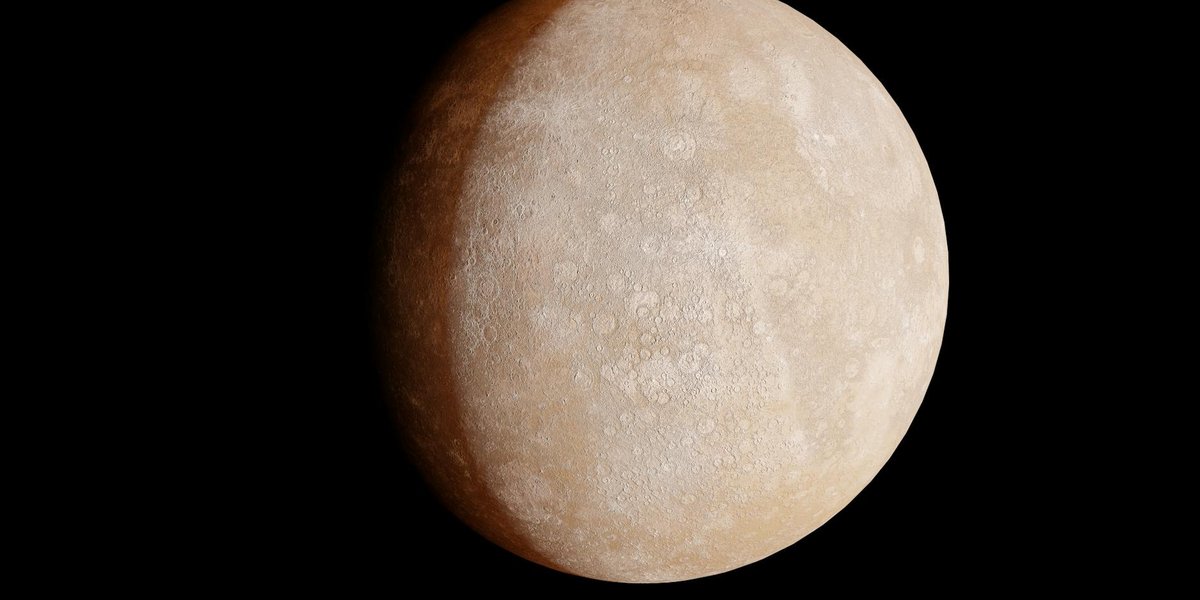
Mercury is the closest planet to the Sun, and it should be easy to visit. It isn’t. In more than sixty years of spaceflight, only three missions have ever made the trip — Mariner 10, MESSENGER, and the BepiColombo spacecraft still en route. Compare that to Mars, which has hosted dozens of orbiters, landers, and rovers, and you start to suspect Mercury is hiding something. It is. The problem is gravity, and it works in the opposite direction from your intuition.
Table of Contents
- Why Mercury Is So Hard to Reach
- Mariner 10 (1973–1975): The First Look
- MESSENGER (2004–2015): The First to Orbit
- BepiColombo (2018–present): The 2026 Arrival
- Mission Comparison Table
- What’s Next: Future Missions to Mercury
- What Mercury Has Surprised Us With
Why Mercury Is So Hard to Reach
Here’s the counterintuitive part. To reach an outer planet like Jupiter, you fling a spacecraft outward and let it coast. To reach Mercury, you’re falling toward the Sun, and the Sun’s gravity keeps accelerating you the whole way down. By the time a probe arrives at Mercury’s orbit, it’s moving far too fast to simply pull alongside the planet. It would scream past.
The numbers make this brutal. Getting a spacecraft to actually stop and orbit Mercury requires shedding an enormous amount of velocity — more change in velocity (what engineers call delta-v) than it takes to leave the solar system entirely. According to NASA’s mission overview, this is exactly why early missions could only manage fast flybys rather than orbit insertions.
There’s a second problem: heat. At Mercury’s distance, sunlight is about ten times more intense than at Earth. A spacecraft has to survive temperatures that would cook unshielded electronics, while also dumping heat radiated back up from the planet’s scorching dayside surface. Solving both problems — the speed and the heat — took engineers decades. That’s the real reason Mercury has only three missions to its name.
Mariner 10 (1973–1975): The First Look
NASA’s Mariner 10 was the first spacecraft to reach Mercury, and it pulled off two firsts at once. It was the first probe to visit two planets on one trip (it swung past Venus first), and the first to use a gravity assist — borrowing Venus’s gravity to bend its path toward Mercury. That trick is now standard for nearly every deep-space mission, but in 1973 it was unproven. It was also the last and most ambitious flight in NASA’s long-running Mariner program; if you want to see where it fits, the complete list of Mariner missions lays out all ten flights, their targets, and what each one achieved.
Mariner 10 never orbited Mercury. It couldn’t — the delta-v problem hadn’t been solved yet. Instead it made three flybys between March 1974 and March 1975, photographing the planet each time it swept past. The catch: because of the orbital geometry, the same sunlit hemisphere faced the camera on every pass. Mariner 10 mapped only about 45 percent of Mercury’s surface, leaving more than half the planet a blank for the next thirty years.
What it did see was startling. Mercury looked like the Moon — battered, cratered, ancient — but it had a magnetic field, which a small dead-looking rock has no business possessing. That single detail reshaped how scientists thought about the planet’s interior, hinting at a large, partly molten iron core. Mariner 10 ran out of attitude-control gas in 1975 and was switched off, still looping silently around the Sun.
MESSENGER (2004–2015): The First to Orbit
It took until 2004 for NASA to launch the spacecraft that would finally orbit Mercury. MESSENGER — a tortured acronym for MErcury Surface, Space ENvironment, GEochemistry, and Ranging — solved the speed problem with patience. Rather than burning impossible amounts of fuel, it spent six and a half years on a winding path through the inner solar system, executing one Earth flyby, two Venus flybys, and three Mercury flybys to gradually bleed off velocity before it could slip into orbit in March 2011.
The payoff was the first global map of Mercury. MESSENGER’s instruments imaged the entire surface, measured its composition, and probed the magnetic field Mariner 10 had only glimpsed. According to the Planetary Society’s mission record, it captured more than 270,000 images over its four years in orbit.
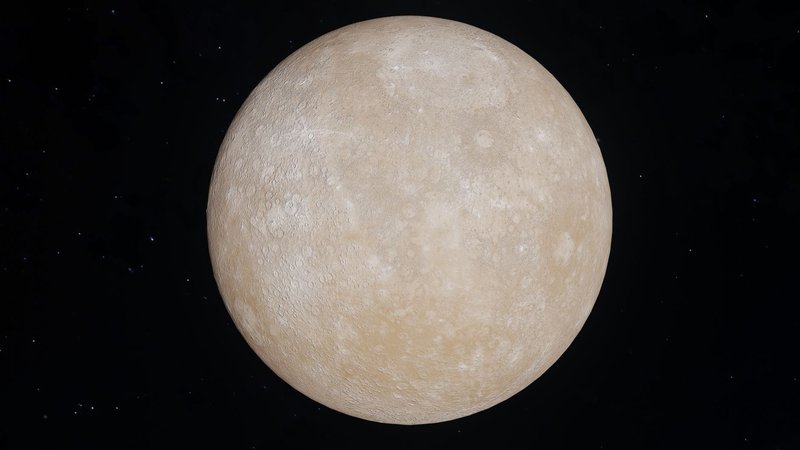
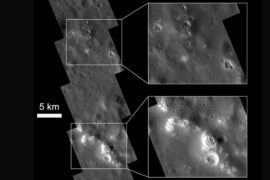
The biggest discovery came from the poles. MESSENGER found strong evidence of water ice sitting in permanently shadowed craters near Mercury’s poles — on the planet closest to the Sun. The geometry makes it possible: Mercury barely tilts on its axis, and it turns so slowly that a single solar day lasts longer than its year — earning it a place among the longest days in the solar system — so some deep polar crater floors never see sunlight and stay cold enough to trap ice for billions of years. The spacecraft also mapped surprising concentrations of volatile elements like sulfur and potassium, which challenged the leading theories about how a planet that close to the Sun could have formed.
MESSENGER’s mission ended the only way it could. Out of fuel and unable to fight the Sun’s gravitational tug any longer, it crashed into Mercury’s surface on April 30, 2015, carving a fresh crater roughly 16 meters wide.
BepiColombo (2018–present): The 2026 Arrival
The current mission is a joint effort between the European Space Agency and Japan’s space agency, JAXA — named for Giuseppe “Bepi” Colombo, the Italian scientist who first worked out the gravity-assist math that makes reaching Mercury feasible. BepiColombo launched in October 2018 and is, as of 2026, in the final stretch of its journey.
BepiColombo is actually two orbiters stacked together for the cruise: ESA’s Mercury Planetary Orbiter, which studies the surface and interior, and JAXA’s Mio orbiter, which focuses on the magnetic field and space environment. Once they arrive, they’ll separate into different orbits to study the planet from two vantage points at once — something no previous mission could do. The Mercury 3D map shows those two orbits around the planet, next to MESSENGER’s, and counts down to arrival.
The trip has been a marathon of gravity assists: one Earth flyby, two at Venus, and six at Mercury itself, each pass shaving off speed. The ESA mission page details how this long sequence substitutes patience for the fuel that would otherwise be impossible to carry. Orbit insertion is scheduled for late 2026, after which the science mission begins in earnest.
Why it matters: BepiColombo carries more sensitive, more modern instruments than MESSENGER, and two spacecraft instead of one. It’s expected to settle open questions about Mercury’s interior, confirm the polar ice deposits with better data, and map the planet’s strange offset magnetic field in detail. The 2026 arrival is the most significant moment in Mercury science since MESSENGER reached orbit.
Mission Comparison Table
| Mission | Agency | Launch | Type | Key Findings |
|---|---|---|---|---|
| Mariner 10 | NASA | 1973 | 3 flybys | First images, discovered magnetic field, mapped ~45% of surface |
| MESSENGER | NASA | 2004 | Orbiter | First global map, polar water ice, surprising volatiles |
| BepiColombo | ESA / JAXA | 2018 | Dual orbiter (arriving 2026) | Two-point study of surface and magnetosphere; results pending |
Three missions in over six decades. The gap between Mariner 10’s last flyby (1975) and MESSENGER’s orbit (2011) — thirty-six years — tells you how hard this planet fights back.
What’s Next: Future Missions to Mercury
Most overviews stop at BepiColombo. But Mercury’s future is more active than it looks, even if nothing is fully funded yet.
The most ambitious concept is a NASA Mercury Lander, studied as part of the agency’s Planetary Mission Concept Studies. The idea is to put a stationary lander on the surface — something never attempted — to measure the chemistry and physics of the ground directly rather than from orbit. Proposed timelines floated a launch in the 2030s, though it remains a concept rather than an approved mission.
Russia has long discussed a Mercury-P lander as part of its broader planetary ambitions, though that proposal has stayed on paper for years with no firm launch date. China’s space agency has also signaled interest in a Mercury orbiter as its deep-space program expands, but nothing concrete has been committed.
The honest summary: after BepiColombo settles in, there is no funded follow-up on the books. A lander would be the obvious next leap, and the science case is strong — but Mercury’s difficulty cuts both ways. Every mission to the closest planet is also one of the hardest to fly, and that keeps the queue short.
What Mercury Has Surprised Us With
For a planet that looks like a burned-out cinder, Mercury keeps producing results that don’t fit the script.
It has water ice — billions of tons of it, locked in polar craters that never see the Sun, on the planet that gets roasted hardest. It has a magnetic field, which means a still-active iron core, on a world small enough that it should have frozen solid long ago. And it has volatiles — sulfur, potassium, chlorine — in amounts that formation models said shouldn’t survive that close to the Sun, forcing scientists to rethink how the inner planets came together.
Three missions in sixty years, each one rewriting part of the textbook. When BepiColombo’s two orbiters finally settle into place in 2026, the smart bet is that Mercury has a few more surprises waiting. The hardest planet to reach has rarely been the dullest to study.