Table of Contents
- What Is a Variable Star?
- Intrinsic vs. Extrinsic: The Core Distinction
- The Major Types of Variable Stars
- Cepheid Variables
- RR Lyrae Stars
- Mira Variables
- Eclipsing Binaries
- Cataclysmic Variables
- Quick Comparison Table
- Why Variable Stars Actually Matter
- How to Observe Variable Stars with Backyard Equipment
- Getting Involved: Citizen Science with AAVSO
What Is a Variable Star? {#what-is-a-variable-star}
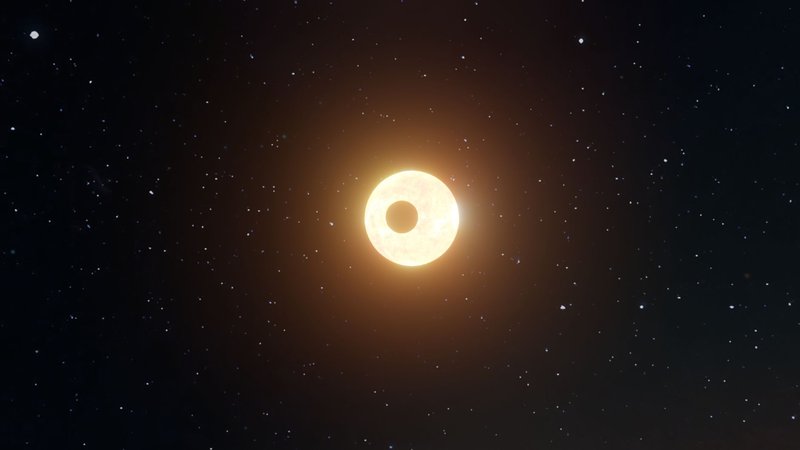
Most stars look fixed from Earth. They’re not — they just change too slowly or subtly for the naked eye to catch over a human lifetime. Variable stars are the exceptions: their brightness measurably changes over timescales of hours, days, months, or years.
Some pulsate, physically expanding and contracting. Some have their light periodically blocked by a companion. Some explode. The variation is the clue — and for astronomers, it’s one of the most useful clues in the sky.
The first variable star ever recorded was Omicron Ceti, now called Mira, spotted by Dutch astronomer David Fabricius in 1596. He thought it was a nova. It kept disappearing and reappearing. That behavior — a star brightening and fading on a regular schedule — turned out to be one of nature’s most productive data sources.
Intrinsic vs. Extrinsic: The Core Distinction {#intrinsic-vs-extrinsic}
Variable stars fall into two fundamental categories based on why their brightness changes.
Intrinsic variables change brightness because of something happening inside or on the star itself — pulsation, instability, eruptions. The star is genuinely getting brighter and dimmer.
Extrinsic variables don’t change intrinsically. Their light varies because something else is blocking or altering the light before it reaches us — typically a companion star passing in front, or starspots rotating in and out of view.
The distinction matters because each type reveals different physics. Intrinsic variables tell you about stellar structure and evolution. Extrinsic variables hand you orbital mechanics, stellar radii, and sometimes planetary systems.
The Major Types of Variable Stars {#major-types}
Cepheid Variables {#cepheid-variables}
Cepheids are the most scientifically significant variable stars ever discovered — and that’s not hyperbole. They’re pulsating giants and supergiants that brighten and dim over periods of 1 to 100 days, with a clockwork regularity that makes them useful as cosmic rulers.
The critical discovery came in 1908, when Henrietta Swan Leavitt at Harvard noticed that Cepheids in the Small Magellanic Cloud with longer periods were consistently more luminous. The relationship between period and luminosity is linear and predictable: you time how long a Cepheid takes to complete one pulse cycle, and you know how intrinsically bright it is. Compare that to how bright it looks from Earth, and you have its distance. Leavitt is just one of the many famous astronomers whose contributions reshaped our understanding of the cosmos in ways that took decades to fully appreciate.
Edwin Hubble used Cepheids in the Andromeda Galaxy in 1924 to prove it was a separate galaxy entirely — not a nebula inside our own. The scale of the universe flipped overnight. If you want to understand just how extraordinary Andromeda is as a target, the 10 facts about the Andromeda Galaxy give a vivid sense of what Hubble was actually measuring across that vast distance.
You can spot Delta Cephei, the prototype for the class, with binoculars in the constellation Cepheus. It varies between magnitude 3.5 and 4.4 over a 5.4-day period.
RR Lyrae Stars {#rr-lyrae}
RR Lyrae stars are horizontal-branch stars — older, lower-mass than Cepheids — that pulsate over periods of less than a day (usually 0.2 to 1 day). They’re all roughly the same intrinsic luminosity, about 40–50 times that of the Sun, which makes them useful as “standard candles” in a different way: if you see an RR Lyrae, you know approximately how bright it actually is, so you can infer distance from apparent brightness.
They’re particularly useful for mapping globular clusters and the structure of the Milky Way’s halo. The prototype, RR Lyrae in the constellation Lyra, cycles between magnitude 7.1 and 8.1 in under 14 hours — too faint for the naked eye, but easy in binoculars.
Mira Variables {#mira-variables}
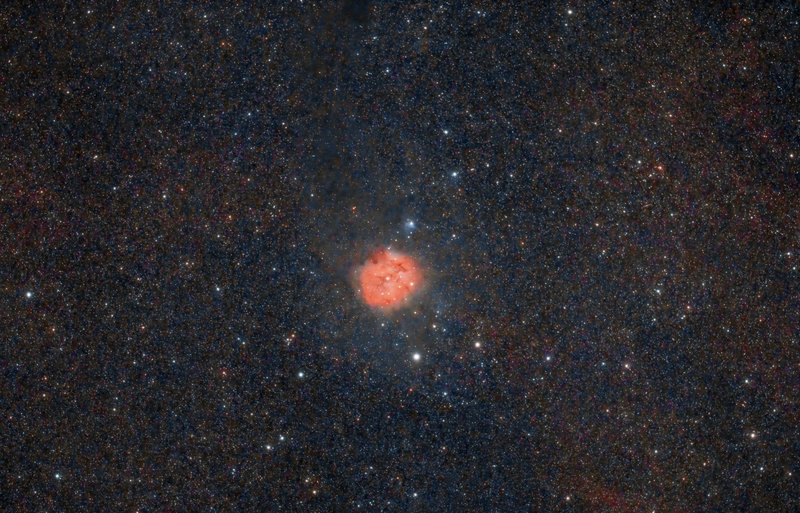
Mira variables are red giant stars near the end of their lives, pulsating over periods of 80 to over 1,000 days. They’re intrinsic pulsators, but unlike the near-perfect regularity of Cepheids, Mira-type variability can be semi-irregular: the period and amplitude drift over time.
Mira itself (Omicron Ceti) swings between magnitude 2.0 at peak — easily visible to the naked eye — and 10.1 at minimum, below what most binoculars can reach. The range spans a factor of 1,500 in actual brightness. That’s not a subtle flicker; it’s a star that essentially disappears and reappears on a roughly 332-day cycle.
They’re also prolific dust and gas producers, contributing significantly to the interstellar medium. When a Mira variable loses enough mass, it eventually sheds its outer layers and leaves behind a white dwarf — one of the more spectacular slow-motion endings in stellar evolution.
Eclipsing Binaries {#eclipsing-binaries}
These are extrinsic variables: two stars orbiting each other, with the orbital plane nearly edge-on from our perspective. When one star passes in front of the other, the total light we receive drops. When it moves behind, it drops again (if the stars differ in luminosity, these dips have different depths).
Algol in Perseus is the famous one — the “Demon Star,” likely named by ancient Arabic astronomers who noticed something unsettling about its periodic dimming. It dips from magnitude 2.1 to 3.4 every 2.87 days. You can watch it happen in real time with the naked eye if you know when to look.
Eclipsing binaries give astronomers both orbital periods and, when combined with spectroscopic data, stellar masses and radii — parameters that can’t easily be measured any other way.
Cataclysmic Variables {#cataclysmic-variables}
Cataclysmic variables are close binary systems where a white dwarf pulls material from a companion star. The accreting material builds up on the white dwarf’s surface until it triggers a thermonuclear runaway — a nova explosion. The star can brighten by 6 to 15 magnitudes in hours or days, then fade back over weeks or months.
Recurrent novae repeat this cycle. T Pyxidis has erupted in 1890, 1902, 1920, 1944, 1966, and 2011. Some systems, if the white dwarf accumulates enough mass, end in a Type Ia supernova — an explosion so consistent in peak luminosity that it was used to discover dark energy in the late 1990s. The 2011 Nobel Prize in Physics went to Saul Perlmutter, Brian Schmidt, and Adam Riess for that discovery, which depended on Type Ia supernovae as calibrated distance markers.
Quick Comparison Table {#comparison-table}
| Type | Period Range | Cause | Key Use |
|---|---|---|---|
| Cepheid | 1–100 days | Stellar pulsation | Extragalactic distances |
| RR Lyrae | 0.2–1 day | Stellar pulsation | Milky Way structure, globular clusters |
| Mira | 80–1,000+ days | Pulsation (cool giants) | Stellar evolution, mass loss |
| Eclipsing Binary | Hours to years | Orbital geometry | Stellar masses and radii |
| Cataclysmic | Hours to months | Mass transfer + thermonuclear runaway | Stellar physics, dark energy (Type Ia) |
Why Variable Stars Actually Matter {#why-they-matter}
Variable stars aren’t just interesting oddities. They’ve been load-bearing columns in our understanding of the universe.
Cepheids told us the universe is far larger than we imagined. RR Lyrae helped map the Milky Way. Mira variables feed the interstellar medium that eventually forms new stars and planets. Eclipsing binaries provided the first direct measurements of stellar masses. And Type Ia supernovae — born from cataclysmic variable systems — forced cosmologists to accept that the universe’s expansion is accelerating, driven by something we still can’t fully explain.
The American Association of Variable Star Observers has catalogued over 50,000 variable stars. Professional telescopes can’t monitor all of them continuously. Amateur observers fill that gap, and their data contributes directly to published research.
How to Observe Variable Stars with Backyard Equipment {#how-to-observe}
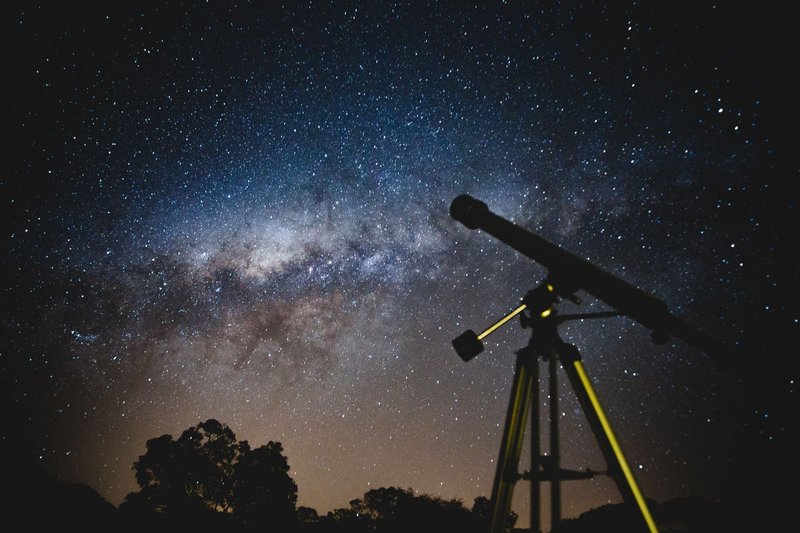
You don’t need a serious setup. Here’s how to get started:
With the naked eye: Start with Algol (Perseus) and Delta Cephei (Cepheus). Both are bright enough to track without any equipment. Print or download a comparison chart from the AAVSO — it shows nearby stars with known magnitudes so you can estimate where your target sits in brightness.
With binoculars (7×50 or 10×50): RR Lyrae and many Mira variables come into range. Binoculars also let you see enough stars around your target to make reliable magnitude comparisons. A stable mount or tripod helps.
With a small telescope (4–8 inch aperture): Cataclysmic variables and fainter Miras become accessible. At this level, you can contribute usable brightness estimates to the AAVSO database. The software VStar (free, from AAVSO) lets you plot your observations against historical light curves and see where your data fits.
Timing matters: For short-period variables like Algol or Delta Cephei, the AAVSO website shows predicted minima and maxima so you can schedule observations around the interesting moments.
Getting Involved: Citizen Science with AAVSO {#citizen-science}
The AAVSO has been coordinating amateur variable star observations since 1911. Their database holds over 55 million observations submitted by amateurs worldwide. That’s not a side note — it’s the primary long-term dataset used by researchers studying stellar behavior over timescales that professional observing time can’t cover.
Creating a free account gives you access to their Variable Star Plotter (finder charts for any variable), the WebObs submission tool, and historical light curves stretching back over a century. Some members focus on a single star and become the world’s most consistent data source for that object.
Variable star observing rewards patience over equipment. The science doesn’t care whether you’re using a $200 pair of binoculars or a $5,000 imaging rig — it cares whether your brightness estimate is accurate and consistently reported. That’s a rare entry point for genuine scientific contribution.
Variable stars are where the sky stops being a static backdrop and starts being a system you can actually read. Each flickering light is a physical process — a star pulsating under its own pressure, two stars trading mass, a surface explosion bright enough to see from another galaxy. Learning to watch them doesn’t just teach you astronomy. It gives you a real connection to some of the biggest discoveries in the history of science.
Enjoyed this article?
Get daily 10-minute PDFs about astronomy to read before bed!
Sign up for our upcoming micro-learning service where you will learn something new about space and beyond every day while winding down.