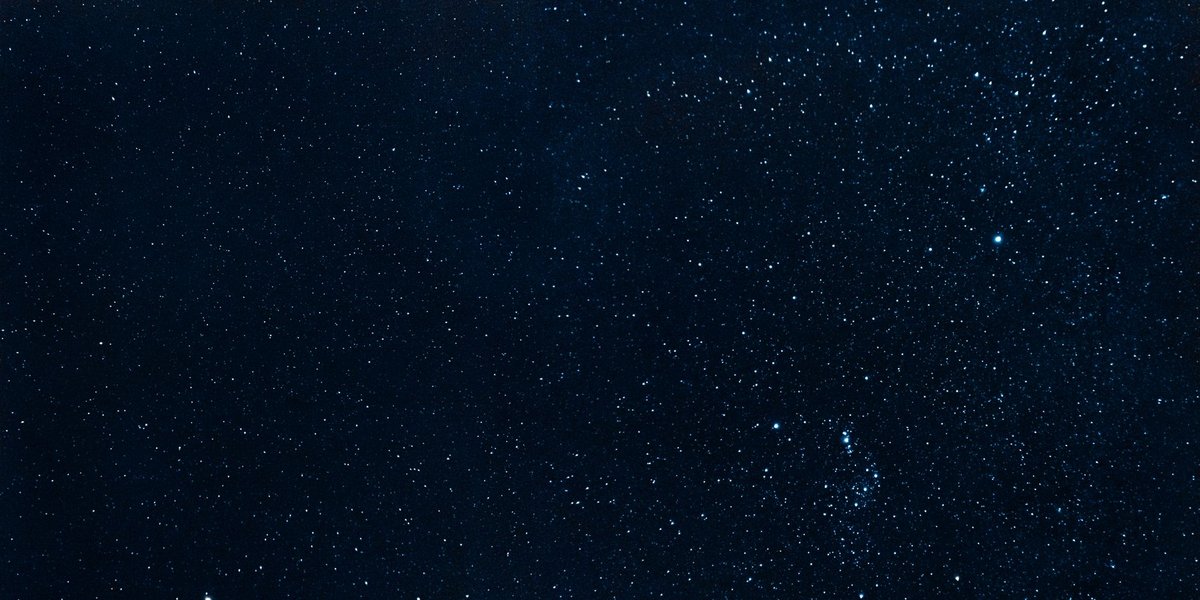
Star color is a thermometer. The cooler a star, the redder it looks; the hotter it burns, the bluer it glows. Blue stars sit at the top of that scale — surface temperatures from roughly 10,000 K to over 40,000 K, hot enough that the Sun’s comfortable 5,778 K looks downright lukewarm by comparison.
They’re also the rebels of the stellar family. Blue stars live fast and die young, blazing through their nuclear fuel in a few million years instead of the billions a star like ours gets. That trade-off — extreme brightness for a short life — is the whole story.
(Quick note for anyone who landed here looking for the marching arts: the Blue Stars Drum & Bugle Corps in La Crosse, Wisconsin is a different thing entirely. This post is about the stars in the sky.)
Table of Contents
- Why blue stars are blue
- How hot and how massive
- The short, violent life of a blue star
- O-type and B-type: the spectral classes
- Famous blue stars (with a comparison table)
- Frequently asked questions
Why blue stars are blue {#why-blue}
It comes down to physics that also governs a piece of heated metal. Warm a poker and it glows dull red. Heat it more and it shifts to orange, then yellow, then white-hot, then a faint blue-white. Stars do the same thing on a vastly larger scale.
This is blackbody radiation, and it follows a tidy rule: hotter objects emit more of their light at shorter, bluer wavelengths. A red dwarf peaks in the red and infrared. The Sun peaks in green-yellow (though it averages out to white). A blue star peaks in the blue and ultraviolet, which is why it looks blue-white to our eyes. NASA’s primer on stellar temperature and color lays out the same relationship if you want the official version.
So blue isn’t a paint job. It’s a direct readout of how hot the surface is. See a blue star and you’re looking at one of the most extreme furnaces in the universe.
How hot and how massive {#hot-massive}
Heat and mass go hand in hand here. A star’s surface temperature is set largely by how much mass it packs, because mass dictates the crushing pressure and temperature in the core.
Blue stars start around 3 solar masses and climb from there. The truly monstrous ones — blue supergiants and hypergiants — reach dozens or even a couple hundred times the Sun’s mass. R136a1, in the Tarantula Nebula, weighs in at around 200 solar masses, making it one of the heaviest stars known.
That mass translates into staggering luminosity. A hot blue O-type star can pour out hundreds of thousands of times the Sun’s energy. Some blue supergiants exceed a million solar luminosities. Stand one next to the Sun and the Sun is a candle next to a searchlight.
There’s a hard ceiling, though. Above roughly 150 to 250 solar masses, a star’s own radiation pressure starts tearing it apart faster than gravity can hold it together. That’s why stars like R136a1 sit near the practical upper limit of what nature builds.
The short, violent life of a blue star {#lifespan}
Here’s the catch. All that mass and heat come at a brutal cost: blue stars burn through their hydrogen at a reckless pace.
You’d think more fuel means a longer life. The opposite is true. A massive blue star has more hydrogen, but its core runs so hot that it fuses that fuel millions of times faster than a small star does. The result is a life measured in single-digit millions of years rather than billions. By stellar standards, that’s a blink.
For scale: the Sun is about 4.6 billion years old and roughly halfway through its life. A massive O-type blue star that formed when the dinosaurs went extinct would have already lived, died, and exploded several times over.
And they don’t go quietly. When a massive blue star exhausts its fuel, its core collapses and it detonates as a supernova, often leaving behind a neutron star or black hole. The exact way that explosion unfolds depends on the star’s mass and composition, and the different types of supernovae trace back to exactly these kinds of progenitors. The heavy elements forged and flung out in those explosions — oxygen, silicon, iron — are the same atoms that later built planets and people. Blue stars are short-lived, but they seed the galaxy on the way out.
O-type and B-type: the spectral classes {#spectral}
Astronomers sort stars by spectral class using the sequence O, B, A, F, G, K, M — running from hottest to coolest. The Sun is a G-type star, sitting comfortably in the middle.
Blue stars occupy the top two rungs:
- O-type — the hottest and rarest, 30,000 to over 40,000 K. These are the blue giants and supergiants, blazingly luminous and extraordinarily scarce. Genuine O-type stars are among the least common stars in the galaxy.
- B-type — still very hot and blue-white, roughly 10,000 to 30,000 K. More common than O-types but still rare overall. Rigel and Spica are B-type.
A handy detail: O-type stars show strong absorption lines from ionized helium in their spectra, a fingerprint that only appears at these extreme temperatures. It’s how astronomers confirm a star really belongs in the hottest class rather than just looking bluish.
The rarity is worth sitting with. The galaxy is overwhelmingly populated by cool red dwarfs — small, dim, and long-lived. Hot blue stars make up a tiny sliver of the population, which is exactly why they stand out so dramatically when you find one. If you want to see where O and B stars fall among the main types of stars and their characteristics, they sit at the extreme hot end of a sequence that runs all the way down to those faint red dwarfs.
Famous blue stars {#famous}
Several of the brightest stars in the night sky are blue, and you can spot a few of them without any equipment. Here’s how the headliners stack up:
| Star | Spectral Type | Surface Temp | Mass (Suns) | Distance (light-years) |
|---|---|---|---|---|
| Rigel | B (blue supergiant) | ~12,000 K | ~21 | ~860 |
| Spica | B (binary) | ~22,400 K | ~11 | ~250 |
| Regulus | B | ~12,000 K | ~3.8 | ~79 |
| Eta Carinae | O (luminous blue variable) | ~25,000–40,000 K | ~100+ | ~7,500 |
| R136a1 | O (hypergiant) | ~46,000 K | ~200 | ~163,000 |
Rigel is the blue-white beacon marking Orion’s foot — a supergiant so luminous it outshines the more famous red Betelgeus across the constellation. Orion is one of the easiest constellations to spot in the night sky, which makes Rigel a convenient starting point for tracking down a blue star yourself. Spica, the brightest star in Virgo, is actually a tight binary of two hot blue stars whirling around each other.
Regulus, the heart of Leo, is the closest of the bunch and a good reminder that even a “modest” blue star runs far hotter than the Sun. Eta Carinae is a volatile monster that staged a near-supernova outburst in the 1840s, briefly becoming one of the brightest stars in the sky before fading. And R136a1 sits in the Large Magellanic Cloud as one of the most massive and luminous stars ever measured — the European Southern Observatory’s studies of R136 helped establish just how extreme these giants get.
Frequently asked questions {#faq}
Is the Sun a blue star? No. The Sun is a G-type star with a surface temperature around 5,778 K. It often gets called yellow, though its light is actually close to white when you account for the full spectrum. Either way, it’s far cooler than any blue star and sits squarely in the middle of the temperature scale.
Why are blue stars so rare? Two reasons. Massive stars form less often than small ones to begin with, and the blue ones burn out within a few million years. Combine a low birth rate with a short lifespan and there simply aren’t many around at any given moment.
Are blue stars older or younger than red stars? Generally younger. A blue star’s short life means any blue star you see formed relatively recently in cosmic terms. Red dwarfs, by contrast, can live for trillions of years, so a red star might be ancient. (Red giants are a separate case — those are old stars that have swollen and cooled near the end of their lives.)
Are blue stars hotter than red stars? Yes, dramatically. Color is the giveaway: blue stars run from about 10,000 K up past 40,000 K, while red stars hover around 2,500 to 3,500 K. The bluer the star, the hotter it burns.
Can you see blue stars without a telescope? Absolutely. Rigel, Spica, and Regulus are all visible to the naked eye and rank among the brightest stars in the sky. Rigel in particular is easy to find in winter as the bright blue-white point at the foot of Orion.
Enjoyed this article?
Get daily 10-minute PDFs about astronomy to read before bed!
Sign up for our upcoming micro-learning service where you will learn something new about space and beyond every day while winding down.