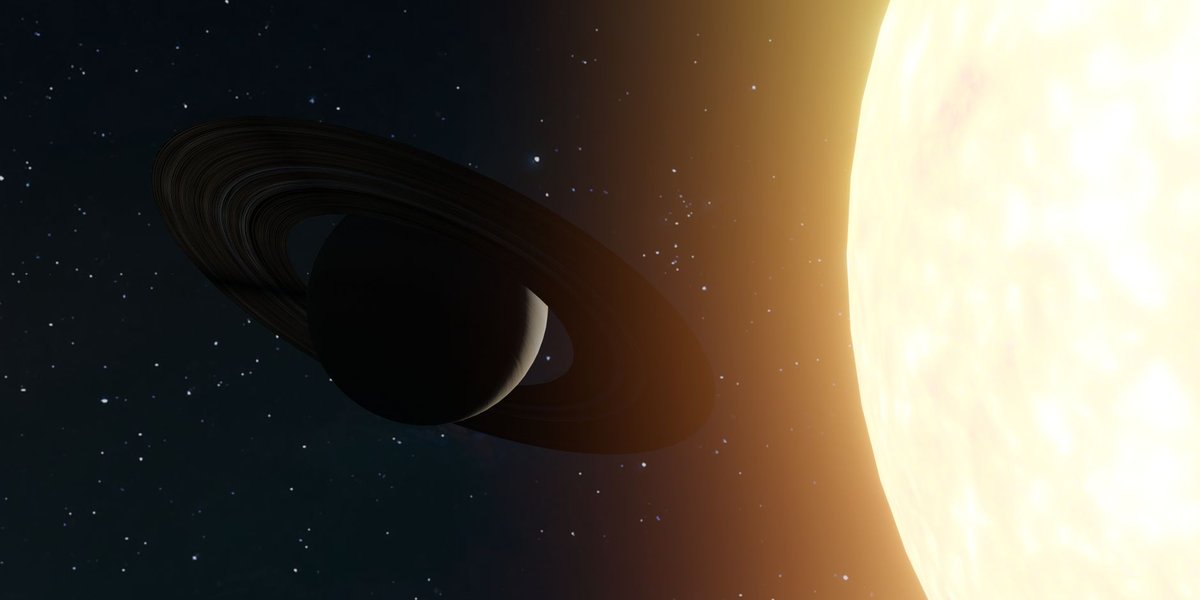
A red giant is what a Sun-like star becomes when it runs out of hydrogen in its core, swells up, and cools to that distinctive orange-red glow. The good news for stargazers: several of the brightest stars in the night sky are red giants, and you can find a handful of them with no equipment beyond your eyes.
Below are ten real examples — named stars, with their sizes, distances, and where to look. After the list, there’s a section on the two famous stars almost everyone files under “red giant” by mistake.
Table of Contents
- Quick comparison table
- The red giants, one by one
- Red giant vs. red supergiant: the mistake everyone makes
- How to spot a red giant tonight
- FAQ
Quick comparison table
Solar radii means “how many times wider than the Sun.” A value of 44 means you could line up 44 Suns across the star’s diameter.
| Star | Constellation | Solar radii | Distance (light-years) | Naked-eye? |
|---|---|---|---|---|
| Aldebaran | Taurus | ~44 | 65 | Yes (very bright) |
| Arcturus | Boötes | ~25 | 37 | Yes (very bright) |
| Pollux | Gemini | ~9 | 34 | Yes (bright) |
| Gacrux | Crux | ~84 | 88 | Yes (bright) |
| Mira | Cetus | ~330–400 | ~300 | Sometimes |
| Hamal | Aries | ~15 | 66 | Yes |
| Kochab | Ursa Minor | ~42 | 131 | Yes |
| Eta Geminorum (Propus) | Gemini | ~275 | ~380 | Yes (faint) |
| 47 Ursae Majoris | Ursa Major | ~1.2 | 46 | Barely |
| La Superba (Y CVn) | Canes Venatici | ~215 | ~710 | Binoculars |
That’s ten true red giants. The two stars people most often add to a list like this — Betelgeuse and Antares — are something else, and they get their own section below.
The red giants, one by one
1. Aldebaran — the eye of the bull
Aldebaran is the orange star that marks the eye of Taurus, and it’s the easiest red giant to find in the whole sky. Look for the V-shaped face of the bull in winter; Aldebaran is the bright orange one at the top of the V. It looks like it sits inside the Hyades star cluster, but that’s a line-of-sight trick — Aldebaran is barely half as far away as the cluster behind it.
It’s about 44 times the Sun’s diameter and shines orange because its surface sits around 3,900 K, well cooler than our Sun’s ~5,800 K — and worlds apart from the hottest blue stars, which sit at the opposite end of the temperature scale. NASA’s profile of Aldebaran notes it was visited in a sense by Pioneer 10 — the dead spacecraft is drifting roughly in its direction and will pass it in about two million years.
2. Arcturus — the spring beacon
Arcturus is the fourth-brightest star in the night sky and the brightest in the northern celestial hemisphere. Finding it is a party trick: follow the curve of the Big Dipper’s handle outward and “arc to Arcturus.” That orange spark at the end of the arc is it.
At 25 solar radii and only 37 light-years away, Arcturus is a close, well-studied red giant. It’s also a high-velocity star, plowing through the galaxy nearly perpendicular to the plane the Sun follows — a sign it belongs to an older population of stars passing through our neighborhood.
3. Pollux — the nearest red giant with a planet
Pollux is the brighter of Gemini’s “twin” head stars (Castor is the other, and despite the nickname, it’s a different kind of star entirely). At 34 light-years, Pollux is the closest red giant to Earth, and it has a confirmed planet — Pollux b, a gas giant a couple of times Jupiter’s mass, cataloged by the NASA Exoplanet Archive.
It’s a relatively modest red giant at about 9 solar radii, which makes it a good reminder that “giant” is a stage of life, not a single size.
4. Gacrux — the top of the Southern Cross
Gacrux (Gamma Crucis) is the orange star at the top of the Southern Cross, and it’s the nearest red giant of the famous kind to anyone in the Southern Hemisphere at about 88 light-years. Against the three blue-white stars of the Cross, its color stands out — useful, because that color contrast is exactly how you confirm you’ve found the real Crux and not the fake “False Cross” nearby.
At roughly 84 solar radii, it’s a genuinely puffed-up star nearing the end of its giant phase.
5. Mira — the star that disappears
Mira is the show-off. It’s a pulsating red giant that swells and shrinks over an 11-month cycle, swinging from naked-eye obvious to completely invisible without a telescope. The name means “wonderful,” given by astronomers in the 1600s who couldn’t explain why a star would fade out and return.
There’s a stranger detail: Mira is moving so fast through space that it leaves a comet-like tail of shed gas behind it, a 13-light-year streak imaged by NASA’s GALEX mission. At its largest it’s several hundred times the Sun’s radius. Catch it near maximum brightness in the dim constellation Cetus and it’s an easy naked-eye star; miss the window and you’ll need optics.
6. Hamal — the head of the ram
Hamal is the brightest star in Aries and another orange red giant, about 15 times the Sun’s diameter and 66 light-years off. It’s not flashy, but it has a place in history: a few thousand years ago Hamal sat near the spring equinox point, which is part of why the ram was such a significant constellation to ancient skywatchers. Like Pollux, it appears to host a planet several times Jupiter’s mass.
7. Kochab — the dimmer guardian of the pole
Kochab is one of the two “Guardians of the Pole” in the bowl of the Little Dipper, circling Polaris all night. It’s an orange red giant about 42 times the Sun’s size. Around 3,000 years ago, before Polaris took the job, Kochab was the closest bright star to the celestial north pole — ancient navigators steered by it.
8. Eta Geminorum (Propus) — the variable at the twin’s foot
Propus marks the foot of Castor in Gemini and is both a red giant and a variable star, dimming and brightening on a roughly 230-day cycle. It sits near the beautiful Eskimo Nebula region of the sky and is a frequent target for amateur observers tracking its slow flicker. At a couple of hundred solar radii, it’s one of the larger entries on this list.
9. 47 Ursae Majoris — the quiet Sun-like one
47 Ursae Majoris is included to make a point: not every red giant is a swollen monster. This star is only just leaving its Sun-like prime, barely larger than the Sun, and it’s most famous for its planets — a system of gas giants that, for a while, looked like the closest analog to our own Solar System we’d found, earning it a lasting place among the most famous exoplanet systems. It sits in Ursa Major at 46 light-years, right at the edge of naked-eye visibility from a dark site.
10. La Superba (Y Canum Venaticorum) — the reddest of them all
La Superba is a carbon star, a rare type of red giant whose atmosphere is loaded with carbon soot that filters out blue light and leaves it glowing a deep, almost ruby red. The 19th-century astronomer Angelo Secchi named it “the superb one” for its color. You’ll need binoculars to find it in Canes Venatici, but few stars reward the hunt like this one — it’s one of the reddest objects visible from Earth.
Red giant vs. red supergiant: the mistake everyone makes {#red-giant-vs-red-supergiant}
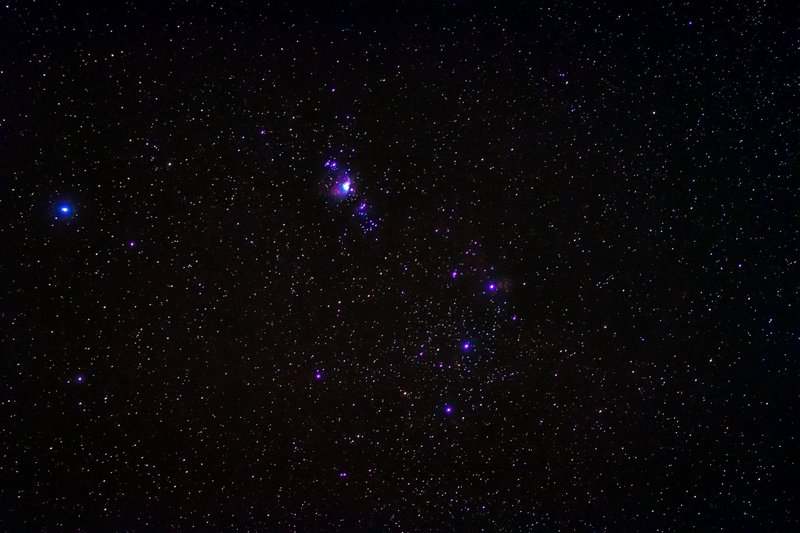
Search for “examples of red giants” and you’ll see Betelgeuse and Antares at the top of nearly every list. They don’t belong there, and the distinction is worth getting right.
A red giant forms from a low-to-medium-mass star (up to about eight Suns). It swells, burns helium for a while, then sheds its outer layers into a planetary nebula and leaves behind a white dwarf. Quiet ending. Every star on the list above is headed for that fate. So is our Sun, in about five billion years — when it does, NASA expects it to expand far enough to engulf the inner planets.
A red supergiant comes from a much heavier star (roughly 10+ Suns). It’s larger, brighter, and burns through its fuel in a few million years instead of billions. The ending is violent: a core-collapse supernova, leaving a neutron star or black hole.
| Red giant | Red supergiant | |
|---|---|---|
| Starting mass | Up to ~8 Suns | ~10+ Suns |
| Typical size | Tens of solar radii | Hundreds to 1,000+ |
| Lifespan in stage | Up to ~1 billion years | A few million years |
| How it dies | Planetary nebula → white dwarf | Supernova → neutron star/black hole |
| Examples | Aldebaran, Arcturus, Pollux | Betelgeuse, Antares |
So is Betelgeuse a red giant? No — it’s a red supergiant, around 700 times the Sun’s diameter and a strong supernova candidate. Antares, the red heart of Scorpius, is the same kind of star. They’re spectacular, and they’re genuinely red, but they’re a different chapter of stellar life. If a list lumps them in with Aldebaran without comment, that’s your sign it skipped the physics.
How to spot a red giant tonight
You already have everything you need — red giants are some of the brightest stars in the sky, and their color is the giveaway.
- Look for orange, not white. Red giants don’t look fire-engine red to the eye; they read as warm orange or amber against the cooler white and blue of most bright stars. Compare Aldebaran to blue-white Rigel some winter night and the difference is obvious.
- Use the signpost tricks. Arc to Arcturus off the Big Dipper’s handle. Find the V of Taurus for Aldebaran. Trace the head of Gemini for Pollux.
- Color shows best when a star is higher up. Near the horizon, the atmosphere reddens everything, so a star low in the sky is a poor color test. Wait until it climbs.
- Try a small “defocus” trick. Nudging binoculars slightly out of focus smears a star into a colored disk, which makes its true tint easier to judge — handy for confirming a deep-red carbon star like La Superba.
The best part is that you’re not just looking at a bright dot. You’re looking at the future of stars like the Sun, several billion years early.
FAQ
Is Betelgeuse a red giant? No. Betelgeuse is a red supergiant — it formed from a much more massive star and will end in a supernova, not the quiet white-dwarf fate of a true red giant like Aldebaran.
What’s the closest red giant to Earth? Pollux, in Gemini, at about 34 light-years. It’s also the nearest red giant known to host a planet.
Will the Sun become a red giant? Yes, in roughly five billion years. It will expand far enough to swallow Mercury and Venus, and likely scorch Earth, before shedding its layers and shrinking to a white dwarf.
What color are red giants, really? Warm orange to amber for most of them, deepening to true red only in rare carbon stars like La Superba. The color comes from their cool surface temperatures, typically 3,000–4,000 K versus the Sun’s ~5,800 K.
How big is a red giant? It varies enormously — from barely larger than the Sun (like 47 Ursae Majoris) to several hundred times wider (like Mira). “Giant” describes a stage of a star’s life, not one fixed size.