
Curious which bodies in our Solar System are bigger than Earth? This post lists five objects — the Sun, Jupiter, Saturn, Uranus, and Neptune — compares their sizes and mass, and links to detailed guides so you can explore each object in depth.
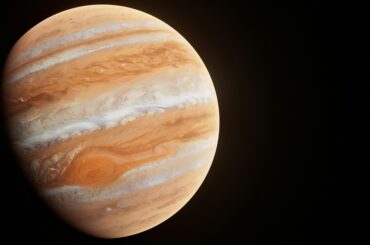
Curious which bodies in our Solar System are bigger than Earth? This post lists five objects — the Sun, Jupiter, Saturn, Uranus, and Neptune — compares their sizes and mass, and links to detailed guides so you can explore each object in depth.
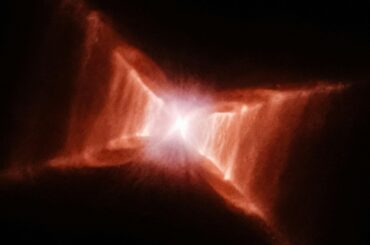
Explore 10 ways pulsars act like cosmic lighthouses in this illustrated hub post. Each numbered item explains a distinct behavior or analogy – beam alignment, precise timing, pulse profiles, relativistic effects, and how astronomers use pulses as cosmic clocks – linking to deeper articles with images, data, and clear explanations for curious readers and students.
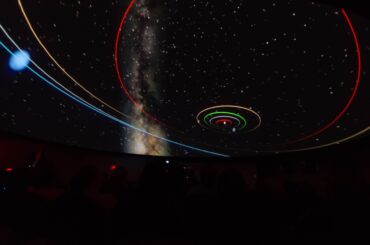
Explore ’10 Ways Gravity Affects Everything in Space’, a hub that breaks down how gravity shapes orbits, planet and star formation, tidal forces, black hole lensing, gravitational waves, and large-scale cosmic structure. Each numbered item links to a deeper article so readers can dive into orbital mechanics, galaxy dynamics, relativity, and the latest astrophysics research – ideal for curious readers and students.
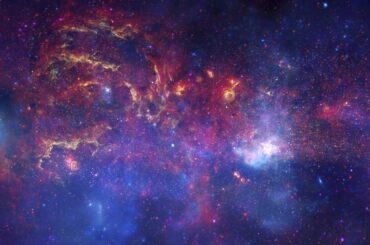
In this hub post, explore 8 things that would happen if the Sun disappeared — from the immediate plunge into darkness and the loss of photosynthesis to orbital chaos, rapid cooling, and long-term ecological collapse. Each item links to a detailed follow-up post with science-backed timelines, visualizations, and practical survival scenarios.
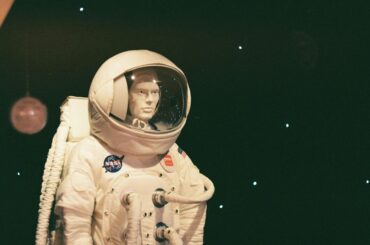
This comprehensive list compiles every astronaut born in December, presenting verified birthdates, brief biographies, mission summaries, and notable achievements. Ideal for researchers, space enthusiasts, and anyone marking December birthdays, the post provides concise profiles, key mission highlights, and links to deeper resources to help you explore the lives and contributions of astronauts born in December.
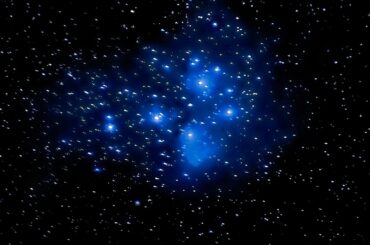
Explore how astronomy fuels science fiction in eight vivid ways — from real discoveries that reshape story ideas to cosmic visuals that inform setting and technology. This hub links to a series of deep-dive posts on stellar phenomena, planetary science, astrobiology, spacecraft design, and other ways space science sparks plot, characters, and worldbuilding.
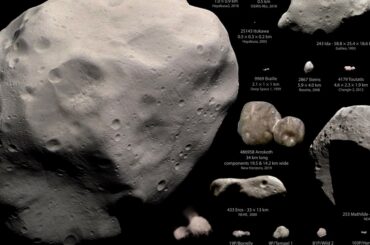
Explore the 10 Smallest Objects in the Solar System, a compact guide to the tiniest moons, asteroids, comet nuclei, and minor bodies. This hub post summarizes each object’s size, location, and significance, and links to in-depth articles for further reading.
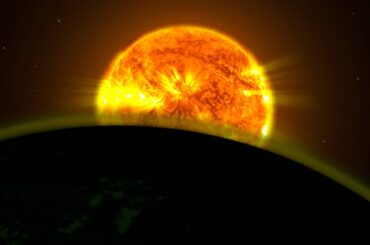
Explore eight major types of exoplanet atmospheres in this hub post, from hydrogen-rich gas giants to thin rocky-world envelopes. Each type includes key traits, observational signatures, and linked deep-dive articles so you can learn what they reveal about formation and habitability.
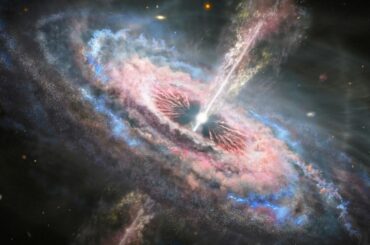
Explore the 10 Most Luminous Objects in the Universe in this illustrated hub post that ranks and explains the brightest phenomena across cosmic scales. From blazing quasars and gamma-ray bursts to titanic supernovae and active galactic nuclei, each entry links to an in-depth article covering what produces their extreme luminosity, observed signatures, and why they matter to astronomy.
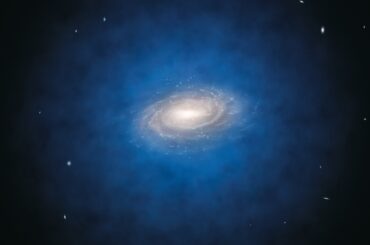
This hub explores 12 mysteries about dark matter, linking to in-depth posts that examine evidence, particle candidates, cosmic roles, detection efforts, and leading theories. Ideal for curious readers and students, the series breaks down each mystery with clear explanations, recent findings, and what future experiments could reveal.