Little Astronomy is reader-supported. As an Amazon Associate I earn from qualifying purchases made through links on this page, at no extra cost to you.
I bought the Celestron Omni 2x Barlow in late 2021 to stretch the eyepieces that came with my first telescopes, and it is still the Barlow I reach for first. It has gone through a 70mm refractor and a 130mm reflector, and it has never needed anything beyond a quick wipe of the lenses. This update keeps my original notes, adds how it behaves in different telescopes and says which Barlow to buy instead when the Omni is the wrong fit. The Omni 2x is in stock on Amazon US as of November 2026, sold directly by Amazon.
Verdict
4.5 out of 5 as a first Barlow
The Omni 2x doubles the power of every 1.25″ eyepiece you own with no loss of brightness or color that I can see on the Moon or Jupiter. The body is metal, the single thumbscrew grips eyepieces without marking the barrel, and the blackened edges keep reflections down. It is a plain, dependable accessory. Its limits are the same as any 2x Barlow: it cannot fix a weak eyepiece, and in a fast reflector the cheaper Barlows give the same view.
Still sold: yes. It shows as in stock on Amazon US and ships from Amazon with Celestron’s 2-year warranty (checked November 2026). Buy it if this is your first Barlow, or if the 2x or 3x Barlow from your telescope kit is soft or full of reflections.

Specs at a glance
| Magnification | 2x (doubles the power of any eyepiece) |
|---|---|
| Barrel and eyepiece size | 1.25″ in, 1.25″ out |
| Optics | Fully multi-coated lenses, blackened edges |
| Body | Metal, one thumbscrew, threaded barrel |
| Length | About 7.4 cm (just under 3 inches) |
| Weight | About 80 g (under 3 ounces) |
| Warranty | 2 years, US |
| Model | Celestron Omni 2x Barlow, model 93326 |
| Status in 2026 | In stock on Amazon US |
What a Barlow does
A Barlow lens sits between the telescope and the eyepiece and doubles the focal length of the telescope. A 2x Barlow turns a 20mm eyepiece into the equivalent of a 10mm one, keeping the 20mm eyepiece’s comfortable eye relief. With three eyepieces and a Barlow you have six powers. The same apparent field of view shows half as much sky, which is why a Barlow is for planets and the Moon more than for wide star fields. The full explanation is in my Barlow lens guide.
Every extra piece of glass can cost you a little light and add false color or reflections. That is the test for a Barlow: after it goes in, the image should look like a bigger version of the same image. The Omni passes.
Build and fit

The Omni is a metal tube about as long as a short eyepiece. The silver and gray finish has not worn through on mine, and the knurled thumbscrew is large enough to turn with gloves on. The screw bites on the barrel of the eyepiece without leaving marks on the Plössls and zoom eyepiece I use with it. A compression ring is gentler still, but I have not had to fix a scratch from this one.
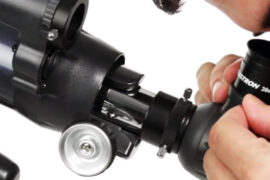
The Barlow slides into the 1.25″ holder of a star diagonal or focuser and takes the eyepiece in its top end. The barrel is threaded, so a Moon filter or color filter screws onto the Barlow and works for every eyepiece you put in. After you insert it, refocus. The focus point moves a little each time.
Image quality
I compared it with the 3x Barlow that came in the PowerSeeker 70EQ box during my 2021 tests. On the Moon and Jupiter the Omni was brighter and had less glare around the limb. The 3x showed ghost reflections on bright objects, and the Omni did not. The edges of the Omni’s lenses are black, and that makes the difference: the dark rim keeps stray light out of the view, and the view looks a little sharper for it. Some Barlows claim blackened edges and the edge still looks gray under a light. This one does not.
Color is neutral. Jupiter’s belts keep the same tan and brown with the Barlow in or out, and the Moon stays gray, not yellow or blue. In a fast f/5 telescope the field edge goes soft with any 2x Barlow, and the Omni does the same. Stars in the center of the field focus to points, which is what matters for planets.
How it performs with common telescopes
A Barlow works with any telescope that takes 1.25″ eyepieces. The question is which eyepieces give you useful powers behind it. This table shows the 15mm and 9mm eyepieces that most kits include or that you add first. Practical limits are about 100x on a 70mm lens, 120x on an 80mm lens, 200x on a 130mm mirror and 300x on an 8-inch mirror on a steady night.
| Telescope | 15mm eyepiece, then with Barlow | 9mm eyepiece, then with Barlow | Fit |
|---|---|---|---|
| 70mm refractor, 700mm | 47x, then 93x | 78x, then 156x | Good with the 15mm and longer. The 9mm is too much. |
| 80mm refractor, 900mm | 60x, then 120x | 100x, then 200x | Good with the 15mm and longer. Skip the 9mm. |
| 130mm reflector, 650mm | 43x, then 87x | 72x, then 144x | Very good. The 9mm works on steady nights. |
| 8-inch Dobsonian, 1200mm | 80x, then 160x | 133x, then 267x | Very good. Aim for 150x to 250x on planets. |
The pattern is simple. Short telescopes with small lenses run out of power quickly, so use the Barlow with your longer eyepieces and let it give you 80x to 120x. Larger telescopes keep going. In my 130mm reflector the 15mm and Barlow combination at 87x was the one I used the most for Saturn and Jupiter. In a 70mm kit scope, the Omni behind a 20mm eyepiece gives 70x, which is where the planets become interesting. My magnification chart and magnification calculator work out the numbers for your own telescope.
If your kit includes a 4mm or 6mm eyepiece, put those aside. Combined with a Barlow they give 250x or more on a short telescope, and the image goes dim and soft. I wrote more about the kit eyepieces in AstroMaster vs PowerSeeker.
Eyepieces that work well behind it
The best use of a Barlow is to double the number of powers you have from a short list of eyepieces. A 25mm, a 15mm and a 9mm already cover most of what a beginner needs, and a Barlow turns them into six steps. The 15mm and longer eyepieces are the ones I use behind the Omni most, because the result lands at 7.5mm to 16mm equivalent, a range that suits the Moon and planets in most telescopes. The Celestron Omni Plössl line pairs well with it and is covered in my Celestron eyepieces guide. For planets in particular, see eyepieces for planets. A zoom eyepiece works behind a 2x Barlow too, and the zoom eyepiece guide covers which ones.
What I did not like
- A thumbscrew, not a compression ring. It holds well, but a compression ring is safer for eyepieces with soft finishes.
- Soft edges in fast telescopes. In an f/5 reflector the outer part of the field is blurry. This is common to 2x Barlows at this level.
- No grip band. The metal gets slippery with cold or damp fingers. The X-Cel LX has a rubber ring for this.
- Not a fix for a weak eyepiece. A Barlow multiplies what the eyepiece gives it, flaws included.
Pros and cons
Pros
- Neutral color and no visible light loss on the Moon and planets
- Blackened edges that are actually black, with few reflections
- Metal body, thumbscrew that does not mark eyepiece barrels
- Threaded barrel takes filters
- Fits every 1.25″ focuser, diagonal and eyepiece
- Sold by Amazon with a 2-year warranty
Cons
- Thumbscrew instead of a compression ring
- No rubber grip
- Soft field edge in fast telescopes
- Only 2x, so no 3x option for short telescopes
- Too much power with a kit 4mm or 6mm eyepiece
What to buy instead
The Omni is the right choice for most people with a 70mm to 150mm telescope. Three situations call for something else. You may want a better-finished Barlow, or 3x for a short telescope. Or you may want the lowest-cost 2x and accept a plainer unit. All three picks below are in stock on Amazon US as of November 2026. My ranked list of every option is in the best Barlow lenses guide.
| Barlow | Multiplier | Eyepiece lock | Link |
|---|---|---|---|
| Celestron Omni 2x (reviewed) | 2x | Thumbscrew | Check on Amazon |
| Celestron X-Cel LX 2x | 2x | Compression ring | Check on Amazon |
| Celestron X-Cel LX 3x | 3x | Compression ring | Check on Amazon |
| SVBONY 2x | 2x | Thumbscrew | Check on Amazon |
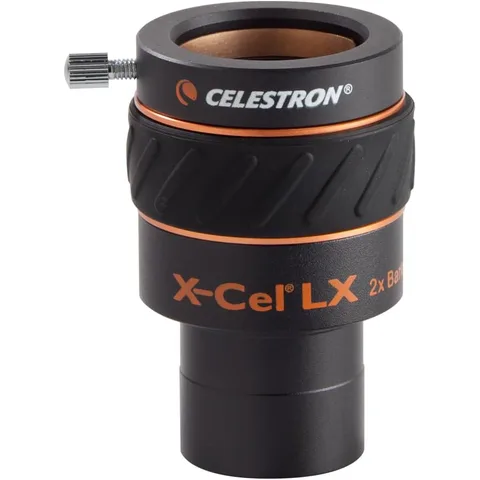
Better finish
Celestron X-Cel LX 2x Barlow
This is the Omni’s upgrade from the same maker. It has a three-element design, a brass compression ring in place of the thumbscrew and a rubber grip band that makes it easier to hold in the cold. The ring holds an eyepiece firmly without scratching the barrel, and the grip matters on winter nights with gloves on. Optically it is a small step up that shows in a bigger telescope, where contrast on planets counts for more. In a 70mm kit scope you will struggle to see the difference. It is the better choice for a 130mm telescope or larger.
- Multiplier: 2x, 1.25″ eyepieces, threaded for filters
- Choose it if: you own a telescope with 130mm or more of aperture and want the best 2x from Celestron
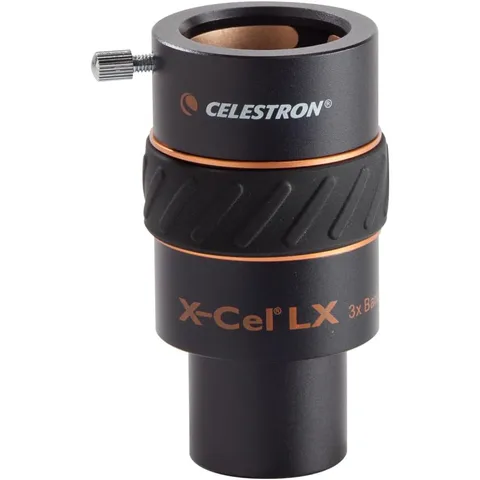
For short telescopes
Celestron X-Cel LX 3x Barlow
A 3x Barlow gives more power from each eyepiece, so it suits a short telescope such as a small refractor with a 400mm focal length, where a 2x does not reach planetary power. It has the same compression ring, grip band and filter threads as the 2x. The trade-off is that 3x reaches the limit of a small lens fast: a 15mm eyepiece in a 700mm telescope gives 140x. For a 70mm refractor with a long focal length, stay with the 2x.
- Multiplier: 3x, 1.25″ eyepieces, threaded for filters
- Choose it if: your telescope has a short focal length, or you want a high-power planet setup in a telescope with 130mm of aperture or more
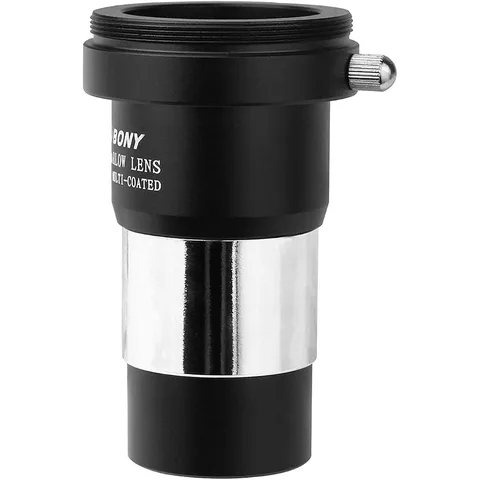
Budget pick
SVBONY 2x Barlow
The SVBONY is a plain aluminum 2x with a thumbscrew and an M42 thread on the back that connects a camera with a T-ring. I tested a similar SVBONY Barlow for my SVBONY Barlow review. The coatings were weaker than the Omni’s, and the blackened edges were not obvious on my sample. On the Moon and Jupiter at moderate power it was fine. Choose it if you want a camera connection or the lowest-cost 2x.
- Multiplier: 2x, 1.25″ eyepieces, T-thread for cameras
- Choose it if: you want to attach a DSLR or a lower-cost spare Barlow
Add-ons worth getting
These two work with any Barlow and fit 1.25″ focusers.
Best eyepiece to pair
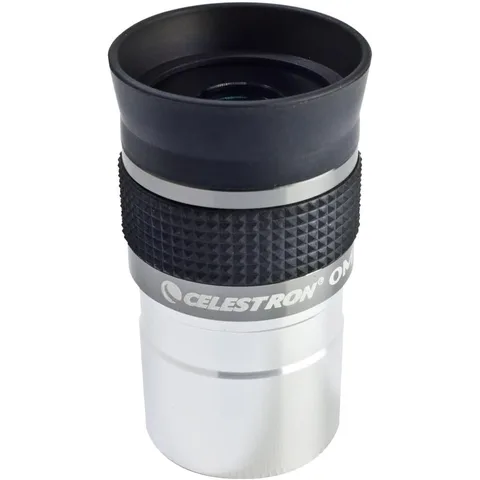
Celestron Omni 15mm Plössl
The 15mm is the eyepiece I put behind the Barlow most. By itself it gives a wide, easy view for finding targets. With the Barlow in, it becomes the equivalent of a 7.5mm eyepiece with the eye relief of a 15mm, which suits Jupiter and Saturn in most 100mm to 200mm telescopes.
For the Moon
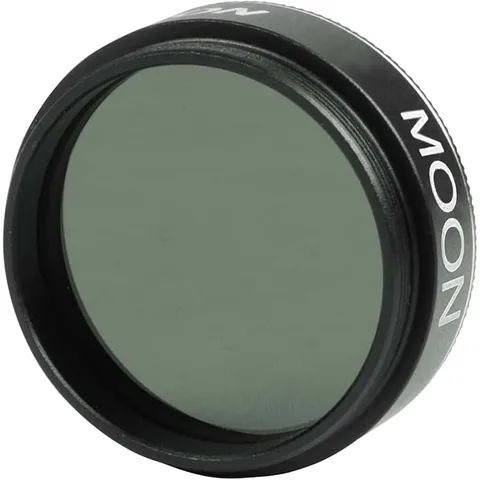
Celestron Moon Filter
A Moon at 100x or 150x is bright enough to hurt. The filter threads into the bottom of the Barlow’s barrel or of an eyepiece and cuts the glare. Read do you need a Moon filter before buying one.
Final word
The Celestron Omni 2x Barlow is still the Barlow I recommend to a beginner. It does one job without adding a color cast, and it will outlast your first telescope. Buy it if you have a 70mm to 150mm telescope with 1.25″ eyepieces. If you own a bigger telescope and want a tougher, nicer-feeling unit, pick the X-Cel LX 2x. If your telescope is short and fast, pick the X-Cel LX 3x.
See the Omni 2x Barlow on Amazon
More from Little Astronomy
- Barlow lens: everything you need to know
- Best Barlow lenses
- SVBONY Barlow lens review
- Best Celestron eyepieces
- Plössl vs Kellner eyepieces
FAQ
Is the Celestron Omni 2x Barlow still available?
Yes. As of November 2026 it is in stock on Amazon US, sold and shipped by Amazon with Celestron’s 2-year warranty.
Is the Celestron Omni 2x Barlow good?
Yes. It doubles the power of any 1.25″ eyepiece with neutral color and no light loss I can see on the Moon or Jupiter. The metal body and blackened lens edges are better than what most telescope kits include.
What does a 2x Barlow do?
It doubles the focal length of your telescope, so every eyepiece gives twice the magnification. A 20mm eyepiece behaves like a 10mm one, and you keep the longer eye relief of the 20mm.
Will the Omni 2x Barlow fit my telescope?
It fits any telescope with a 1.25″ focuser or 1.25″ star diagonal. Put it in the focuser or diagonal, then put the eyepiece in the Barlow and refocus.
What eyepieces work best with a Barlow?
Eyepieces of 15mm and longer. They land at 7.5mm to 16mm equivalent, a range that gives good power on the Moon and planets. A 4mm or 6mm eyepiece behind a Barlow usually gives more power than the telescope can use.
Does a Barlow lens reduce image quality?
A good one does not reduce it in any way you can see at the eyepiece. A poor one adds color fringes, reflections and dimming. The blackened edges and multi-coated lenses of the Omni keep those problems low.
Omni 2x or X-Cel LX 2x?
The Omni is the sensible pick for telescopes up to about 150mm. The X-Cel LX 2x has a compression ring, a grip band and a three-element design. It is the better match for larger telescopes and for people who want the best build from Celestron.
Can I use a Barlow with a zoom eyepiece?
Yes. A 2x Barlow doubles the power across the whole zoom range. Keep the zoom setting toward its longest focal length, so that the combined power stays within what your telescope can handle.
Can I use a Barlow for photography?
The Omni works for phone photos of the Moon through the eyepiece. For a DSLR on a T-ring, the SVBONY 2x lists a camera thread. The Omni listing does not mention one.