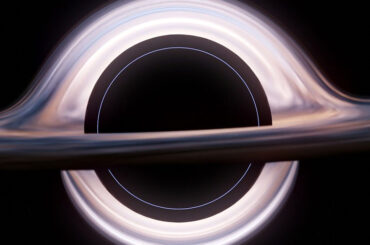
This post catalogs 10 confirmed and candidate Intermediate Black Holes (IMBHs), presenting masses, detection methods, and host galaxies with distances. Explore observational evidence—from ULXs and globular-cluster candidates to dwarf-galaxy nuclei—and essential references in a concise, authoritative list for researchers, students, and curious readers.
Explore the 7 Wonders of Deep Space — an illustrated hub introducing the most spectacular cosmic phenomena and linking to full deep-dive posts on each wonder. From vibrant nebulae and spiral galaxies to black holes, exoplanets, and stellar nurseries, this guide helps you discover, learn, and find stunning images and further reading.
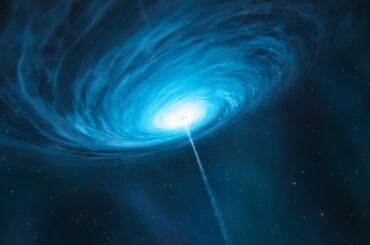
Explore 12 of the strangest, least intuitive facts about quasars — the universe’s brightest and most mysterious objects. This hub summarizes each oddity (extreme luminosity, relativistic jets, record redshifts, hidden hosts, and more) and links to in-depth posts so you can dive deeper into the surprising science behind quasars.
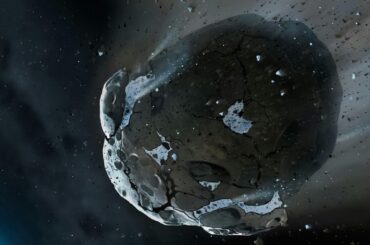
Explore the nine most dangerous objects in space — from fast-moving near-Earth asteroids and deadly radiation sources to black holes and orbital debris. This hub summarizes each threat and links to in-depth articles on origins, risks, and mitigation for readers interested in the science and real-world impact of cosmic hazards.
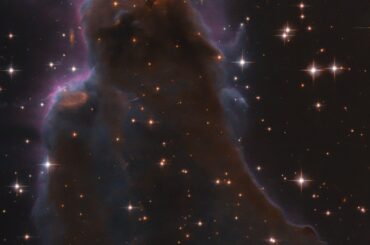
Explore the life cycle of stars in “10 Ways Stars Are Born and Die,” a hub post linking detailed guides on stellar nurseries, protostars, main-sequence evolution, red giants, supernovae, neutron stars, white dwarfs, and black holes. This overview explains ten distinct formation and end-of-life paths with clear diagrams and links to in-depth articles — click to discover how mass and environment shape stellar fates.
Introduction to Black holes “A point of no return” – how many times have we heard this phrase used in…
Naming conventions in the scientific world can be weird. And sometimes you end up with two different types of objects…