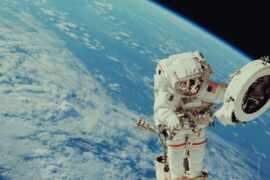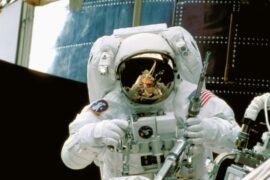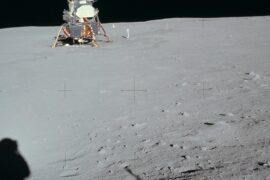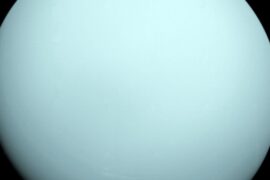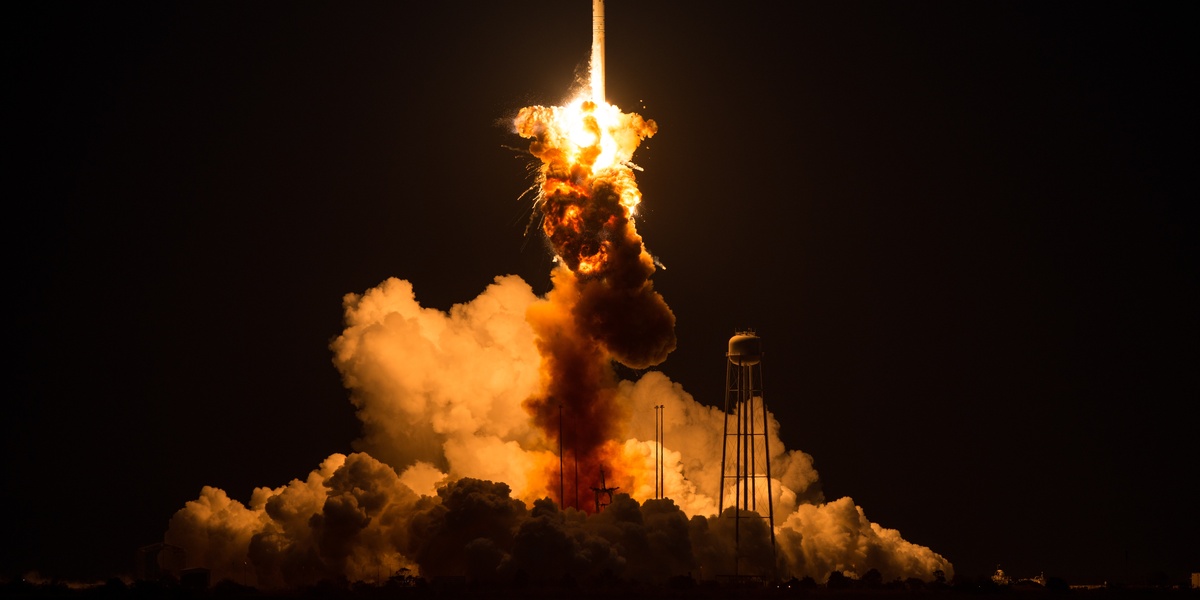
Whether you’re watching a rocket lift off from a viewing hill, scanning images from a classroom planetarium, or reading mission briefs in a control room, the careers and technologies behind space work span many settings and goals. Space activity isn’t just launches and landings — it includes science, operations, safety, and services that affect life on Earth.
There are 33 Types of Space Missions, ranging from Active debris removal / deorbiting to Weather monitoring. For each entry you’ll find below concise information organized by Primary objective, Typical target, Crewed so you can quickly see what each mission aims to do, which objects or regions it focuses on, and whether people are involved — you’ll find below.
Which mission types are usually crewed?
Crewed missions tend to be those that require human decision-making, direct experimentation, construction or maintenance tasks, or transport of people: crewed transport to stations, lunar landing missions, space tourism flights, and some deep-space exploration sorties. Many support roles (cargo resupply, probes, and most satellites) are uncrewed for cost and safety reasons.
How should I use the columns to compare missions?
Start with Primary objective to group by purpose (science, communication, navigation, defense, etc.), then check Typical target to understand scale (low Earth orbit, Moon, asteroids), and finally Crewed to see operational complexity; together those columns make it easy to filter mission types for research, teaching, or planning.
Types of Space Missions
| Type | Primary objective | Typical target | Crewed |
|---|---|---|---|
| Earth observation | Monitor Earth’s surface, resources, and environment | LEO, polar orbits | Uncrewed |
| Weather monitoring | Observe and forecast atmospheric conditions and weather patterns | LEO, GEO | Uncrewed |
| Communications | Relay voice, data, and broadcast signals between users | GEO, MEO, LEO | Uncrewed |
| Navigation / GNSS | Provide accurate position, navigation and timing services | MEO, GNSS constellations | Uncrewed |
| Reconnaissance / Earth intelligence | Collect imagery and signals for national security and defense | LEO, HEO | Uncrewed |
| Space astronomy | Observe astronomical objects across wavelengths from space | LEO, Lagrange points (L1, L2) | Uncrewed |
| Heliophysics / Solar observation | Study the Sun and its effects on the solar system | Sun-Earth L1, heliocentric orbits | Uncrewed |
| Planetary flyby | Pass close to a planetary body to collect brief scientific data | Interplanetary trajectories | Uncrewed |
| Planetary orbiter | Enter orbit around another world to study it over time | Planets, moons, comets, asteroids | Uncrewed |
| Planetary lander | Touch down on a planetary surface to perform in-situ science | Moon, Mars, comets, asteroids | Uncrewed |
| Rover missions | Traverse and explore planetary surfaces under remote control | Moon, Mars, asteroids | Uncrewed |
| Atmospheric probe / entry probe | Penetrate atmospheres to measure composition and structure | Gas giants, planetary atmospheres | Uncrewed |
| Sample return | Collect and return extraterrestrial material to Earth | Moon, Mars, asteroids, comets | Uncrewed |
| Comet and asteroid rendezvous | Study small bodies by matching their orbit for close work | Asteroids, comets, NEOs | Uncrewed |
| Near-Earth object reconnaissance | Characterize potentially hazardous or resource-rich near-Earth bodies | NEOs, asteroids | Uncrewed |
| Human transport / Crew ferry | Carry astronauts to and from orbital stations or vehicles | LEO, cislunar transfer | Crewed |
| Cargo resupply | Deliver supplies, experiments and equipment to orbital stations | LEO, space stations | Uncrewed |
| Space station operations / habitation | Maintain long-duration human presence in orbit | LEO, cislunar stations | Crewed |
| Human exploration / lunar landing | Send humans to the Moon or other celestial bodies for exploration | Moon, cislunar space | Crewed |
| Space tourism | Commercial short-duration flights for paying civilians | Suborbital, LEO | Crewed |
| Suborbital research and flight | Short, high-altitude flights for microgravity and atmospheric research | Suborbital trajectories | Both |
| Technology demonstration | Test new space technologies in orbit or space-like conditions | LEO, GEO, interplanetary | Uncrewed |
| Pathfinder / precursor missions | Advance knowledge and reduce risk ahead of major missions | LEO, target body | Uncrewed |
| Orbital test flight / demonstration | Validate launch, spacecraft or crew systems in flight | LEO, suborbital | Both |
| Rendezvous and docking | Approach and attach two spacecraft in orbit for transfer or assembly | LEO, cislunar | Both |
| On-orbit servicing and refueling | Repair, refuel, or upgrade spacecraft while they remain in orbit | LEO, GEO | Uncrewed |
| In-orbit assembly and construction | Assemble large structures and telescopes in space | LEO, GEO, cislunar | Both |
| Constellation deployment | Launch and place many satellites to provide continuous services | LEO, MEO | Uncrewed |
| Rideshare / secondary payload deployment | Deliver additional, smaller payloads alongside a primary launch | LEO, transfer orbits | Uncrewed |
| Active debris removal / deorbiting | Remove or deorbit space debris to reduce collision risk | LEO, GEO | Uncrewed |
| Planetary atmosphere aerobraking / aerocapture | Use atmospheric drag to slow a spacecraft into orbit or adjust trajectory | Planetary atmospheres | Uncrewed |
| Space-based Earth science | Study Earth’s systems from space for climate and process understanding | LEO, polar orbits, Lagrange points | Uncrewed |
| Science sample analysis return | Return specialized experiment samples for laboratory study on Earth | LEO return, planetary sample return | Both |
Images and Descriptions
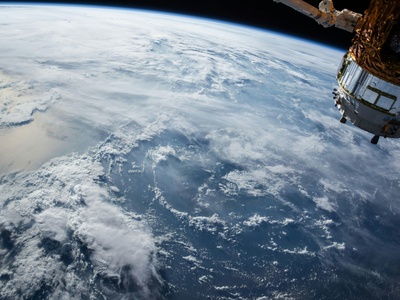
Earth observation
Missions that image and measure Earth’s land, oceans, and atmosphere for mapping, agriculture, disaster response and climate science. They provide routine, global datasets used by governments, scientists, and businesses to track environmental change and resource use.
Weather monitoring
Satellites dedicated to measuring clouds, temperature, humidity and precipitation to support short-term forecasts and climate records. Geostationary platforms offer continuous regional views while polar orbiters build global climate data useful for safety and agriculture.
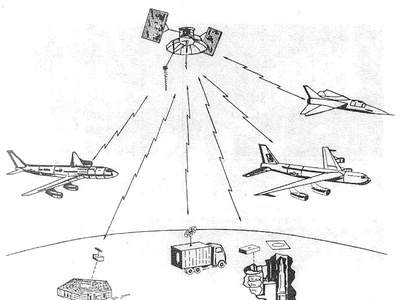
Communications
Satellites providing telephony, internet, television and military communications. These missions maintain networks, ensure global connectivity, and support critical infrastructure by relaying signals across long distances or filling coverage gaps where terrestrial systems cannot reach.
Navigation / GNSS
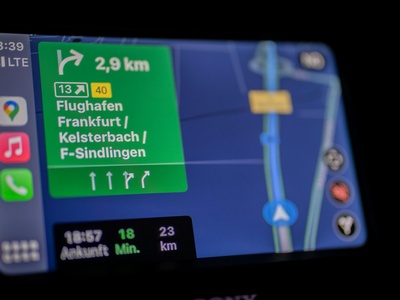
Global navigation satellite systems transmit precise timing and positioning signals used by civilian, commercial and military users for navigation, surveying and synchronization. Missions deploy and maintain constellations and upgrade capabilities to improve accuracy and resilience.
Reconnaissance / Earth intelligence
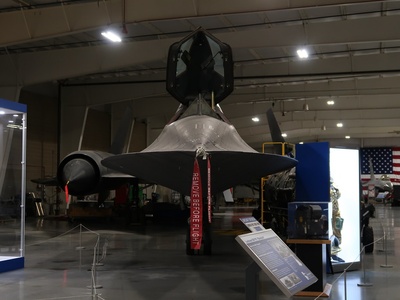
Classified or dual-use missions that gather high-resolution imagery, radar, or electronic intelligence about terrestrial targets. They support military planning, treaty monitoring and disaster assessment, often emphasizing timeliness, resolution and secure communications.
Space astronomy
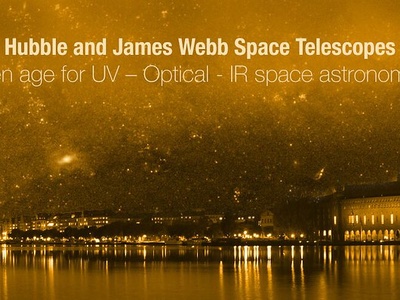
Space telescopes and observatories operate above the atmosphere to study stars, galaxies, exoplanets and cosmic background radiation. Free from atmospheric distortion and absorption, these missions achieve higher sensitivity and unique spectral coverage than ground-based telescopes.
Heliophysics / Solar observation
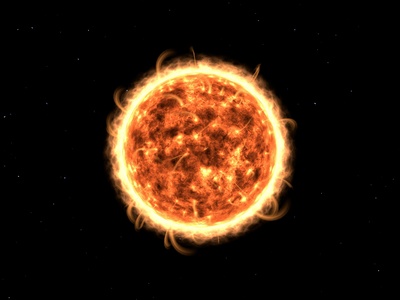
Missions that monitor solar activity, solar wind and magnetic fields to understand space weather and fundamental solar physics. They protect satellites and power grids by improving forecasts of solar storms and studying solar-terrestrial interactions.

Planetary flyby
Flyby missions sweep past planets, moons, comets or asteroids to capture imagery and measurements without entering orbit. They are cost-effective for initial reconnaissance, discovering targets for later orbiters or landers and returning unique first-look science.

Planetary orbiter
Orbiters map surfaces, monitor atmospheres, and measure fields and composition from sustained vantage points. Long-duration orbits enable seasonal studies, high-resolution mapping, and support for landing missions by scouting safe sites and relaying data.
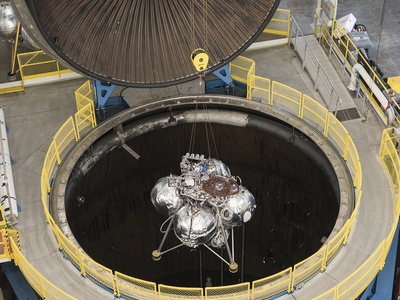
Planetary lander
Landers perform direct surface experiments, measure geology and atmosphere, and test sampling techniques. They provide ground-truth for orbital observations and can carry instruments that require surface contact, such as seismometers and weather stations.
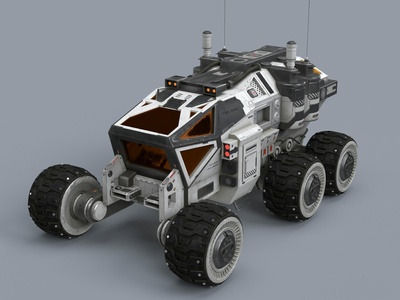
Rover missions
Rovers drive across alien terrain to collect samples, analyze rocks, and scout wide areas. Their mobility allows diverse science at multiple sites, long-duration operations, and selection of scientifically promising targets beyond a single lander’s reach.
Atmospheric probe / entry probe
Probes designed to enter and descend through thick atmospheres record pressure, temperature, winds and composition. They reveal atmospheric dynamics and chemistry that orbiters cannot access, often transmitting data during limited descent windows.
Sample return
Missions that retrieve rocks, dust or gas and deliver them to Earth for detailed laboratory analysis. Sample returns enable precise isotopic and biological studies that remote instruments cannot match and often require complex rendezvous and Earth reentry systems.
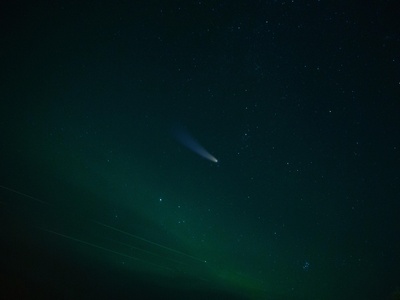
Comet and asteroid rendezvous
Rendezvous missions approach and orbit small bodies to map surfaces, sample material, and study composition and history. They help understand solar system formation, assess impact risks, and test techniques for resource utilization or planetary defense.
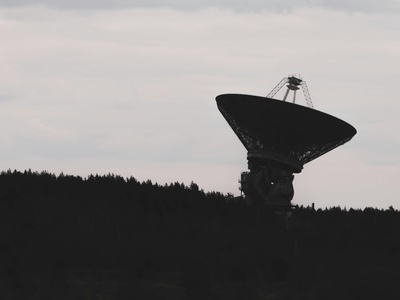
Near-Earth object reconnaissance
Targeted missions to assess size, orbit, composition and structure of near-Earth asteroids and comets. They inform impact risk mitigation strategies, resource prospecting, and planning for future exploration or deflection demonstrations.
Human transport / Crew ferry
Crew transports move people between Earth and stations or lunar gateways. These missions focus on safety, life support and reliable crew rotations, enabling long-term human presence and scientific work in orbit or beyond.
Cargo resupply
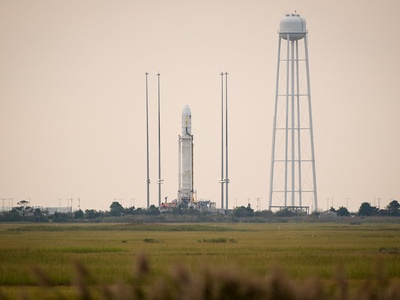
Regular cargo missions replenish stations with food, spare parts, experiments and propellant. They sustain crewed operations, enable continuous science, and often serve as platforms for testing new logistics and commercial supply-chain models.
Space station operations / habitation
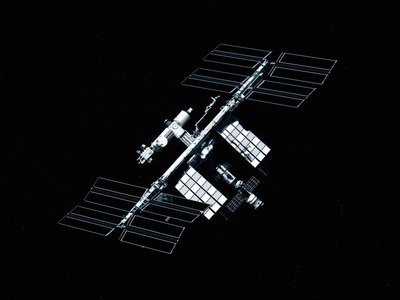
Missions focused on operating, provisioning and conducting science aboard orbital habitats. This category includes station assembly, crew rotations, long-duration research in microgravity, life support systems testing, and international cooperation frameworks.
Human exploration / lunar landing
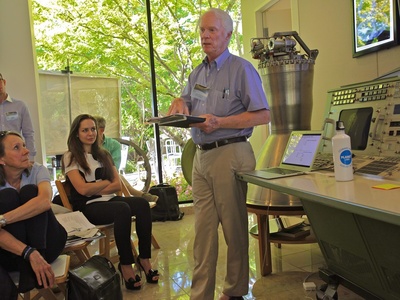
Crewed lunar missions carry astronauts to land, live, and work on the surface for exploration, science and technology demonstration. They test surface systems, sample collection, and habitats in preparation for deeper human missions.
Space tourism
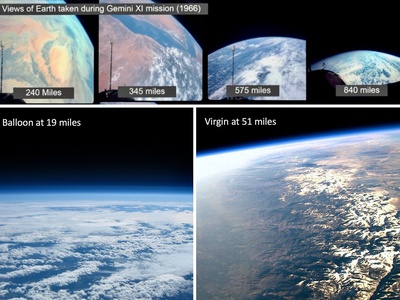
Paid flights offering tourists brief experiences of weightlessness or orbital views. These missions prioritize safety, training, and customer experience and mark the commercialization of human spaceflight beyond government-only programs.
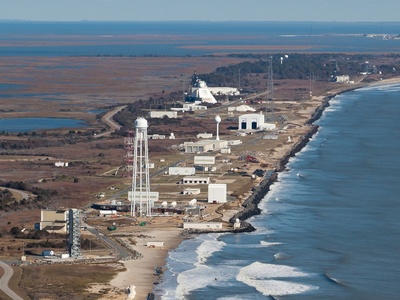
Suborbital research and flight
Suborbital missions provide brief microgravity, upper-atmosphere access, and payload testing without reaching orbit. They are used for biological experiments, materials research, technology tests and training, often at lower cost and faster turnaround than orbital flights.
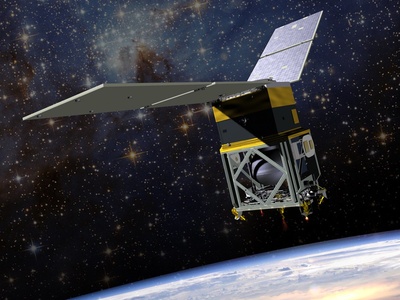
Technology demonstration
Purpose-built missions validate novel systems such as propulsion, communications, materials, or robotics in relevant environments. They reduce risk for future operational missions by proving concepts and refining designs before full-scale deployment.
Pathfinder / precursor missions
Small, focused missions that scout conditions, validate techniques or collect preliminary data to inform larger follow-on missions. They often answer key feasibility questions, optimize mission designs and are cost-effective risk reducers.
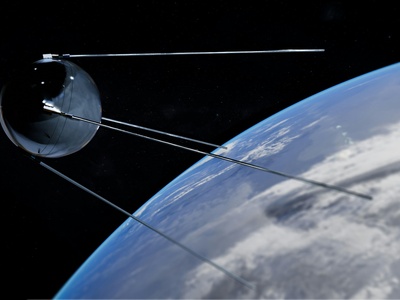
Orbital test flight / demonstration
Test flights exercise vehicles, reentry systems, avionics or life-support before committing to operational missions. They are crucial for certifying capabilities, demonstrating new architectures, and gaining regulatory and public confidence.
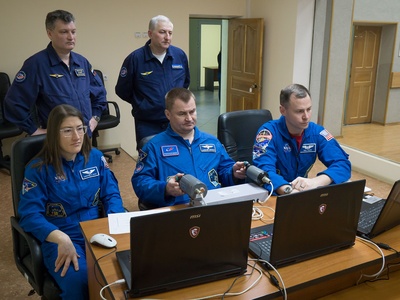
Rendezvous and docking
Missions that practice or perform close-proximity operations enabling crew transfer, cargo exchange, refueling or station assembly. Precision navigation, autonomous systems and safety protocols are notable requirements for successful docking.
On-orbit servicing and refueling
Servicing missions extend satellite lifetimes by refueling, replacing components, repairing faults or upgrading payloads. They reduce space debris and lifecycle costs, and enable modular spacecraft architectures for sustained operations.
In-orbit assembly and construction
Missions that join modules, build large antennas or construct habitats in orbit using robotic and crewed operations. They enable construction of assets too large for single launches and support future deep-space platforms and manufacturing.
Constellation deployment
Missions that deploy multiple satellites to form networks for communications, Earth observation or navigation. They emphasize mass deployment, coordinated operation, and rapid replenishment to maintain global coverage and service levels.
Rideshare / secondary payload deployment
Rideshare missions carry secondary payloads like small satellites or experiments, lowering access costs. They enable diverse actors to reach space affordably but require careful integration and orbital compatibility management.
Active debris removal / deorbiting
Missions that capture, tug or deorbit defunct satellites and fragments to mitigate orbital pollution. They employ nets, harpoons, tethers or robotic arms and support long-term sustainability of critical orbital regimes.
Planetary atmosphere aerobraking / aerocapture
Missions that use controlled atmospheric passes to bleed speed and enter or reshape orbits without large propellant burns. Aerobraking is fuel-efficient but requires precise modeling of atmospheric density and thermal protection for spacecraft.
Space-based Earth science
Missions focused on fundamental Earth system science—carbon cycles, sea-level rise, ice-sheet dynamics and ecosystems—providing long-term, calibrated datasets that inform climate models, policy and environmental stewardship.
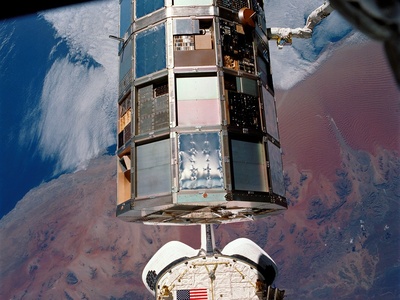
Science sample analysis return
Missions designed to bring experimental or biological samples back to Earth for detailed analysis under controlled conditions. They enable high-precision measurements impossible in situ and ensure sample curation for decades of research.
Enjoyed this article?
Get daily 10-minute PDFs about astronomy to read before bed!
Sign up for our upcoming micro-learning service where you will learn something new about space and beyond every day while winding down.