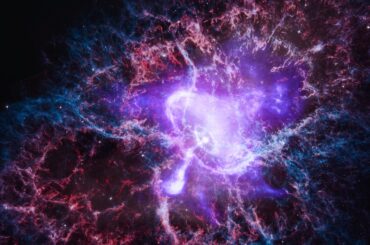
This post catalogs 32 notable Neutron Stars—pulsars, magnetars, and other compact remnants—presented with Type, Distance (kly), and Discovery year. Use this concise, data-focused list to compare distances, trace discovery history, and quickly identify prominent neutron-star objects. Ideal for astronomy enthusiasts, students, and researchers seeking a reliable reference and further reading on each entry.
A complete compilation of 59 merging black holes detected to date, listing each event’s detection date (UTC), component masses (M☉), and distance (Mpc). Explore the dataset to compare mass ranges, distances, and the landmark gravitational-wave discoveries from LIGO/Virgo/KAGRA.
This hub explores 12 mysteries about dark matter, linking to in-depth posts that examine evidence, particle candidates, cosmic roles, detection efforts, and leading theories. Ideal for curious readers and students, the series breaks down each mystery with clear explanations, recent findings, and what future experiments could reveal.
This post explores the Types of Pulsars, comparing young energetic pulsars, recycled millisecond pulsars, and magnetars by typical period, magnetic field strength, and emission band. It provides clear tables and explanations to help students and enthusiasts understand how pulsar properties arise from neutron-star physics and observational methods.
Explore the 10 Mysteries of Interstellar Travel — a hub post that surveys the biggest unknowns from wormholes and faster-than-light theories to cosmic hazards and human survival between the stars. Each mystery links to a deep-dive article so you can follow the science, speculation, and open questions driving research and sci-fi imagination.
Explore the 10 most important equations in astronomy, from Newton’s laws and Kepler’s laws to Einstein’s relativity and Hubble’s law. Each entry includes intuitive explanations, real-world examples, and links to dedicated posts for deeper study—perfect for students, hobbyists, and educators seeking a clear guide to the math of the cosmos.
This guide explains 11 key differences between a star and a planet—from formation, mass, and composition to light emission, gravity, and orbital behavior. Use this hub to get quick comparisons and follow linked deep-dive posts for each difference with examples from the solar system and beyond.
Explore the life cycle of stars in “10 Ways Stars Are Born and Die,” a hub post linking detailed guides on stellar nurseries, protostars, main-sequence evolution, red giants, supernovae, neutron stars, white dwarfs, and black holes. This overview explains ten distinct formation and end-of-life paths with clear diagrams and links to in-depth articles — click to discover how mass and environment shape stellar fates.