Across the galaxy, compact remnants of massive stars mark the endpoints of stellar evolution. Studying them helps us understand extreme gravity, dense matter, and the high-energy processes that light up the sky in X-rays and radio waves.
There are 32 Neutron Stars, ranging from 1E 1048.1-5937 to XTE J1810-197. For each entry, data are organized into columns: Type, Distance (kly), Discovery year to make comparisons straightforward, and you’ll find below.
How were these neutron stars detected?
Most were found through their high-energy or radio signatures: pulsations in radio surveys, periodic X-ray or gamma-ray pulses, transient X-ray outbursts, or associations with supernova remnants. Detection method is often listed in the Type column, which helps explain why some objects were discovered earlier or later.
How reliable are the listed distances?
Distances come from a mix of methods—parallax (when available), dispersion measure for radio pulsars, association with supernova remnants, or spectral modeling—so uncertainties vary. Expect typical errors from tens of percent to factors of two for the most distant or poorly constrained objects.
Neutron Stars
| Name | Type | Distance (kly) | Discovery year |
|---|---|---|---|
| Crab Pulsar | Pulsar | 6.50 | 1968 |
| Vela Pulsar | Pulsar | 0.94 | 1968 |
| Hulse-Taylor Pulsar | Pulsar (in binary) | 21.00 | 1974 |
| LGM-1 | Pulsar | 2.28 | 1967 |
| Double Pulsar | Pulsar (in binary) | 2.40 | 2003 |
| Black Widow Pulsar | Millisecond Pulsar | 6.50 | 1988 |
| Fastest-Spinning Pulsar | Millisecond Pulsar | 18.00 | 2004 |
| Most Massive Neutron Star | Millisecond Pulsar | 4.60 | 2012 |
| SGR 1806-20 | Magnetar | 50.00 | 1979 |
| 1E 1048.1-5937 | Magnetar | 9.00 | 1981 |
| XTE J1810-197 | Magnetar | 10.00 | 2003 |
| RX J1856.5-3754 | Central Compact Object | 0.40 | 1992 |
| PSR J0108-1431 | Pulsar | 0.42 | 1994 |
| Scorpius X-1 | X-ray Binary | 9.00 | 1962 |
| Hercules X-1 | X-ray Binary | 21.00 | 1971 |
| Cas A Neutron Star | Central Compact Object | 11.00 | 1999 |
| Geminga | Pulsar | 0.81 | 1972 |
| PSR B1257+12 | Millisecond Pulsar | 2.30 | 1990 |
| PSR J0437-4715 | Millisecond Pulsar | 0.51 | 1993 |
| SGR 1935+2154 | Magnetar | 30.00 | 2014 |
| PSR B1509-58 | Pulsar | 17.00 | 1982 |
| RX J0822-4300 | Central Compact Object | 7.10 | 1999 |
| PSR J1614-2230 | Millisecond Pulsar | 3.00 | 2006 |
| Cygnus X-2 | X-ray Binary | 32.60 | 1965 |
| PSR J1903+0327 | Millisecond Pulsar | 21.00 | 2007 |
| 4U 0142+61 | Magnetar | 13.00 | 1981 |
| PSR J1719-1438 | Millisecond Pulsar | 4.00 | 2009 |
| SGR 0526-66 | Magnetar | 163.00 | 1979 |
| PSR B0540-69 | Pulsar | 163.00 | 1984 |
| Swift J1756.9-2508 | Millisecond Pulsar (X-ray Binary) | 25.00 | 2007 |
| SGR J1745-2900 | Magnetar | 26.00 | 2013 |
| PSR B1620-26 | Millisecond Pulsar | 12.40 | 1993 |
Images and Descriptions
Crab Pulsar
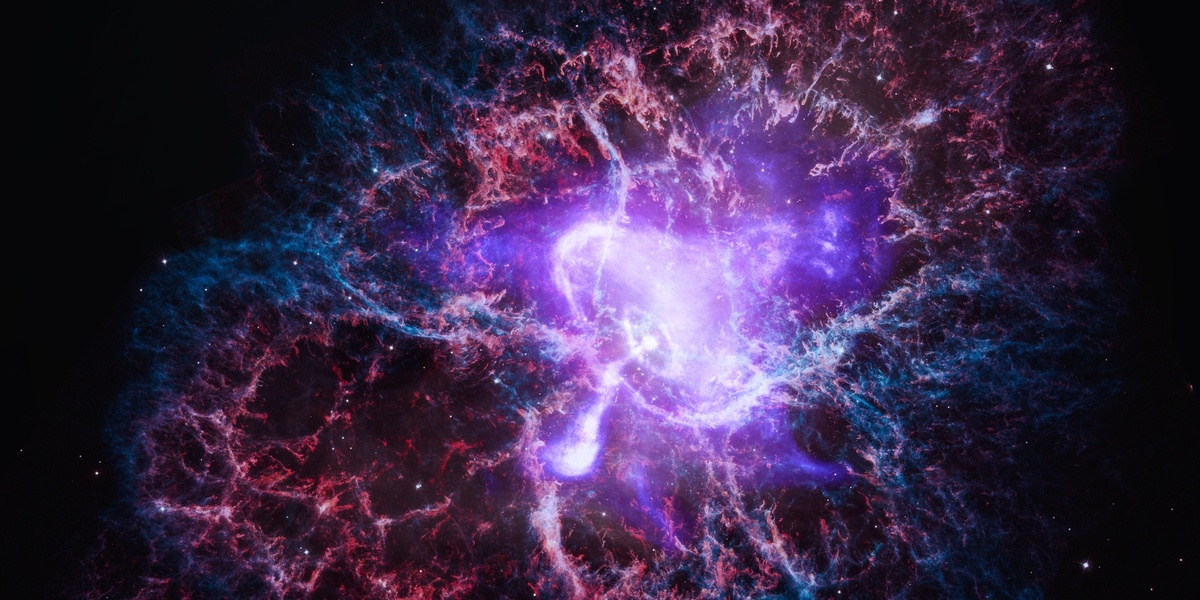
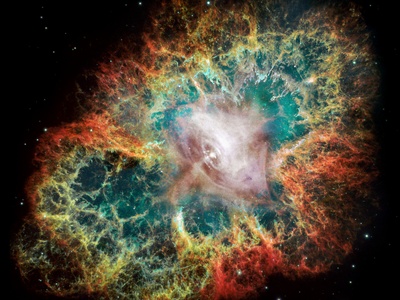
The energetic heart of the Crab Nebula, born from a supernova seen in 1054 CE. Its powerful wind illuminates the surrounding nebula, making it a cornerstone for studying the extreme physics of young neutron stars.

Vela Pulsar
A middle-aged radio pulsar in the Vela Supernova Remnant. It’s famous for its frequent “glitches,” where its rotation suddenly speeds up, providing rare insights into the superfluid core of a neutron star.
Hulse-Taylor Pulsar
The first binary pulsar discovered, proving the existence of gravitational waves as predicted by Einstein. The gradual orbital decay of this two-neutron-star system earned its discoverers the Nobel Prize in Physics.
LGM-1
The very first pulsar ever discovered, initially nicknamed “LGM-1” for “Little Green Men” due to its regular pulses. This landmark discovery provided the first solid evidence for the existence of neutron stars.
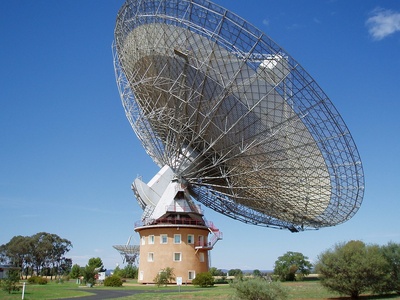
Double Pulsar
A unique system where two pulsars orbit each other. As the only known system of its kind, it allows for unprecedentedly precise tests of Einstein’s theory of general relativity in a strong gravitational field.
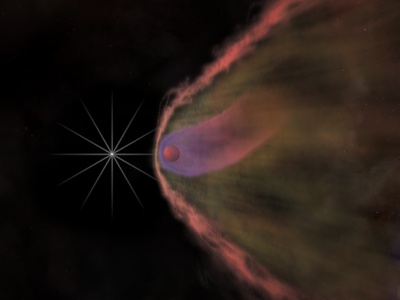
Black Widow Pulsar
A rapidly spinning millisecond pulsar that is actively destroying its companion star. The pulsar’s intense radiation is evaporating its low-mass partner, creating a dramatic “black widow” system with a tail of ablated material.
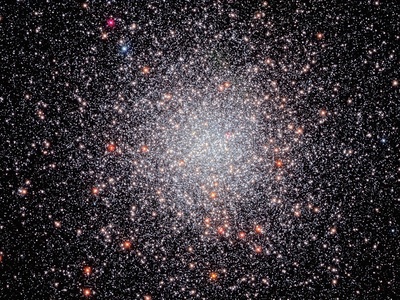
Fastest-Spinning Pulsar
Located in the globular cluster Terzan 5, this is the fastest-spinning neutron star known, rotating 716 times per second. Its incredible speed pushes the physical limits of how fast a star can spin before breaking apart.
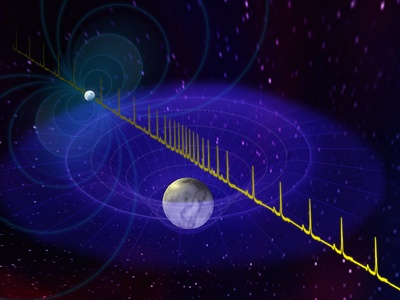
Most Massive Neutron Star
One of the most massive neutron stars ever measured, with a mass of about 2.14 times that of our Sun. Its immense weight places critical constraints on the composition of matter at extreme densities.
SGR 1806-20
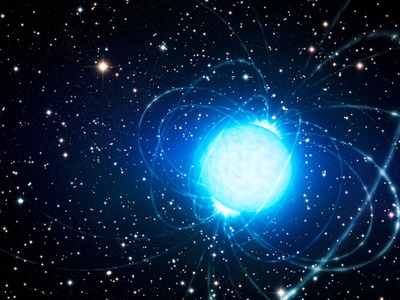
An extreme magnetar that produced the brightest gamma-ray burst ever seen from Earth in 2004. The flare was so powerful it ionized our upper atmosphere from halfway across the galaxy, showcasing the immense energy of magnetars.
1E 1048.1-5937
One of the first and best-studied magnetars, located in the constellation Carina. It is a persistent X-ray source that has shown repeated bursting activity, making it a prototypical example of the magnetar class.
XTE J1810-197
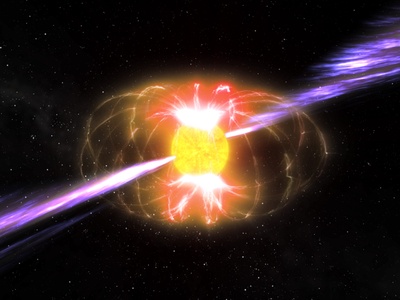
The first transient magnetar discovered. It was observed to switch on as a bright radio source, confirming the theoretical link between magnetars and their powerful radio emissions and providing a new way to study these objects.
RX J1856.5-3754
One of the closest known neutron stars and part of a group called the “Magnificent Seven.” It is a young, isolated cooling neutron star studied for its pure thermal X-ray emission, which helps model neutron star surfaces.
PSR J0108-1431
One of the closest and oldest known pulsars to Earth. It is remarkably faint and has a very low spin-down rate, suggesting its magnetic field has significantly decayed over its incredibly long life.

Scorpius X-1
The first cosmic X-ray source discovered outside our Solar System and the brightest persistent one in the sky. It’s a low-mass X-ray binary where a neutron star’s gravity pulls material from a companion star.
Hercules X-1
A famous X-ray binary pulsar discovered by the Uhuru satellite. It exhibits a complex 35-day cycle of X-ray brightness variations, believed to be caused by the wobbling of its warped accretion disk.
Cas A Neutron Star
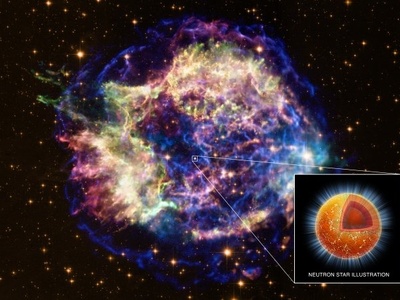
The central neutron star within the Cassiopeia A supernova remnant. It is notable for cooling down much faster than predicted, which may be evidence for the formation of a superfluid state in its core.
Geminga
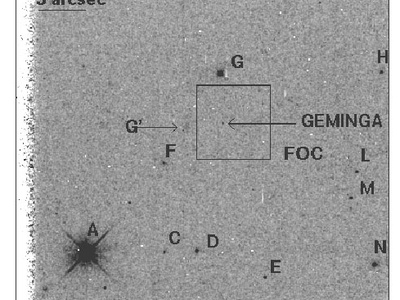
A nearby gamma-ray and X-ray pulsar that was one of the brightest unidentified gamma-ray sources for 20 years. It is “radio-quiet,” making it largely invisible to radio telescopes and highlighting a different class of pulsars.
PSR B1257+12
Famously, this pulsar was found to host the first confirmed exoplanets ever discovered. Its three small, rocky planets orbit in the harsh environment of the neutron star, challenging theories of planet formation.
PSR J0437-4715
The closest and brightest known millisecond pulsar in the sky. Its proximity and incredible timing stability make it a crucial tool for detecting faint, nanohertz-frequency gravitational waves from supermassive black holes.
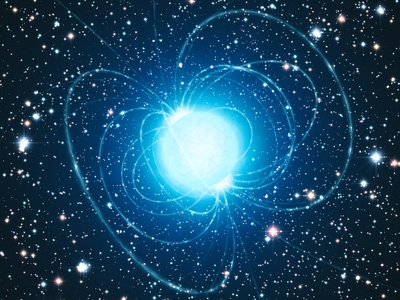
SGR 1935+2154
The first magnetar observed to produce a fast radio burst (FRB) from within our own Milky Way galaxy. This 2020 event provided the first direct evidence linking magnetars as a source for these mysterious cosmic flashes.
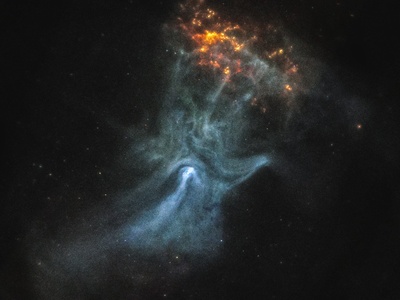
PSR B1509-58
A young pulsar whose energetic particle wind has created a stunning X-ray nebula shaped like a giant hand. The “fingers” of this “Hand of God” nebula are seen stretching into a neighboring gas cloud.
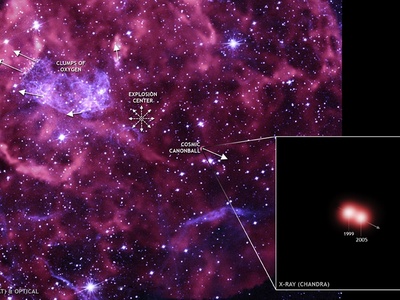
RX J0822-4300
The central compact object in the Puppis A supernova remnant, known as the “Cosmic Cannonball.” It is moving at an incredible speed of over 3 million miles per hour, likely from a powerful supernova kick.
PSR J1614-2230
Formerly the most massive neutron star known, with a mass near two times that of the Sun. Its precise measurement was a landmark that ruled out many “softer” theories of ultra-dense matter.
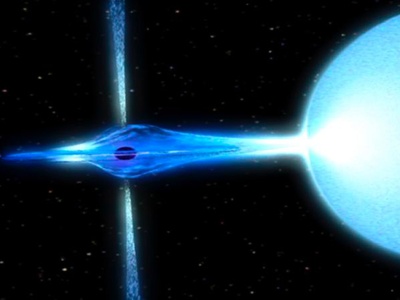
Cygnus X-2
A bright and persistent X-ray source containing a neutron star accreting matter from an evolved, giant companion star. It is a key object for studying the physics of accretion disks in strong gravity.
PSR J1903+0327
A massive, rapidly rotating millisecond pulsar in a highly eccentric orbit with a Sun-like star. This unusual pairing challenges standard models of how millisecond pulsars are formed and spun up by companion stars.
4U 0142+61
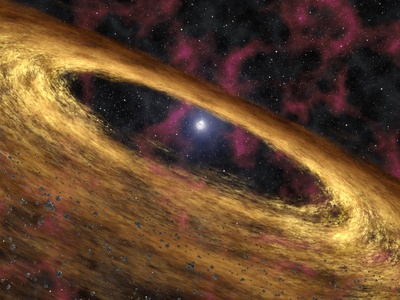
One of the first anomalous X-ray pulsars (AXPs) identified as a magnetar. It is notable for being one of the few magnetars surrounded by a debris disk, possibly formed from fallback material after the supernova.
PSR J1719-1438
An extreme millisecond pulsar with a planet-mass companion made of crystalline carbon, essentially a giant diamond. The companion is the remnant core of a white dwarf that was almost entirely vaporized by the pulsar.
SGR 0526-66
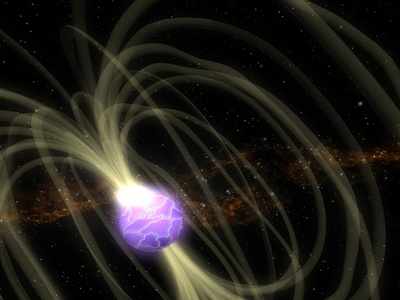
Located in the Large Magellanic Cloud, this was the source of the first-ever detected giant gamma-ray flare. This “March 5th event” was the first strong piece of evidence for the existence of magnetars.
PSR B0540-69
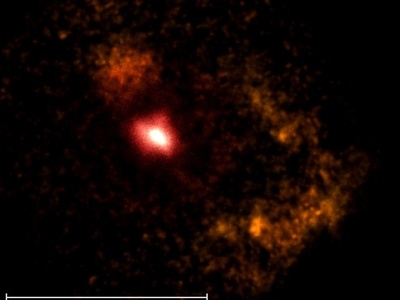
An energetic young pulsar in the Large Magellanic Cloud, often considered a twin to the Crab Pulsar. It allows for the detailed study of pulsar wind nebulae in an environment outside the Milky Way.
Swift J1756.9-2508
An accreting millisecond X-ray pulsar in a very compact 54-minute orbit with its companion star. This ultracompact binary is a laboratory for studying mass transfer and orbital evolution in extreme gravitational fields.
SGR J1745-2900
A magnetar discovered remarkably close to Sagittarius A*, the supermassive black hole at the center of the Milky Way. Its powerful magnetic field serves as a valuable probe of the galactic center’s complex environment.
PSR B1620-26
An ancient pulsar in the globular cluster M4 that hosts a “circumbinary” planet orbiting both the pulsar and its white dwarf companion. The planet, nicknamed “Methuselah,” is one of the oldest exoplanets known.
Enjoyed this article?
Get daily 10-minute PDFs about astronomy to read before bed!
Sign up for our upcoming micro-learning service where you will learn something new about space and beyond every day while winding down.