Umbriel sits in the cold, dim outer reaches of the Uranian system — a dark, heavily cratered moon that has intrigued astronomers since its discovery. Its low reflectivity and varied surface features make it a useful contrast to brighter Uranian satellites and a target for both telescopic study and flyby observations.
There are 5 NASA Missions to Umbriel, ranging from Hubble Space Telescope to Voyager 2; for each mission, the entries list Date (YYYY or YYYY-MM-DD),Mission type,Key instruments / data (max 15 words) — you’ll find below.
Has any spacecraft actually visited Umbriel?
Yes — Voyager 2 remains the only spacecraft to have flown through the Uranus system and imaged Umbriel (1986), providing the only close-up photos and some spectral snapshots; other “missions” are remote observations from telescopes like Hubble and Earth-based facilities.
How should I use the table to compare these missions?
Focus on the Date to see chronological progress, Mission type to distinguish flybys from telescopes, and Key instruments / data to judge what observations were possible (imaging, spectra, resolution); that helps you weigh scientific reach and data quality.
Nasa Missions to Umbriel
| Mission name | Date (YYYY or YYYY-MM-DD) | Mission type | Key instruments / data (max 15 words) |
|---|---|---|---|
| Voyager 2 | 1986-01-24 | Flyby | Imaging Science Subsystem, UVS, IRIS |
| Hubble Space Telescope | 1994 | Space telescope observation | WFPC2, STIS imaging and visible spectroscopy |
| Hubble Space Telescope | 2003 | Space telescope observation | ACS, WFPC2 near-UV/visible imaging |
| NASA IRTF | 2003 | Ground telescope observation | SpeX near-IR spectrograph |
| JWST | 2022 | Space telescope observation | NIRCam, NIRSpec, MIRI imaging and spectroscopy |
Images and Descriptions
Voyager 2
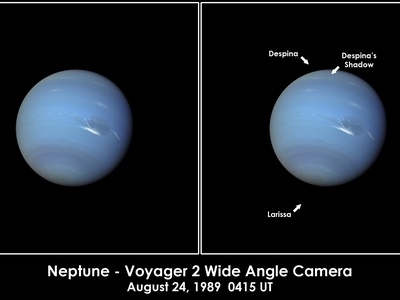
Voyager 2 flew past Uranus and imaged Umbriel at close range in January 1986. Its cameras revealed Umbriel’s dark, heavily cratered surface and the unusual bright ringed crater Wunda, providing first resolved maps and baseline photometry and spectra used for decades.
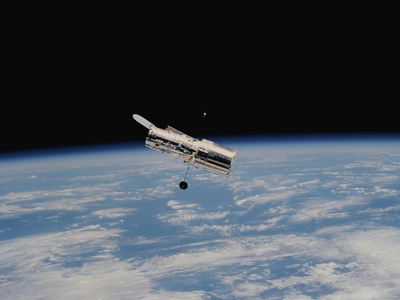
Hubble Space Telescope
Hubble imaged Umbriel in the 1990s with WFPC2 and later STIS, resolving its disk and refining albedo maps and color contrasts. HST provided ultraviolet-to-visible spectra complementing Voyager data and tracked secular surface changes and brightness variations over years.
Hubble Space Telescope
HST observations around 2003 used advanced cameras to measure Umbriel’s albedo patterns and opposition surge, improving understanding of surface texture and composition contrasts. These targeted imaging campaigns helped plan ground- and space-based spectroscopy and comparative studies of Uranus’ moons.

NASA IRTF
NASA IRTF SpeX near-infrared spectroscopy measured Umbriel’s water-ice absorption bands and continuum, constraining ice grain sizes and non-ice contaminants. These ground-based spectra revealed hemispheric compositional differences and provided important complementary data to Voyager images and HST observations.
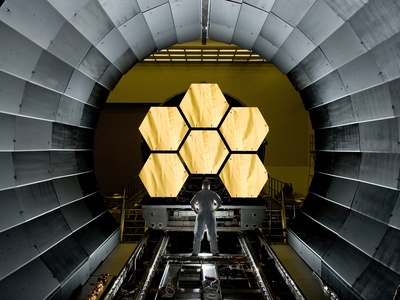
JWST
JWST observed the Uranus system in 2022–2023, resolving major moons and obtaining high-sensitivity near- and mid-infrared spectra of Umbriel. JWST data improved detection limits for organics, refined ice abundances, and mapped thermal and compositional variations.
Enjoyed this article?
Get daily 10-minute PDFs about astronomy to read before bed!
Sign up for our upcoming micro-learning service where you will learn something new about space and beyond every day while winding down.