On March 16, 1926, Robert H. Goddard launched the first liquid‑fueled rocket in Auburn, Massachusetts — a brief hop that lasted only a few seconds but altered the course of engineering. The vehicle burned liquid oxygen and gasoline, rose a few dozen feet, and proved that controlled liquid combustion could produce useful thrust.
That small flight sat atop centuries of experimentation, from Chinese “fire arrows” to iron‑cased battlefield rockets. Those early devices were crude by modern standards, but they established the basic idea: pack energetic material into a tube and direct the reaction to push a body through the air.
From the 13th century to the era of reusable boosters, practical advances and theoretical breakthroughs combined to make spaceflight possible. This piece lays out ten clear milestones in rocket technology, each explaining what changed, when it happened, and how engineers applied the idea. First up: the foundations and early experiments that turned fireworks and weapons into the tools of propulsion.
Foundations and Early Experiments
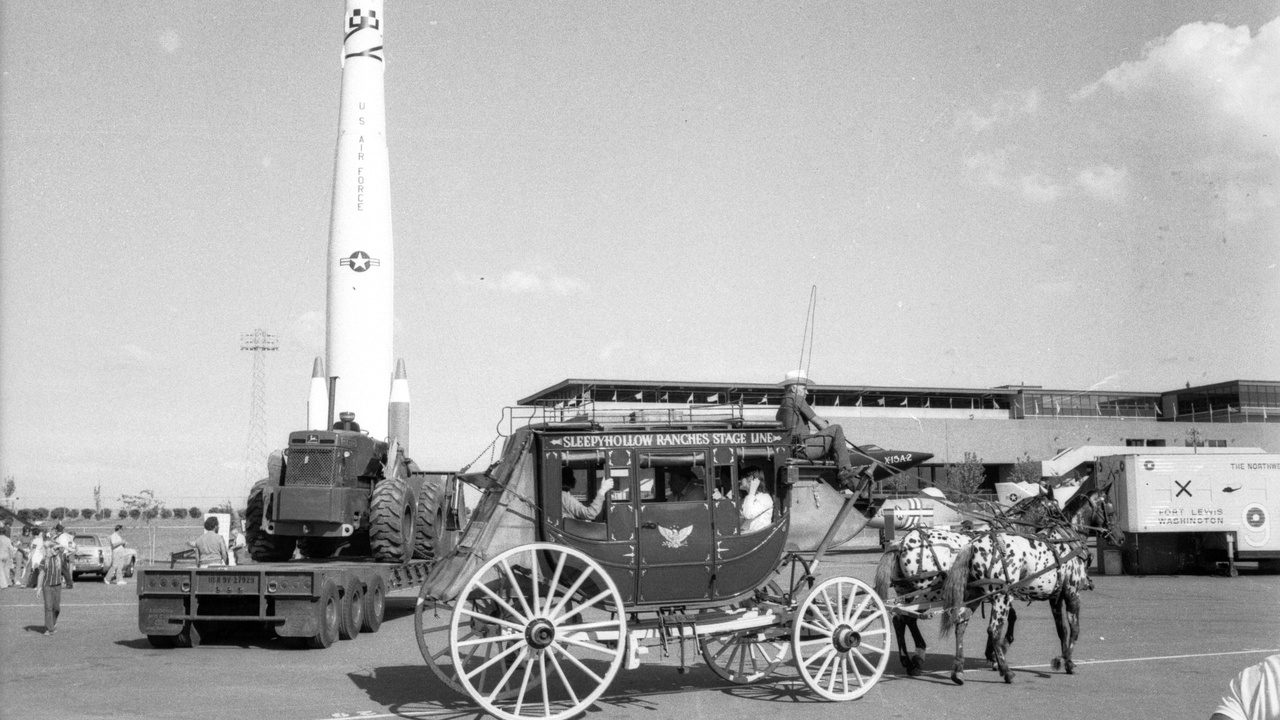
Before rocketry became a branch of aerospace engineering, it lived in festivals, sieges, and naval battles. The technology began as solid propellant devices where combustion products escaped a nozzle or tube to produce thrust, and over centuries craftsmen iterated on casings, mounts, and stabilizing tails. Understanding these roots explains why later engineers picked certain solutions — like iron casings for pressure containment or stabilizing sticks for guidance — and how cultural exchange spread ideas across continents.
These early centuries also seeded the conceptual shift from incendiary devices to machines that could deliver a payload through momentum rather than just fire. That shift set the stage for measurable performance thinking hundreds of years later.
1. Origin of Gunpowder Rockets (13th century China)
The milestone: the invention and battlefield use of gunpowder rockets in 13th‑century China. Song and Yuan dynasty texts record “fire arrows” — simple bamboo tubes filled with black powder attached to arrows — used for signaling and as weapons from roughly the 1200s onward.
Archaeological finds and contemporary accounts place these devices solidly in the 13th century, and they represent the first practical solid‑propellant motors: fuel and oxidizer combined in a single grain that burned, generated gas, and expelled it to produce thrust.
On the battlefield these rockets functioned as area weapons and psychological tools. Technically, they taught later engineers about containment, ignition, and simple stabilization — the same problems engineers would revisit when making metal casings and later, staged vehicles.
2. Military Adoption and European Development (18th–19th centuries)
By the late 1700s, rockets had moved from pyrotechnics to purpose‑built military weapons. Tipu Sultan’s forces in Mysore deployed iron‑cased rockets in the late 18th century, which increased range and structural reliability compared with bamboo casings.
Those Mysorean designs inspired William Congreve in Britain, who refined production and developed the Congreve rocket used during the Napoleonic Wars and in the early 1800s. The shift to iron cases and standardized manufacturing marked a major step toward ballistic thinking and repeatable performance.
The period drove innovations in mounting, trajectory estimation, and mass production that would inform later large‑scale rocketry: better casings, more predictable burn rates, and the idea that rockets could be treated as artillery rather than curiosities.
3. Theoretical Breakthrough: Tsiolkovsky and the Rocket Equation (1903)
Konstantin Tsiolkovsky’s 1903 work turned rocketry from craft to calculable engineering. He showed that a vehicle’s achievable velocity depends fundamentally on the exhaust speed of its propellant and the ratio of initial to final mass — concepts we now call delta‑v and mass ratio.
That insight explains why staging works: by dropping empty tanks you improve the mass ratio of the remaining vehicle, so the same propulsive impulse yields more final speed. Engineers used this idea to design multi‑stage vehicles decades later, rather than relying on empirical trial and error.
In short, Tsiolkovsky made it possible to plan missions with numbers instead of just hope, and that quantitative framing underpins everything from fuel budgets to staging decisions today.
Propulsion and Large-Scale Thrust
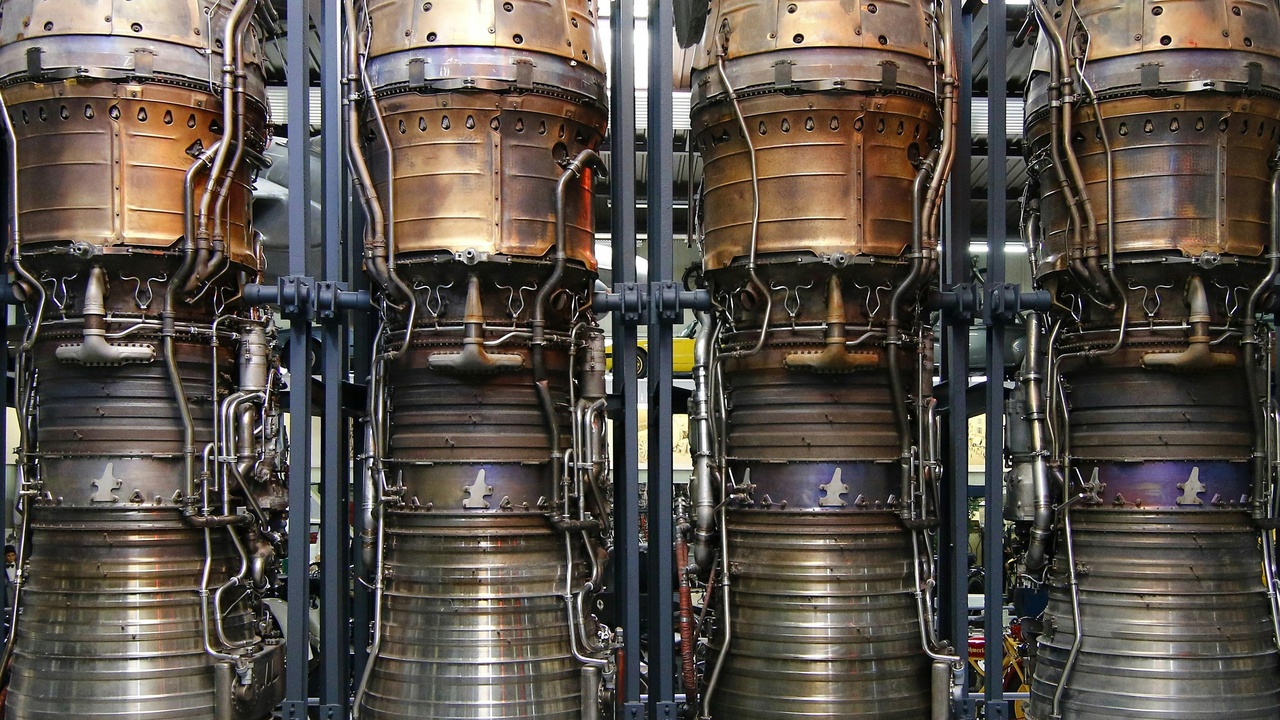
Moving from small fireworks and military rockets to vehicles that could lift tons required new propellant chemistries, engine cycles, and manufacturing scale. Liquid propellants enabled controllable and restartable thrust, while wartime programs pushed engineers to build reliable, high‑thrust motors quickly. These advances set the stage for orbital and lunar launchers by increasing burn duration, specific impulse, and gross lift capability.
Key developments in this era include the first liquid‑fuel flights, mass production of large liquid rockets during World War II, and later the very-high-thrust engines that powered heavy‑lift vehicles to the Moon.
4. First Liquid-Fueled Rocket: Robert Goddard (1926)
On March 16, 1926, Robert H. Goddard launched the first liquid‑fueled rocket in Auburn, Massachusetts. The vehicle used liquid oxygen and gasoline and rose to about 41 feet before traveling roughly 184 feet in a flight lasting less than five seconds.
Goddard’s innovation was not just that the engine burned liquids, but that the combustion was ignited, sustained, and controllable. Liquid propellants let engineers vary thrust and, eventually, restart engines — features impossible with early solid charges.
Those early prototypes influenced the engine cycles and feed systems of later rockets used by national space programs, proving the practicality of liquid propulsion decades before orbital launches became routine.
5. The V-2 and Mass-Produced Liquid Rockets (1944)
The V‑2 (A‑4), first deployed operationally in 1944, was the first large, production liquid‑fueled ballistic missile. It burned alcohol and liquid oxygen, carried a one‑ton warhead, and had ranges on the order of a few hundred kilometers.
Built under Wernher von Braun’s program, the V‑2 demonstrated how to design, test, and manufacture powerful liquid engines at scale. After the war, captured V‑2 hardware and technical staff accelerated rocketry research in both the United States and the Soviet Union.
The V‑2 showed that liquid rockets could be engineered for performance, guidance, and repeatable production, closing the gap between laboratory curiosities and strategic systems capable of delivering payloads over long distances.
6. High-Thrust Engines and Clustering: Saturn V and the F-1
To lift Apollo’s payloads to the Moon required unprecedented thrust. The Saturn V first stage used five F‑1 engines, each producing roughly 1.5 million pounds‑force (≈6.7 meganewtons) of thrust. The result: a launch vehicle capable of sending a multi‑ton crewed stack to lunar injection.
Clustering engines — grouping multiple large motors in a single stage — combined manufacturing pragmatism with plenty of thrust. Saturn V first flew in the late 1960s and supported Apollo lunar missions, including Apollo 11 in 1969.
That approach still matters. Modern providers often cluster smaller engines (for example, Falcon 9’s Merlin engines) rather than building a single enormous motor, because clustering offers redundancy and manufacturing flexibility.
Guidance, Control, and High-Energy Propellants
Getting a rocket off the pad is only part of the problem. Precise steering, orbital insertion, and complex mission profiles required advances in onboard computers, inertial navigation, and more energetic propellants like liquid hydrogen. Together, these innovations made accurate rendezvous, long burns, and trans‑lunar injections possible.
Engine efficiency and reliable guidance combined to expand mission envelopes from low Earth orbit to the Moon and beyond.
7. Guidance and Onboard Computers (Apollo era)
Compact digital computing and inertial navigation were decisive for crewed lunar missions. The Apollo Guidance Computer (AGC), developed in the 1960s, provided real‑time control and navigation at a performance level measured in kiloflops — tiny by today’s standards but revolutionary then.
The AGC, paired with inertial measurement units, allowed precise burns, automated rendezvous, and closed‑loop control of the launch vehicle and spacecraft. Apollo 11 relied on this stack for trajectory corrections and landing guidance in 1969.
Modern launchers inherit the same architectural ideas, though now with far more powerful processors and miniaturized sensors that make guidance more accurate and resilient than ever.
8. Cryogenic Propellants and High-Efficiency Engines
Switching from kerosene‑type fuels to liquid hydrogen combined with liquid oxygen (LH2/LOX) raised specific impulse substantially, meaning more thrust per unit of propellant mass. Engines like the RL10 flew in early practical LH2 upper stages in the 1960s, and the J‑2 powered Saturn V’s upper stages.
Centaur, an early operational LH2/LOX upper stage, demonstrated how cryogenic stages boost payload to higher orbits or deep‑space trajectories. In simple terms, LH2/LOX engines extract more velocity from the same propellant mass than denser kerosene combinations, enabling trans‑lunar injection and heavier payloads for exploration missions.
Cryogenics introduced handling challenges — insulation, boil‑off, and complex plumbing — but the performance gains made those engineering headaches worthwhile for upper stages and deep‑space missions.
Modern Systems: Reusability, Miniaturization, and Commercialization
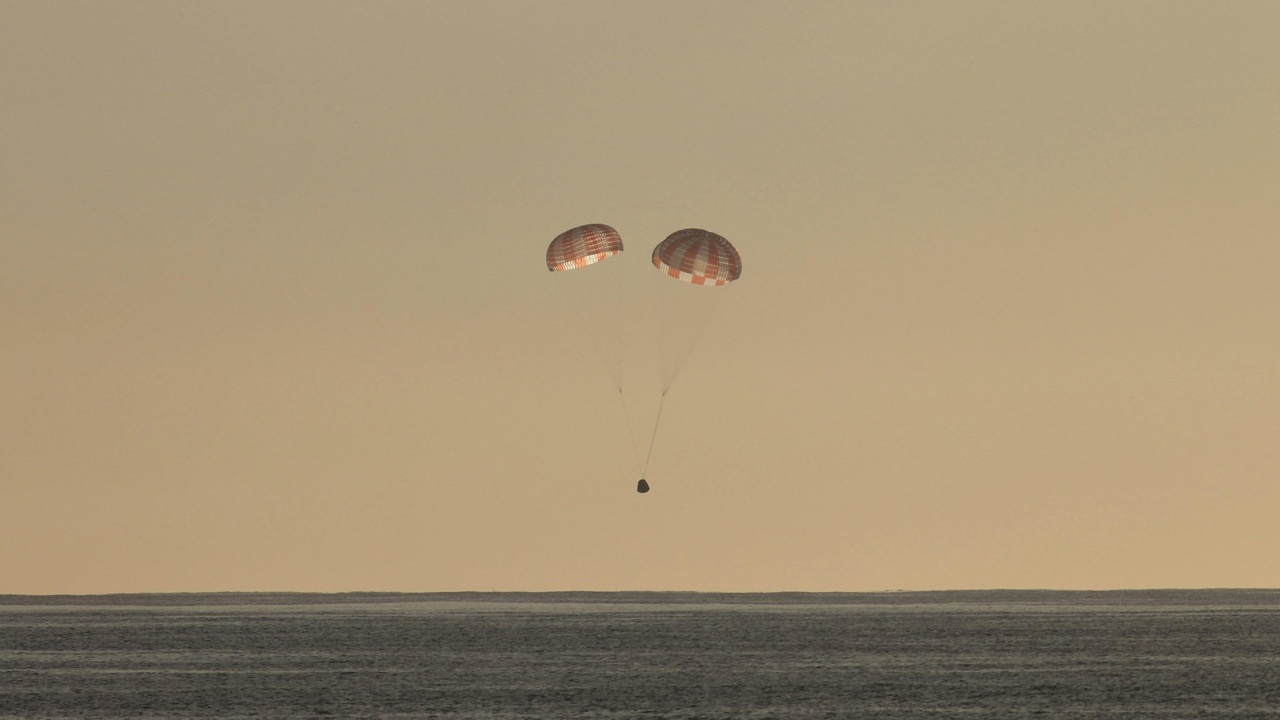
Over the past two decades the industry has shifted from government monopolies to a mixed ecosystem where private firms drive frequent launches, cheaper access, and new architectures. Two trends stand out: reusability, which reduces per‑flight hardware costs, and miniaturization, which democratizes missions through standardized small satellites.
Together these changes are reshaping supply chains, mission pacing, and the kinds of science and commerce we can perform from orbit.
9. Reusability and the Commercial Launch Revolution
Returning and reusing orbital‑class boosters marks a recent milestone. In December 2015 SpaceX accomplished the first successful landing of an orbital‑class first stage, and subsequent reflights have demonstrated that recovered boosters can fly multiple missions.
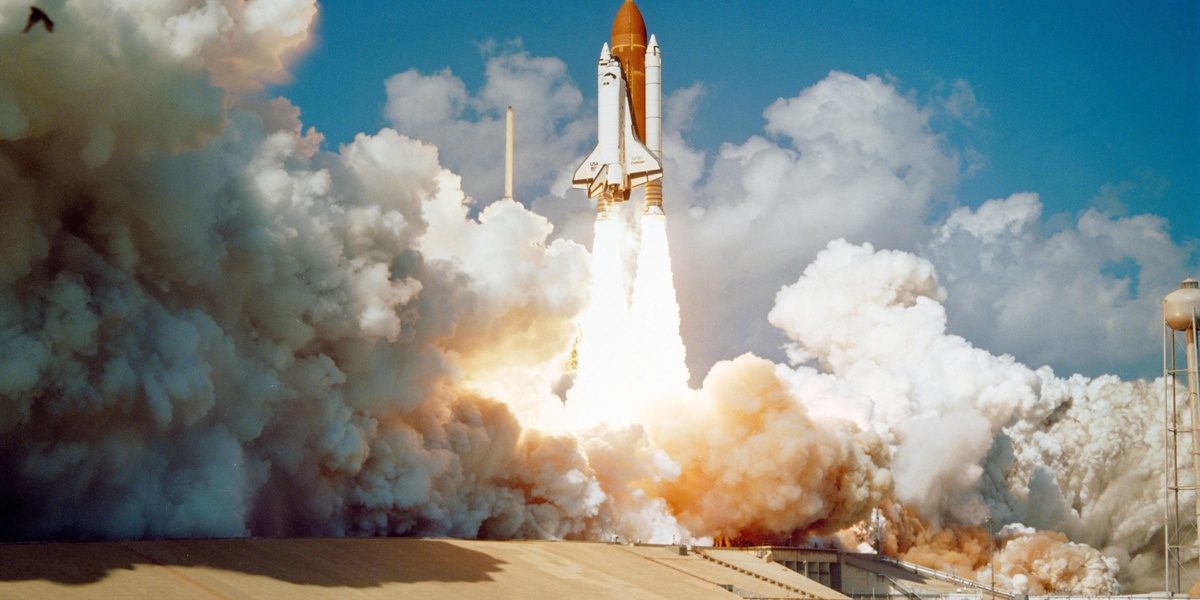
Reflights increased launch cadence and reduced the marginal hardware cost of sending payloads to orbit. The Space Shuttle (first flown in 1981) featured a different reuse model — a partially reusable orbiter — but modern propulsive landings focus on rapid turnaround and lower refurbishment costs.
Companies report varying savings, but the practical effect is clear: more frequent launches, competitive prices for rideshare slots, and new business models for constellations and on‑demand access.
10. Miniaturization and New Architectures: CubeSats to Rideshare
The CubeSat standard, formalized in 1999 and first launched in the early 2000s, standardized small satellite form factors and reduced the technical barrier to space for universities and startups. Since then thousands of small satellites have flown for science, Earth observation, and communications.
Rideshare missions and dedicated small‑launcher companies (for example, Rocket Lab) scaled deployment. Firms like Planet Labs demonstrated the power of many small satellites working together to provide daily imagery, and rideshare on vehicles such as Falcon 9 lowered per‑unit launch costs for small payloads.
Standardization and lower costs enabled rapid experiments, iterative hardware development, and commercial constellations that would have been prohibitively expensive on the old model of one large satellite per launch.
Summary
- The arc from 13th‑century fire arrows to modern boosters shows steady, problem‑by‑problem engineering: materials, combustion, guidance, and systems integration improved incrementally yet decisively.
- Theory and practice reinforced each other: Tsiolkovsky’s 1903 analysis enabled staging logic; Goddard’s 1926 flight proved liquid engines; WWII programs (notably the V‑2, 1944) scaled production and know‑how.
- Propulsion and guidance advances made ambitious missions possible — cryogenic LH2/LOX engines and the Apollo Guidance Computer were crucial for lunar missions (Apollo 11, 1969) — while clustering and high‑thrust engines like the F‑1 powered heavy lift.
- Recent shifts toward reusability (first orbital booster landing, December 2015) and satellite miniaturization (CubeSat standard, 1999) are lowering costs and increasing flight tempo, reshaping who can reach orbit and how missions are done.
- Watch next for methane engines, in‑space refueling, and fully reusable heavy‑lift architectures — these are likely the next major milestones that expand payloads and enable sustained operations beyond low Earth orbit.
Enjoyed this article?
Get daily 10-minute PDFs about astronomy to read before bed!
Sign up for our upcoming micro-learning service where you will learn something new about space and beyond every day while winding down.