As an Amazon Associate, Little Astronomy earns from qualifying purchases. The links below go to Amazon.
I have a shelf at home that is only Mars books. It started with The Martian, grew with every rover landing and now holds history, geology, settlement debates, novels and a row of picture books I read with the kids in my family. This list is the best of that shelf.
To learn astronomy beyond Mars, see our astronomy books for self study, in reading order.
Mars books have changed a lot since I first wrote this guide in 2022. Perseverance has been collecting rock samples in Jezero Crater since 2021, Ingenuity made 72 flights before it was grounded in 2024 and a new wave of books covers that era. I kept seven titles from the old list and added nine. I dropped three: The Big Book of Mars, the 2016 National Geographic companion Mars: Our Future on the Red Planet and Giles Sparrow’s Mars, which is now hard to find new. The picks are split by reader: adults, science fiction fans and kids.
Quick picks
| Book | Best for | Reader | Author |
|---|---|---|---|
| A City on Mars | Best overall | Adults | Kelly and Zach Weinersmith |
| The Sirens of Mars | Best memoir | Adults | Sarah Stewart Johnson |
| Discovering Mars | Most complete history | Adults | William Sheehan and Jim Bell |
| The Red Planet | Best on Mars geology | Adults | Simon Morden |
| The Martians | Best narrative history | Adults | David Baron |
| The Case for Mars | Best case for going | Adults | Robert Zubrin |
| The Search for Life on Mars | Best on the search for life | Adults | Elizabeth Howell and Nicholas Booth |
| Mars: Photographs from the NASA Archives | Best photo book | All ages | Taschen |
| The Martian | Best Mars novel | Teens and adults | Andy Weir |
| Red Mars | Best colony epic | Adults | Kim Stanley Robinson |
| The Martian Chronicles | Best classic | Teens and adults | Ray Bradbury |
| Mars! Earthlings Welcome | Best picture book | Ages 4 to 8 | Stacy McAnulty |
| Curiosity: The Story of a Mars Rover | Best rover book for kids | Ages 4 to 9 | Markus Motum |
| Mars: Explore the Mysteries of the Red Planet | Best fact book for kids | Ages 7 to 9 | DK and Smithsonian |
| A Rover’s Story | Best novel for kids | Ages 8 to 12 | Jasmine Warga |
| You Are the First Kid on Mars | Best for young kids | Grades K to 3 | Patrick O’Brien |
Best Mars books for adults
Best overall
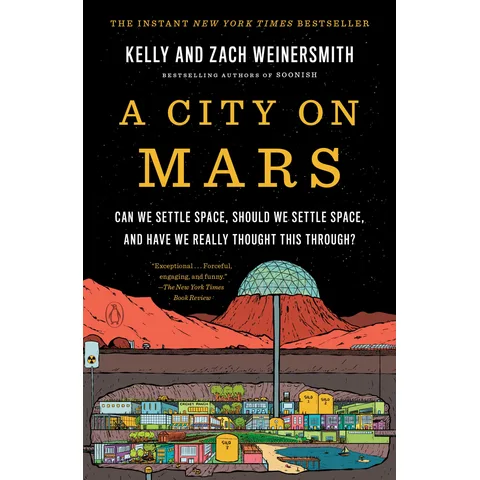
1. A City on Mars
- Authors: Kelly and Zach Weinersmith
- First published: 2023
- 448 pages
Kelly Weinersmith is a biologist and Zach Weinersmith draws the webcomic Saturday Morning Breakfast Cereal. They set out to write a guide to settling space and ended up writing a book that asks whether we are ready. It covers what we know about human health in space, having children off Earth, growing food, building habitats and the space law that would govern a settlement. It won the 2024 Hugo Award for Best Related Work and the Royal Society Trivedi Science Book Prize.
What I like: It is the most fun I have had reading about Mars, and Zach’s cartoons break up the heavy chapters. It also answers the questions every other Mars book skips, like who would own the land and what happens to a pregnancy in low gravity. After reading it I see every Mars colony headline differently.
Drawbacks: It is skeptical about settling Mars soon, and readers who want a pep talk should pair it with The Case for Mars. Despite the title, much of the book covers the Moon and orbital stations too.
Best memoir
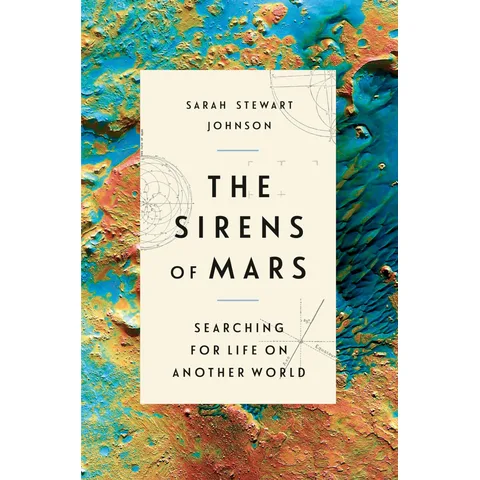
2. The Sirens of Mars
- Author: Sarah Stewart Johnson
- First published: 2020
- 288 pages
Sarah Stewart Johnson is a planetary scientist at Georgetown University. The book alternates between her own path, from a Kentucky childhood to a career searching for signs of life on Mars, and the history of everyone who looked before her: Percival Lowell and his canals, the Mariner flybys, the Viking landers and the rovers. It was a New York Times Notable Book.
What I like: This is the best written book on this list. Johnson writes about Mars the way nature writers write about deserts, and the personal chapters show what planetary science work looks like day to day. I kept it from the 2022 list without a second thought.
Drawbacks: It came out before Perseverance landed, so the rover story stops short of Jezero Crater. It is a literary book more than a reference.
Most complete history
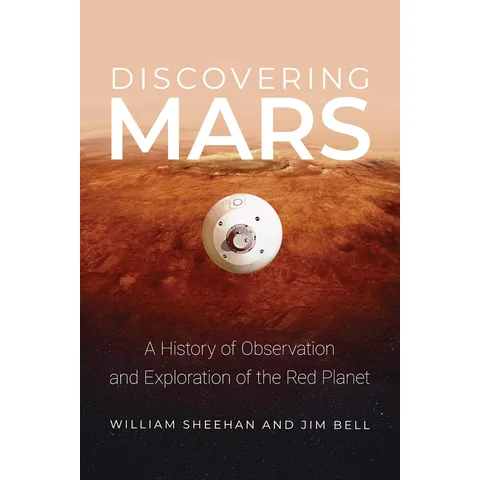
3. Discovering Mars: A History of Observation and Exploration of the Red Planet
- Authors: William Sheehan and Jim Bell
- First published: 2021
- 744 pages
William Sheehan is a historian of astronomy. Jim Bell is a planetary scientist who leads the Mastcam-Z camera team on Perseverance. Together they trace how our picture of Mars changed with each new tool: the naked eye, telescopes and the canal debate, then Mariner, Viking, the orbiters and the rovers up to Perseverance and Ingenuity.
What I like: It is the one Mars book I use as a reference. When I want to know who first mapped a feature or why a mission was designed the way it was, the answer is in here. Bell’s inside view of the rover missions is the best part.
Drawbacks: It is long and dense, and it is published by a university press. Read it if you want depth. Skip it if you want a quick introduction.
Best on Mars geology
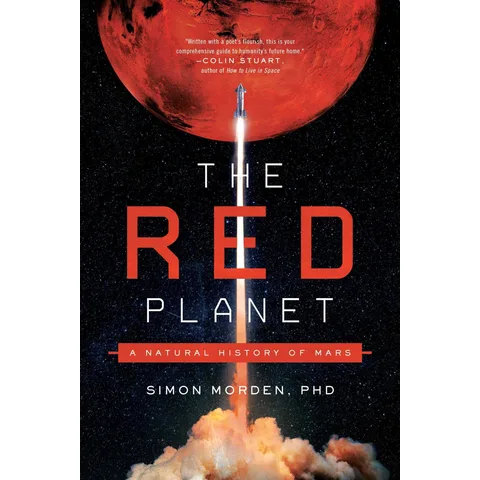
4. The Red Planet: A Natural History of Mars
- Author: Simon Morden
- First published: 2021 (US 2022)
- 256 pages
Simon Morden has a doctorate in planetary geophysics and also writes science fiction. His book tells the history of Mars itself, era by era, from the planet’s formation 4.5 billion years ago through giant impacts, volcanoes and a possible ocean across the northern hemisphere to the slow loss of its atmosphere and the frozen planet we see today.
What I like: Most Mars books are about the people who study it. This one is about the planet. It explains how Olympus Mons, Valles Marineris and the dried river valleys formed, and it made the rover photos make sense to me.
Drawbacks: Some chapters get technical, and it has fewer pictures than you might expect. Readers new to geology should go slow.
Best narrative history
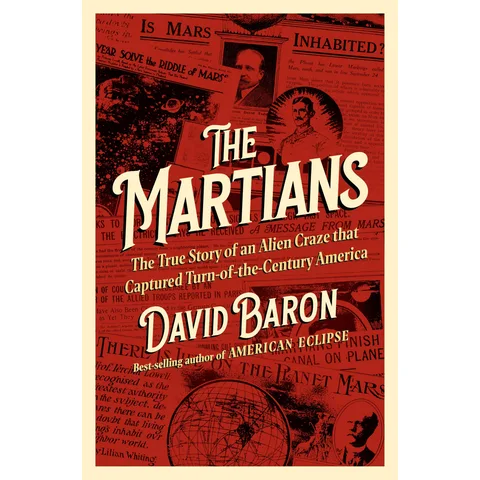
5. The Martians: The True Story of an Alien Craze that Captured Turn-of-the-Century America
- Author: David Baron
- First published: 2025
- 336 pages
Around 1900, many Americans believed intelligent beings lived on Mars. David Baron, author of American Eclipse, tells how that happened: Percival Lowell’s canal maps, newspaper headlines, attempts to signal the planet and the scientists who pushed back. TIME named it one of the best books of 2025, and it was longlisted for the Andrew Carnegie Medal for Nonfiction.
What I like: It reads like a novel. Baron draws a clear line from the canal craze to the way people treat claims about aliens today. It is the newest book on my shelf and the one I have lent out most.
Drawbacks: This is history, not planetary science. It ends long before the first spacecraft reached Mars.
Best case for going
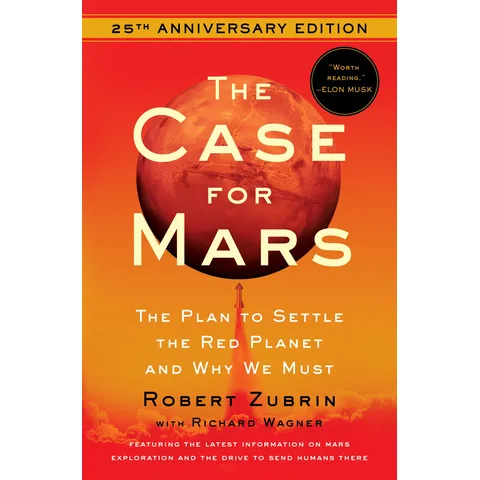
6. The Case for Mars: The Plan to Settle the Red Planet and Why We Must
- Author: Robert Zubrin (with Richard Wagner)
- 25th anniversary edition: 2021
- 448 pages
Robert Zubrin is an aerospace engineer, and this book lays out Mars Direct, his plan for a human mission that makes its return fuel from the Martian atmosphere instead of carrying it from Earth. The first edition came out in 1996. The 25th anniversary edition adds the Perseverance mission, SpaceX’s Starship program and what has changed since.
What I like: Zubrin explains the engineering of a Mars mission step by step, from launch to landing to living off the land. It is the book that shaped how NASA and SpaceX talk about Mars, and it is still the clearest argument for sending people.
Drawbacks: Zubrin is an advocate and sometimes waves away the hard problems. Read A City on Mars for the other side.
Best on the search for life
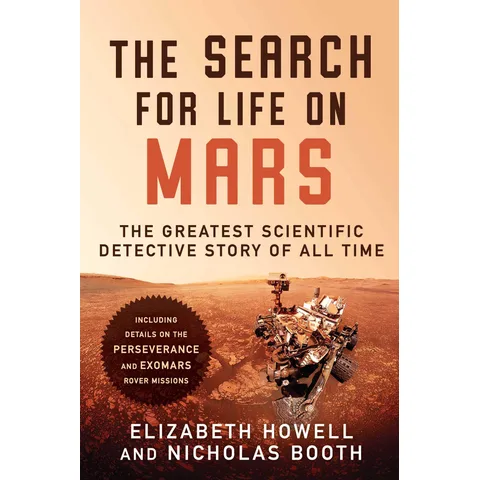
7. The Search for Life on Mars: The Greatest Scientific Detective Story of All Time
- Authors: Elizabeth Howell and Nicholas Booth
- First published: 2020
- 424 pages
Two space journalists follow the hunt for Martian life from the canal era and the Viking life experiments of 1976 to the missions launched in 2020, with a focus on Perseverance. They interviewed more than a hundred scientists and engineers for it.
What I like: It explains why Viking’s results were so confusing and why Perseverance was sent to an old lake bed in Jezero Crater. If you followed the 2025 news about possible biosignatures in a Perseverance rock sample, this book gives you the background. Our post on the Viking missions is a short version of the early chapters.
Drawbacks: It was written as Perseverance launched, so it ends before the landing. The writing is journalistic rather than literary.
Best Mars photo book
Best photo book
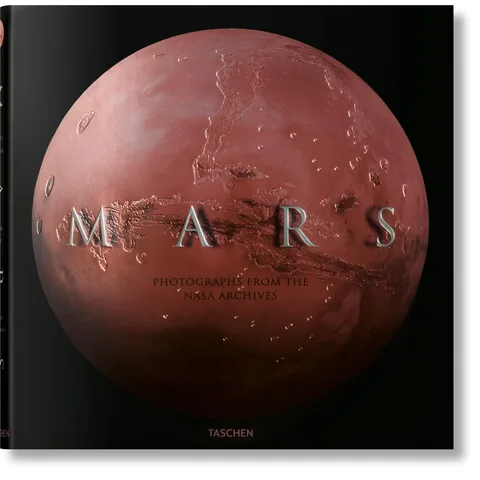
8. Mars: Photographs from the NASA Archives
- Publisher: Taschen
- Texts: Emily Lakdawalla, James L. Green, Margaret Weitekamp, Rob Manning and Nikki Giovanni
- First published: 2024
Taschen collected the best images NASA has taken of Mars, from the 1965 Mariner 4 flyby to Perseverance: polar ice caps, dune fields, canyons and rover panoramas. The texts come from planetary science writer Emily Lakdawalla, former NASA chief scientist James Green, Smithsonian space historian Margaret Weitekamp and JPL engineer Rob Manning, with a contribution from poet Nikki Giovanni.
What I like: This is the Mars book everyone in my house opens, kids included. The orbital photos look like abstract art at this size. It replaced Giles Sparrow’s Mars as my pick for a Mars coffee table book.
Drawbacks: It is a multilingual edition, so the text appears in more than one language. It is large and heavy. For more books like it, see our list of space coffee table books.
Best science fiction books about Mars
Best Mars novel
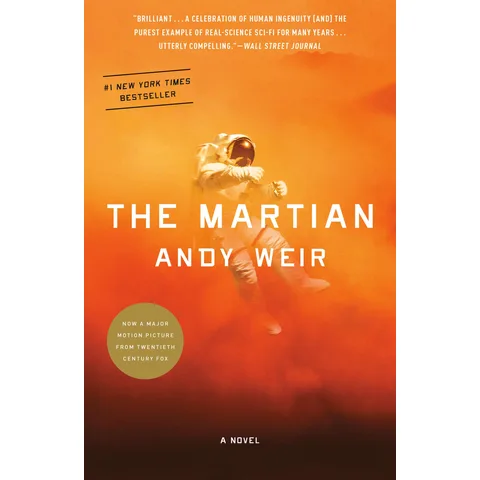
9. The Martian
- Author: Andy Weir
- First published: 2011 (Crown edition 2014)
- Novel
A dust storm forces the crew of Ares 3 to abort their mission, and they leave astronaut Mark Watney behind, believing he is dead. He is not. Watney is a botanist and engineer, and the novel follows his attempts to grow food, make water and contact Earth with what the mission left behind. Ridley Scott made it into a film with Matt Damon in 2015.
What I like: Weir works out the science for nearly every problem Watney solves, and the book is funny. It is the novel I give to people who say they don’t read science fiction. The movie is good, but the book has more of the problem solving.
Drawbacks: Watney’s log entries are full of swearing, which matters if you are buying for a younger teen. A classroom edition with the language toned down also exists.
Best colony epic
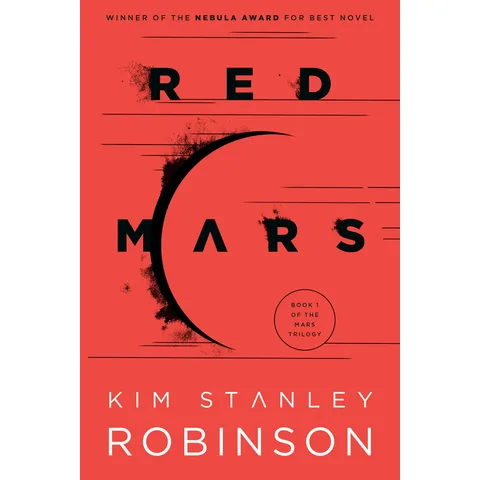
10. Red Mars
- Author: Kim Stanley Robinson
- First published: 1992
- Book 1 of the Mars trilogy
Red Mars follows the First Hundred, the colonists who found the first settlement on Mars, over several decades. They argue about whether to terraform the planet or leave it as it is, and the arguments turn into politics, sabotage and revolution. It won the Nebula Award, and Green Mars and Blue Mars continue the story.
What I like: No other novel describes the Martian landscape in this much detail. In the novel the colonists leave Earth in 2026, which reads strangely now. The terraforming debate between Ann Clayborne and Sax Russell is still the best fictional treatment of that question.
Drawbacks: It is long and slow in places, with whole chapters of geology and politics. Some of the science dates from the early 1990s.
Best classic
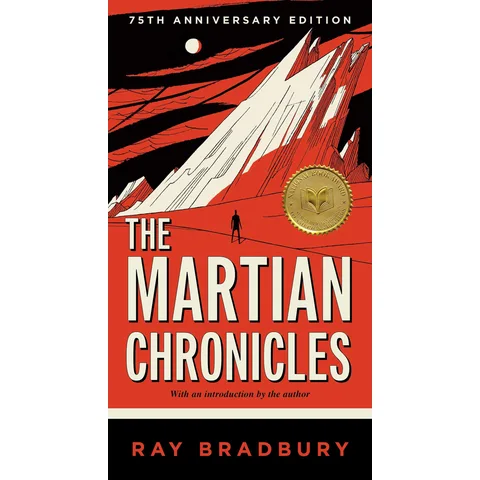
11. The Martian Chronicles
- Author: Ray Bradbury
- First published: 1950
- Linked short stories
Bradbury’s linked stories follow the colonization of Mars from the first failed expeditions to the end of the native Martians and the fate of the human settlers. It is not science fiction about real Mars. Bradbury’s Mars has canals, breathable air and an ancient civilization.
What I like: The stories are short, so it works for readers who don’t usually finish novels. “There Will Come Soft Rains,” about an automated house still running after its family is gone, is one of the best short stories I know. It is the book I would give a teenager who liked The Martian.
Drawbacks: Readers who want accurate science should start with The Martian or Red Mars. Some of the 1950s attitudes in the book have aged badly.
Best Mars books for kids
Best picture book
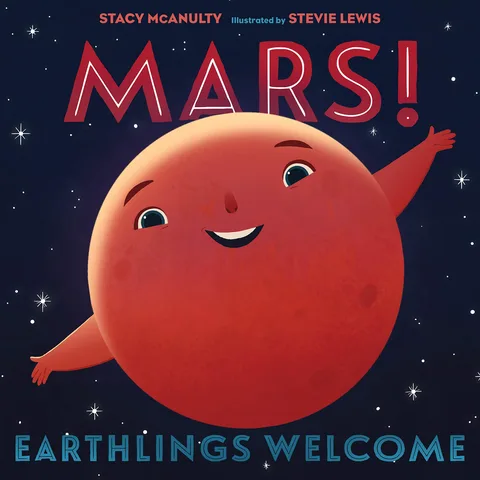
12. Mars! Earthlings Welcome
- Author: Stacy McAnulty
- Illustrator: Stevie Lewis
- Published: 2021
- Ages 4 to 8
Mars tells his own story in this picture book from the Our Universe series. He brags about his day being a little longer than Earth’s, his polar ice caps and Olympus Mons, the largest volcano in the solar system, and he makes his case for why Earthlings should visit. The facts are real and the voice is silly.
What I like: It is the Mars book the youngest kids in my family ask for again. The jokes keep them listening and the facts stick: one of them still tells people how far apart Earth and Mars get. If they like it, the series has books narrated by the Sun, the Moon and Earth.
Drawbacks: It is a light introduction with 40 pages. Kids past second grade will want the DK book below.
Best rover book for kids
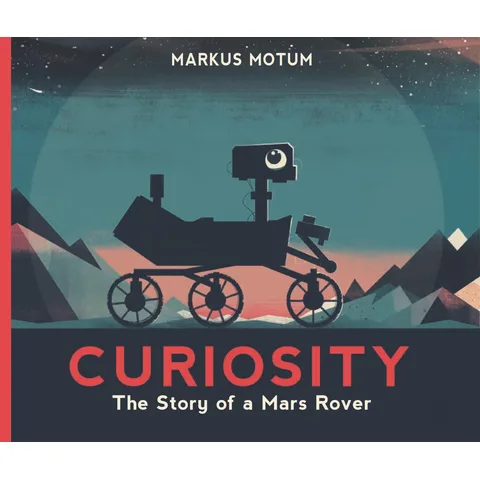
13. Curiosity: The Story of a Mars Rover
- Author and illustrator: Markus Motum
- First published: 2018
- 56 pages
The Curiosity rover narrates her own story, from the engineers who designed her and how she got her name to the launch, the landing on August 6, 2012 and her work searching Gale Crater for signs that Mars could once have supported life. Markus Motum’s illustrations use deep blues for space and rusty reds for Mars.
What I like: It explains a real mission in a way a seven-year-old can follow, including the tools Curiosity carries and what each one does. The landing pages are the ones kids stop on. Afterward, our post on what a Mars rover does answers the follow-up questions.
Drawbacks: It is about Curiosity, not Perseverance. For a Perseverance story, older kids can read A Rover’s Story.
Best fact book for kids
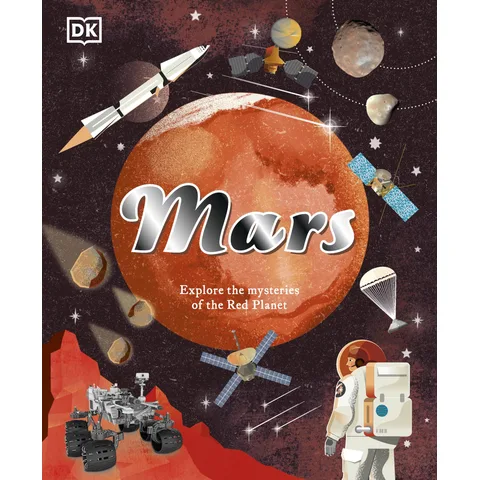
14. Mars: Explore the Mysteries of the Red Planet
- Publisher: DK, with the Smithsonian
- Authors: Shauna Edson and Giles Sparrow
- 80 pages
- Ages 7 to 9
This DK reference covers Mars from its formation and geography to the evidence for past water and life, the missions that have explored it and what living there might look like. Every spread mixes photos from orbiters and rovers with illustrations and short blocks of text. The current printing is part of DK’s Space Explorers series.
What I like: It answers the questions kids actually ask: how tall Olympus Mons is, what astronauts would eat and whether they could go. It also works for school reports, and adults reading along will learn something. I kept it from the 2022 list.
Drawbacks: The format is short sections rather than a story, so it suits browsing more than bedtime reading.
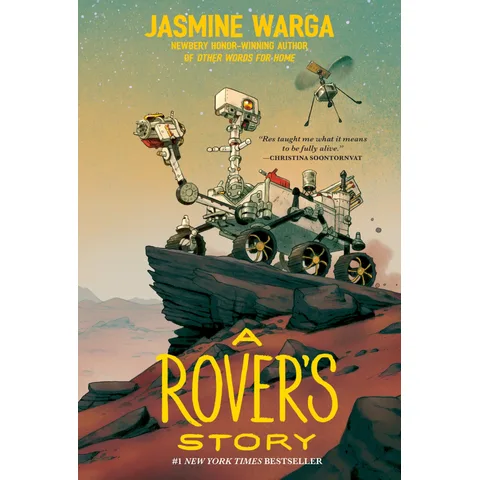
Best novel for kids
15. A Rover’s Story
- Author: Jasmine Warga
- First published: 2022
- 320 pages
- Ages 8 to 12
Resilience, or Res, is a Mars rover who starts to develop feelings as the scientists build him. He launches to Mars with a drone helicopter named Fly, then faces dust storms and cliffs while a girl back on Earth writes him letters. The story is fiction, but the mission follows Perseverance and Ingenuity closely. It was a number one New York Times bestseller.
What I like: It is the Perseverance book for kids, even though the rover has another name. The chapters are short and the rover’s voice is easy to love. It is also a good way into a talk about what real rovers can and can’t do. Our post on what happened to Ingenuity tells the real story of Fly’s counterpart.
Drawbacks: The story deals with grief and a family facing loss, which can hit hard for some kids. Read the first chapters together if you are unsure.
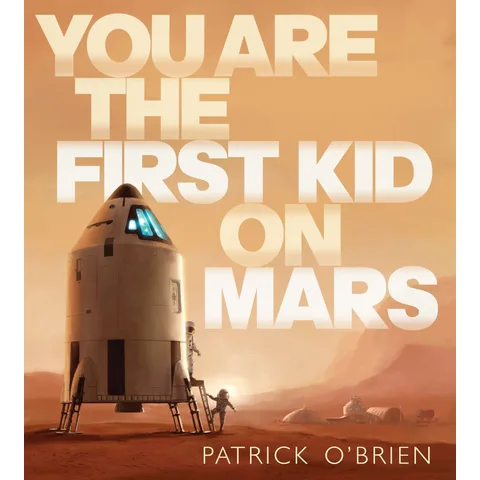
Best for young kids
16. You Are the First Kid on Mars
- Author and illustrator: Patrick O’Brien
- First published: 2009
- 32 pages
- Grades K to 3
Written in the second person, this picture book takes the reader on a trip to Mars: the launch, the long journey, the landing and daily life at a Mars base. Patrick O’Brien based the spacecraft and the base on mission designs that were current when he wrote it, and painted them in a realistic style.
What I like: Putting the child in the story works. Kids imagine themselves in the spacesuit, and the paintings show the real problems of living on Mars, like the cold and the thin air. I reviewed it in 2022 and it still holds up as a first book about traveling to Mars.
Drawbacks: It is from 2009, so the rockets look different from today’s Starship plans. Treat it as a story about what a trip could look like.
How to choose a book about Mars
Start with the reader
For an adult who wants the current science, start with A City on Mars or Discovering Mars. For someone who likes stories, The Martian. For a child under 8, a picture book like Mars! Earthlings Welcome. For a strong reader aged 8 to 12, A Rover’s Story. The table at the top sorts every pick by reader.
Check the publication date
Mars science moves fast. Books published before 2021 end before Perseverance landed in Jezero Crater, and books before 2012 end before Curiosity. That matters for science books and not at all for novels. Of the science picks, Discovering Mars and The Case for Mars (2021 edition) cover Perseverance and Ingenuity, and A City on Mars covers the settlement debate as it stands in the Starship era.
Decide between science and story
The Sirens of Mars and The Martians tell stories about people. Discovering Mars and The Red Planet are closer to references. Mars: Photographs from the NASA Archives is mostly pictures. If the book is a gift, a story is the safer choice.
Pair a book with something hands-on
Kids remember a book better when they can explore what it describes. Our free Mars 3D map shows Olympus Mons, Valles Marineris and the rover landing sites, and the list of Mars rovers covers every rover in these books. For more reading for kids, see our best space books for kids.
FAQ
What is the best book about Mars?
A City on Mars by Kelly and Zach Weinersmith is the best book about Mars for most adults. It is current, funny and covers the questions about settling Mars that other books skip. For the full history of Mars exploration, choose Discovering Mars by William Sheehan and Jim Bell.
What is the best Mars book for kids?
Mars! Earthlings Welcome by Stacy McAnulty is the best Mars picture book for ages 4 to 8. Curiosity: The Story of a Mars Rover by Markus Motum is the best rover book for early readers. A Rover’s Story by Jasmine Warga is the best Mars novel for ages 8 to 12.
Is there a book about the Perseverance rover?
Discovering Mars covers Perseverance and Ingenuity in its final chapters, and The Search for Life on Mars explains why Perseverance went to Jezero Crater. For kids, A Rover’s Story is a novel inspired by Perseverance and Ingenuity, told by a rover named Resilience.
What is the most accurate science fiction book about Mars?
The Martian by Andy Weir is the most scientifically accurate Mars novel for most readers. Red Mars by Kim Stanley Robinson is the most detailed about Martian geography and terraforming. Ray Bradbury’s The Martian Chronicles is a classic but not scientifically accurate.
Is The Martian book appropriate for kids?
The Martian contains a lot of swearing. Most readers put it at 14 and up. A classroom edition with the language removed is available for younger readers.
What book should I read about colonizing Mars?
Read The Case for Mars by Robert Zubrin for the argument in favor and a mission plan, then A City on Mars for the problems that plan has to solve. For fiction about a Mars colony, read Red Mars.