In the 1960s and early 1970s, a string of robotic probes returned the first close-up views and measurements of nearby planets, reshaping how scientists mapped Venus, Mars and Mercury. Those missions combined engineering trials with scientific objectives, producing datasets still cited in planetary research.
There are 10 Mariner Missions, ranging from Mariner 1 to Mariner 9. For each, you’ll find below data organized with Launch date (YYYY-MM-DD),Target,Outcome & highlights (≤15 words),Description (30-50 words); use these fields to scan timelines, targets and mission results — you’ll find below.
How did the Mariner Missions advance planetary science?
They delivered first-ever close images, atmospheric readings and flyby measurements that clarified surface features, atmospheres and orbital dynamics; those baseline observations enabled later missions to target specific questions about volcanism, weather and planetary composition.
How can I use this list to compare mission success and goals?
Compare Launch date to see program progression, check Target and Outcome & highlights for quick results, and read the Description for mission context; together these columns reveal technical milestones, scientific focus shifts and relative success across the missions.
Mariner Missions
| Name | Launch date (YYYY-MM-DD) | Target | Outcome & highlights (≤15 words) | Description (30-50 words) |
|---|---|---|---|---|
| Mariner 1 | 1962-07-22 | Venus | Destroyed after guidance failure shortly after launch. | Early Venus probe intended for atmospheric and magnetic studies; guidance anomaly triggered range-safety destruct shortly after launch, resulting in mission failure. Despite loss, the accident led to improved flight-control software and procedures for later interplanetary missions. |
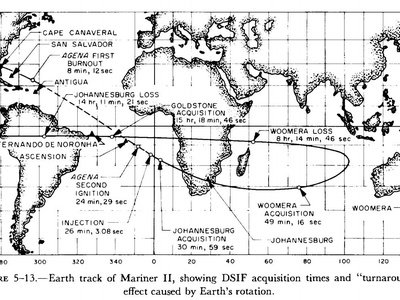
| Mariner 2 | 1962-08-27 | Venus | Successful Venus flyby; first planetary probe. | First successful planetary probe; flew past Venus measuring temperature, atmosphere, solar wind, and cosmic dust. Confirmed high surface temperatures and absence of detectable magnetic field; proved feasibility of interplanetary missions and provided pioneering Venus science. |
| Mariner 3 | 1964-11-05 | Mars | Fairing failed to jettison; no data returned. | Intended Mars flyby for imaging and atmosphere studies; fairing failed to jettison, blocking antennae and solar panels. Spacecraft did not return data and was declared a failure, informing improved payload fairing designs for future missions. |
| Mariner 4 | 1964-11-28 | Mars | Successful Mars flyby; first close-up Martian images. | First successful Mars flyby; returned the first close-up images of Mars, revealing a cratered, Moon-like surface and thin atmosphere. Measured atmospheric composition and solar wind interactions, reshaping ideas about Mars’ geology and habitability. |
| Mariner 5 | 1967-06-14 | Venus | Successful Venus flyby; atmospheric and solar-wind studies. | Small Venus flyby spacecraft; performed atmospheric and occultation experiments, measuring temperature, pressure, composition, and solar wind. Confirmed dense, hot atmosphere and refined Venus atmospheric models, complementing Soviet Venera results. It demonstrated cost-effective spacecraft reuse and instrument miniaturization. |
| Mariner 6 | 1969-02-24 | Mars | Successful Mars flyby; returned close-up images and spectra. | Mars flyby mission studying atmosphere, surface, and composition; returned dozens of close-up images showing cratered and volcanic terrains. Mapped temperature profiles and atmospheric composition, helping build a comparative picture with Mariner 7. |
| Mariner 7 | 1969-03-27 | Mars | Successful Mars flyby; complementary imaging and infrared data. | Companion to Mariner 6, flew a complementary Mars trajectory to survey different regions; returned high-resolution images and infrared spectra. Confirmed diverse Martian geology and seasonal atmospheric variations, enhancing understanding from Mariner 6 data. |
| Mariner 8 | 1971-05-08 | Mars | Launch/upper-stage failure; spacecraft lost. | Mars orbiter intended to map surface and study atmosphere; Centaur upper stage malfunction prevented orbit insertion and spacecraft was lost. Failure prompted review of launch vehicle reliability for later Mars missions. |
| Mariner 9 | 1971-05-30 | Mars | First Mars orbiter; extensive mapping despite dust storm. | First spacecraft to orbit Mars; arrived during global dust storm but mapped over 80% of the surface after dust settled. Returned extensive imagery of volcanoes, canyons, and channels, transforming knowledge of Martian geology. |
| Mariner 10 | 1973-11-03 | Venus and Mercury | Successful Venus and Mercury flybys; first Mercury images. | Dual Venus and Mercury flyby mission using gravity assist; first to use gravity assist and first to return close-up Mercury images. Mapped Mercury’s cratered surface and measured its magnetic field, reshaping Mercury science. |
Images and Descriptions

Mariner 1
Early Venus probe intended for atmospheric and magnetic studies; guidance anomaly triggered range-safety destruct shortly after launch, resulting in mission failure. Despite loss, the accident led to improved flight-control software and procedures for later interplanetary missions.
Mariner 2
First successful planetary probe; flew past Venus measuring temperature, atmosphere, solar wind, and cosmic dust. Confirmed high surface temperatures and absence of detectable magnetic field; proved feasibility of interplanetary missions and provided pioneering Venus science.
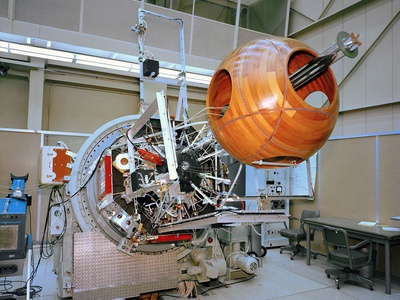
Mariner 3
Intended Mars flyby for imaging and atmosphere studies; fairing failed to jettison, blocking antennae and solar panels. Spacecraft did not return data and was declared a failure, informing improved payload fairing designs for future missions.
Mariner 4
First successful Mars flyby; returned the first close-up images of Mars, revealing a cratered, Moon-like surface and thin atmosphere. Measured atmospheric composition and solar wind interactions, reshaping ideas about Mars’ geology and habitability.
Mariner 5
Small Venus flyby spacecraft; performed atmospheric and occultation experiments, measuring temperature, pressure, composition, and solar wind. Confirmed dense, hot atmosphere and refined Venus atmospheric models, complementing Soviet Venera results. It demonstrated cost-effective spacecraft reuse and instrument miniaturization.
Mariner 6
Mars flyby mission studying atmosphere, surface, and composition; returned dozens of close-up images showing cratered and volcanic terrains. Mapped temperature profiles and atmospheric composition, helping build a comparative picture with Mariner 7.
Mariner 7
Companion to Mariner 6, flew a complementary Mars trajectory to survey different regions; returned high-resolution images and infrared spectra. Confirmed diverse Martian geology and seasonal atmospheric variations, enhancing understanding from Mariner 6 data.
Mariner 8
Mars orbiter intended to map surface and study atmosphere; Centaur upper stage malfunction prevented orbit insertion and spacecraft was lost. Failure prompted review of launch vehicle reliability for later Mars missions.
Mariner 9
First spacecraft to orbit Mars; arrived during global dust storm but mapped over 80% of the surface after dust settled. Returned extensive imagery of volcanoes, canyons, and channels, transforming knowledge of Martian geology.
Mariner 10
Dual Venus and Mercury flyby mission using gravity assist; first to use gravity assist and first to return close-up Mercury images. Mapped Mercury’s cratered surface and measured its magnetic field, reshaping Mercury science.
Enjoyed this article?
Get daily 10-minute PDFs about astronomy to read before bed!
Sign up for our upcoming micro-learning service where you will learn something new about space and beyond every day while winding down.