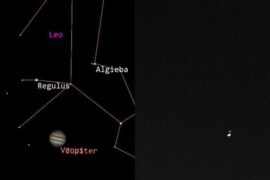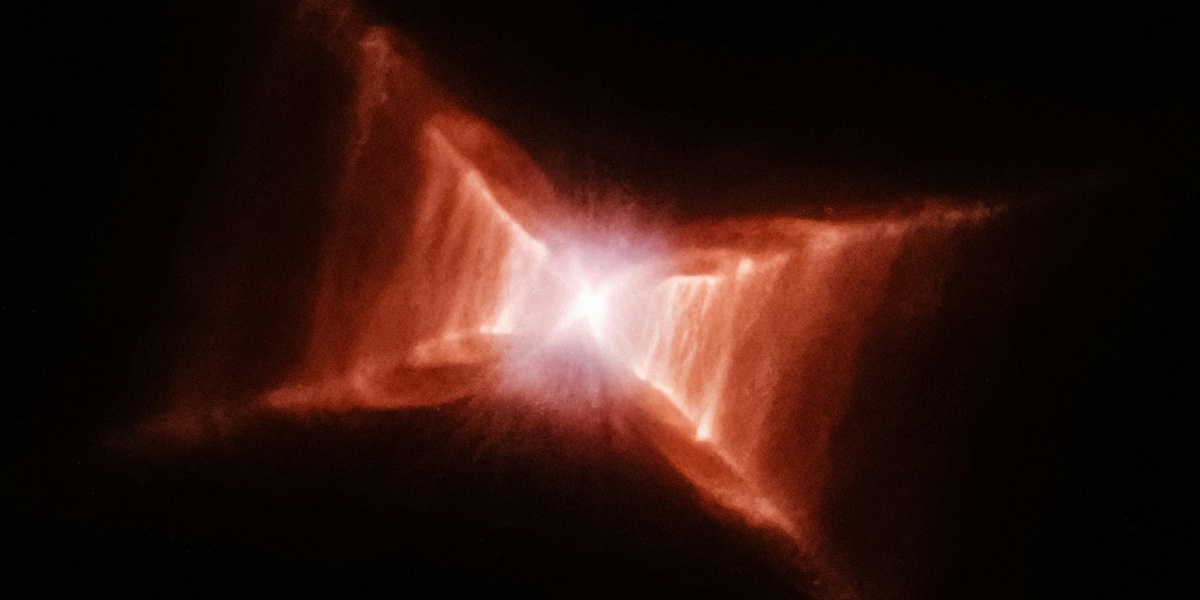
In November 1967 a graduate student named Jocelyn Bell Burnell spotted an eerily regular radio pulse: a signal repeating every 1.337 seconds. The discovery stunned astronomers — the source was briefly nicknamed “LGM” for “little green men” before its true nature emerged — and it opened a new window onto extremely dense, rapidly spinning stars. Those spinning neutron stars pack more mass than the Sun into a sphere only about 10–13 km across, and they sweep beams of radio (and sometimes X-ray or gamma-ray) emission past Earth with astonishing regularity. To answer how pulsars work is to see them as natural lighthouses: steady, directional flashes that serve as clocks, beacons, and physics laboratories. Below are ten specific ways these spinning neutron stars light the cosmos, grouped into three themes: precision timing, navigation and mapping, and probes of extreme physics.
Pulsars as Ultra-Precise Clocks
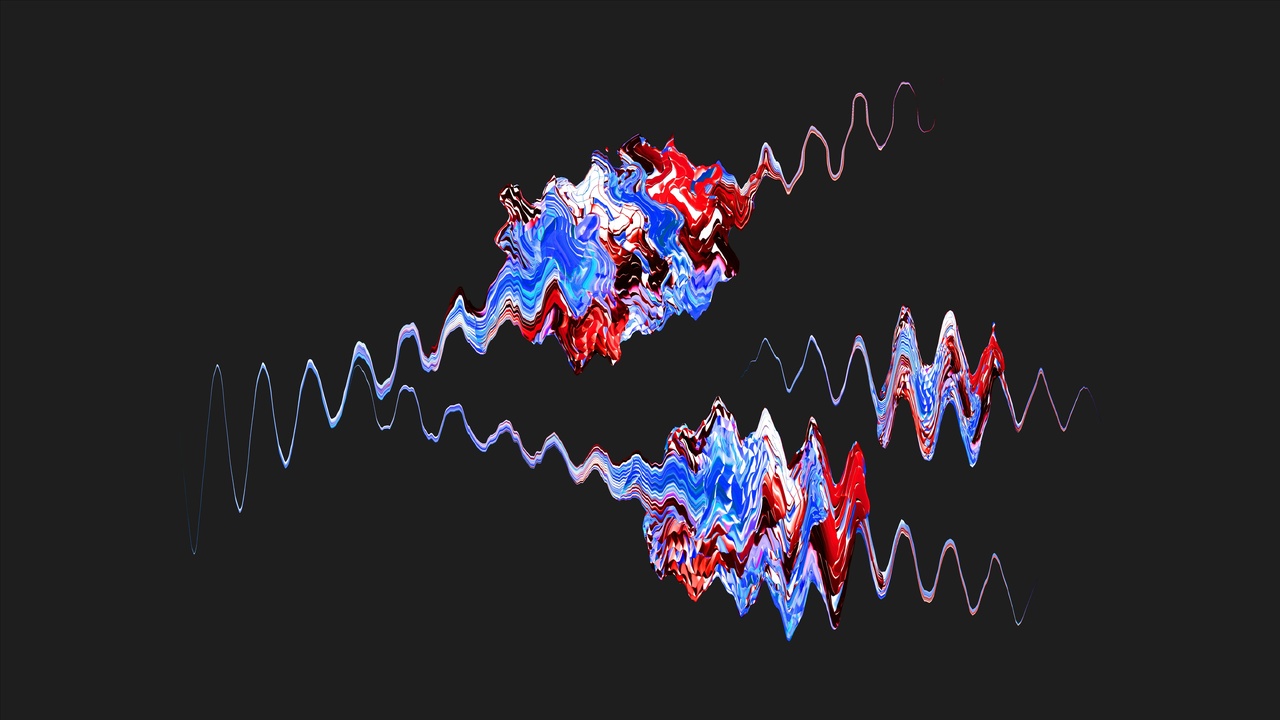
Some pulsars, especially millisecond pulsars, spin hundreds of times per second and deliver pulses with clock-like regularity. Astronomers treat those pulses as timing marks: record the arrival times, compare to a model, and tiny deviations reveal physics or motion. That steadiness is why pulsars are often described as cosmic clocks.
1. Natural precision clocks: timing down to microseconds
Millisecond pulsars rotate at rates of roughly 100–700 Hz, with the fastest known spinner at about 716 Hz (PSR J1748−2446ad, ~1.396 ms). Bright, stable objects like PSR J0437−4715 produce timing residuals at the microsecond level and, in specialized analyses, even nanosecond-scale precision across long baselines. That level of stability rivals decades-old atomic clocks for certain long-term applications.
Practical uses follow: pulsar timing helps refine terrestrial time standards, cross-check atomic timekeeping, and offers long-baseline references that span interplanetary distances. And because these pulses are observable across the galaxy, they serve as far-flung metrological beacons.
2. Testing relativity: pulsars reveal orbital decay
Timing binary pulsars measures orbital changes predicted by general relativity. The Hulse–Taylor pulsar (PSR B1913+16, discovered 1974) showed orbital period decay exactly as GR predicts, with agreement better than 0.2% after decades of monitoring. That result earned Russell Hulse and Joseph Taylor the Nobel Prize in Physics in 1993.
Energy carried away by gravitational waves changes the time of arrival of pulses by tiny, cumulative amounts. Pulsar timing was the first indirect confirmation of gravitational-wave emission long before ground-based interferometers like LIGO made direct detections.
3. Millisecond pulsars as long-term timekeepers
Millisecond pulsars maintain extraordinary rotational stability over years to decades. Spin rates of 100–700 Hz and low intrinsic jitter make them excellent candidates for long-term timing arrays. Networks worldwide now combine dozens of such pulsars to improve overall stability.
The International Pulsar Timing Array (IPTA) brings together regional efforts (NANOGrav, EPTA, PPTA) and times something like 50–100 millisecond pulsars. Individual standouts such as PSR J1909−3744 provide especially precise clocks, and arrays help refine solar-system ephemerides and check terrestrial clock ensembles.
4. Detecting tiny disturbances: pulsars as interferometers of the sky
Deviations from expected arrival times — timing residuals — act like a sensitive detector for anything that perturbs the signal path. That includes changes in the interstellar medium, orbiting companions, and passing gravitational waves with periods of years to decades.
Timing arrays aim to detect correlated, nanosecond-level residuals across many pulsars to reveal nanohertz gravitational waves. On smaller scales, pulsar timing uncovered the first exoplanets (PSR B1257+12, 1992) and continues to measure interstellar “weather” such as plasma lensing and dispersion changes.
Beacons for Navigation and Mapping
Pulsars act as fixed, predictable flashes on the sky, much like lighthouses or GPS satellites. Instruments that time those flashes can triangulate position, and the frequency-dependent delays in radio pulses map free electrons between stars. That makes pulsars powerful tools for navigation and galactic cartography.
5. Spacecraft navigation: XNAV prototypes and tests
Pulsar signals can guide spacecraft autonomously when GPS is unavailable. X-ray pulsar navigation (XNAV) compares observed pulse arrival times to a database of known pulse templates to triangulate a craft’s position in deep space.
NASA demonstrated the idea in 2016 with SEXTANT aboard NICER on the ISS, achieving position fixes to within a few kilometers. China’s XPNAV-1 (launched 2016) and other technology demonstrations have shown this approach is practical for missions beyond Earth orbit.
6. Galactic mapping: dispersion as a distance tool
Radio pulses are delayed by the ionized interstellar medium; lower frequencies arrive later. The dispersion measure (DM), given in pc cm−3, equals the integrated free-electron column between us and the pulsar. Nearby pulsars have DMs of a few pc cm−3, while distant ones in the plane reach hundreds.
By compiling DMs for many pulsars, astronomers refine electron-density models (NE2001, YMW16) and estimate distances where parallax is unavailable. Those maps reveal spiral-arm structure, electron-density clumps, and regions of recent star formation.
7. Pinpointing objects: pulsars as celestial landmarks
Pulsars are fixed sky markers that high-precision timing and interferometry can localize to milliarcsecond accuracy. Very Long Baseline Array (VLBA) astrometry pins positions that let astronomers associate pulsars with supernova remnants, globular clusters, or host stellar populations.
These associations provide independent age and velocity estimates for neutron stars and help reconstruct supernova histories. In short, pulsars light up locations across the galaxy and tie multiwavelength observations together.
Probes of Extreme Physics and the Interstellar Medium
Pulsars host conditions we cannot replicate on Earth: central densities above nuclear density, surface magnetic fields up to 10^15 gauss, and relativistic particle winds. Their pulsed emission provides time-tagged diagnostics of matter and fields in those regimes, so every pulse is a data point on extreme physics.
8. Laboratories for dense-matter physics
Precise mass and radius measurements of neutron stars constrain the equation of state of matter at nuclear densities. The existence of pulsars above 2 M☉ rules out many soft equations of state, narrowing theoretical models of dense matter.
Notable examples include PSR J0740+6620, measured at about 2.14 M☉ (NICER plus radio timing results published around 2021), and other heavy pulsars that push nuclear physics models. Understanding how pulsars work in terms of their internal structure informs both astrophysics and laboratory nuclear theory.
9. Windows into magnetospheres and relativistic plasma
The beams we see come from charged particles moving in ultra-strong magnetic fields, so pulse shapes, polarization, and sudden changes offer direct probes of magnetospheric physics. Observations such as mode switching, polarization angle swings, and giant pulses reveal particle acceleration and plasma behavior in relativistic regimes.
The Crab pulsar’s giant pulses, seen from radio up to gamma rays, show extreme, brief bursts of coherent emission. Magnetars, with fields around 10^14–10^15 gauss, extend the parameter space further and produce X-ray bursts that help test magnetohydrodynamic models at the highest field strengths.
10. Pulsar timing arrays: lighthouses for gravitational waves
Arrays of precisely timed millisecond pulsars function as a galaxy-scale detector for nanohertz gravitational waves. Collaborations like NANOGrav (US), EPTA (Europe), and PPTA (Australia) pool data in the International Pulsar Timing Array to search for correlated timing deviations across the sky.
In the 2020s these groups reported a common-spectrum process in their datasets — a tantalizing hint consistent with a stochastic gravitational-wave background from supermassive black hole binaries. Pulsar timing targets strains at frequencies of ~10^−9–10^−7 Hz, probing phenomena inaccessible to LIGO/Virgo.
Summary
- Pulsars act as remarkably precise cosmic beacons: millisecond pulsars provide timing stability rivaling long-term atomic references.
- They enable practical navigation and mapping: XNAV demonstrations (SEXTANT/NICER, XPNAV-1) and dispersion measures reveal position and galactic structure.
- Pulsar timing underpins fundamental physics: binaries like Hulse–Taylor confirmed orbital decay from gravitational waves, while heavy pulsars (e.g., PSR J0740+6620) constrain dense-matter models.
- Networks of pulsars are unique detectors for nanohertz gravitational waves (NANOGrav, EPTA, PPTA/IPTA), turning a grid of lighthouses into a gravitational observatory.
Enjoyed this article?
Get daily 10-minute PDFs about astronomy to read before bed!
Sign up for our upcoming micro-learning service where you will learn something new about space and beyond every day while winding down.