Explore the 7 Wonders of the Solar System — a curated guide to the most spectacular planets, moons, and celestial landmarks in our cosmic neighborhood. Each wonder links to in-depth posts with photos, science, and travel-worthy facts for stargazers, students, and space enthusiasts. Start your journey through the Solar System’s greatest sights.
This post lists the four Galilean Moons — Io, Europa, Ganymede, and Callisto — with concise data on discovery year, diameter (km), and distance from Jupiter (in 1,000 km). Ideal for students, educators, and space enthusiasts, the table makes it easy to compare sizes and orbital distances at a glance. Plus, brief notes highlight unique features of each moon.
From blazing Venus to the ice-covered seas of Europa, this hub explores the 10 most extreme environments in the Solar System, highlighting worlds with blistering heat, crushing pressure, violent volcanism, and cryovolcanic oceans. Each entry provides a concise overview, the defining science behind the conditions, and links to in-depth posts on Io, Titan, Mercury, Jupiter’s storms and more.
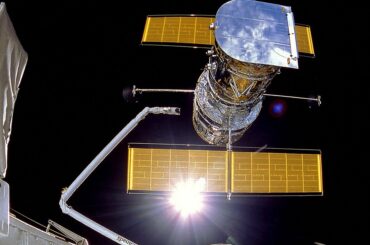
From early telescopic plates and the first lunar surface photos to Hubble deep-field revelations and the ‘Pale Blue Dot,’ this hub highlights 10 milestones in space photography that reshaped our view of the cosmos. Each milestone links to a detailed post with high-resolution images, technical context, and the stories behind the shots—perfect for space fans, photographers, and educators.
This guide lists all 16 Equatorial Constellations — star patterns that lie along or near the celestial equator and are visible from both hemispheres. For each constellation you’ll find declination and right ascension ranges, notable stars, and a concise 30-50 word description to help identify and observe them. Perfect for stargazers, navigators, and astronomy students seeking a clear reference.
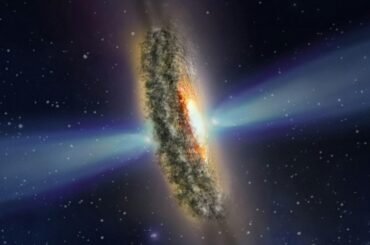
Explore 12 of the strangest, least intuitive facts about quasars — the universe’s brightest and most mysterious objects. This hub summarizes each oddity (extreme luminosity, relativistic jets, record redshifts, hidden hosts, and more) and links to in-depth posts so you can dive deeper into the surprising science behind quasars.
This curated list presents 21 stars named after women, detailing who each star was named for, the origin or culture of the name, and whether the name is officially recognized by the IAU. Perfect for astronomy enthusiasts and name-history lovers, the post explores myths, historical figures, and cultural traditions behind female star names. Click to explore the full list and origins.
This hub highlights the 10 Most Active Volcanoes on Other Planets, summarizing each site’s activity, causes, and observations while linking to in-depth posts. Perfect for space enthusiasts and students, it explains how tidal heating, cryovolcanism, and other processes drive eruptions beyond Earth and points to detailed planet-by-planet coverage.
This comprehensive list catalogs 23 Great Comets observed across history, providing each comet’s year, peak visual magnitude, and orbital period. Whether you’re an amateur skywatcher or a space enthusiast, consult this guide for key visibility data, historical context, observing tips, maps of notable apparitions, and notes on visibility from different hemispheres.
Explore the 10 most important equations in astronomy, from Newton’s laws and Kepler’s laws to Einstein’s relativity and Hubble’s law. Each entry includes intuitive explanations, real-world examples, and links to dedicated posts for deeper study—perfect for students, hobbyists, and educators seeking a clear guide to the math of the cosmos.