
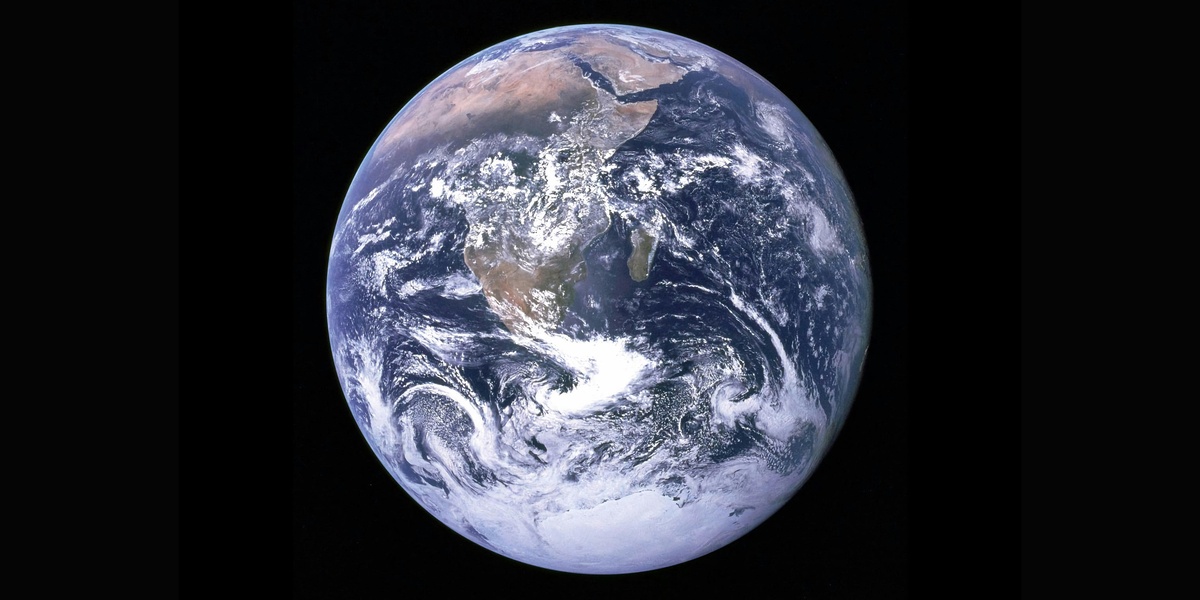
What would happen if the planet beneath our feet suddenly stopped spinning? Imagine the sky freezing, winds that tear cities apart, and a day that lasts an entire year.
Humans have relied on Earth’s steady spin for navigation, calendar-making, and the rhythms of sleep and work—sailors used stars and compasses tied to a rotating world, and our circadian clocks evolved to a 24-hour cycle. The rotation underpins day/night cycles, global weather patterns, the planet’s slightly squashed shape, and the dynamo that powers our magnetic shield.
People sometimes ask what if Earth stopped rotating, and the answer is dramatic but grounded in physics: the immediate shocks would be catastrophic, and the long-term consequences would reshape coastlines, climates, and societies. For context, Earth currently completes a rotation in about 24 hours.
Atmospheric and Weather Effects
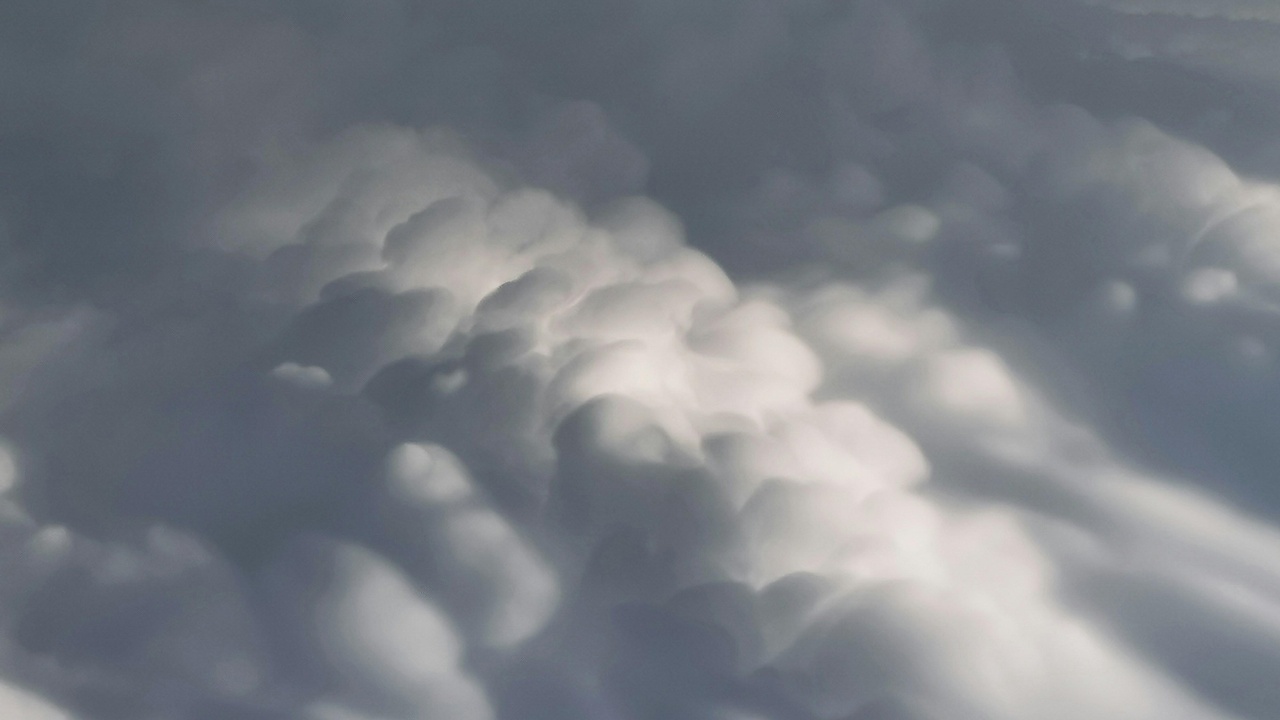
Earth’s spin generates the Coriolis effect, steers the jet streams, and helps set the size and behavior of Hadley, Ferrel, and polar cells. Take the numbers seriously: the equatorial surface speed is roughly 1,670 km/h, and the planet’s rotational kinetic energy is on the order of 2.1×10^29 joules—enough to dominate large-scale atmospheric motions. If rotation stopped suddenly, the atmosphere wouldn’t instantly stop with the surface; those enormous stored motions would translate into extreme winds and reconfigured weather systems.
Over the medium term—years to decades—a non-rotating Earth would develop very different heating patterns (no regular 24-hour cycle), producing new steady circulation patterns more like slowly rotating planets such as Venus or tidally locked worlds. That would shift precipitation belts, change hurricane behavior, and alter where temperate agriculture is viable. Think of Hurricane Katrina-scale destruction magnified and widespread, and you’ll get a sense of the stakes.
1. Supersonic atmospheric winds and instant storms
If Earth’s solid body were brought to a stop abruptly, the air above would keep moving at roughly the same tangential speed as the surface used to have—about 465 m/s (≈1,670 km/h) at the equator. That exceeds the speed of sound at sea level (≈343 m/s), so the first minutes and hours would feature supersonic flows and shock waves sweeping across the surface.
Those winds would pulverize unanchored structures, strip roofs, uproot forests, and hurl debris like high-velocity shrapnel. For scale, a Category 5 hurricane’s sustained winds are under 90 m/s; the initial winds from a stopped spin would be multiple times stronger near the equator. Coastal cities—New Orleans among them—would face both wind-driven destruction and later flooding from redistributed ocean water.
2. Collapse of the Coriolis effect and reworked storm tracks
The Coriolis force arises because the planet spins; remove that rotation and the deflection of moving air vanishes. Trade winds, mid-latitude cyclones, and ocean gyres would lose their familiar patterns, and the jet streams—typically flowing at ~30–50 m/s—would break down or reconfigure into very different steady flows.
That change means storm tracks and rainfall belts would shift unpredictably. Regions that depend on seasonal storms or predictable winter weather for agriculture and water supply would see those systems reorganize, threatening harvests and freshwater availability across large parts of Europe, North America, Africa, and Asia.
3. Day length becomes a year-long cycle (if not tidally locked)
If the planet stopped rotating but kept orbiting the Sun, a solar day at any given point would stretch from 24 hours to roughly one orbital period—about 365.25 days—meaning roughly six months of continuous daylight followed by six months of darkness at most latitudes.
As a thought experiment, asking what if Earth stopped rotating helps illustrate the consequences: prolonged sunlight would bake daytime hemispheres and plunge the night side into long cold spells. Planetary comparisons are instructive—Mercury’s solar day lasts about 176 Earth days under its 3:2 spin-orbit resonance, and Venus rotates so slowly that solar days are extremely long, with very different atmospheric circulation as a result.
Extended daylight and night would stress photosynthesis, alter growing seasons, and break circadian rhythms for humans and wildlife, producing broad ecological and agricultural upheaval—especially away from the equator, where seasonal heating contrasts would be greatest.
Geophysical and Environmental Changes
Rotation sculpts Earth’s shape: the equator bulges and the poles flatten because of centrifugal force. The equatorial bulge amounts to about a 21 km difference in radius between equator and poles, and centrifugal acceleration at the equator is roughly 0.034 m/s²—about 0.34% of standard gravity. Stop the spin and the balance of forces changes, prompting water and even solid mass to migrate toward a new equilibrium.
In the short term, sudden deceleration would radiate energy into the mantle and crust as seismic waves. Over decades to centuries, oceans and crustal stresses would relax toward a new shape, sea levels would shift regionally, and the internal fluid motions that power the geomagnetic field could be altered.
4. Oceans migrate toward the poles; coastlines rewritten
Centrifugal force currently lifts water toward the equator; without it, that bulge relaxes and water seeks regions of lower gravitational potential—generally higher latitudes. The result: polar inundation and exposure of some equatorial shelves, with coastlines redrawn in dramatic ways.
Quantitatively, the ≈21 km equatorial bulge gives a sense of how much shape would change, but exact local sea-level shifts depend on complex factors (ocean basin geometry, Earth’s elastic response). Still, major low-lying equatorial cities and deltas—Miami, Mumbai, Dhaka among them—would face very different fates: some zones might be exposed, others inundated, and global maps of navigable ports and fisheries would be altered.
5. Increase in effective gravity at the equator
Right now the outward centrifugal acceleration at the equator slightly counters gravity. Remove that outward push and apparent gravity increases by about 0.034 m/s², roughly 0.34% of g.
That’s measurable but small: a 70 kg person would feel the equivalent of about 0.24 kg heavier. Buildings and bridges would see slightly larger static loads, but those mechanical changes are minor compared with the atmospheric and hydrodynamic upheavals caused by a stopped spin.
6. The magnetic field could weaken if the core slows
Earth’s magnetic field arises from convection and rotation-driven motions in the liquid outer core. A major change in rotation would alter those flows and could weaken or reconfigure the dynamo over centuries to millennia.
Surface magnetic-field strengths today range roughly 25–65 µT (microteslas). A substantially weaker field would let more cosmic rays and solar energetic particles reach the atmosphere and surface, increasing radiation exposure, disrupting satellites and aviation, and inducing currents in long conductors like power grids and pipelines. The Carrington Event of 1859 shows how a strong geomagnetic storm can damage telegraph systems—modern infrastructure is far more vulnerable.
Biological and Human Impacts

Life on Earth evolved under a roughly 24-hour light-dark cycle, and ecosystems, crops, and human societies are tuned to that cadence. Sudden storms and long-term shifts in daylight patterns would cause immediate casualties and long-term disruption to food production, health, and settlement patterns.
About 40% of the global population lives within 100 km of a coastline, so sea-level and coastline changes would threaten hundreds of millions of people and push large-scale migration. Agricultural zones would shift as rainfall and temperature regimes reorganize, placing enormous stress on food systems.
7. Collapse of agriculture and food supply shocks
Major crops—wheat, rice, maize and soy—are sensitive to photoperiod and seasonal cues. Altered day length, extreme temperatures, and new precipitation patterns would reduce yields across wide swaths of current farmland.
Regions that rely on predictable monsoons or winter rainfall would be especially hard hit. The immediate picture is failing harvests, broken supply chains, and regional famines unless rapid adaptation—greenhouses, controlled-environment agriculture, seed reprogramming—can be scaled up quickly, which itself would be a gargantuan challenge.
8. Human health and biological clock disruption
Human circadian rhythms regulate sleep, hormones, metabolism, and immune function. Prolonged daylight or darkness would spike rates of sleep disorders, mood disorders, and metabolic problems, and acute disaster-related injuries would overwhelm medical systems.
A practical analogy: astronauts on the ISS use strict schedules and lighting to manage circadian disruption. On Earth, whole populations would need similar interventions at scale—controlled lighting, shift-work protocols, and robust healthcare—to avoid long-term public-health declines.
Infrastructure, Economy and Society
Built systems assume a rotating planet with familiar weather and day-night cycles. Catastrophic winds, flooding, and ground shifts would damage transportation networks, power grids, and communications. Space assets and long-distance electrical systems face elevated risk from both storms and any weakening of the magnetic field.
Economic shocks would be immediate and long-lasting: ports out of service, harvests lost, insurance markets collapsing, and global supply chains fracturing. The costs would dwarf most historical disasters simply because the disruption would be global and simultaneous.
9. Widespread infrastructure collapse and economic shock
Extreme winds, water redistribution, and seismic shaking would destroy or severely damage roads, rails, ports, and energy systems. Look at recent disasters for scale: Hurricane Katrina (2005) and Typhoon Haiyan (2013) caused tens of billions in damages regionally—multiply that across many regions at once and the economic toll becomes unprecedented.
Partial mitigations—microgrids, stockpiles, hardened buildings—help locally but can’t fully offset a global, systemic shock. Restoring complex supply chains and financial systems would take years, if not decades.
10. Long-term governance, migration, and technological responses
Over years and decades, expect mass migrations from inundated coasts and collapsed farmlands, political strain on host regions, and new demands on international institutions. Historical examples—climate-driven migrations that contributed to regional instability—show how resource shocks can stress governance.
Technological responses would include hardened satellites and grids, expanded controlled-environment agriculture, geoengineering debates, and coordinated humanitarian efforts led by organizations like the UN and space and monitoring agencies (NASA, ESA) for early warning and adaptation planning. Even so, the scale of change would test global cooperation in unprecedented ways.
Summary
- Immediate atmospheric and geophysical shocks—supersonic winds, seismic waves, and rapid flooding—would cause most acute damage.
- Long-term shifts—a solar day stretching toward a year, coastlines redrawn, and potential weakening of the magnetic field—would reshape ecosystems, agriculture, and human settlement patterns.
- Physical and societal systems are tightly linked: infrastructure, food systems, and health services would face cascading failures without rapid, large-scale adaptation.
- Key scientific figures to keep in mind: Earth’s current rotation period is 24 hours, equatorial surface speed ≈1,670 km/h, and rotational kinetic energy ≈2.1×10^29 J.
- Forward action means investing in monitoring and resilience (NASA and other agencies for observation; the UN for coordination), building controlled-environment food systems, and hardening critical infrastructure to improve our planetary resilience.
Enjoyed this article?
Get daily 10-minute PDFs about astronomy to read before bed!
Sign up for our upcoming micro-learning service where you will learn something new about space and beyond every day while winding down.