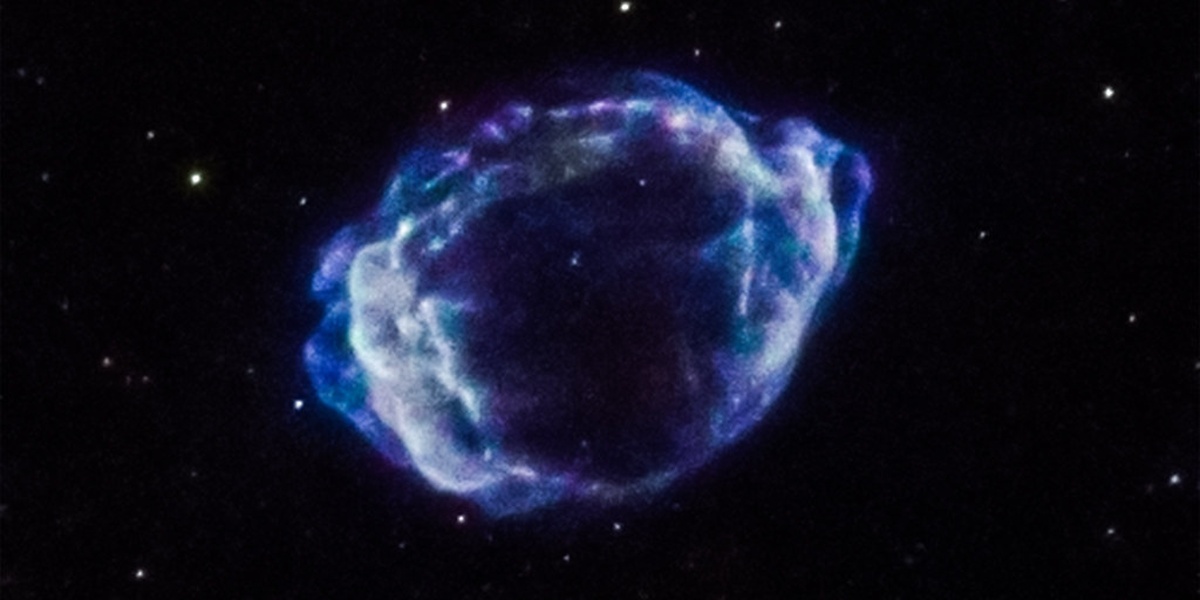
Across the cosmos, dying stars light up their surroundings with brief, powerful bursts that reshape galaxies and seed the interstellar medium. Observing these explosions lets astronomers trace stellar life cycles, chemical enrichment, and the formation of neutron stars and black holes.
There are 24 Types of Supernovae, ranging from Ca-rich gap transients to Ultra-stripped SN; the list covers common core-collapse and thermonuclear explosions as well as rare, fast, and faint transients. Each entry is organized with columns Progenitor,Mechanism,Peak abs mag (mag) so you can compare origins, driving processes, and typical brightness, and you’ll find below.
How do astronomers distinguish between different supernova types?
Spectra and light curves are the primary tools: spectral lines reveal elements (hydrogen, helium, silicon, calcium), while the rise and decline of brightness indicate the explosion mechanism and ejecta mass. Combining both with host-galaxy context and progenitor constraints yields a robust classification.
Why does “Peak abs mag (mag)” matter when comparing supernovae?
Peak absolute magnitude gives an intrinsic brightness independent of distance, so it tells you how much energy was radiated at maximum light. That helps separate faint, fast transients from luminous events and links observed brightness to physical models of the explosion.
Types of Supernovae
| Type | Progenitor | Mechanism | Peak abs mag (mag) |
|---|---|---|---|
| Ia | White dwarf in binary (carbon-oxygen) | Thermonuclear runaway near Chandrasekhar mass | -19.3 |
| Ia-91T | White dwarf in binary (carbon-oxygen) | Thermonuclear runaway (overluminous subtype) | -19.8 |
| Ia-91bg | White dwarf in binary (carbon-oxygen) | Thermonuclear runaway (subluminous subtype) | -17.0 |
| Iax | White dwarf in binary (likely partial deflagration) | Failed/partial thermonuclear explosion | -16.5 |
| Ia-CSM | White dwarf interacting with dense circumstellar material | Thermonuclear explosion with strong CSM interaction | -20.0 |
| Ib | Massive star stripped of hydrogen envelope | Core-collapse of massive star | -17.6 |
| Ic | Massive star stripped of H and He envelopes | Core-collapse of massive star | -17.7 |
| Ic-BL | Very massive, stripped star (often Wolf-Rayet) | Energetic core-collapse, often jet-driven | -19.0 |
| II-P | Red supergiant star (~8–25 Msun) | Core-collapse of massive star | -16.5 |
| II-L | Moderately stripped massive star (red/yellow supergiant) | Core-collapse of massive star | -17.0 |
| IIb | Massive star partially stripped of hydrogen envelope | Core-collapse with partial envelope stripping | -17.5 |
| IIn | Massive star with dense circumstellar material | Core-collapse with strong CSM interaction | -19.0 |
| Ibn | Wolf-Rayet or He-rich massive star | Core-collapse with He-rich CSM interaction | -19.0 |
| Icn | Massive star with C/O-rich circumstellar material | Core-collapse with C/O-rich CSM interaction | -19.0 |
| II-pec (87A-like) | Blue supergiant or compact progenitor | Core-collapse with compact progenitor shock diffusion | -15.5 |
| SLSN-I | Massive, hydrogen-poor star or exotic engine | Magnetar spin-down or CSM interaction | -21.5 |
| SLSN-II | Massive hydrogen-rich star with dense CSM | CSM interaction powers extreme luminosity | -22.0 |
| Pair-instability (PISN) | Very massive star (~140–260 Msun, low metallicity) | Pair production triggers runaway oxygen burning | -22.0 |
| Pulsational pair-instability (PPISN) | Very massive star (~80–140 Msun) | Pair-instability pulses eject mass before final collapse | -19.5 |
| Electron-capture (ECSN) | Super-AGB star or O-Ne-Mg core (~8–10 Msun) | Rapid electron captures trigger core collapse | -15.5 |
| Ultra-stripped SN | He-star in tight binary stripped by companion | Core-collapse with very low ejecta mass | -16.0 |
| Ca-rich gap transients | Old, low-mass progenitor (He shell on WD?) | Explosive helium shell detonation or unusual core-collapse | -15.5 |
| Failed supernova (direct collapse) | Very massive star (>25 Msun) | Direct collapse to black hole with little/no explosion | -14.0 |
| Hypernova | Very massive, rapidly rotating star | Extremely energetic core-collapse, jet-driven | -20.0 |
Images and Descriptions

Ia
Thermonuclear explosions of white dwarfs lacking hydrogen lines, used as standardizable candles for cosmology. Characterized by strong Si II absorption near peak and uniform light curves. Common example SN 2011fe was a nearby, well-studied Type Ia.
Ia-91T
Overluminous Type Ia with weak early Si II and strong Fe III lines, broader light curves and higher peak brightness. Thought to be large Ni-56 yield explosions. Notable example SN 1991T defined the class.
Ia-91bg
Subluminous, fast-declining Type Ia with strong Ti II absorption, red colors and low Ni-56 mass. Occur in older stellar populations and are less luminous. SN 1991bg is the prototypical example.
Iax
Low-energy thermonuclear explosions with mixed spectral features, lower velocities and incomplete disruption of the white dwarf. Often fainter and more diverse than normal Ia. SN 2002cx is the class prototype.
Ia-CSM
Type Ia that shows narrow hydrogen emission from interaction with dense circumstellar gas; spectra blend Ia features and IIn-like emission. Very luminous and long-lived. SN 2002ic is a well-known example.
Ib
Hydrogen-poor core-collapse supernovae showing strong helium lines; result from massive stars stripped by winds or binaries. Spectra lack hydrogen but show He I features. SN 2008D is a well-studied Type Ib with X-ray shock breakout.
Ic
Stripped-envelope core-collapse supernovae lacking both hydrogen and helium lines; often from Wolf-Rayet or binary-stripped stars. Can be linked to long gamma-ray bursts in extreme cases. SN 1994I is a classic Type Ic.
Ic-BL
Broad-lined Type Ic with very high ejecta velocities and broad spectral features; often exceptionally energetic (‘hypernova’). Frequently associated with long GRBs. SN 1998bw, linked to GRB 980425, is the archetype.
II-P
Common core-collapse SNe showing a long, flat “plateau” in their light curve lasting ~100 days; strong hydrogen lines in spectra. Progenitors are red supergiants. SN 1999em is a textbook Type II-P.
II-L
Historically defined by a linear decline instead of a plateau; hydrogen-rich core-collapse explosions with faster-declining light curves and similar spectra to II-P. Distinction blurred but SN 1979C is a classic Type II-L.
IIb
Transitional events that show hydrogen lines early, then evolve to helium-dominated spectra like Type Ib; indicate partial stripping by winds or binary interaction. Light curves often double-peaked. SN 1993J is a famous Type IIb.
IIn
Type II spectra with narrow emission lines produced by dense, slow-moving circumstellar gas being shocked by ejecta; can be very luminous and long-lived. Often linked to massive stars with eruptive mass loss. SN 1998S is a well-known example.
Ibn
Show narrow helium emission lines from interaction with helium-rich circumstellar material, often fast-evolving and luminous. Likely from massive stars that recently shed helium shells. SN 2006jc, which had a pre-explosion outburst, is a defining example.
Icn
Recently identified class with narrow carbon/oxygen emission lines and little hydrogen or helium, indicating interaction with C/O-rich circumstellar shells. Rare and fast-evolving. SN 2019hgp is a key observed example. Spectra suggest massive progenitors that lost outer layers.
II-pec (87A-like)
Peculiar Type II events with slow-rising light curves and compact blue-supergiant progenitors, giving distinct long rise times and ring-shaped remnants. SN 1987A in the Large Magellanic Cloud is the canonical example and well-studied nearby event.
SLSN-I
Superluminous hydrogen-poor explosions with extreme peak brightness and blue spectra; powered by magnetar energy injection or other exotic mechanisms rather than radioactive decay. Rare and often in low-metallicity galaxies. SN 2015bn is a prominent SLSN-I.
SLSN-II
Hydrogen-rich superluminous events whose great brightness is powered by ejecta colliding with dense circumstellar shells. Often show strong narrow hydrogen emission like Type IIn but much brighter. SN 2006gy is a famous SLSN-II.
Pair-instability (PISN)
Theoretical/observational class where extremely massive, low-metallicity stars undergo pair production instability, causing complete disruption and huge Ni-56 yields; very broad light curves and extreme luminosities. SN 2007bi was proposed as a candidate PISN.
Pulsational pair-instability (PPISN)
Very massive stars experience pair instability pulses that eject shells in repeated outbursts; final collapse can produce bright interacting supernovae when ejecta collide with earlier shells. Possibly seen in luminous interacting events like SN 2006gy.
Electron-capture (ECSN)
Collapse triggered when electrons are captured by Ne/Mg in O-Ne-Mg cores of super-asymptotic giant branch stars, producing relatively low-energy, faint explosions. Theory supported by candidates; SN 2018zd has been proposed as an ECSN candidate.
Ultra-stripped SN
Very fast, faint core-collapse SNe from heavily stripped progenitors in tight binaries; low ejecta mass produces rapidly evolving light curves and weak spectra, likely progenitors of some neutron-star binaries. iPTF14gqr is a key observed example.
Ca-rich gap transients
Fast, faint transients with strong nebular calcium emission and explosion energies between novae and supernovae (“gap” events). Often in galaxy outskirts suggesting older progenitors; SN 2005E is a well-known Ca-rich transient.
Failed supernova (direct collapse)
Stars that collapse directly into black holes with little or no optical display; may produce a weak transient or neutrino signal and leave disappearing stars. N6946-BH1 is an observational candidate for a failed supernova.
Hypernova
Exceptionally energetic core-collapse explosions with kinetic energies >10^52 ergs, often broad-lined Type Ic and associated with long GRBs; high Ni-56 yields and broad spectra characterize them. SN 1998bw is the classic hypernova connected to GRB 980425.
Enjoyed this article?
Get daily 10-minute PDFs about astronomy to read before bed!
Sign up for our upcoming micro-learning service where you will learn something new about space and beyond every day while winding down.