Astronomers estimate there are over two trillion galaxies in the observable universe — each with its own shape, history, and story. That staggering number makes classification useful: sorting galaxies helps astronomers read their past and predict their futures. In 1926 Edwin Hubble published the first systematic sketch that grouped galaxies by shape, and his sequence still guides how we think about galactic forms today.
This guide to the types of galaxies explains seven distinct morphological classes, how they differ, and why those differences matter for studies of star formation, dark matter, and black-hole growth. Expect clear examples — the Milky Way (≈100,000 light-years across), Andromeda (M31), M87, the Large Magellanic Cloud, IC 1101, and the Antennae — with concrete facts sprinkled throughout.
Classifying galaxies reveals formation history, typical environments (clusters versus the field), and the distribution of gas and stars. Read on for seven numbered categories with real examples and the key ideas astronomers use when they sort the sky.
Major Morphological Types
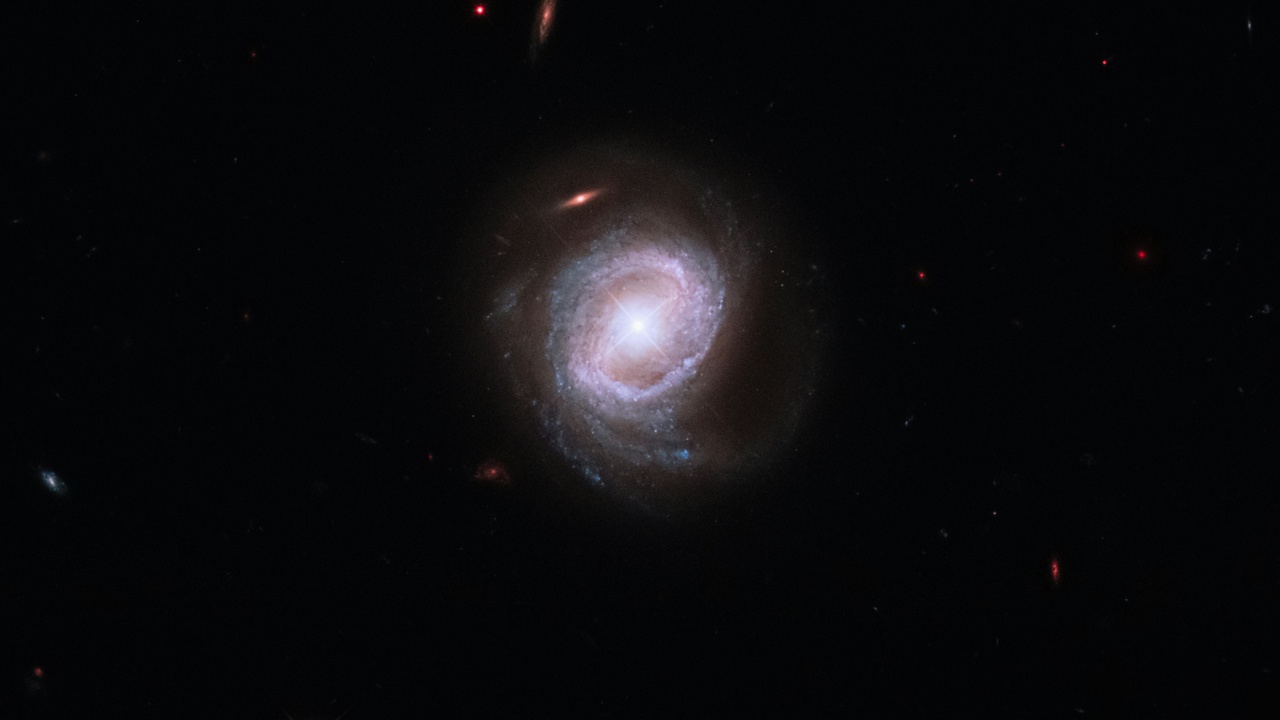
Edwin Hubble’s 1926 sequence grouped galaxies into disk-like spirals, rounded ellipticals, intermediate lenticulars, and nonstandard irregulars. Those broad classes are still the backbone of modern morphological studies because shape correlates with physical properties: spirals tend to be gas-rich and actively forming stars, while ellipticals are gas-poor and dominated by older stars.
Morphology also ties to environment. Massive ellipticals commonly sit near the centers of galaxy clusters, where mergers and interactions are frequent. By contrast, many spirals live in the field or smaller groups where their disks can survive.
Understanding these major categories helps astronomers infer past events — like mergers or gas stripping — and predict future evolution, from disk dynamics and planet-hosting regions to central black-hole growth. Below I break these four foundational classes into clear, numbered subsections.
1. Spiral Galaxies
Spiral galaxies are flattened disks with winding arms and ongoing star formation concentrated in those arms. H II regions and young O/B stars light up the spiral pattern and signal active stellar nurseries.
Our Milky Way is a barred spiral with a diameter around 100,000 light-years. Andromeda (M31) is a large spiral roughly 2.537 million light-years away and is often estimated to contain on the order of 1 trillion stars.
Studying spirals informs models of disk stability, angular-momentum transport, and where planetary systems are most likely to form. The rotation curves of spirals also gave some of the earliest strong evidence for dark matter.
2. Elliptical Galaxies
Elliptical galaxies look rounded or ellipsoidal and typically have little cold gas and minimal star formation. Their light is dominated by older, redder stars.
Examples include M87, a supergiant in the Virgo Cluster, and IC 1101, one of the most massive known ellipticals whose faint envelope can stretch to millions of light-years when measured approximately. M87 famously hosts a roughly 6.5 billion–solar-mass black hole imaged by the Event Horizon Telescope in 2019.
Ellipticals are important for studying the end products of mergers and the growth of central black holes. Because they often reside in dense cluster centers, they also illuminate the role of environment in galaxy evolution.
3. Lenticular (S0) Galaxies
Lenticular galaxies, classed S0, have a disk and a central bulge but lack prominent spiral arms. They sit between spirals and ellipticals in appearance and stellar content.
NGC 5866 is a classic example, showing a faint dust lane and an aging stellar population. S0s often show low star formation because their gas has been removed or exhausted.
Because lenticulars are common in clusters, they’re thought to be transitional objects. Processes like ram-pressure stripping (identified in the 1970s and studied extensively since) can strip gas from a spiral, leaving an S0 behind.
4. Irregular Galaxies
Irregular galaxies lack a coherent shape and are often rich in gas with vigorous star formation. They can be the result of interactions or simply low-mass systems that never settled into a disk.
The Large Magellanic Cloud lies about 163,000 light-years away and hosts large star-forming regions like the Tarantula Nebula. The Small Magellanic Cloud is another nearby irregular companion to the Milky Way.
Because irregulars can have low metallicity and intense localized star formation, they serve as nearby laboratories for processes that were common in the early universe.
Smaller and Ringed Systems
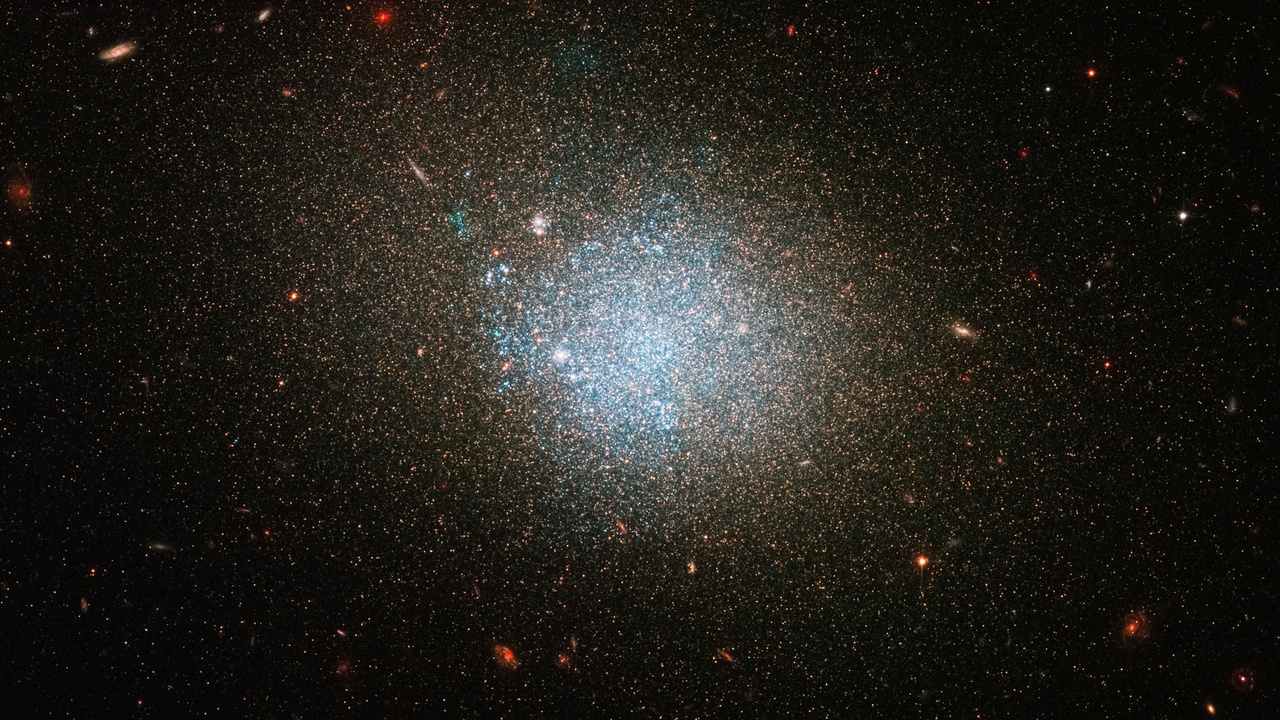
Not every galaxy that matters is giant. Dwarf galaxies are small but numerous, and ring galaxies are visually striking and reveal violent past collisions. Both categories carry outsized scientific value.
Dwarf galaxies dominate number counts in surveys and are crucial for testing dark-matter models and hierarchical formation theories. Ring galaxies, though rare, record dramatic encounters and let astronomers study outward-propagating starbursts.
Examples to watch for include the Large Magellanic Cloud (discussed above) as a massive dwarf and striking ring systems like the Cartwheel or NGC 4650A, which tell direct stories of collisions and resonance dynamics.
5. Dwarf Galaxies
Dwarf galaxies are low-mass, low-luminosity systems that vastly outnumber large galaxies. The Local Group alone contains dozens of known dwarfs; surveys since about 2005 have pushed that number higher, with more than 50 satellites now identified around the Milky Way and Andromeda combined.
They come in several flavors, including dwarf spheroidals (dSph) and dwarf irregulars. Fornax dSph and Sculptor dSph are well-studied classical examples, while the Large Magellanic Cloud can be thought of as a massive dwarf companion.
Dwarfs are critical tests of dark-matter physics: the “missing satellites” problem and the core–cusp debate both rely on observations of these faint systems.
6. Ring Galaxies
Ring galaxies display a prominent ring of stars and gas, often caused when a smaller galaxy plunges through the disk of a larger one. That collision launches a radially expanding density wave that lights up star formation along the ring.
The Cartwheel Galaxy is the archetype: a dramatic ring created by a head-on collision. NGC 4650A is another famous system, sometimes described as a polar-ring galaxy, and both objects have been central to studies of collision-driven starburst propagation.
Because ring galaxies are uncommon, each provides a clear time-stamped event that helps astronomers model the dynamics and timing of galactic encounters.
Peculiar and Interacting Galaxies
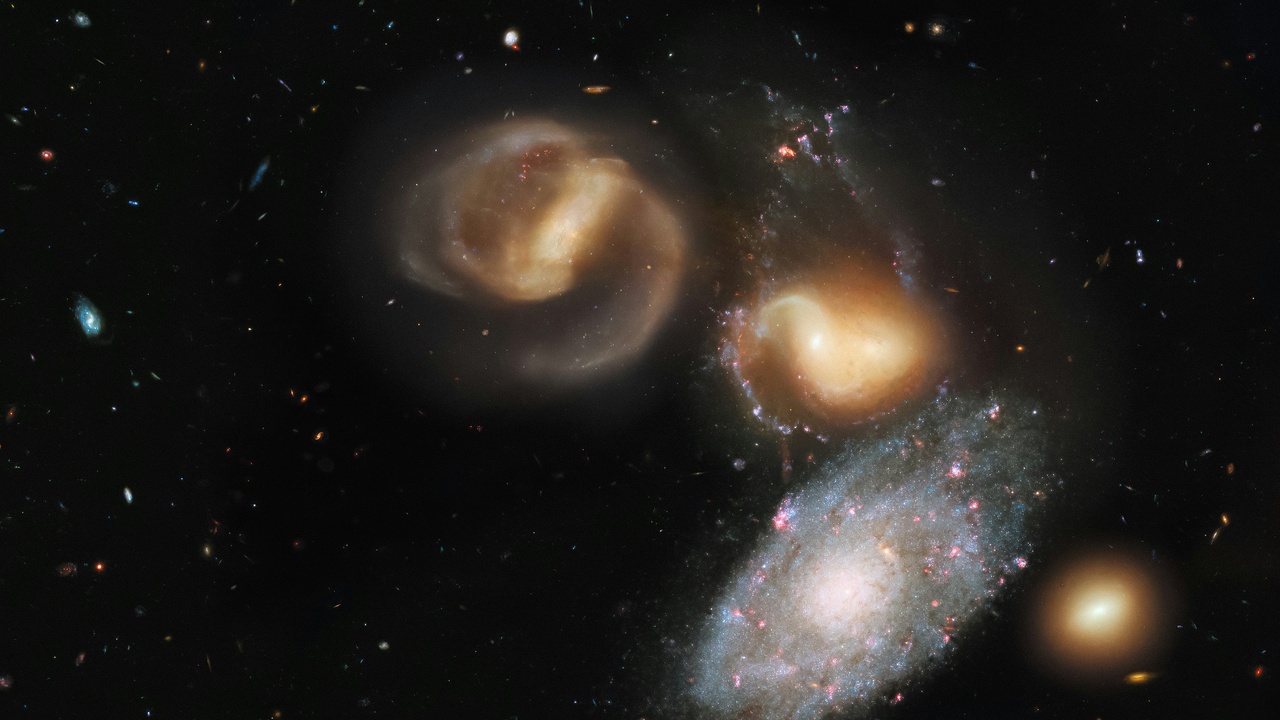
Peculiar or interacting galaxies defy neat categories because tidal forces and mergers distort their shapes. These encounters create tidal tails, bridges, and concentrated starbursts, and they play a central role in the cosmic life cycle of galaxies.
Mergers are one of the primary ways to build massive ellipticals and to fuel active galactic nuclei. Hubble Space Telescope images from the 1990s revealed delicate tidal structures and young massive clusters that had been invisible from the ground.
Interaction timescales range from a few hundred million to over a billion years, so observed systems give snapshots of long, dramatic transformations that reshape stellar orbits and gas reservoirs.
7. Peculiar / Interacting Galaxies
Peculiar or interacting galaxies are those whose appearances have been dramatically altered by collisions or internal instabilities. They often show extended tidal tails, intense H II regions, and compact young star clusters.
The Antennae Galaxies (NGC 4038/4039) are a nearby, iconic merger with widespread star formation and dozens of young massive clusters. The Mice galaxies provide spectacular examples of long tidal tails produced by a close encounter.
These systems matter because mergers drive morphological change, feed central black holes, and trigger the very starbursts that can alter a galaxy’s stellar population in just a few hundred million years.
Summary
- Seven broad galactic classes—spiral, elliptical, lenticular, irregular, dwarf, ring, and interacting—capture the main morphological varieties and what they tell us about history and environment.
- Shape correlates with physics: spirals are gas-rich and star-forming, ellipticals are older and merger-built, and dwarfs test dark-matter and formation theories.
- Interactions and collisions (examples: Antennae, Cartwheel) are crucial drivers of transformation and starbursts; they also help explain how massive ellipticals and central black holes grow.
- Keep an eye on new surveys from JWST and the Vera Rubin Observatory—upcoming data will refine counts, reveal fainter dwarfs, and reshape our picture of galaxy evolution.
Enjoyed this article?
Get daily 10-minute PDFs about astronomy to read before bed!
Sign up for our upcoming micro-learning service where you will learn something new about space and beyond every day while winding down.