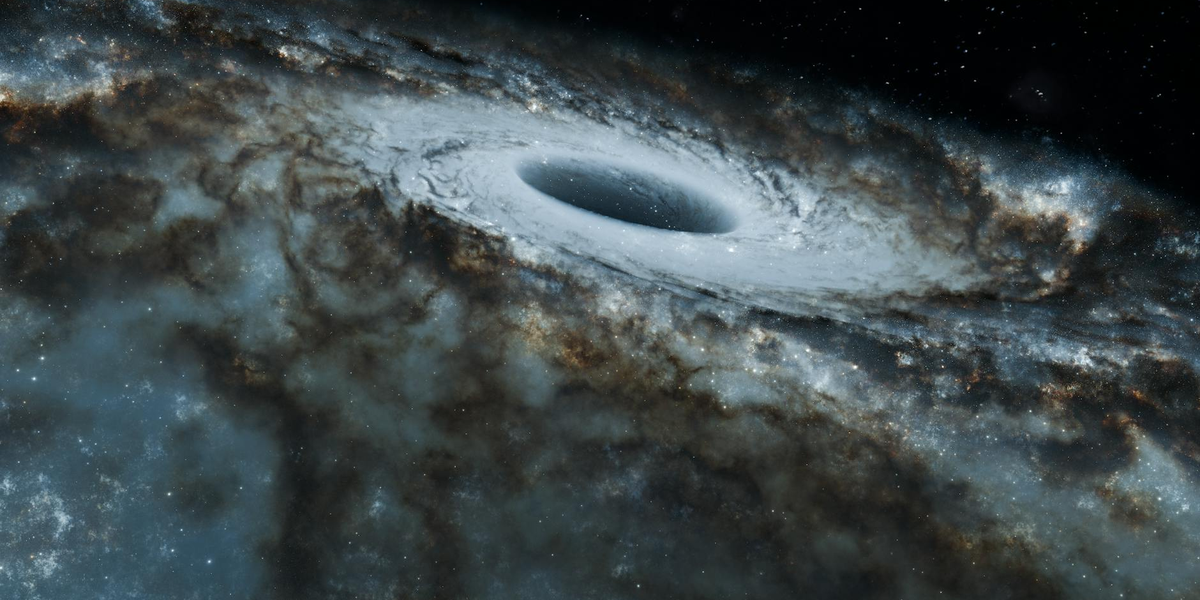
Black holes are not all the same size, and they don’t all form the same way. The types of black holes astronomers talk about most often are stellar black holes, supermassive black holes, intermediate-mass black holes, and primordial black holes. Two of those are firmly confirmed. Two are still the stuff of active research and, in one case, some very patient cosmic detective work.
Quick answer: the main types of black holes
- Stellar black holes form when massive stars collapse at the end of their lives.
- Supermassive black holes sit in the centers of galaxies and contain millions to billions of solar masses.
- Intermediate-mass black holes are the awkward middle child: bigger than stellar black holes, smaller than supermassive ones, and still hard to pin down.
- Primordial black holes are hypothetical black holes that may have formed shortly after the Big Bang.
The first two are well established. The last two are much less settled, but they’re important because they fill gaps in our picture of how black holes might grow and evolve.
Table of contents
- How black holes are classified
- Stellar black holes
- Supermassive black holes
- Intermediate-mass black holes
- Primordial black holes
- Types of black holes comparison table
- Common misconceptions
- FAQ
How black holes are classified
Astronomers usually classify black holes by mass and origin.
Mass is the easy part. A black hole with a few times the Sun’s mass belongs in a very different observational category from one with millions of solar masses. Origin matters too, because the formation story tells you where to look for one and what evidence to expect.
That’s why the usual categories are not just “small, medium, large.” They reflect different astrophysical pathways. A stellar black hole is the collapsed core of a star. A supermassive black hole is a galaxy-scale beast, likely built through long-term growth and mergers. Intermediate-mass black holes may represent a missing evolutionary stage. Primordial black holes, if they exist, would not come from stars at all.
For a compact overview of black hole physics and terminology, NASA’s black hole basics is a solid starting point.
Stellar black holes
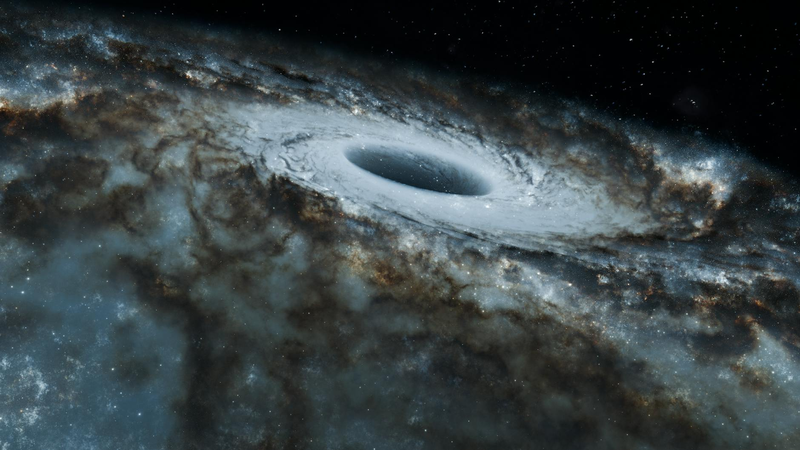
Stellar black holes are the best-known type. They form when a massive star runs out of fuel, can no longer support itself against gravity, and collapses. If the leftover core is massive enough, not even neutron degeneracy pressure can stop the collapse.
These black holes usually have masses from about a few to a few tens of Suns, though some can be heavier. They’re found throughout galaxies, often in binary systems where they pull matter from a companion star. That stolen gas forms an accretion disk, heats up, and gives off X-rays before crossing the event horizon.
A famous example is Cygnus X-1, one of the first strong stellar black hole candidates ever identified. More recently, gravitational-wave observatories such as LIGO have detected black hole mergers, giving astronomers direct evidence for many stellar-mass black holes that would otherwise be invisible.
A stellar black hole is basically a dead star with an attitude problem. Small by black hole standards, still wildly dense, and absolutely not something you want nearby.
Supermassive black holes
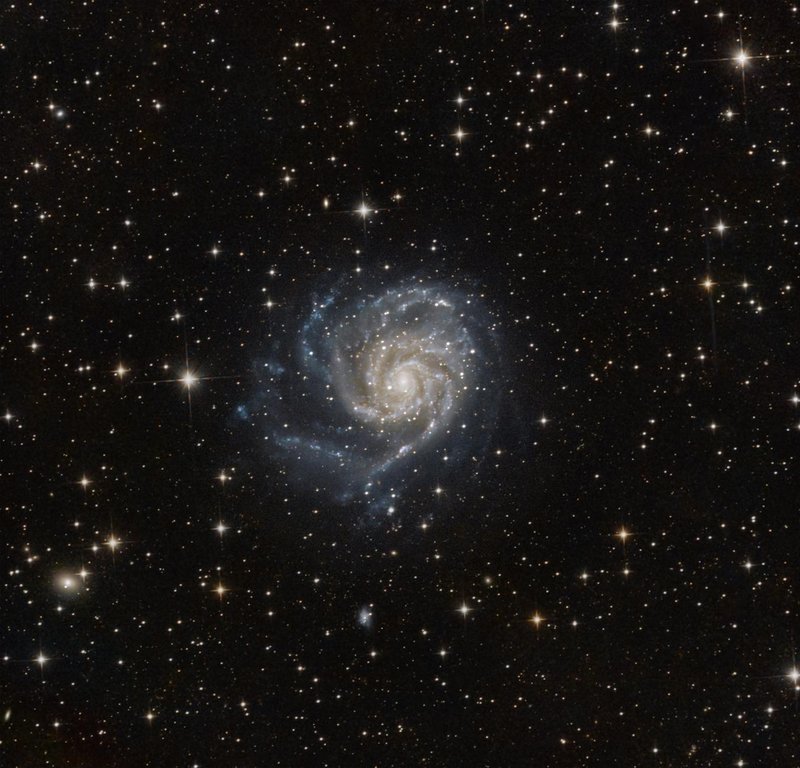
Supermassive black holes live at the centers of galaxies, including our own Milky Way. Sagittarius A — pronounced “A-star,” because astronomy enjoys making simple things awkward — has a mass of about 4 million Suns*.
These giants range from millions to billions of solar masses. Some of the most massive known are so large that they shape the motion of stars and gas across the center of an entire galaxy. They’re also the engines behind active galactic nuclei and quasars, where infalling matter gets heated so intensely that the galaxy’s core can outshine everything around it.
How do they get so big? That’s still an open question in detail. The leading ideas involve a combination of:
- growth from smaller black holes,
- direct collapse of massive gas clouds,
- and mergers over cosmic time.
A useful resource on the Milky Way’s central black hole comes from the Event Horizon Telescope collaboration, which also produced the first image of a black hole shadow.
Intermediate-mass black holes
Intermediate-mass black holes are the gap between stellar and supermassive black holes, typically thought to fall in the range of roughly 100 to 100,000 solar masses.
They matter because they may explain how supermassive black holes got their start. If you can find a bunch of these mid-sized objects, you’ve got a plausible bridge between stellar collapse and galaxy-scale monsters. If you can’t, then black hole growth gets messier and more interesting.
The problem is that intermediate-mass black holes are hard to confirm. They’re not usually bright enough to announce themselves the way supermassive black holes do, and they’re too large to look like ordinary stellar remnants. Some candidates have been found in star clusters and dwarf galaxies, but the evidence is often indirect.
Researchers have also used gravitational-wave events and X-ray observations to hunt for them. The category is real as a hypothesis, but the population is still being mapped one cautious claim at a time.
Primordial black holes
Primordial black holes are the wild card. These are theoretical black holes that may have formed from extreme density fluctuations in the very early universe, less than a second after the Big Bang.
Unlike stellar black holes, they would not come from dying stars. Their possible masses cover a huge range depending on the model — from tiny objects that might evaporate via Hawking radiation to much larger bodies that could potentially survive today.
Why do people care? Because primordial black holes have been proposed as possible contributors to dark matter, though that idea is heavily constrained and remains unproven. They’re also useful as a test case for early-universe physics. If they existed in large numbers, they would leave clues in gravitational lensing, gamma-ray backgrounds, and cosmic structure.
So far, there’s no confirmed primordial black hole. The idea remains intriguing because it gives the early universe a possible way to make black holes without stars.
For a broader context on why black holes exist, see Why Do Black Holes Exist? (Explained).
Types of black holes comparison table
| Type | Typical mass | How it forms | Where it’s found | Status |
|---|---|---|---|---|
| Stellar black hole | ~3 to tens of solar masses | Core collapse of a massive star | Binary systems, supernova remnants, galaxies | Confirmed |
| Intermediate-mass black hole | ~100 to 100,000 solar masses | Likely from mergers or rapid growth | Star clusters, dwarf galaxies, galactic nuclei | Candidate stage / uncertain |
| Supermassive black hole | Millions to billions of solar masses | Long-term growth, mergers, possible direct collapse | Centers of galaxies | Confirmed |
| Primordial black hole | Wide possible range | Early-universe density fluctuations | Hypothetical; not confirmed | Theoretical |
Common misconceptions
“A black hole is a giant cosmic vacuum cleaner”
Not really. A black hole does not suck in everything around it by default. If the Sun were suddenly replaced by a black hole of the same mass, Earth would keep orbiting almost the same way. The danger comes from getting close, not from magical pulling power. NASA explains this clearly in its black hole resources.
“Supermassive black holes are just bigger stellar black holes”
Not in any simple sense. They may grow from smaller black holes, but their environment, mass scale, and role in galaxy evolution are completely different. A stellar black hole is the corpse of one star. A supermassive black hole is a galactic resident with a long history.
“All black holes were made by stars”
Nope. That’s true for stellar black holes, but not necessarily for supermassive black holes or primordial black holes. The universe likes variety.
“Intermediate-mass black holes are just a nice theory”
They’re more than a hand-wavy idea, but less than a settled population. Think “promising category with incomplete census,” not “made-up placeholder.”
FAQ
What is the most common type of black hole?
Stellar black holes are expected to be the most common ordinary black holes in the universe because they form from massive stars, and stars are everywhere.
What is the biggest type of black hole?
Supermassive black holes are the largest confirmed type, reaching billions of solar masses.
Are primordial black holes real?
Maybe, but no confirmed detection exists yet.
Can intermediate-mass black holes grow into supermassive black holes?
Yes, that’s one of the leading ideas. They may act as building blocks in the early growth of supermassive black holes, especially in young galaxies.
How do astronomers detect black holes if they don’t emit light?
They look for the effects on nearby stars, gas, X-rays from accretion disks, and gravitational waves from mergers. The black hole stays dark. The mess around it usually does not.
Summary
The types of black holes break down into a few main categories: stellar black holes from collapsed stars, supermassive black holes at galaxy centers, intermediate-mass black holes that may fill the gap between them, and primordial black holes that may have formed in the early universe. The first two are firmly observed. The last two are active research territory.
That mix is what makes black holes so interesting. We’re not just sorting objects by size. We’re piecing together a story about how matter, gravity, and cosmic history conspired to make some of the strangest objects in the universe.
Enjoyed this article?
Get daily 10-minute PDFs about astronomy to read before bed!
Sign up for our upcoming micro-learning service where you will learn something new about space and beyond every day while winding down.