Table of contents
- TL;DR
- Why Jupiter gets all the spacecraft
- Space missions to Jupiter: the timeline
- What the big missions taught us
- The next missions: Europa, Ganymede, and JUICE
- Why Jupiter matters beyond Jupiter
- Summary
TL;DR
Jupiter has been visited by flybys, orbiters, and one famous atmospheric probe, and each mission has pushed our view of the solar system a little further out. The big names are Pioneer 10 and 11, Voyager 1 and 2, Galileo, and Juno. The next wave focuses less on Jupiter itself and more on its moons, especially Europa and Ganymede, because that’s where the real “is there life?” questions live.
If you want the shortest version:
- Pioneer proved Jupiter could be reached and studied up close.
- Voyager showed the system was stranger and more active than expected.
- Galileo spent years orbiting Jupiter and dropped a probe into the atmosphere.
- Juno is still rewriting the details of Jupiter’s interior, weather, and magnetic field.
- JUICE and Europa Clipper are aimed at the icy moons, where subsurface oceans may hide.
Why Jupiter gets all the spacecraft
Jupiter is the biggest planet in the solar system by a mile, and it acts like a giant gravity well for visiting spacecraft. That makes it scientifically useful and a little bit dramatic.
Scientists care about Jupiter for three big reasons:
-
It’s a planet in its own right.
Jupiter is a leftover from solar system formation, so it preserves clues about how the whole system assembled. -
It’s a weather machine.
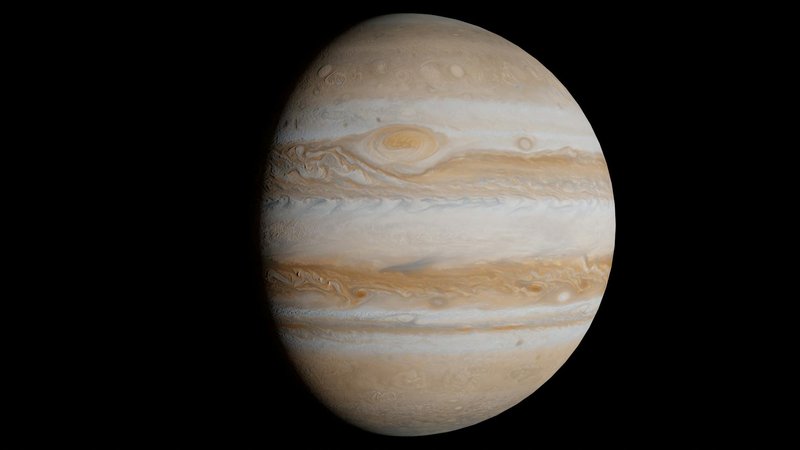
The Great Red Spot gets the headlines, but Jupiter’s atmosphere is full of storms, jet streams, lightning, and belts that change over time. -
It’s a moon system disguised as a planet.
The Galilean moons — Io, Europa, Ganymede, and Callisto — are almost a solar system inside the solar system. NASA’s Juno mission overview makes this pretty clear: Jupiter is important, but its moons are half the story.
For a broader look at Jupiter’s remaining mysteries, see 10 Things We Still Don’t Understand About Jupiter.
Space missions to Jupiter: the timeline
Jupiter missions have come in waves. First came the reconnaissance flybys, then the long-term orbiter era, and now a moon-focused phase.
Pioneer 10 and Pioneer 11
Pioneer 10 launched in 1972 and became the first spacecraft to fly past Jupiter in 1973. Pioneer 11 followed in 1974 and returned for a second look in 1974 before heading on to Saturn.
These were not fancy missions. They were trailblazers, which is a nice word for “the first spacecraft to survive the radiation and not immediately vanish into nonsense.” Pioneer sent back the first close-up measurements of Jupiter’s radiation belts, magnetic field, and atmosphere. The numbers were rough by modern standards, but the message was clear: Jupiter was not just a bigger version of Earth-like planets. It had its own bizarre physics.
Voyager 1 and Voyager 2
The Voyager flybys in 1979 changed the game. The spacecraft captured detailed images of Jupiter’s cloud tops and its moons, and they found active volcanism on Io — the first known volcanically active body beyond Earth.
That discovery mattered because it turned Jupiter’s moon system from “interesting satellites” into active worlds. Voyager also helped show that Jupiter’s rings exist, even though they’re faint and easy to miss. NASA’s Voyager mission pages are still worth a look if you want to see how much of modern planetary science started with those flybys.
Galileo
Galileo launched in 1989, arrived at Jupiter in 1995, and became the first spacecraft to orbit the planet. It also dropped an atmospheric probe into Jupiter, the only direct sampling mission we’ve had there.
That probe lasted less than an hour before Jupiter’s pressure and temperature crushed it. Still, in that short time it measured the atmosphere’s composition, winds, and temperature profile. Galileo’s orbiter kept going for years, studying the moons, magnetic environment, and the planet’s cloud structure.
Galileo is the mission that really turned Jupiter into a system, not just a planet. It showed:
- Europa likely has a salty subsurface ocean
- Ganymede has its own magnetic field
- Callisto preserves an ancient, heavily cratered surface
- Io is powered by tidal heating and extreme volcanism
For a broad catalog of missions to Jupiter’s moons, see The Complete List of Space Missions to Europa.
For a solid mission track, NASA’s Galileo archive is still one of the best sources.
If you want a broader look at the remaining mysteries about Jupiter, see 10 Things We Still Don’t Understand About Jupiter.
Cassini’s Jupiter flyby
Cassini wasn’t a Jupiter mission in the main sense, but it used Jupiter for a gravity assist in 2000 on the way to Saturn. During that flyby, it gathered useful data and helped scientists calibrate instruments before the Saturn tour began.
This is a good reminder that Jupiter often plays the role of cosmic slingshot. Missions to the outer solar system frequently swing past it to gain speed. Jupiter doesn’t just get explored — it helps other missions escape.
New Horizons
New Horizons flew past Jupiter in 2007 on its way to Pluto. It used Jupiter’s gravity to shorten the trip and took advantage of the encounter to study the planet’s atmosphere, rings, and magnetosphere.
The mission was brief, but it showed how Jupiter can serve as both target and stepping stone. One giant planet. Two jobs.
Juno
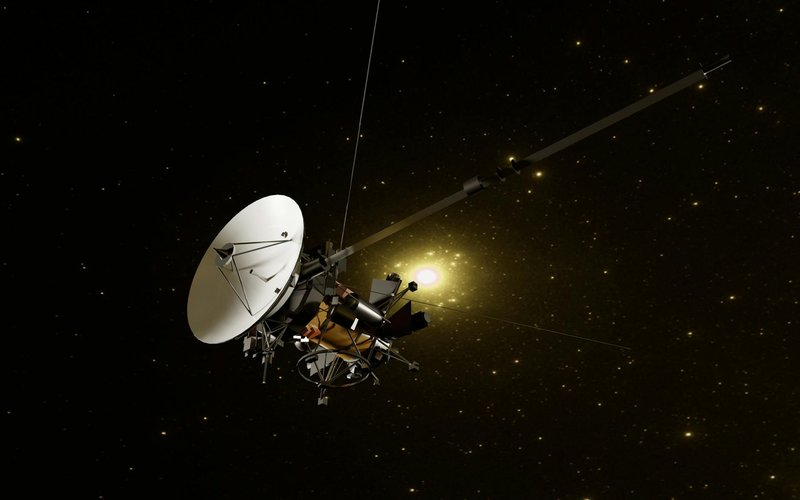
Juno launched in 2011 and arrived at Jupiter in 2016. Unlike earlier missions, Juno was designed to get up close to the planet’s interior structure, gravity field, magnetic field, and polar atmosphere.
Its polar orbit is a big deal. It avoids repeated passes through the worst radiation belts as much as possible, while letting the spacecraft skim over Jupiter’s poles again and again. Juno has revealed:
- Deep atmospheric jet structures
- Powerful magnetic storms
- A surprisingly lopsided magnetic field
- Complex cyclone patterns at the poles
- Clues that Jupiter’s core may be diffuse rather than a neat rock ball
If you want the official mission track, NASA’s Juno page is the place to start.
What the big missions taught us
Each Jupiter mission answered one set of questions and opened three more. That’s the fun part.
We learned Jupiter is dynamic, not static
The old idea of Jupiter as a smooth, mostly uniform gas giant doesn’t survive contact with actual data. The atmosphere has towering storms, long-lived bands, and deep flows that move heat around in complicated ways.
We learned the moons are the real prizes
Io, Europa, Ganymede, and Callisto each have their own personality:
- Io is the most volcanically active body we know
- Europa likely hides a global ocean under ice
- Ganymede is the only moon with its own magnetic field
- Callisto looks ancient and comparatively undisturbed
That’s a wild amount of variety from four moons orbiting the same planet.
We learned Jupiter shapes the whole neighborhood
Jupiter’s gravity influences asteroids, comets, and mission trajectories. Its magnetosphere is huge enough to dominate the space environment around it. Even the radiation is part of the story, because it limits what spacecraft can survive there and where future landers might go.
For a broad scientific overview of why Jupiter matters, Encyclopaedia Britannica’s Jupiter entry gives a clean summary without trying to be flashy.
The next missions: Europa, Ganymede, and JUICE
The next chapter in space missions to Jupiter is mostly about the moons.
Europa Clipper
NASA’s Europa Clipper is designed to investigate Europa’s ice shell and ocean beneath it. It won’t land, but it will make repeated close passes to study the moon’s surface, composition, and potential habitability.
Why Europa? Because if there’s one place in the Jupiter system where life might have a shot, it’s a moon with liquid water, chemistry, and energy sources.
ESA JUICE
ESA’s JUICE mission — short for Jupiter Icy Moons Explorer — is focused on Ganymede, with additional study of Europa and Callisto. It launched in 2023 and is headed for the Jovian system to investigate how icy moons work and whether any of them could support habitable environments.
JUICE is especially interesting because it plans to orbit Ganymede, which will be a first. That’s not a small milestone. Ganymede is a weird and wonderful moon, and getting into orbit around it is the kind of move that makes planetary scientists sit up straight.
For mission specifics, ESA’s JUICE mission page lays out the goals clearly.
If you want to see all missions focused on Europa, check The Complete List of Space Missions to Europa.
Why Jupiter matters beyond Jupiter
Jupiter is a test case for giant planets everywhere. The gas giants we keep finding around other stars are often easier to detect than Earth-like worlds, so understanding Jupiter helps us interpret exoplanets too.
It also gives us a practical lesson in planetary history. Giant planets likely shaped how the inner solar system evolved, where material ended up, and what kinds of worlds got built. That makes Jupiter more than a giant striped sphere. It’s a record of the solar system’s construction site.
Summary
The story of space missions to Jupiter is really a story about how planetary science matured. Early flybys showed that Jupiter was reachable. Later missions proved the planet and its moons were far stranger than expected. Juno is still refining the details, while JUICE and Europa Clipper are moving the spotlight onto the icy moons.
Jupiter has never been just a destination. It’s a landmark, a laboratory, and a gateway to the outer solar system. And its best secrets may still be sitting under ice.
Enjoyed this article?
Get daily 10-minute PDFs about astronomy to read before bed!
Sign up for our upcoming micro-learning service where you will learn something new about space and beyond every day while winding down.