In August 2012, Voyager 1 crossed what mission scientists called the heliopause at roughly 121 astronomical units (AU) from the Sun — the first time a human-made object left the plasma-dominated bubble that surrounds our system. That milestone reframed a simple picture: the Sun’s outflow creates a protective, magnetized cavity, but the edges of that cavity turn out to be surprisingly lively and informative.
The heliosphere is a region carved out by the solar wind that stretches roughly 100–150 AU from the Sun, depending on solar output and the local interstellar environment. It modulates galactic cosmic rays, carries the Sun’s magnetic fingerprint into interstellar space, and sets the radiation backdrop for planets and spacecraft.
Here are ten secrets of the heliosphere — concise, evidence-driven insights born from Voyager, IBEX, New Horizons and decades of monitoring — grouped into three themes: boundary physics, solar influence and space weather, and missions with practical impact. Expect concrete numbers (Voyager 2012, ~121 AU), real mission names, and implications for future crewed and robotic exploration.
Boundary Physics of the Heliosphere
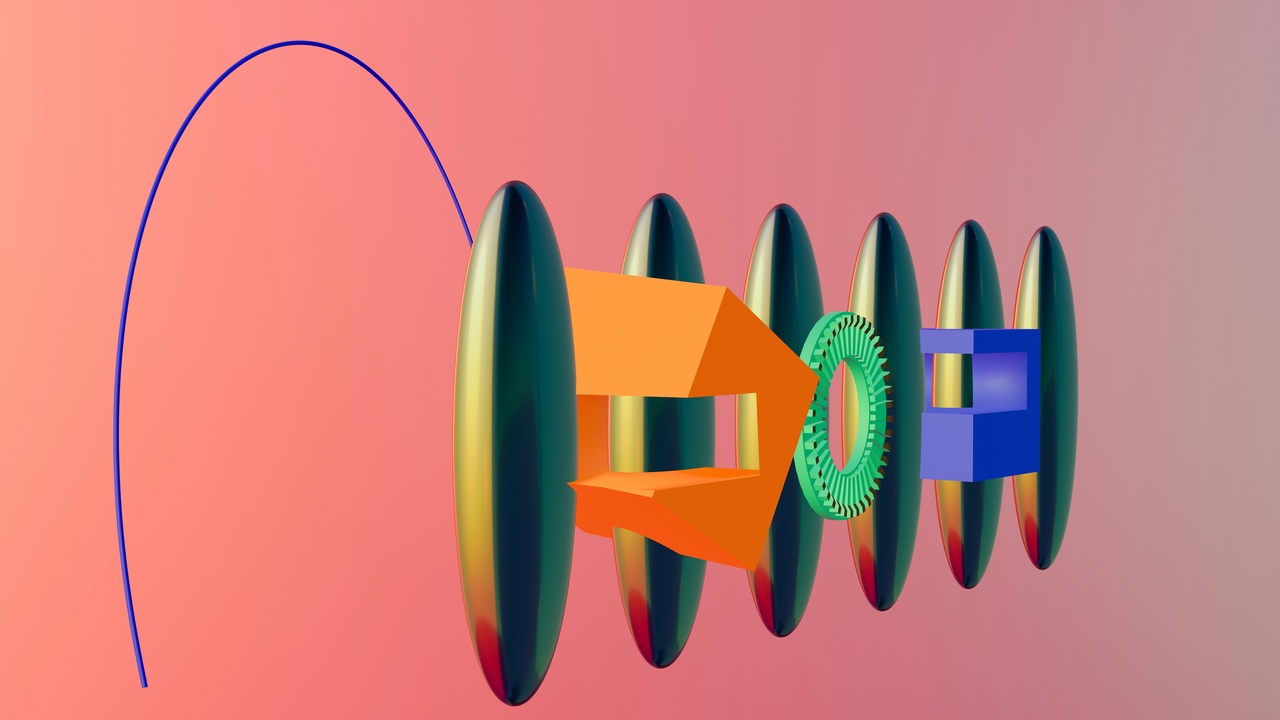
The heliosphere’s outer layers — the termination shock, heliosheath and heliopause — define where the Sun’s wind gives way to interstellar space. Far from being static shells, these boundaries shift with solar pressure, local interstellar flow, and magnetic forces. Point measurements from the Voyager spacecraft and global maps from IBEX (energetic neutral atom imaging) overturned earlier symmetric models and revealed a complex, changing frontier.
Voyager 1’s heliopause crossing in 2012 (~121 AU) and Voyager 2’s crossing in 2018 gave concrete distances and signatures, while IBEX’s ENA maps exposed large-scale structures not visible to a single probe. Together these data show a boundary that is bumpy, asymmetric, and partly porous — and that matters for how particles move across it.
1. The heliosphere isn’t a perfect bubble
Observations make one thing obvious: the heliosphere is lopsided. It has a blunt “nose” facing the incoming interstellar flow and a long, turbulent tail downstream. The shape is sculpted by the local interstellar magnetic field and the Sun’s motion through the surrounding gas.
Voyager data show different crossing distances depending on direction — Voyager 1 crossed the heliopause near 121 AU in 2012, while Voyager 2 reported its own crossings at a different distance and at different times. IBEX added the ENA ribbon, a strong, narrow feature that highlighted asymmetries in energetic-particle outputs.
That asymmetry matters operationally: models of cosmic-ray propagation and spacecraft trajectories can’t assume a spherical shell. Direction-dependent corrections improve radiation forecasts for missions headed out of the ecliptic or toward the heliotail.
2. The termination shock is a particle accelerator
The termination shock marks where the solar wind slows from supersonic to subsonic speeds and converts bulk flow energy into heat and energetic particles. It behaves like many astrophysical shocks, accelerating charged particles and stirring turbulence.
Voyager 1 crossed the termination shock in 2004 at about 94 AU and recorded sudden jumps in energetic-particle counts and magnetic signatures. Voyager 2 crossed the shock in 2007 at roughly 84 AU and observed similar spikes. Instruments on both spacecraft measured increases in anomalous cosmic rays produced locally at the shock.
Understanding shock acceleration here helps us interpret particle acceleration elsewhere, from shocks in supernova remnants to termination regions around other stars, and explains why some spacecraft instruments need extra shielding or filtering to handle bursts of energetic particles.
3. The heliopause can be porous — magnetic reconnection leaks plasma
The heliopause isn’t an impermeable wall. Magnetic reconnection and instabilities at the interface create openings where solar and interstellar plasmas and fields can mix. That mixing makes the boundary semi-permeable rather than a single clean surface.
Near the heliopause, Voyager instruments recorded rotations in magnetic-field direction and plasma properties that looked blended — signatures of reconnection and tangled fields. IBEX saw ENA flux variations that align with regions where mixing is likely stronger.
Porosity affects shielding because mixed regions alter the local particle population and energy spectrum; it also complicates remote interpretation of boundary chemistry since in-situ instruments may sample blended plasma rather than pure solar or interstellar gas.
Space Weather and the Sun’s Reach

The heliosphere sets the stage for space weather across the solar system. By modulating galactic cosmic rays and steering solar energetic particles, the Sun’s bubble changes radiation conditions at Earth, Mars, the Moon and beyond. Those effects are time-dependent and tied to the solar cycle and heliospheric size.
Solar maximum tends to inflate the heliosphere and reduce galactic cosmic-ray penetration; solar minimum does the opposite. That ebb and flow alters dose rates experienced by high-altitude flyers, satellites and deep-space crews.
4. The heliosphere is a variable shield against cosmic rays
The Sun’s magnetic field and outflow reduce the galactic cosmic-ray flux that reaches the inner system, but the amount of protection changes. Over an 11-year solar cycle, cosmic-ray intensities at Earth can swing by tens of percent.
Neutron monitors and spacecraft records show higher count rates at solar minimum and lower rates at solar maximum. Once Voyager crossed the heliopause, its measurements showed the outside flux to be substantially higher than inside — a direct demonstration of the heliosphere’s shielding role.
For mission planners, a contracted heliosphere or prolonged solar minimum means higher radiation exposure for astronauts and satellites. That influences choices about shielding, flight timing and allowable mission durations.
5. Solar storms ride the solar wind all the way out
Coronal mass ejections (CMEs) and the associated interplanetary shocks propagate through the heliosphere on the solar wind, affecting environments far from the Sun. Multi-spacecraft missions have tracked storms as they move outward, changing local plasma and magnetic conditions along the way.
STEREO and SOHO tracked CMEs across the inner heliosphere, while New Horizons and other probes measured the remnants farther out. Strong storms can cause instrument upsets, single-event upsets in electronics, and elevated dose rates on planetary surfaces.
Early-warning systems and multi-point observations are critical: if a CME is headed toward Mars, for example, controllers can delay extravehicular activities or put sensitive hardware into safe mode. For crewed deep-space transit, timely forecasts reduce risk.
6. Planets feel the heliosphere differently
Heliospheric modulation is a system-wide effect, but local protection depends on a planet’s magnetic field, atmosphere and distance from the Sun. Earth’s magnetosphere and atmosphere cut down particle fluxes far better than Mars’ thin air and patchy crustal fields.
Missions have measured these contrasts directly: the RAD instrument on Curiosity logged dose rates on the Martian surface and during transit that are significantly higher than typical surface doses at Earth. The Moon and unmagnetized small bodies get even larger swings during strong events.
That variation explains why Mars crewed missions need more robust shielding and why exoplanet habitability assessments must consider whether a world has magnetic protection and sufficient atmospheric depth to survive its star’s wind and cosmic-ray background.
Discovery, Missions, and Practical Impacts
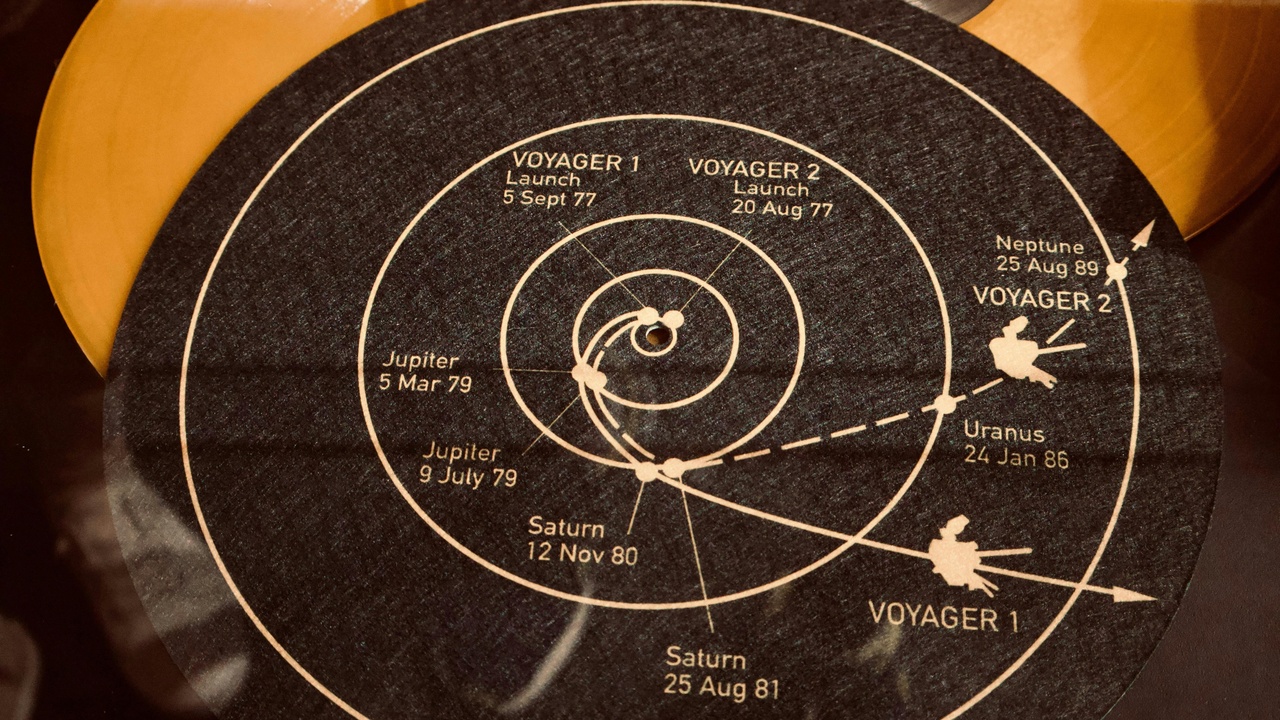
Missions have been the decisive factor in turning models into measurable reality. Voyager gave us local encounters with boundaries, IBEX provided global ENA maps, and New Horizons and other probes filled gaps across the heliosphere. Those mission-driven discoveries recalibrated expectations and informed practical design choices for both hardware and operations.
Below are mission highlights and the practical implications they carry for everything from instrument design to exoplanet studies. If you like lists, consider this a guided tour of how spacecraft transformed our conceptual bubble into a data-rich environment.
7. Voyager rewrote expectations with real boundary crossings
Voyager 1 and 2 provided the first in-situ tests of where one regime ends and another begins. Key dates mark those changes: Voyager 1 crossed the termination shock in 2004 (~94 AU) and the heliopause in 2012 (~121 AU). Voyager 2 crossed the termination shock in 2007 (~84 AU) and the heliopause in 2018.
At each crossing, instruments recorded abrupt changes: plasma densities, energetic-particle populations and magnetic-field orientations shifted in ways that forced modelers to revise assumptions about boundary location and behavior. The twin Voyagers remain fundamental reference points for heliophysics.
8. IBEX discovered a mysterious ribbon of neutral atoms
Launched in 2008, IBEX produced all-sky energetic neutral atom (ENA) maps whose first ribbon emerged in maps published around 2009. The ribbon is a narrow band of enhanced ENA emission that surprised researchers expecting smoother distributions.
The ribbon aligns with the local interstellar magnetic field direction, suggesting that the interstellar field sculpts where charge-exchange processes produce bright ENA emission. ENA imaging gives a global complement to Voyager’s single-point crossings and helped reveal the heliosphere’s large-scale asymmetries.
9. Heliospheric science matters for crewed missions
Radiation planning for lunar, Martian and deep-space crews depends on accurate models of both background cosmic rays and episodic solar particle events. Measurements like RAD on Curiosity quantify surface dose rates, while Earth-based neutron monitors and space weather assets track modulation trends.
Mission designers use heliospheric models to decide how much shielding to carry, when to schedule transits and when to plan surface EVAs. Space-weather forecasting (from assets such as STEREO, SOHO and newer monitors) provides the short-term alerts that protect hardware and crews.
10. Studying our heliosphere helps us read other stars’ astrospheres
Our heliosphere acts as a template for interpreting astrospheres around other stars. Hubble Ly-alpha absorption studies detect stellar wind interactions with surrounding gas, but they rely on models calibrated against the solar system’s well-measured example.
Modelers use Voyager and IBEX constraints to estimate how a star’s wind strength and local interstellar conditions will strip atmospheres or shape particle environments at exoplanets. That informs assessments of atmospheric erosion and radiation levels — key factors for habitability.
Summary
- The heliosphere’s boundaries are dynamic, asymmetric and sometimes porous — not a neat, spherical bubble (Voyager crossings in 2012 and 2018 helped reveal this).
- Local measurements and ENA imaging (IBEX’s ribbon, ~2009) transformed models: termination shocks accelerate particles, and the heliopause can allow plasma mixing through reconnection.
- Heliospheric conditions modulate cosmic-ray exposure across the solar cycle, affecting satellite reliability, airline and crew radiation risk, and planning for lunar and Mars missions.
- Spacecraft remain essential: Voyager gave ground-truth crossings, IBEX provided global context, and missions like New Horizons add outer-heliosphere snapshots that feed models used for exoplanet and mission design.
- Follow upcoming and ongoing efforts — IMAP, continued IBEX operations and heliospheric monitoring — to stay current on how the Sun’s bubble will influence future exploration and our understanding of other stars’ astrospheres.
Enjoyed this article?
Get daily 10-minute PDFs about astronomy to read before bed!
Sign up for our upcoming micro-learning service where you will learn something new about space and beyond every day while winding down.