On July 20, 1976, NASA’s Viking landers sent the first complete data sets from the Martian surface, and on February 18, 2021, Perseverance touched down carrying a cache of samples destined for eventual return to Earth.
Exploring Mars advances science, spurs technology and industry, and broadens humanity’s long-term prospects—here are eight compelling reasons to keep going. You should care because Mars missions deliver concrete benefits: they help answer whether life arose elsewhere, drive innovations that reach everyday markets, and expand economic and cooperative opportunities on a scale that affects jobs and education. This article ties those gains to specific milestones (Viking 1976, Curiosity 2012, Perseverance 2021), key numbers (Mars gravity is about 0.38g; the atmosphere is ~95% CO2), and practical outcomes—so the effort feels less like distant science and more like investments with returns on Earth.
Below are eight grouped reasons, starting with science and ending with society and inspiration.
Scientific discovery: Learning Mars’ story

Mars preserves a long record of climates and water activity that helps answer big questions about habitability, planetary climates, and comparative planetology. From Viking in 1976 to Curiosity’s 2012 landing and Perseverance’s 2021 sample-caching campaign, missions have steadily improved our picture of Mars’ past.
1. Find out whether Mars once hosted life
One of the top scientific motivations is a direct search for biosignatures—evidence that life once existed. The 1996 announcement about possible microfossils in the ALH84001 meteorite sparked debate and drove a generation of targeted measurements. Perseverance, which landed on February 18, 2021, is collecting and caching samples (up to roughly 30 sample tubes) specifically to test for organic compounds and other biosignatures back on Earth.
Methane detections—first hinted in 2003 and seen in later orbital and ground-based observations—add intrigue because methane can be produced biologically or geologically. Confirming a biological source would transform biology and astrobiology; even null results refine our understanding of life’s limits and the chemical pathways that matter for early Earth.
2. Reconstruct Mars’ climate history to learn about planetary change
Mars preserves ancient oceans, river valleys, deltas and glacial features that let scientists read its climate history. Orbital imagery has mapped widespread valley networks and ancient deltas, while rover and spectrometer data have found clay minerals and hydrated salts that form in watery environments.
Orbital missions such as the Mars Reconnaissance Orbiter (launched in 2005) revealed layered polar ice deposits and mineralogical records that track wet and dry epochs. Because Mars’ atmosphere is roughly 95% CO2, studying atmospheric escape and loss—linked to the decay of its magnetic shielding—helps refine models of atmospheric evolution for both Mars and Earth.
3. Improve planetary science and our models of planet formation
Mars is an accessible laboratory for testing theories of planetary formation and geology. With a radius about 0.53 that of Earth and surface gravity near 0.38g, Mars occupies an intermediate place between small asteroids and Earth-sized worlds, so its structure constrains formation models.
Studying impact craters, enormous volcanoes like Olympus Mons, and tectonic scars (Valles Marineris) provides empirical data on heat loss, mantle convection, and crust formation. Those measurements sharpen general planetary science and improve how we interpret exoplanets and early Solar System history.
Technology and economic gains
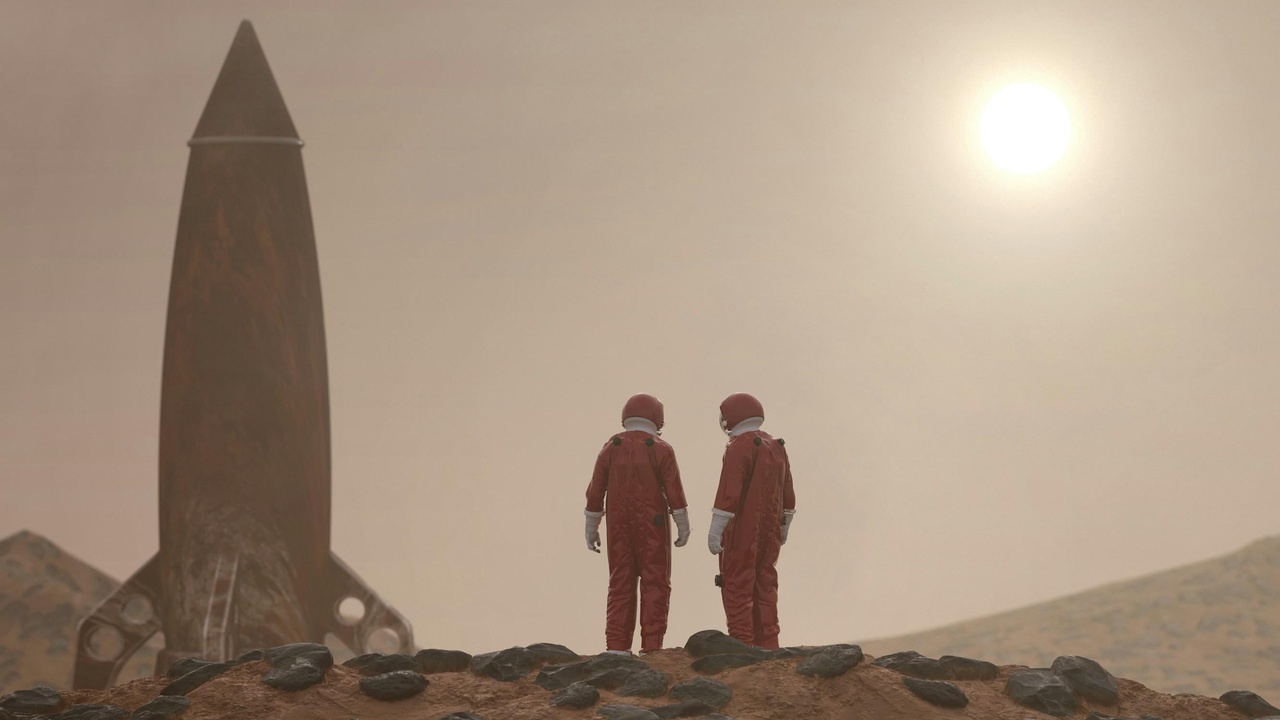
Among the reasons to explore mars are the technology and market spillovers. Mars programs push robotics, AI, life support, and in-situ resource techniques, while commercial activity around those missions expands jobs and new industries.
4. Drive technological innovation with broad spillovers
Missions accelerate development in autonomy, robotics, materials, and life-support systems that later benefit Earth. Rover autonomy algorithms, for instance, have influenced terrestrial robotics and remote operations; sample-handling robotics improve precision manufacturing and medical automation.
NASA and its contractors support a large workforce (on the order of ~18,000 employees at NASA alone), and that R&D generates consumer and industrial spin-offs—satellite imaging used in agriculture, advanced batteries and thermal control adapted to consumer electronics, and remote-health tools that improve care in isolated regions.
5. Create new economic sectors and commercial opportunity
Mars-focused activity expands the global space economy and creates suppliers, manufacturers, and service providers. The global space economy was estimated at roughly US$469 billion in 2021, with growth concentrated in commercial launch, satellite services, and downstream applications.
Commercial players such as SpaceX (Starship development) and others (Blue Origin, numerous startups) drive launch-cost reductions and open markets for cargo, habitats, and eventually tourism. Public–private partnerships (for example, NASA’s commercial contracts) create jobs across supply chains and incentivize private investment in Mars-enabling technologies.
6. Use Mars resources to lower costs and enable sustained presence (ISRU)
In-situ resource utilization (ISRU) changes the economics of off-Earth operations by using local water ice, regolith, and atmosphere to produce propellant, oxygen, and building materials. MOXIE (the Mars Oxygen In-Situ Resource Utilization Experiment aboard Perseverance) produced oxygen on Mars in 2021—on the order of grams during early runs—demonstrating the principle.
Accessible water ice at poles and mid-latitudes can be processed for life support and fuel, and regolith-based construction concepts (including 3D printing habitats) provide radiation shielding and reduce mass launched from Earth. Those capabilities enable longer stays and cheaper return trips.
Human ambition, resilience, and society
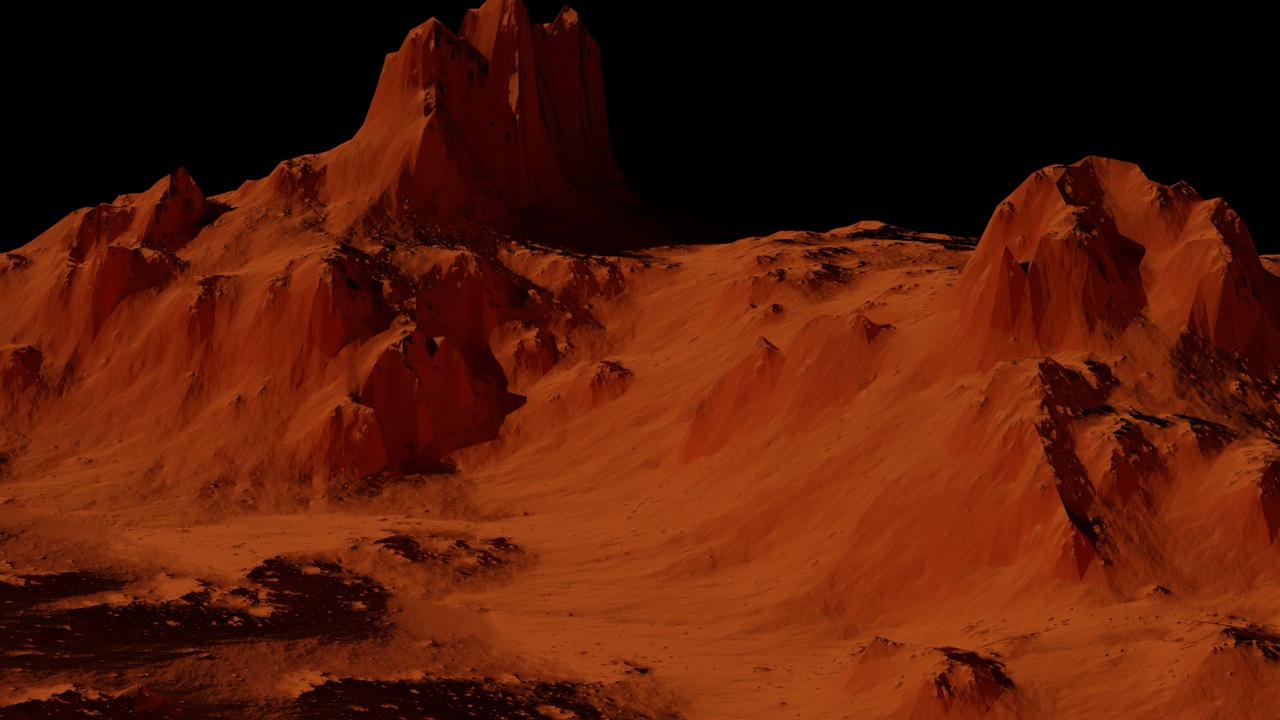
Mars exploration advances human resilience, offers a form of planetary insurance, and serves as a powerful source of inspiration that feeds education and international cooperation.
7. Serve as a long-term backup and advance survival skills
Expanding human presence beyond Earth reduces existential risk by diversifying where humanity lives. Planning multi-year crewed missions requires mastering closed-loop life-support, medical autonomy, and long-duration habitability—skills that translate to extreme environments on Earth.
Practical mission planning also revolves around orbital mechanics: Mars transfer windows recur roughly every 26 months, shaping cadence and logistics. Analog programs on Earth (Antarctic stations, HI-SEAS) test isolation, recycling, and remote medical care that benefit rural and extreme communities.
8. Inspire generations, education, and global collaboration
Mars missions fuel imagination, boost STEM interest, and foster multinational partnerships. Historic programs like Apollo increased STEM enrollment; modern missions continue that effect through outreach, student programs, and citizen-science efforts tied to real mission data.
Perseverance is caching up to about 30 sample tubes for future return, and Mars projects often include international partners (for example, collaborations with ESA and other agencies). Those efforts train engineers and scientists, create a skilled workforce, and strengthen diplomatic ties through shared scientific goals.
Summary
Mars exploration bundles scientific discovery, technological and economic returns, and powerful societal benefits into a single program of sustained investment. Memorable milestones—MOXIE’s oxygen production (2021), Perseverance’s sample caching, and Olympus Mons’ geological lessons—show how tangible and inspiring the payoff can be.
- Search for past life: rovers, the ALH84001 debate (1996), methane detections, and sample-return plans aim to resolve whether Mars ever hosted life.
- Advance climate and planetary science: data from Viking (1976), Curiosity (2012), and orbiters (MRO, 2005) refine models of atmospheric loss and ancient water.
- Drive tech and economy: MOXIE’s 2021 oxygen demonstration, autonomy and robotics spin-offs, and a global space economy estimated at ~US$469 billion (2021) illustrate concrete gains.
- Build human resilience and inspiration: mastering ISRU, long-duration missions (tied to ~26-month transfer windows), and international collaborations train the next-generation STEM workforce.
Enjoyed this article?
Get daily 10-minute PDFs about astronomy to read before bed!
Sign up for our upcoming micro-learning service where you will learn something new about space and beyond every day while winding down.