Rhea, Saturn’s second-largest moon, orbits in a cold, low-gravity environment and shows a heavily cratered surface with bright streaks of ice. Its mix of ancient terrain and subtle features has attracted spacecraft flybys that reveal how moons evolve in Saturn’s system.
There are 3 NASA Missions to Rhea, ranging from Cassini to Voyager 2. For each mission, data are organized as Encounter date(s),Encounter type,Closest approach (km), which you’ll find below.
What did Cassini and Voyager 2 learn about Rhea?
Voyager 2 provided the first close-up images and basic measurements, and Cassini followed with higher-resolution imaging and instruments that clarified surface composition (predominantly water ice), crater ages, evidence for a tenuous exosphere, and how Rhea interacts with Saturn’s magnetosphere.
How reliable is the encounter information listed below?
The encounter details come from mission logs, NASA/JPL archives and published reports—these sources use spacecraft telemetry and peer-reviewed analyses, so the dates and approach distances in the list below reflect the commonly cited, well-documented values.
Nasa Missions to Rhea
| Mission | Encounter date(s) | Encounter type | Closest approach (km) |
|---|---|---|---|
| Voyager 1 | 1980-11-12 | Flyby imaging (distant) of Rhea during Saturn encounter | 40,000 km |
| Voyager 2 | 1981-08-25 | Flyby imaging (distant) of Rhea during Saturn encounter | 50,000 km |
| Cassini | 2005–2015 | Multiple targeted flybys and remote orbiter observations (imaging, spectroscopy, in-situ) | 500 km |
Images and Descriptions
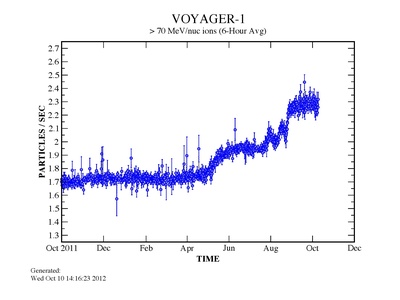
Voyager 1
Voyager 1 imaged Rhea during its November 1980 Saturn encounter using narrow- and wide-angle cameras, revealing global shape, heavy cratering, and leading/trailing hemisphere albedo differences that established Rhea’s basic geology and brightness variations.
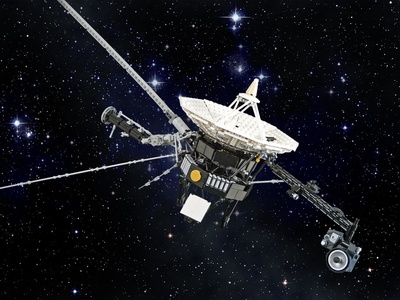
Voyager 2
Voyager 2 captured additional Rhea views in August 1981, extending coverage and confirming surface features. Its imaging and photopolarimeter data refined Rhea’s size, reflectivity, and cratered terrain character across different lighting angles.
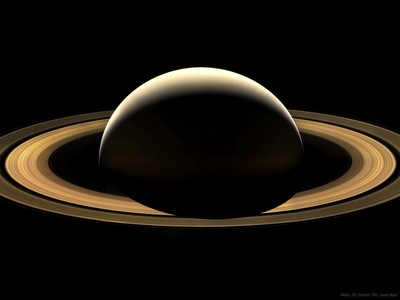
Cassini
Cassini performed many targeted Rhea flybys and remote observations from 2005 onward using ISS, VIMS, CIRS, MAG and CDA, mapping surface geology, probing a tenuous exosphere, and investigating a debated ring/particle signature around Rhea.
Enjoyed this article?
Get daily 10-minute PDFs about astronomy to read before bed!
Sign up for our upcoming micro-learning service where you will learn something new about space and beyond every day while winding down.