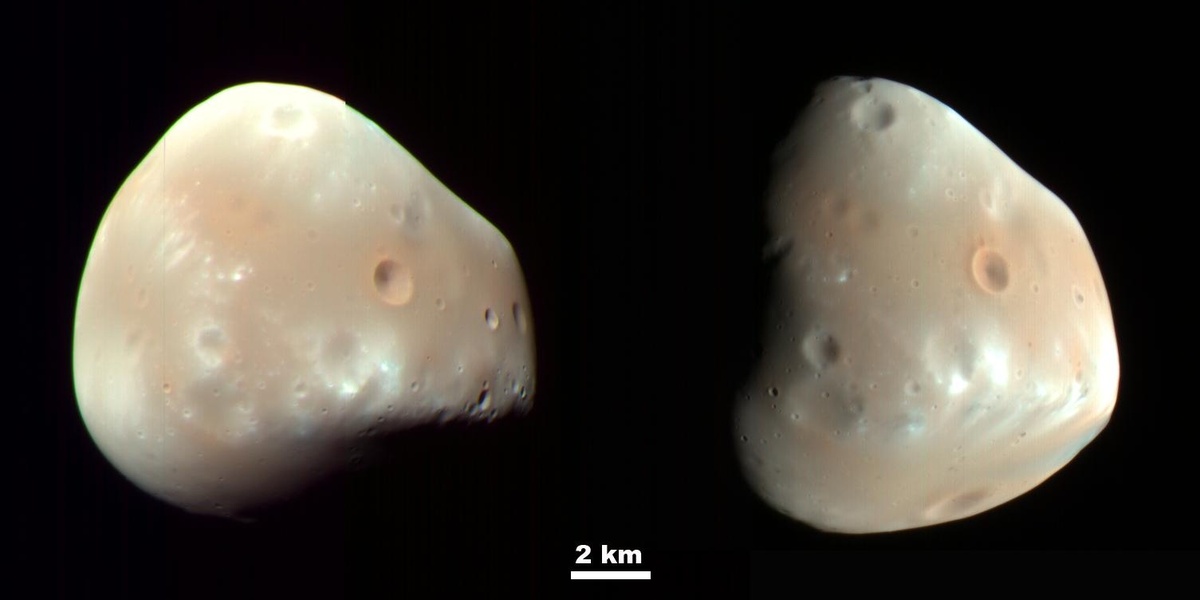
Deimos, Mars’s smaller and more distant moon, is a low-gravity, irregular body that holds clues about the Martian system and small-body formation. Its faint, rocky surface is best studied from orbit or with telescopes, making historical observations and remote missions especially important.
There are 9 NASA Missions to Deimos, ranging from Hubble Space Telescope to Viking 2 Orbiter; for each mission the data are organized as Launch year (YYYY),Mission type,Deimos interaction — you’ll find below.
Did any NASA missions land on or physically sample Deimos?
No—so far NASA missions have not landed on Deimos; interactions have been limited to telescopic observations, imaging from orbiters, and remote sensing data that characterize its orbit, shape, and surface properties (examples include Hubble observations and Viking-era imaging).
How is this list useful for researchers or educators?
A concise list with Launch year (YYYY),Mission type,Deimos interaction helps trace what was observed, when, and how—useful for spotting gaps in coverage, comparing instruments, planning future missions, or building classroom timelines that show how knowledge of Deimos has progressed.
Nasa Missions to Deimos
| Mission name | Launch year (YYYY) | Mission type | Deimos interaction |
|---|---|---|---|
| Mariner 9 | 1971 | orbiter | Imaged Deimos; resolved disk in spacecraft photos |
| Viking 1 Orbiter | 1975 | orbiter | Imaged and tracked Deimos; photometry and astrometry |
| Viking 2 Orbiter | 1975 | orbiter | Imaged Deimos; contributed astrometry and photometry |
| Mars Global Surveyor | 1996 | orbiter | MOC imaging of Deimos; shape and albedo mapping |
| Mars Odyssey | 2001 | orbiter | THEMIS infrared and visible imaging of Deimos |
| Mars Reconnaissance Orbiter | 2005 | orbiter | HiRISE/CRISM high-resolution imaging and spectroscopy |
| MAVEN | 2013 | orbiter | IUVS imaging of Deimos transits; exosphere/dust searches |
| Hubble Space Telescope | 1990 | telescope | Resolved imaging and photometry of Deimos |
| Spitzer Space Telescope | 2003 | telescope | Thermal-infrared observations constraining size and albedo |
Images and Descriptions

Mariner 9
Mariner 9, the first spacecraft to orbit Mars, obtained the earliest spacecraft images of Deimos in 1971–72, resolving the tiny moon’s disk and improving orbit and size estimates. Source: https://www.nasa.gov/mission_pages/mariner9/main/
Viking 1 Orbiter
Viking 1 Orbiter made repeated observations and images of Deimos during Mars orbital operations, refining orbital parameters, brightness and size estimates and providing improved positional data used by later studies. Source: https://www.nasa.gov/mission_pages/viking/
Viking 2 Orbiter
Viking 2 Orbiter also observed Deimos during its Mars mission, supplying images and astrometric measurements that helped refine the moon’s orbit, brightness, and basic physical properties alongside Viking 1 data. Source: https://www.nasa.gov/mission_pages/viking/
Mars Global Surveyor
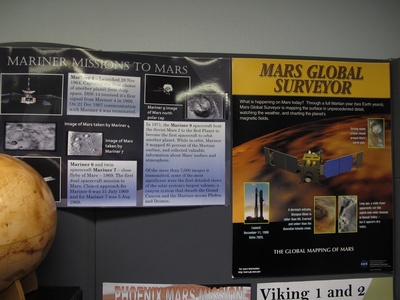
MGS’s Mars Orbiter Camera captured numerous images of Deimos from 1998 onward, mapping its shape, albedo variations and rotation, improving size estimates and surface characterization compared with earlier data. Source: https://mars.nasa.gov/mgs/
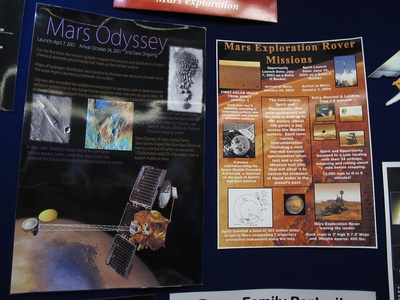
Mars Odyssey
Odyssey’s THEMIS instrument imaged Deimos in infrared and visible wavelengths, constraining thermal properties, surface temperatures and albedo; results informed interpretations of regolith and thermal inertia. Source: https://mars.nasa.gov/odyssey/
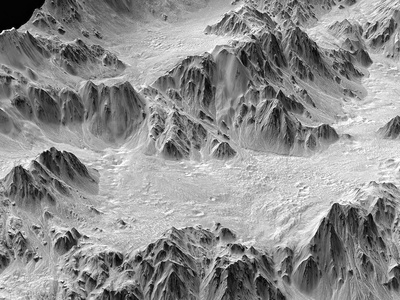
Mars Reconnaissance Orbiter
MRO’s HiRISE produced the highest-resolution images of Deimos, resolving surface features and global shape; CRISM contributed spectral data to help assess surface composition and origin hypotheses. Source: https://mars.nasa.gov/mro/
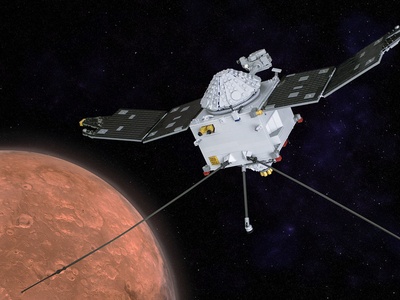
MAVEN
MAVEN’s IUVS observed Deimos during transits and monitored for exospheric or dust signals, placing limits on transient atmospheres and characterizing the near-moon environment and potential dust ejection. Source: https://www.nasa.gov/mission_pages/maven/
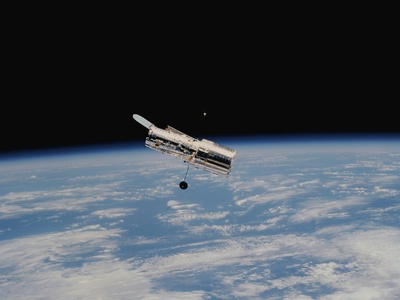
Hubble Space Telescope
HST resolved Deimos in visible wavelengths, measuring shape, rotation, colors and surface scattering properties; these photometric and spectral constraints have been key to comparisons with asteroid-like materials. Source: https://hubblesite.org/
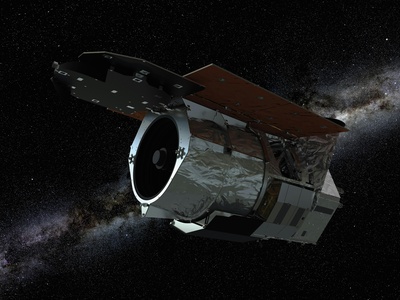
Spitzer Space Telescope
Spitzer measured Deimos’ thermal emission, refining effective diameter, geometric albedo and thermal inertia estimates; these thermal-IR data helped constrain surface grain size and composition models. Source: https://www.nasa.gov/mission_pages/spitzer/
Enjoyed this article?
Get daily 10-minute PDFs about astronomy to read before bed!
Sign up for our upcoming micro-learning service where you will learn something new about space and beyond every day while winding down.