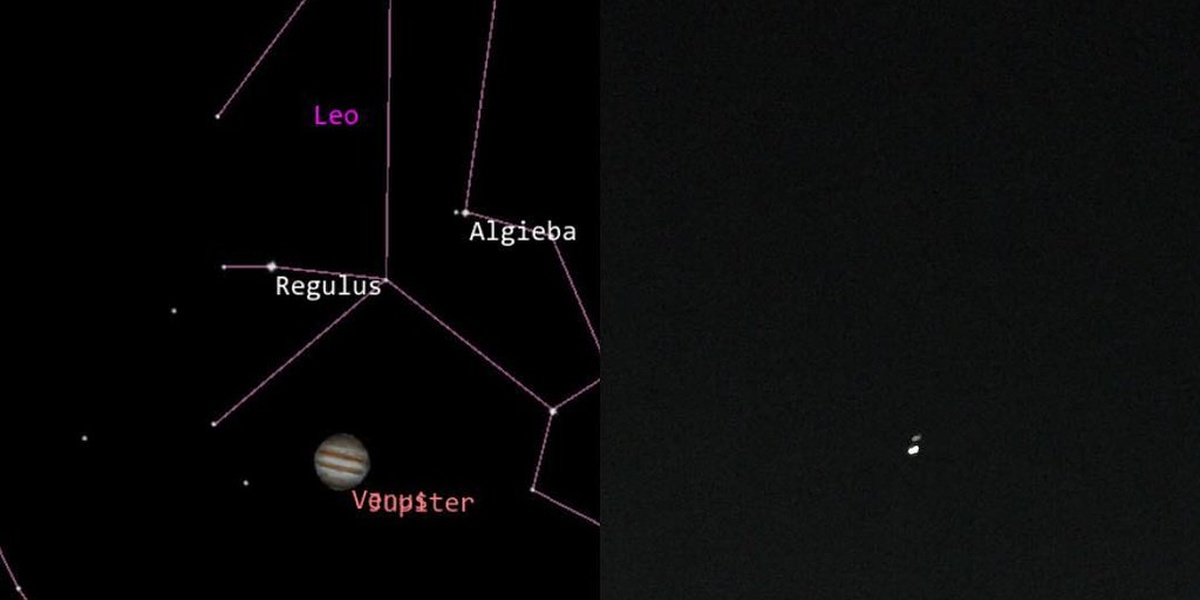
When Galileo turned his telescope to Jupiter in 1610 he saw four moons and, in one glance, rewired humanity’s picture of the solar system. Centuries of follow-up observations and robotic probes—from Voyager flybys in 1979 to the Galileo probe’s plunge in 1995 and Juno’s arrival in 2016—have peeled back layers of the planet without answering several big questions.
Jupiter dominates the solar system by mass, sculpts the orbital architecture of other planets and small bodies, and hosts moons that may shelter habitable environments. So its unknowns matter: they change how we think planets form, how atmospheres behave on giant worlds, and where life-friendly niches might exist beyond Earth.
Below are ten outstanding puzzles—grouped into interior, atmosphere, magnetosphere, and formation/moons—that scientists are still racing to solve.
Some of the biggest mysteries about jupiter are surprisingly basic, and solving them reshapes planetary science.
Deep interior: core, metallic hydrogen, and internal heat
Peering into Jupiter is fundamentally indirect: scientists infer the interior from gravity, magnetic and microwave measurements plus laboratory experiments that mimic extreme pressures. Those data matter for formation scenarios and for how the planet generates its magnetic field.
1. What exactly is at Jupiter’s core?
The basic question is simple: does Jupiter have a compact rocky/icy core, a diffuse “fuzzy” core mixed with hydrogen and helium, or no clear core at all? Juno’s gravity measurements since 2016 tightened constraints but revealed mass anomalies consistent with a diluted heavy-element distribution rather than a neat, Earth-like core.
Model estimates of heavy-element mass inside Jupiter vary widely—anywhere from a few up to tens of Earth masses—depending on the assumed equation of state and internal mixing. Some recent Nature and Science papers interpret Juno gravity inversions as evidence for an extended, composition-gradient region hundreds to thousands of kilometers wide.
Why it matters: a compact core supports classic core-accretion formation, while a diluted interior could imply early giant impacts or prolonged mixing. That distinction also guides how we interpret heavy-element abundances in exoplanet gas giants.
2. How does hydrogen become metallic and what are its properties inside Jupiter?
Under pressures of millions of atmospheres (megabars) and temperatures of thousands of kelvin, hydrogen is predicted to shift from a molecular insulator to an electrically conducting metallic fluid. That transition is central to dynamo models because metallic hydrogen supplies the conductivity that supports Jupiter’s magnetic field.
Laboratory efforts—diamond anvil cells and shock-compression experiments—have reached megabar regimes and reported signatures of metallization, but extrapolating to Jupiter’s interior remains uncertain. Different equations of state and transition depths change predicted conductivity profiles and therefore whether the dynamo operates deep or relatively shallow.
Practical payoff: a better grasp of metallic hydrogen refines models for magnetic-field strength, field geometry, and for interpreting observations of massive exoplanets where pressures are even higher.
3. Why does Jupiter emit more heat than it receives from the Sun?
Jupiter radiates about 1.6 times the energy it absorbs from sunlight, producing a net internal heat flux on the order of a few watts per square meter. The source of that excess is still debated.
Leading hypotheses include leftover formation heat (Kelvin–Helmholtz contraction), helium phase separation (helium “rain” that releases gravitational energy), and slow differentiation or ongoing settling of heavy elements. Saturn shows a similar but more puzzling excess that helped motivate the helium-rain idea.
Internal heat controls atmospheric convection, cloud formation, and long-term thermal evolution—so resolving the heat source improves our understanding of atmospheric dynamics and the cooling histories of gas giants generally.
Atmospheric dynamics: storms, jet streams, and the Great Red Spot
The swirls and bands we see are surface manifestations of deep, rapidly rotating fluid dynamics. They offer a laboratory for turbulence, wave–mean-flow interactions, and moist convection under conditions very different from Earth’s.
4. How has the Great Red Spot lasted for centuries?
The Great Red Spot (GRS) is an anticyclonic vortex observed since at least 1665. It has shrunk over the last 150 years but remains a powerful, long-lived storm with wind speeds of several hundred kilometers per hour.
Recent JunoCam imaging and wind analyses show the GRS extends deeply beneath the cloud tops and has complex vertical structure. Theories for its longevity include continual energy input from smaller vortices that merge into it, interactions with surrounding jet streams, and a subsurface structure that inhibits dissipation.
Understanding the GRS tests models of vortex stability in rotating fluids and helps explain similar long-lived features we might see on brown dwarfs and giant exoplanets.
5. What drives Jupiter’s banded jet streams and how deep do they go?
Jupiter’s alternating east–west jets produce its characteristic bands, but their driving mechanism—shallow atmospheric turbulence versus deep internal forcing—and their depth remain debated. Juno gravity and microwave data imply that some jets penetrate thousands of kilometers into the planet.
Shallow models attribute jets to small-scale convection and atmospheric waves, while deep-flow models tie jets to interior angular momentum and thermal gradients. Gravity anomalies measured by Juno provided the first robust constraints on mass flows below the clouds, but model interpretations differ.
Jet depths influence how heat and chemicals are transported and whether flows couple to the dynamo region, so getting this right affects magnetic and thermal evolution models for Jupiter and similar planets.
6. Where does Jovian lightning and storm energy come from?
Galileo first directly detected lightning flashes in the 1990s, and Juno has since mapped lightning and microwave emission associated with deep convective towers. Lightning shows that strong moist convection occurs, but which condensible species—water or ammonia—is the principal driver of the deepest storms is still unclear.
Electrically active storms likely tap energy from latent heat release during condensation of water and perhaps ammonia and ammonium hydrosulfide at different depths. Radio and optical flash rates, combined with microwave brightness, help estimate storm tower depths and convective vigor.
Pinning down storm energetics matters because convection mixes chemical species, alters cloud colors, and controls observable spectra—crucial for remote studies of exoplanet atmospheres.
Magnetosphere and radiation: field structure and particle acceleration
Jupiter’s magnetosphere is the largest and most energetic in the solar system, powered by rapid rotation and internal plasma sources. Its radiation environment complicates exploration and shapes moon surface chemistry.
7. How is Jupiter’s magnetic field generated and why is it asymmetric?
Juno’s magnetometer mapping revealed a surprisingly complex, non-dipolar magnetic field with localized anomalies and an offset between northern and southern components. The field is much stronger than Earth’s—tens of times larger at the cloud tops.
These asymmetries challenge simple dynamo models. The dynamo must account for conductivity in metallic hydrogen, differential rotation, and possible stable layers that alter flow patterns. Localized features may reflect regional flow structures or composition gradients.
Field geometry matters for auroral morphology, trapped-particle populations, and for interpreting induction signals used to probe moons’ subsurface oceans.
8. What accelerates particles to create Jupiter’s intense radiation belts?
Jupiter’s radiation belts harbor relativistic electrons and high-energy ions that deliver lethal doses to unshielded spacecraft. Io’s volcanoes supply neutral material that becomes ionized in the Io plasma torus, seeding the magnetosphere, but how particles are accelerated to MeV energies is still debated.
Candidate processes include radial transport and adiabatic heating, wave–particle interactions (whistler-mode and electromagnetic ion cyclotron waves), and magnetic reconnection during dynamic magnetospheric events. Observations from Voyager and Juno, plus in situ sampling, constrain but do not uniquely identify dominant mechanisms.
Solving this affects spacecraft design (radiation shielding) and predictions for surface irradiation on moons like Europa, where chemistry and possible habitability are sensitive to particle fluxes.
Formation, moons, and ring interactions
Jupiter is both a planet and a miniature system: its formation shaped the rest of the solar system, and its moons present diverse, active worlds. Several open questions bridge planet formation and moon habitability.
9. When and how did Jupiter form and did it migrate early on?
Isotopic studies of meteorites indicate that giant-planet formation and giant impacts occurred within the first few million years of the solar nebula. But whether Jupiter formed in place by core accretion, grew by pebble accretion, or formed via disk instability, and whether it migrated substantially (for example, the Grand Tack inward-then-outward scenario), remains contested.
Migration models can explain features of the inner solar system and asteroid belt, while Jupiter’s measured heavy-element enrichment constrains how much solid material it accreted. Precise timing affects delivery of water and organics to the terrestrial planets and the architecture of extrasolar planetary systems.
Better composition measurements and refined isotopic chronometers will narrow formation scenarios and improve population-level models of exoplanets.
10. How do Jupiter’s moons interact with the planet—especially Europa and Io?
Tidal forces, magnetic induction, and particle bombardment create active environments across the Galilean moons, but key details remain unclear. Io’s volcanism is powered by tidal heating and supplies the magnetosphere; Europa shows a magnetic induction signal consistent with a salty subsurface ocean, yet ocean thickness, salinity and habitability are still open questions.
Galilean orbital resonances (the Laplace resonance among Io, Europa and Ganymede) maintain eccentricities and tidal heating, while Jupiter’s magnetospheric plasma alters surface chemistry on ice-covered moons. Past missions such as Galileo provided initial constraints, but radiation limited detailed exploration.
Upcoming missions—NASA’s Europa Clipper and ESA’s JUICE—are designed to probe ice thickness, ocean properties and surface chemistry, helping answer whether these moons could support life and how they evolved under Jupiter’s influence.
Summary
Juno, Galileo, Voyager and laboratory experiments have transformed our view of Jupiter, yet fundamental unknowns persist about its core, metallic hydrogen, internal heat, atmosphere, magnetosphere and moons.
These open questions are not academic: they affect how we model planet formation, interpret exoplanet observations and plan missions to potentially habitable moons.
- Jupiter may have a diluted, fuzzy core rather than a compact rocky center—an idea that reshapes formation models.
- Metallic hydrogen’s behavior at megabar pressures and the source of Jupiter’s internal heat remain uncertain and critical for dynamo theories.
- Atmospheric puzzles include the Great Red Spot’s longevity, the depth of jet streams, and the drivers of powerful storms and lightning.
- Magnetospheric complexity and intense radiation—fed in part by Io—challenge our understanding of particle acceleration and mission design.
- Formation timing and early migration (e.g., Grand Tack) plus moon–planet interactions (tidal heating, magnetic induction) link Jupiter to exoplanet science and moon habitability; upcoming missions (Europa Clipper, JUICE, continued Juno work) will tackle many of these puzzles.
Keeping these mysteries about jupiter in focus will guide the next decade of observations, experiments and missions aimed at finally revealing the deep and dynamic nature of the solar system’s giant.
Enjoyed this article?
Get daily 10-minute PDFs about astronomy to read before bed!
Sign up for our upcoming micro-learning service where you will learn something new about space and beyond every day while winding down.