On April 24, 1990 the Hubble Space Telescope was launched and within months began returning images that changed how we see the universe. Placed above atmospheric blur and absorption, space telescopes give astronomers an unobstructed view across wavelengths that are partly or completely blocked from the ground. Without those orbital observatories many breakthroughs — from mapping the cosmic microwave background to identifying thousands of exoplanets — would have been impossible. This piece presents the 10 most important space telescopes ever launched, explains what each accomplished and why it matters, and groups them into four themes: optical/infrared, surveys & exoplanet hunters, high-energy observatories, and cosmology.
Optical and Infrared Observatories
Visible and infrared observatories remove atmospheric seeing and absorption that blur images and block key molecular bands in the infrared. High-resolution imaging plus sensitive spectroscopy at these wavelengths transformed our view of galaxy formation, stellar nurseries, and exoplanet atmospheres, driven by advances in detectors and lightweight optics that have practical spin-offs for remote sensing and instrumentation.
1. Hubble Space Telescope — A New Window on the Visible Universe
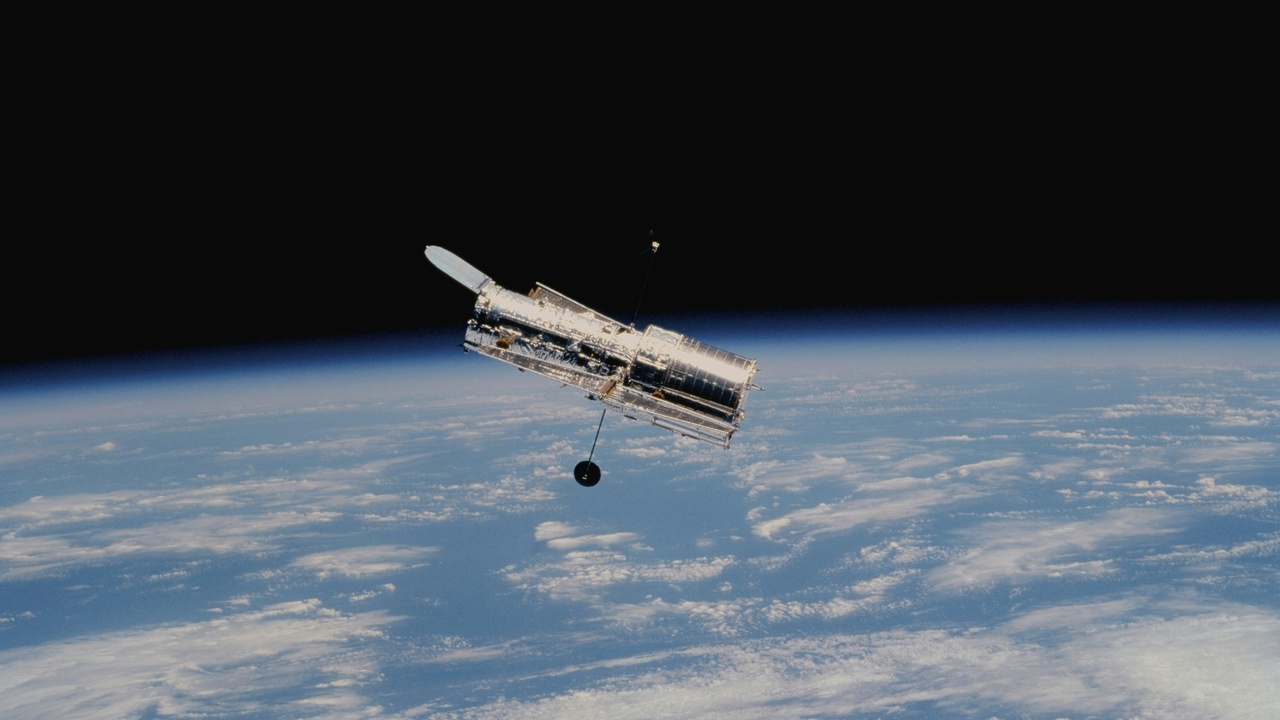
Hubble’s primary achievement was transformational optical imaging with near-UV capability that captured the public imagination and produced high-precision science. Launched April 24, 1990 with a 2.4-meter primary mirror, Hubble was serviced five times by shuttle crews, a sequence of interventions that extended its lifetime and kept instruments state-of-the-art.
Hubble Deep Field (1995) and the later Hubble Ultra Deep Field showed thousands of faint galaxies in a tiny patch of sky, directly informing galaxy evolution timelines and star-formation histories. Hubble’s imaging and spectra also refined the distance ladder, helping tighten estimates of the Hubble constant through Cepheid and supernova measurements.
On a practical level, Hubble drove improvements in CCD imaging, calibration techniques, and outreach — those iconic images raised public science literacy and provided catalogs and targets that later missions followed up.
2. James Webb Space Telescope — Infrared Eyes for the Early Universe
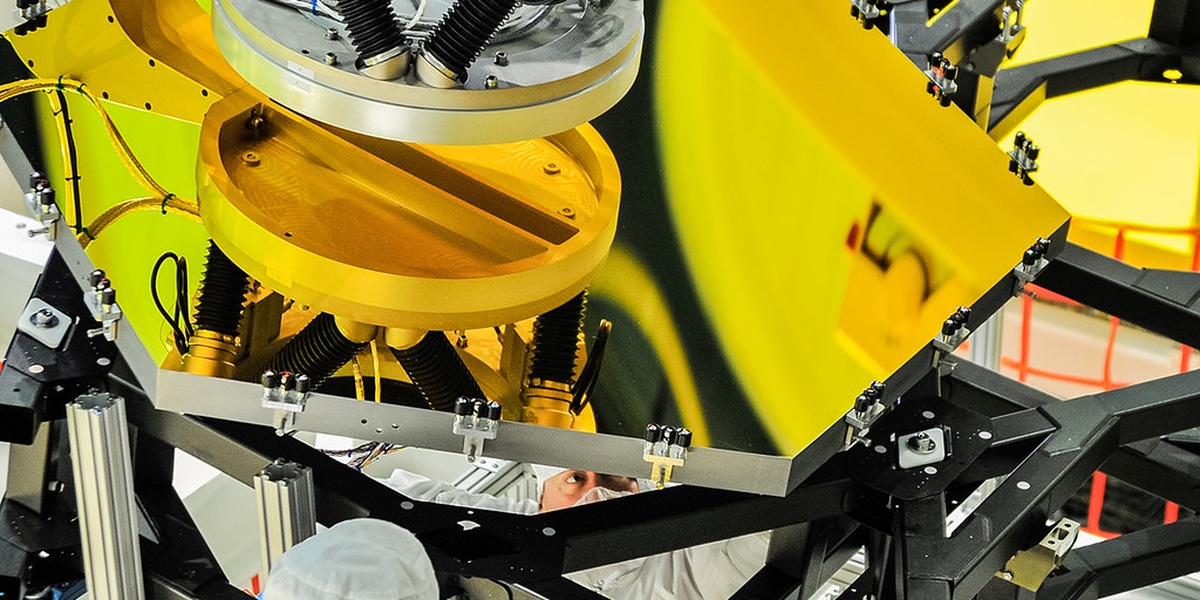
Webb’s role is to probe the near- and mid-infrared with a large, segmented 6.5-meter mirror to see the first galaxies and characterize exoplanet atmospheres. It launched December 25, 2021 and delivered its first full-color images and spectra in July 2022, showing detailed structure in star-forming regions and faint galaxies at extreme distances.
Early Webb results include candidate galaxies at redshifts greater than 10 and high-resolution transmission and emission spectra of exoplanets that reveal molecules such as water and carbon-bearing species. Instruments cooled to cryogenic temperatures and advanced IR detectors used on Webb are now a technological benchmark.
Webb’s Early Release Observations and subsequent programs have already produced spectra of planets like WASP‑96b showing water signatures, and the mission’s catalogs and methods will guide infrared sensor design across astronomy and Earth-observing fields.
3. Spitzer Space Telescope — A Long-Lived Infrared Scout
Spitzer pioneered high-sensitivity mid-infrared observations from space. It launched August 25, 2003 and operated through January 30, 2020, beginning with a cryogenic mission phase and then a productive “warm” mission after coolant depletion.
Spitzer mapped protoplanetary disks, traced dust in star-formation regions, and measured thermal emission from exoplanets via secondary-eclipse photometry, providing early constraints on atmospheric temperatures and compositions. Its surveys generated target lists for JWST and ground-based follow-up.
The mission pushed forward infrared detector technology and data-processing techniques that have been adopted in other fields, and its long baseline produced legacy catalogs still mined for follow-up observations.
Survey, Astrometry and Exoplanet Hunters
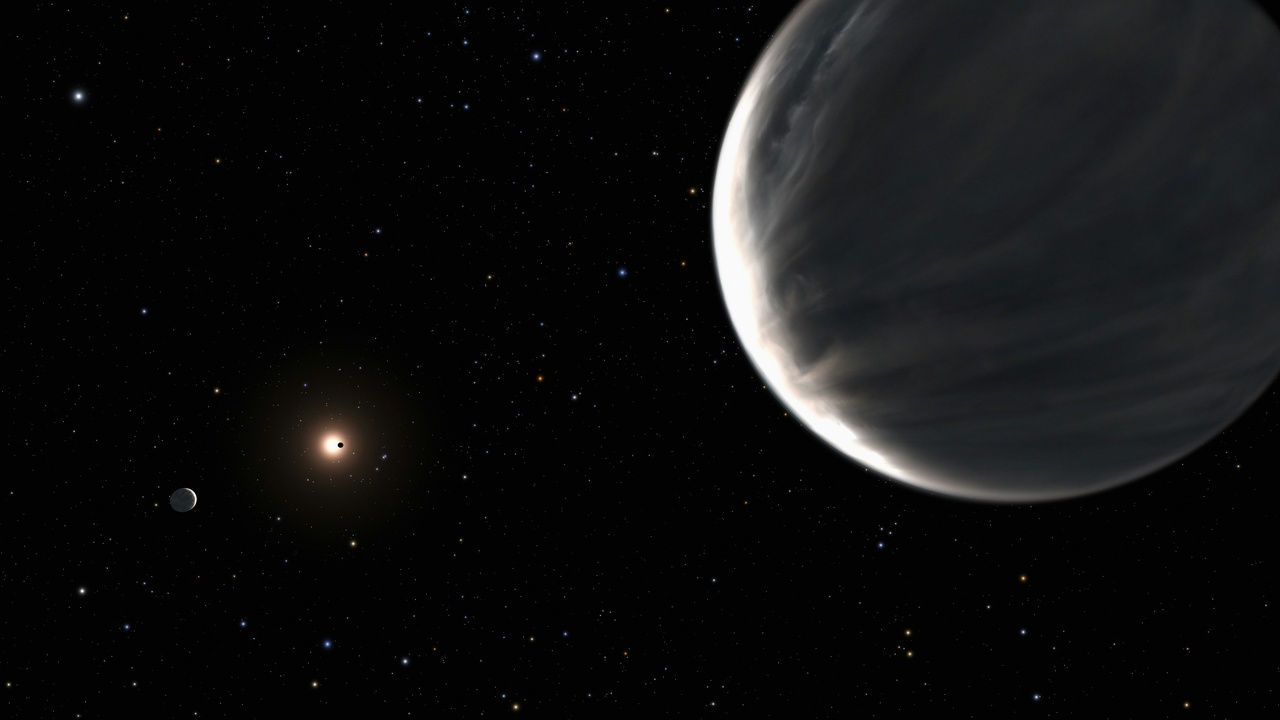
Wide-field photometry and precise astrometry converted astronomy into a statistics-driven science by delivering large, unbiased samples and accurate distances and motions. Milli- to microarcsecond astrometry and continuous photometric surveys let researchers measure exoplanet occurrence rates, map the Milky Way’s structure, and populate catalogs that telescopes like JWST use for detailed follow-up.
4. Kepler Space Telescope — Proving Exoplanets Are Everywhere
Kepler demonstrated that planets are common by staring at a single star-rich patch of sky to detect transits. Launched March 7, 2009, Kepler’s primary mission ran through 2013; its K2 extended operations continued through 2018 and broadened the mission’s scientific reach.
Kepler directly produced more than ~2,600 confirmed exoplanets and thousands of candidates, delivering robust occurrence rates including estimates for Earth-size planets in habitable zones. Those statistics — eta‑Earth estimates — reshaped mission planning and telescope design for transit spectroscopy.
Kepler-186f became an early poster child for an Earth-size world in a habitable zone, while the mission’s large, well-characterized sample set prioritized targets for atmospheric follow-up and informed theoretical models of planet formation.
5. TESS (Transiting Exoplanet Survey Satellite) — Finding Nearby Worlds
TESS uses an all-sky approach to find planets orbiting bright, nearby stars that are ideal for follow-up. It launched April 18, 2018 and employs four wide-field cameras to monitor most of the sky in sectors, producing the TESS Object of Interest (TOI) catalog.
TESS has returned thousands of candidate signals and hundreds of confirmed planets, supplying prime targets for JWST and ground-based spectrographs because the host stars are bright enough for high signal-to-noise atmospheric characterization.
That rapid, all-sky target production accelerates exoplanet science by enabling timely transmission and emission spectroscopy of nearby planets and by filling out the bright-host portion of planet demographics.
6. Gaia — A Billion-Star Atlas of the Milky Way
Gaia’s mission is precise positions, distances, and proper motions for over a billion stars, transforming Galactic astronomy. Launched December 19, 2013, Gaia’s Data Release 2 in 2018 included positions for roughly 1.7 billion sources, with later releases improving astrometry and radial velocities for millions.
For bright stars Gaia reaches microarcsecond-level precision, enabling detailed maps of stellar streams, the Milky Way’s warp, and internal dynamics of clusters. Those data have exposed hidden companions, candidate black holes, and perturbed streams that trace past mergers.
Gaia’s precise distances also refine the distance ladder and improve orbital predictions for near-Earth objects, making its catalogs indispensable for both fundamental astrophysics and practical celestial navigation.
High-Energy Observatories
X-ray and gamma-ray telescopes must operate in space because Earth’s atmosphere absorbs high-energy photons. Those observatories reveal extreme physics — black hole accretion, particle acceleration in supernova remnants, and energetic transients — and now play a central role in multi-messenger campaigns with neutrino and gravitational-wave detectors.
7. Chandra X-ray Observatory — High-Resolution X-Ray Vision
Chandra delivered sub-arcsecond X-ray imaging, opening a new window on hot plasmas and compact objects. Launched July 23, 1999, its high-resolution optics and spectrometers revealed fine structure in supernova remnants, detailed cavities carved by black hole jets, and temperature and density structure in galaxy-cluster gas.
Chandra images of the Crab Nebula and maps of hot gas in the Perseus Cluster clarified how particle acceleration and black hole feedback regulate galaxy evolution. The observatory’s spectroscopy also advanced plasma-physics models used in other disciplines.
Beyond pure astrophysics, Chandra’s work contributed to cross-disciplinary instrumentation improvements and informed theoretical models of shock acceleration relevant to laboratory plasmas.
8. Fermi Gamma-ray Space Telescope — Mapping the Most Energetic Sky
Fermi expanded gamma-ray astronomy with continuous all-sky monitoring and transient alerts. Launched June 11, 2008, it carries the Large Area Telescope (LAT) and the Gamma-ray Burst Monitor (GBM), producing catalogs that list thousands of gamma-ray sources including pulsars, blazars, and unidentified objects.
Fermi discovered numerous gamma-ray pulsars, localized GRBs for rapid multiwavelength follow-up, and contributed to multi-messenger associations, for example in campaigns that linked high-energy neutrinos to active galaxies. Its GRB detections and alerts remain central to time-domain astronomy.
Results from Fermi inform models of cosmic-ray origins and high-energy particle acceleration and help assess space-weather hazards that can affect satellites and technology.
Cosmology and the Cosmic Microwave Background
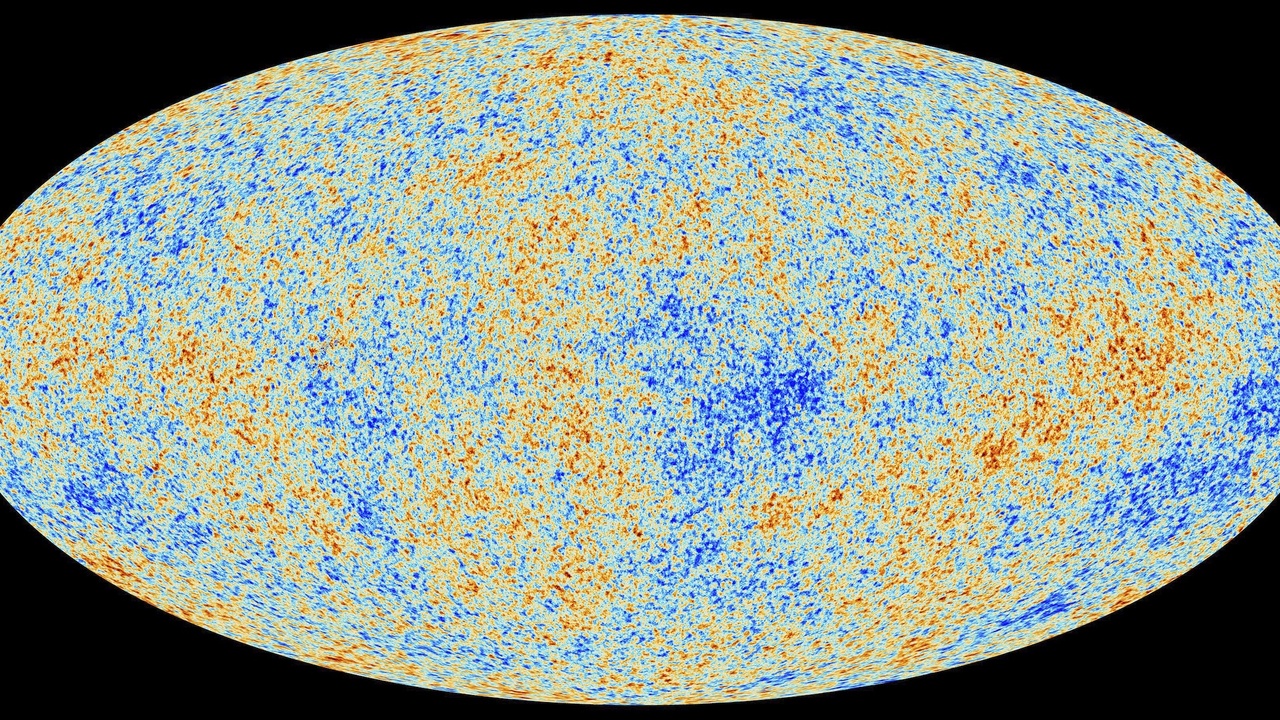
Full-sky CMB measurements from space provide absolute calibration and uniform coverage that are essential for precise cosmology. Those maps revealed the tiny temperature anisotropies that seeded structure formation and allowed percent-level determinations of the universe’s age, matter content, and geometry.
9. COBE (Cosmic Background Explorer) — First Detection of CMB Anisotropy
COBE established the observational basis for modern cosmology. Launched November 18, 1989, it measured the CMB’s spectrum as an almost perfect blackbody and in 1992 detected small anisotropies in the temperature field.
Those results confirmed key Big Bang predictions and provided the seeds for later structure-formation work. The COBE measurements were central to the awarding of the 2006 Nobel Prize in Physics to John Mather and George Smoot for their leadership on the mission.
COBE’s precise blackbody spectrum measurement ruled out many alternative cosmological models and set the stage for higher-resolution follow-ups that would quantify the anisotropy power spectrum in detail.
10. Planck — Precision Cosmology at Percent-Level Accuracy
Planck pushed CMB measurements to high angular resolution and sensitivity across multiple frequencies. Launched May 14, 2009, it produced high-resolution, full-sky maps of temperature and polarization and delivered a sequence of data releases (2013, 2015, 2018) that tightened cosmological parameters to percent-level precision.
Planck refined the age of the universe to about 13.8 billion years and narrowed estimates of dark matter and dark energy densities, providing the parameter set that many galaxy surveys and theoretical models now adopt as a baseline.
Beyond cosmological numbers, Planck’s foreground maps and component-separation techniques are widely used to model Galactic dust and to plan future experiments that search for faint polarization signatures from inflation.
Summary
- Collectively, these 10 most important space telescopes transformed astronomy: they revealed billions of stars, thousands of planets, extreme high-energy phenomena, and the precise imprint of the early universe.
- They enabled new methods and technologies — advanced detectors, cryogenic systems, high-precision optics, and data-analysis pipelines — with spillover benefits for Earth observation and instrumentation.
- Surveys and astrometry (Kepler, TESS, Gaia) created catalogs and demographics that telescopes like JWST and Chandra depend on for targeted, high-value follow-up, while COBE and Planck established the parameter framework for modern cosmology.
- Surprising insights include that small, rocky planets are common (Kepler), the CMB anisotropies are finely patterned and predictable (COBE/Planck), and that multi-messenger, multiwavelength campaigns (Chandra, Fermi, Fermi/GBM alerts plus neutrino links) open entirely new discovery spaces.
Enjoyed this article?
Get daily 10-minute PDFs about astronomy to read before bed!
Sign up for our upcoming micro-learning service where you will learn something new about space and beyond every day while winding down.