When astronomers survey nearby planetary systems, they often find a population of worlds that sit between rocky Earths and gas giants. These objects help fill in how planets form and evolve, especially when you compare their sizes and orbital environments across different systems.
There are 9 Mini-Neptunes, ranging from 55 Cnc e to TOI-849 b. For each entry you’ll see the Radius (R⊕), Mass (M⊕), and Orbital period (days) so you can compare size, mass and orbital pace — you’ll find below.
How do mini-Neptunes differ from super-Earths?
Mini-Neptunes typically have larger radii and lower bulk densities than super-Earths, indicating substantial volatile envelopes (hydrogen, helium, or thick atmospheres) atop a denser core; comparing measured Radius (R⊕) and Mass (M⊕) lets you estimate density and infer whether a planet is gas-rich or predominantly rocky.
What do Radius (R⊕), Mass (M⊕) and Orbital period (days) reveal about these planets?
Radius and mass together give density and composition clues, while orbital period indicates insolation and likely atmospheric retention or loss; using all three columns helps prioritize targets for atmospheric follow-up and understand where each planet sits in formation and evolution models.
Mini-Neptunes
| Name | Radius (R⊕) | Mass (M⊕) | Orbital period (days) |
|---|---|---|---|
| GJ 1214 b | 2.85 | 6.26 | 1.58 |
| K2-18 b | 2.71 | 8.63 | 32.94 |
| HD 97658 b | 2.34 | 7.55 | 9.49 |
| TOI-849 b | 3.44 | 39.10 | 1.27 |
| Kepler-36 c | 3.68 | 8.08 | 16.24 |
| HD 3167 c | 2.85 | 9.80 | 29.85 |
| GJ 9827 d | 2.02 | 4.04 | 6.21 |
| 55 Cnc e | 1.92 | 8.08 | 0.74 |
| K2-3 b | 1.77 | 8.14 | 10.05 |
Images and Descriptions

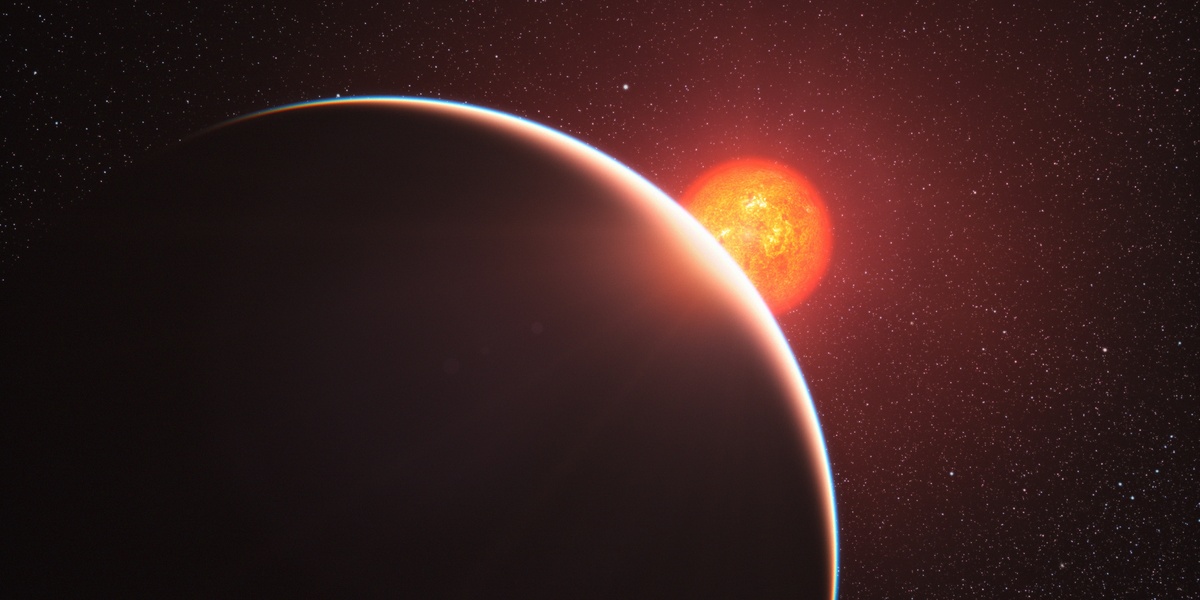
GJ 1214 b
GJ 1214 b is a 2.85 R⊕ planet orbiting the nearby M-dwarf GJ 1214 every 1.58 days. One of the best-studied mini-Neptunes, it’s famous for transmission spectroscopy campaigns probing a hydrogen-rich or water-rich atmosphere amid thick clouds.
K2-18 b
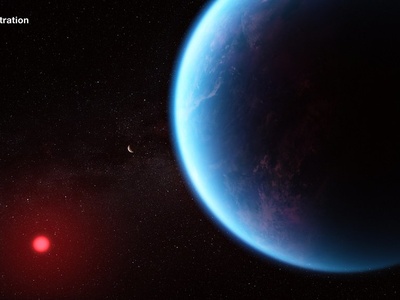
K2-18 b is a 2.71 R⊕ planet orbiting the M-dwarf K2-18 every 32.94 days. Known for detections of water vapor and a temperate equilibrium temperature, it is a leading target for atmospheric studies and habitability discussions.

HD 97658 b
HD 97658 b is a 2.34 R⊕ planet orbiting the bright K-dwarf HD 97658 every 9.49 days. Its proximity and host brightness make it an attractive target for precise mass measurements and atmospheric characterization of a small sub-Neptune.
TOI-849 b
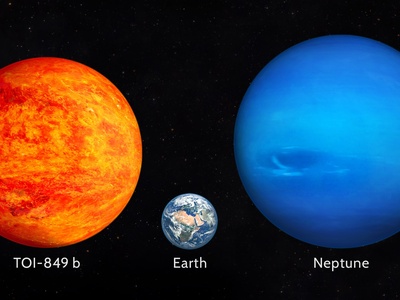
TOI-849 b is a 3.44 R⊕, 39.10 M⊕ planet orbiting a G-type star every 1.27 days. Interpreted as a stripped giant core, it challenges formation models and offers a rare opportunity to study an exposed high-mass planetary interior.
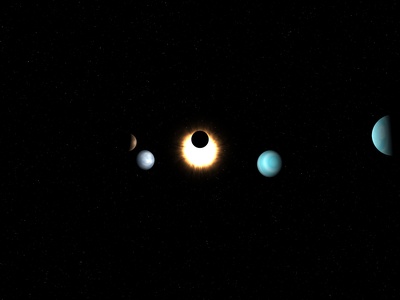
Kepler-36 c
Kepler-36 c is a 3.68 R⊕ planet orbiting the Sun-like star Kepler-36 every 16.24 days. In a strikingly compact pair with a much denser neighbor, it highlights how planets of similar orbits can have very different compositions.
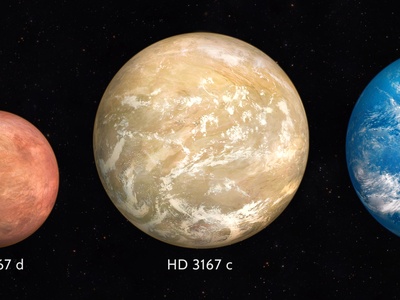
HD 3167 c
HD 3167 c is a 2.85 R⊕ planet orbiting the bright K-dwarf HD 3167 every 29.85 days. Part of a multi-planet system with unusual orbital inclinations, it provides a valuable laboratory for comparative planetology and atmospheric follow-up.
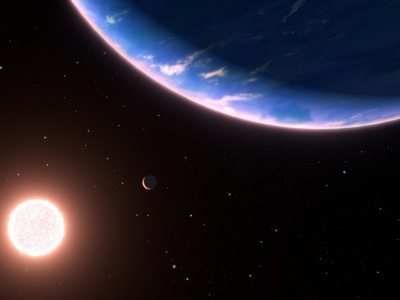
GJ 9827 d
GJ 9827 d is a 2.02 R⊕ planet orbiting the K-dwarf GJ 9827 every 6.21 days. Located in a compact three-planet system and nearby to Earth, it is a convenient target for mass/radius studies and atmospheric searches.
55 Cnc e
55 Cnc e is a 1.92 R⊕, 8.08 M⊕ world orbiting bright Sun-like 55 Cancri every 0.74 days. Extremely hot and accessible to observations, it sits near the super-Earth/mini-Neptune boundary with debated surface and atmospheric properties.
K2-3 b
K2-3 b is a 1.77 R⊕ planet orbiting the M-dwarf K2-3 every 10.05 days. One of three small planets around a nearby bright M-star, it is an excellent target for comparative atmosphere studies of small, cooler planets.
Enjoyed this article?
Get daily 10-minute PDFs about astronomy to read before bed!
Sign up for our upcoming micro-learning service where you will learn something new about space and beyond every day while winding down.