On December 14, 1972, Apollo 17 astronauts watched an earthly sunset from the Moon — a single lunar “day” (sunrise to sunrise) lasts about 29.53 Earth days. That observation is a neat reminder that a “day” can mean different things on different worlds.
In this piece I rank ten of the most extreme solar-day lengths in the Solar System, where “solar day” means sunrise to sunrise as seen from the surface. That differs from a sidereal rotation (rotation relative to the stars): for example, Venus’s sidereal day is about −243 Earth days but its solar day is roughly 116.75 Earth days because it spins retrograde relative to its orbit.
Long solar days matter: they drive temperature extremes, shape atmospheres and volatile transport, and constrain the design and timing of robotic or crewed missions. Numbers below come from NASA mission results and peer-reviewed analyses (MESSENGER, Magellan, Cassini, Galileo, New Horizons, Apollo), with mission years noted where relevant.
Planets with surprisingly long solar days

Most planets spin in hours or a day, but two inner worlds stand out because slow rotation, orbital resonance or retrograde spin stretch their solar days into months. Solar day differs from sidereal day: the former tracks the Sun’s return, the latter tracks a full rotation against the stars. Mercury’s 3:2 spin–orbit resonance and Venus’s retrograde, very slow spin produce solar-day lengths that profoundly affect surface temperature, atmospheric behavior, and mission planning. Mission data—MESSENGER for Mercury and Magellan radar mapping plus Soviet probes for Venus—supply the key numbers cited here.
1. Mercury — Solar day: ~176 Earth days
Mercury has one of the longest solar days of any major planet: its sidereal rotation is about 58.65 Earth days, while its solar day (sunrise to sunrise) is roughly 176 Earth days due to a 3:2 spin–orbit resonance with an 88‑day orbit.
MESSENGER orbiter data (2011–2015) confirmed surface composition and mapped thermal anomalies that reflect those long daylight periods. Daytime surface temperatures can reach ~430°C (≈700 K) while nights drop near −180°C, producing kilometer‑scale thermal stresses that help shape the crust.
For exploration, long solar days force thermal design tradeoffs and dictate when instruments operate; MESSENGER’s mission planning accounted for prolonged sunlit and shadowed intervals when scheduling observations and thermal cycling.
2. Venus — Solar day: ~116.75 Earth days (sidereal rotation ~−243 Earth days)
Venus rotates incredibly slowly and retrograde: its sidereal rotation is about −243 Earth days, but because the planet orbits the Sun in about 225 days the time from one sunrise to the next (solar day) is approximately 116.75 Earth days.
Radar mapping by NASA’s Magellan in the early 1990s and earlier Soviet Venera landers (1970s–1980s) established surface maps and direct probe measurements of pressure and temperature. The long solar day, combined with a dense, super‑rotating atmosphere, helps homogenize surface temperatures around ~460°C despite the slow spin.
Venera landers survived only minutes to hours on the surface because of extreme pressure and heat, so missions must factor long‑duration heating and atmospheric dynamics into any future descent or surface campaign.
Synchronous moons: long days from tidal locking
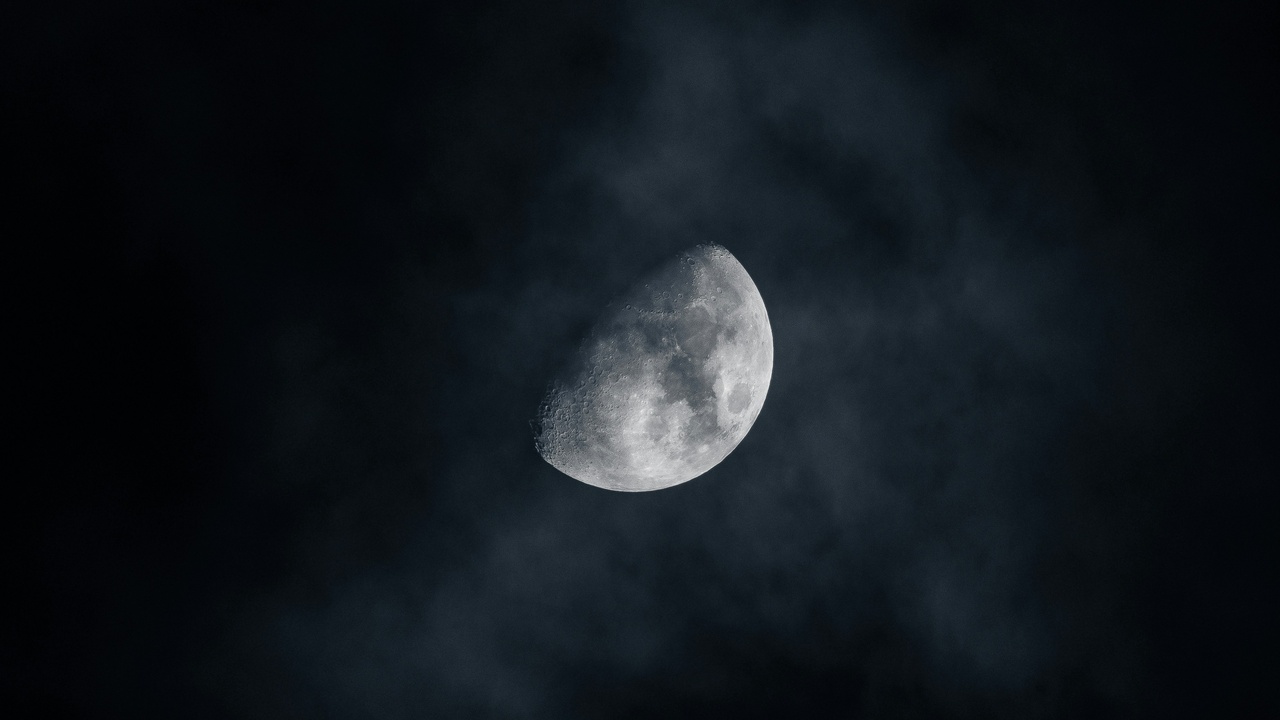
Many large moons are tidally locked, showing the same face to their planet so their rotation period equals their orbital period. Because outer moons orbit more slowly, their solar days (which combine the moon’s orbital period and the planet’s motion around the Sun) can stretch into many Earth days. Below are four familiar synchronized moons with especially long days, with mission references (Cassini, Galileo, Apollo) noted where relevant.
3. Iapetus (Saturn) — Solar day: ~79.3 Earth days
Iapetus has an orbital and rotation period of about 79.32 Earth days, so a single sunrise-to-sunrise cycle lasts roughly 79 days. Cassini flybys (2004–2007) provided the best imagery and revealed its dramatic two‑tone coloration and an unusual equatorial ridge.
That long day produces extended illumination and darkness across its icy surface, amplifying temperature contrasts and influencing any seasonal movement of volatiles. The slow cycle also affects how sunlight-driven processes, such as sublimation, play out over months rather than hours.
Cassini’s close approaches between 2004 and 2007 allowed targeted imaging—those datasets are the primary source for Iapetus’s surface maps and the ridge discovery.
4. Earth’s Moon — Solar day: ~29.53 Earth days (synodic month)
The Moon is tidally locked so its rotation equals its orbital period, but because Earth moves around the Sun the lunar solar day (sunrise to sunrise) equals the synodic month: about 29.53 Earth days.
Apollo missions (1969–1972) gave direct surface experience with long daylight and night: lunar days bring temperatures up to ~+120°C and nights down to about −130°C, forcing considerations for power (long lunar night for solar arrays) and thermal control for habitats.
For future bases, planners must cope with nearly two‑week daylight and two‑week darkness in many locations, or choose polar regions where sunlight conditions differ—lessening the severe thermal cycling experienced by Apollo crews.
5. Callisto (Jupiter) — Solar day: ~16.69 Earth days
Callisto’s orbital and rotation period around Jupiter is about 16.69 Earth days, so its solar day spans roughly 16–17 days. Galileo flybys and remote sensing in the 1990s–2000s characterized its heavily cratered, ancient surface.
That prolonged daylight and night influence surface temperatures over multi‑day cycles, and Callisto’s relatively low radiation environment (compared with inner Galilean moons) makes it appealing as a lower‑risk target for future missions searching for subsurface oceans.
Data from Galileo helped identify hints of a subsurface layer and provided orbital context for follow‑on observations by Hubble and ground observatories.
6. Titan (Saturn) — Solar day: ~15.95 Earth days
Titan is tidally locked with an orbital period of about 15.95 Earth days, so days last roughly sixteen days. Cassini–Huygens (Huygens landed in 2005) transformed our understanding of Titan’s thick atmosphere, methane cycle, and surface liquids.
Long daylight affects atmospheric circulation and the timing of methane rainfall and evaporation; seasonal insolation changes over weeks influence surface lakes and dune heating. Mission planners for rotorcraft or landers (NASA’s Dragonfly, planned for the 2030s) must account for multi‑day thermal cycles and power margins during long nights.
Huygens’ 2005 descent and Cassini’s long mission provided the primary datasets used for climate and surface cycle models that inform Dragonfly’s design.
Distant and oddball worlds with long ‘days’
Out beyond the major planets you find a grab‑bag of distant moons and dwarf worlds whose day lengths are long because of slow rotation, long orbital periods, or odd rotation states. Measurements can be less precise for small or irregular bodies, so mission flybys or light‑curve analyses are often the best sources of rotation estimates.
7. Oberon (Uranus) — Solar day: ~13.46 Earth days
Oberon, a large Uranian moon, is tidally locked with an orbital period of about 13.46 Earth days, giving it a long solar day by Earth standards. Voyager 2’s 1986 flyby delivered the only close images we have, supplemented by telescopic observations since.
Those long days influence how sunlight warms Oberon’s icy, heavily cratered surface and control seasonal illumination patterns over its 84‑year orbit around the Sun via Uranus’ large axial tilt. Thermal inertia and volatile redistribution on icy terrain operate on multi‑day to seasonal timescales.
Voyager 2’s 1986 data remain the primary basis for Oberon’s global descriptions and orbital period determination.
8. Hyperion (Saturn) — Rotation: chaotic, effective day ~13 days (variable)
Hyperion is a special case: rather than a stable spin period, its irregular shape and orbital interactions lead to chaotic rotation. Observations suggest unpredictable tumbling with characteristic orientation changes on timescales of order ~10–20 days, so an “effective” day is roughly two weeks but highly variable.
Cassini flybys documented Hyperion’s sponge‑like surface and confirmed chaotic rotation through time‑series imaging. Because the rotation is not constant, any quoted period is approximate and depends on the epoch and the analysis method (light‑curve or imaging).
That unpredictability affects illumination patterns and complicates long‑duration monitoring or landing attempts—mission planning must treat rotation as uncertain and rely on short‑term tracking from a spacecraft.
9. Ganymede (Jupiter) — Solar day: ~7.15 Earth days
Ganymede is tidally locked with Jupiter and has an orbital period of about 7.15 Earth days, so its solar day lasts just over a week. Galileo mission data and more recent Hubble observations have characterized its surface and revealed that Ganymede even has an intrinsic magnetic field.
A week‑long cycle affects surface heating and the behavior of any near‑surface ice. Ganymede’s subsurface ocean interest makes its light‑and‑dark cycle relevant for thermal models and potential instrumentation planning; the upcoming ESA JUICE mission will revisit these questions in more detail.
Galileo’s discoveries in the 1990s set the foundation for current explorations and for defining Ganymede’s rotation and orbital properties.
10. Pluto (dwarf planet) — Rotation: ~6.39 Earth days
Pluto rotates in about 6.39 Earth days, a value well measured by New Horizons’ 2015 flyby and prior light‑curve work. That multi‑day rotation means sunlight and shadow sweep its complex, volatile‑rich surface over several Earth days.
New Horizons (July 2015) captured geology—Sputnik Planitia’s nitrogen ice flows, mountains, and varied terrains—showing how seasonal and diurnal insolation can drive redistribution of nitrogen and methane ices over days to seasons.
Those observations revealed that even relatively rapid multi‑day rotation can coexist with dramatic seasonal volatile transport on a cold, distant world.
Summary
- Solar day and sidereal day differ: Mercury’s solar day is ~176 Earth days while its sidereal rotation is ~58.65 days (MESSENGER data, 2011–2015).
- Venus spins retrograde with a sidereal period near −243 Earth days, yet its solar day is ~116.75 days (Magellan radar mapping and probe heritage).
- Tidally locked moons can have very long days—Earth’s Moon (synodic) is ≈29.53 days, Iapetus ≈79.32 days (Cassini imaging), and other giants’ moons span week‑scale cycles affecting exploration and surface processes.
- Irregular or distant bodies add uncertainty: Hyperion’s chaotic rotation produces variable effective day lengths (~two weeks, Cassini observations) while New Horizons measured Pluto’s ~6.39‑day rotation and revealed active volatile behavior.
- Want updates? Check NASA mission pages (MESSENGER, Magellan, Cassini, Galileo, New Horizons, Apollo) for the latest measurements and consider how the longest days in solar system influence mission design, climate models, and habitability studies.
Enjoyed this article?
Get daily 10-minute PDFs about astronomy to read before bed!
Sign up for our upcoming micro-learning service where you will learn something new about space and beyond every day while winding down.