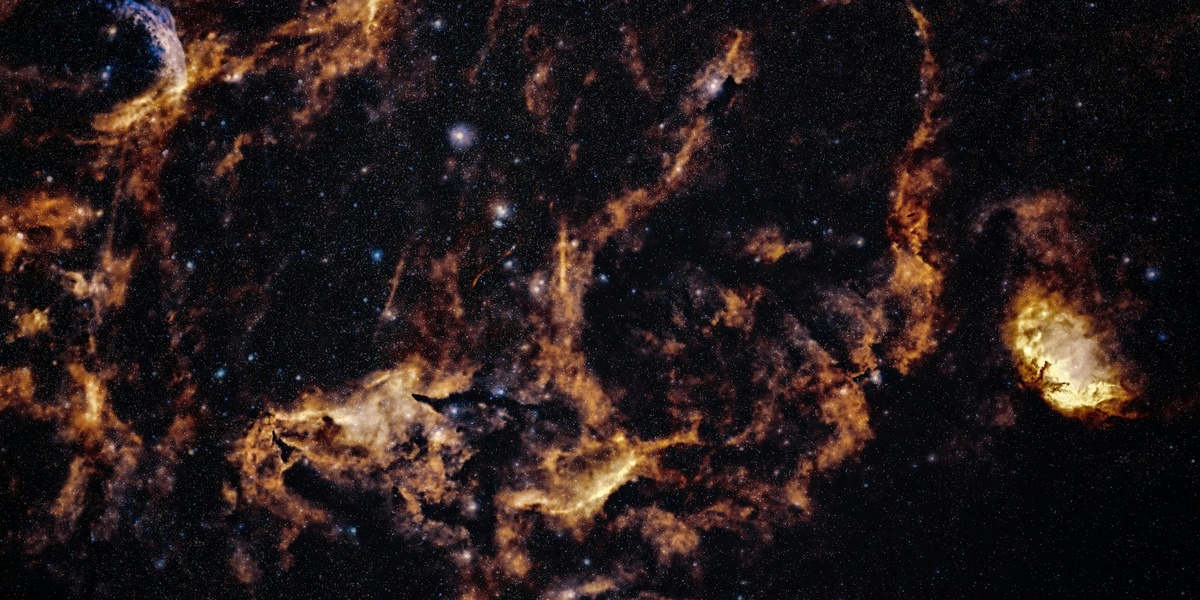
When you step back from images of the night sky, the scale of galaxies becomes striking: some systems span hundreds of thousands of light-years and dominate their local environments. Astronomers piece together size, distance and type to understand how those giants formed and grew over cosmic time.
There are 6 Largest Galaxies in the Universe, ranging from IC 1101 to UGC 2885 (Rubin’s Galaxy). For each you’ll find below the columns Diameter (kly),Distance (Mly),Type — see the list below.
How are diameters of distant galaxies measured?
Diameters are usually estimated from an object’s apparent angular size combined with its distance (from redshift or other indicators), and by defining a surface-brightness or isophotal limit to mark the edge; uncertainties arise from faint outer halos, projection effects, and distance errors, so reported sizes are best treated as approximate.
Could the list change with new observations or definitions?
Yes — improved imaging, deeper surveys, revised distance estimates, or different criteria for what counts as a galaxy’s edge can add or remove objects and change measured sizes, so rankings are periodically updated as data and methods improve.
Largest Galaxies in the Universe
| Name | Diameter (kly) | Distance (Mly) | Type |
|---|---|---|---|
| IC 1101 | 6,000 | 1,040.0 | cD elliptical |
| Malin 1 | 650 | 1,200.0 | LSB spiral |
| NGC 6872 (Condor Galaxy) | 522 | 212.0 | Barred spiral (interacting) |
| UGC 2885 (Rubin’s Galaxy) | 486 | 232.0 | Spiral |
| UGC 1382 | 463 | 220.0 | Giant LSB galaxy |
| M87 (NGC 4486) | 652 | 53.5 | Elliptical |
Images and Descriptions
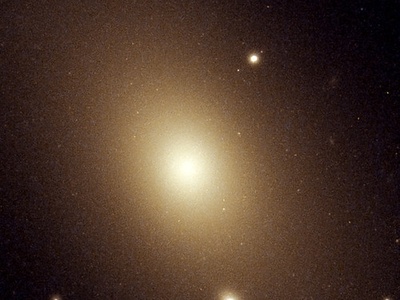
IC 1101
One of the most-cited giant galaxies, often quoted up to ~6,000 kly across when its diffuse stellar envelope is included; size estimates vary widely because faint outer halo limits depend on how deep you measure.

Malin 1
The archetypal giant low-surface-brightness spiral with an enormous, faint disk measured to roughly 650 kly; its extended, low-density outer disk makes diameter estimates sensitive to imaging depth and surface-brightness limits.
NGC 6872 (Condor Galaxy)
A spectacular interacting spiral with arms stretched across more than 500 kly; well-measured tidal extents make it one of the largest known spirals, though sizes reflect disturbed, non-equilibrium structure.
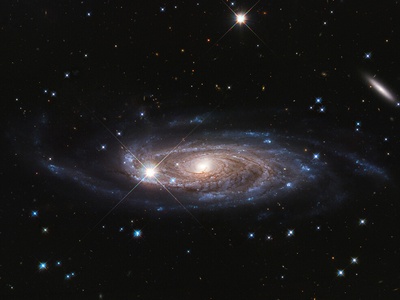
UGC 2885 (Rubin’s Galaxy)
A very large, massive spiral often quoted near 400–500 kly across; deep imaging shows an extended disk and faint outskirts, so reported diameters depend on the surface-brightness threshold used.
UGC 1382
Recognized as a giant low-surface-brightness system with an extended disk reaching a few hundred thousand light-years; its classification and diameter came from deeper surveys that revealed a faint outer component.
M87 (NGC 4486)
Massive Virgo-cluster elliptical whose stellar halo and intracluster light have been traced to hundreds of kiloparsecs (~650 kly); measured size grows with deeper photometry, so quoted diameters vary with method and isophote choice.
Enjoyed this article?
Get daily 10-minute PDFs about astronomy to read before bed!
Sign up for our upcoming micro-learning service where you will learn something new about space and beyond every day while winding down.