

When SpaceX put Falcon 1 into orbit in 2008 it marked a turning point: private companies moved from niche contractors to full mission partners, and the modern space boom accelerated from there. Since that launch, firms such as SpaceX (which reports over 10,000 employees in company filings) and a growing set of startups have scaled launch, constellations, and satellite services, creating career paths that look very different from the NASA-era workforce of roughly 17,000 civil servants (NASA) concentrated in the 1960s–present.
Many readers want a stable, well-paid career tied to space but aren’t sure which jobs pay best or how those roles translate to everyday life. Questions about salaries, training, and mission impact are common—especially as companies push toward mega-constellations, lunar programs, and in-orbit servicing.
As the sector expands from government programs to commercial constellations and lunar plans, there are at least ten distinct high paying space careers that routinely top six figures in the U.S. market. Below I group them into Engineering & Technical; Science & Research; Operations & Flight; and Business, Legal & Program Management, and for each role cover typical responsibilities, pay ranges, training, and concrete examples (firms, missions, and products). For authoritative data consult the BLS, NASA workforce reports, and company filings when verifying salaries and staffing.
Engineering & Technical Roles

Engineering roles dominate high-paying positions in space because the work is highly technical, often safety-critical, and requires scarce, mission-proven skills. Median pay for aerospace engineers has been reported near $122k annually (BLS median pay for aerospace engineers), and senior specialists at commercial launch firms or defense primes commonly exceed $150k. Education expectations typically start with a BS in aerospace, mechanical, electrical, or materials engineering; many senior roles prefer an MS or PhD plus 4–8+ years of hands-on experience to reach six-figure compensation.
Engineers turn design into services people use: structural teams enable rockets and crew capsules, avionics and GNC provide precise navigation for GPS and pinpoint landings, and propulsion groups create the thrust that puts communications and weather satellites into orbit. Employers such as SpaceX, Lockheed Martin, Northrop Grumman, and Boeing hire these specialties to build products like Falcon 9, GPS satellites, and components for JWST.
Below are three high-paying engineering roles, typical pay brackets, real-world applications, and the skills that get you there.
1. Aerospace Engineer
Many mid-career aerospace engineers earn $110k–$160k in the U.S. private sector, with defense primes and high-growth launch firms often paying a premium for seasoned designers (BLS and industry surveys). Senior leads and principal engineers can exceed that range on large programs.
Work focuses on structural and systems design for rockets, satellites, and crewed vehicles: stress analysis, load paths, thermal protection, and integration of propulsion, avionics, and payloads. Examples include Lockheed Martin’s satellite bus projects, Boeing’s work on the CST-100 Starliner, and SpaceX structural teams responsible for Falcon and Starship stages.
Typical path: BS in aerospace or mechanical engineering, then an MS for specialized roles. Key skills include CAD tools (CATIA, SolidWorks), finite element analysis (FEA), materials science, and hands-on test protocol experience for qualification testing and flight hardware acceptance.
2. Propulsion Engineer (Chemical & Electric)
Experienced propulsion engineers frequently reach six figures, with senior specialists commonly paid $120k+ in launch and in-space propulsion firms. The role splits broadly into chemical propulsion (liquid/solid rocket engines) and electric propulsion (ion or Hall-effect thrusters) specialties.
Chemical propulsion work covers engine thermodynamics, turbopumps, combustion stability, and full-scale hot-fire testing—examples include development efforts like SpaceX’s Merlin and Raptor engines or Blue Origin’s BE-4. Electric propulsion engineers design and qualify Hall-effect or ion thrusters used for GEO station-keeping and constellation maneuvers (deployed by operators such as SES or Maxar).
Backgrounds usually include MS/PhD in propulsion, aerospace, or mechanical engineering, strength in thermodynamics and fluid mechanics, and experience in test stands and flight-heritage hardware. Career progression often moves from test engineer to subsystem lead to chief propulsion engineer.
3. Guidance, Navigation & Control (GNC) / Avionics Engineer
Senior GNC and avionics engineers typically earn $110k–$170k+ depending on mission criticality and flight heritage. These engineers are in high demand at launch providers and satellite manufacturers because control precision directly drives mission success.
Applications range from stabilizing Earth-observation satellites and fine pointing for telescopes (JWST instrument pointing) to the precise booster guidance systems that enable Falcon 9 booster landings. Work includes sensor fusion for star trackers and IMUs, flight-control algorithms, and real-time embedded code development.
Key skills: control theory, embedded C/C++, FPGA experience, model-based design, and hardware-in-the-loop (HIL) testing. Flight-proven software and HIL testing experience are often required for senior roles.
Science & Research Careers

Scientific roles span academia, government laboratories, and industry R&D, and senior researchers or principal investigators can command six-figure salaries—especially when leading large missions or translating research into commercial products. Research underpins exploration (planetary science), drives climate and resource monitoring (Earth observation), and feeds product teams with analytics and models.
Career paths often take longer to reach high pay because of the PhD/postdoc pipeline, but industry roles in data analytics and applied science can reach $120k–$200k faster than academia. Organizations to consult for benchmarks include NASA centers (JPL, GSFC), ESA, university pay scales, and company reports from Maxar or Planet Labs.
Below are three science-focused roles that commonly pay over $100k at senior levels and the ways their work affects everyday services.
4. Planetary Scientist / Space Scientist
Planetary scientists typically follow a PhD path; senior researchers, mission leads, or PIs can earn well over $100k—particularly at NASA centers or in industry R&D. Senior civil servant pay bands and mission leadership stipends can push total compensation higher for mission-critical roles.
Work includes interpreting rover and orbital data, selecting landing sites, planning sample-return campaigns, and mapping resources. Examples include JPL scientists on the Perseverance rover team and researchers preparing for Artemis lunar sample-return planning.
Typical route: PhD, one or more postdocs, then staff scientist or PI roles. Leadership on a major mission proposal or a funded instrument often correlates with higher pay and career stability.
5. Astrophysicist / Observatory Scientist
Senior observatory scientists and instrument leads at national labs or large private institutes often earn six figures. Pay rises when scientists take responsibility for major instruments or missions, such as those on Hubble or JWST (launched in 2021).
Responsibilities include instrument design, calibration, mission operations support, and public-science outreach that fuels funding and technological advances. Concrete examples are JWST instrument teams and senior staff at national observatories or research institutes like the Carnegie Observatories.
Grant funding, instrument leadership, and cross-institution collaborations often increase compensation and visibility within the field.
6. Space Data Scientist / Machine Learning Engineer
As satellite constellations produce petabytes of imagery and telemetry, data scientists in the space sector have become highly valuable. Experienced practitioners at private firms often earn $120k–$200k, especially when aligned with product teams that monetize analytics.
Applications include automated crop and land-use monitoring, maritime vessel detection, change-detection for disaster response, and anomaly detection in satellite telemetry. Teams at Planet Labs and Maxar use ML to deliver analytics for agriculture, insurance, and defense customers.
Key skills: Python, TensorFlow/PyTorch, remote-sensing fundamentals, geospatial libraries, and cloud-scale data engineering. These roles bridge research, product development, and commercial deployment.
Operations, Flight & Mission Roles
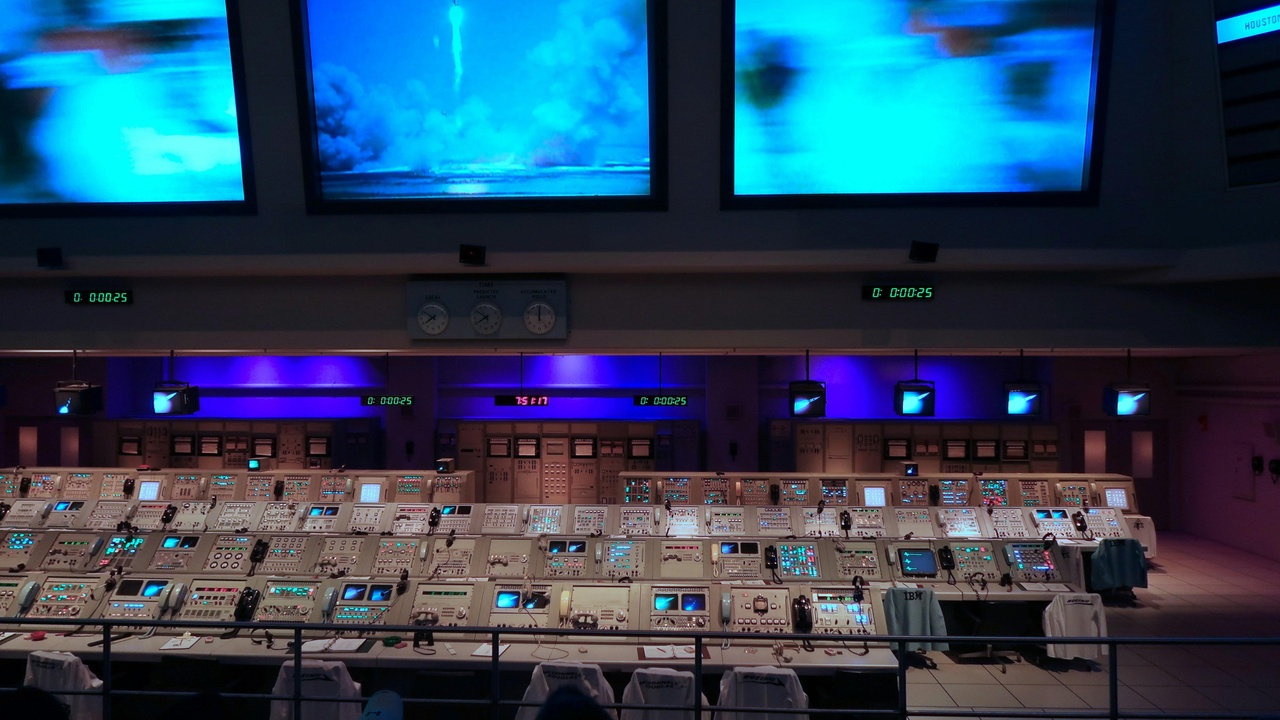
Operations and mission roles command six figures because they carry live responsibility for asset health, safety, and customer service. These positions involve 24/7 readiness, cross-contractor coordination, and handling anomalies during launches and on-orbit operations.
Such roles exist in government (NASA mission operations), commercial launch control teams, and large constellation operators. Their work enables consumer-facing services: reliable satellite internet, timely disaster imaging, and continuous navigation signals.
Two common high-paying operations roles are outlined below, along with examples of organizations and services they support.
7. Mission Operations Manager / Flight Director
Experienced mission operations managers and flight directors at large programs often earn well into six figures. Pay scales reflect the live, high-stakes responsibility of running crewed missions or large constellation operations (NASA flight director bands and commercial equivalents).
Responsibilities include overseeing timelines, managing anomaly resolution during launches and flights, and coordinating across engineering, safety, and customer teams. Examples: NASA flight directors, SpaceX mission ops leads for Crew Dragon, and private mission directors for human spaceflight or high-value science missions.
These roles require years of ops experience, exceptional crisis-management skills, and the ability to translate technical data into actionable decisions under pressure.
8. Satellite Operations Manager / Constellation Ops Lead
Satellite and constellation operations leads often earn $100k–$180k in commercial firms, with pay scaling alongside fleet size and customer commitments. The rise of mega-constellations has driven demand for experienced ops staff.
Work covers scheduling, health monitoring, collision-avoidance coordination, and optimizing bandwidth for customers. For context, Starlink has launched over 4,000 satellites (company filings), and operators like OneWeb and SES run sizable fleets that require 24/7 monitoring and regulatory coordination.
Key skills include familiarity with satellite telemetry, basic orbital mechanics, ops-tooling, and regulatory interfaces (including coordination with U.S. Space Force space‑traffic advisories for avoidance maneuvers).
Business, Legal & Program Management

Non-engineering roles can pay six figures when they combine technical literacy with commercial, regulatory, or leadership responsibility. These positions secure funding, win contracts, manage risk, and shape long-term strategy that make missions and products viable.
Examples of employers include prime contractors, launch providers, satellite operators, and law firms advising on licensing. These roles are essential to translating technical capability into customers, revenue, and sustained programs—so they’re among the high paying space careers you’ll find across the industry.
Below are two senior business and policy roles that commonly pay over $100k and how they contribute to commercial and government missions.
9. Space Program / Product Manager
Senior program or product managers on large space efforts typically earn $120k–$200k+. Compensation correlates with program scale, budget responsibility, and customer impact, especially on multi-million- or billion-dollar contracts.
Responsibilities include budget and schedule oversight, stakeholder management, defining requirements, and translating technical capabilities into customer-ready services. Examples: program leads managing government satellite contracts, product managers at Planet Labs packaging imagery into analytics, or product leads at Blue Origin coordinating launch services.
Successful candidates combine technical literacy with experience in contracting, systems engineering familiarity, and demonstrated leadership on cross-functional teams.
10. Space Attorney / Policy Director / Business Development Lead
Legal, policy, and business-development leaders often earn six figures because they secure licenses, negotiate multi-million-dollar deals, and shape regulatory strategy. Senior in-house counsel, policy directors, and BD leads at large firms commonly command salaries over $150k.
Real-world tasks include spectrum and launch licensing, export-control compliance, negotiating launch and ground‑station contracts, and structuring public‑private partnerships. Examples: in-house counsel at major satellite operators, policy leads working with national regulators, and BD teams at Arianespace or OneWeb closing customer agreements.
Typical backgrounds include a JD or extensive policy/BD experience plus technical familiarity with satellites, RF spectrum, and international regulatory regimes.
Summary
- These 10 careers span technical, scientific, operational, and commercial domains and commonly pay over $100k with experience, specialization, or leadership.
- Progression to six figures usually requires targeted education (BS/MS/PhD for technical roles or JD/experience for legal), 4–8+ years of hands-on experience, or mission leadership (BLS, NASA, and company reports are useful benchmarks).
- Many roles directly power services people use every day—GPS, satellite internet, weather forecasting, and Earth-observation analytics—through work at firms like SpaceX, Lockheed Martin, Planet Labs, and Maxar.
- Practical next steps: apply for internships at aerospace firms, enroll in a focused MS in propulsion or data science, or network at industry events and career fairs to move toward these roles.
Enjoyed this article?
Get daily 10-minute PDFs about astronomy to read before bed!
Sign up for our upcoming micro-learning service where you will learn something new about space and beyond every day while winding down.