Greece’s coastal cities, island observatories and Hellenistic centers like Alexandria shaped a long tradition of skywatching and mathematical inquiry. From star catalogs to geometric models of motion, Greek thinkers blended observation and theory in ways that still shape how we study the heavens.
There are 28 Greek Astronomers, ranging from Apollonius of Perga to Timocharis of Alexandria; their entries are organized with Dates (birth–death),Era/Period,Main contribution (max 15 words),Description (30–50 words), which you’ll find below.
How reliable are the dates and attributions for these ancient astronomers?
Dates and attributions come from a mix of ancient texts, inscriptions and modern scholarship; many are approximate and sometimes debated, so entries note uncertain dates or contested contributions where relevant.
Which names had the biggest influence on later astronomy and why?
Figures like Hipparchus and Ptolemy shaped star catalogs and planetary theory that later astronomers built on, while mathematicians such as Apollonius provided geometric tools; influence is measured by surviving works, citations and lasting use of their methods.
Greek Astronomers
| Name | Dates (birth–death) | Era/Period | Main contribution (max 15 words) | Description (30–50 words) |
|---|---|---|---|---|
| Aristarchus of Samos | c.310 BCE–c.230 BCE | Hellenistic | Proposed heliocentric model; measured Sun–Moon sizes and distances | Aristarchus argued the Sun-centered model centuries before Copernicus and used geometry to estimate the relative sizes and distances of Sun and Moon. His surviving work shows bold quantitative thinking that influenced later astronomical debate despite ancient skepticism. |
| Eratosthenes of Cyrene | c.276 BCE–c.194 BCE | Hellenistic | Measured Earth’s circumference using shadow lengths and geometry | Eratosthenes compared midday shadows at two Egyptian cities to estimate Earth’s circumference remarkably accurately. He also worked on geography and calendar reform, combining observation and mathematics to produce one of antiquity’s most influential practical measurements. |
| Hipparchus of Nicaea | c.190 BCE–c.120 BCE | Hellenistic | Compiled star catalog; discovered precession; advanced trigonometry | Hipparchus created the first known comprehensive star catalog, discovered the precession of the equinoxes, and developed trigonometric tools for astronomy. His observations and methods formed a foundation for later astronomers, including Ptolemy. |
| Claudius Ptolemy | c.100 CE–c.170 CE | Roman Egypt (Hellenistic culture) | Author of the Almagest; geocentric planetary model and star catalog | Ptolemy’s Almagest codified ancient observational astronomy into a comprehensive geocentric framework and cataloged over 1,000 stars. His mathematical models for planetary motion dominated astronomical thinking for over a millennium. |
| Eudoxus of Cnidus | c.408 BCE–c.355 BCE | Classical | Developed homocentric spheres model for planetary motion | Eudoxus proposed a nested-spheres system to explain planetary motions mathematically rather than mythically. His homocentric-sphere model was a major early attempt to represent complex celestial motion with geometric devices. |
| Apollonius of Perga | c.262 BCE–c.190 BCE | Hellenistic | Developed conic sections foundational to orbital geometry | Apollonius’s systematic study of conic sections gave later astronomers and mathematicians the geometric language to describe trajectories and orbits. His work became essential to both theoretical astronomy and later celestial mechanics. |
| Autolycus of Pitane | c.360 BCE–c.290 BCE | Classical/Hellenistic | Wrote earliest surviving Greek texts on spherical astronomy | Autolycus authored “On the Moving Sphere” and “On Risings and Settings,” the oldest surviving Greek mathematical astronomy works. They present geometric and observational rules for the motions of stars, sunrises, and settings. |
| Timocharis of Alexandria | fl.3rd century BCE | Hellenistic | Recorded precise lunar and stellar observations | Timocharis made some of the earliest systematic positional observations of stars and the Moon from Alexandria. His measurements were later used by Hipparchus to detect precession and to refine ancient star positions. |
| Aristyllus | fl.3rd century BCE | Hellenistic | Measured stellar longitudes used in later catalogs | Aristyllus produced observational measures of star positions that, though surviving only in fragments cited by later authors, contributed to the development of ancient star catalogs and long-term positional astronomy. |
| Geminus of Rhodes | 1st century BCE | Hellenistic/Roman | Author of an accessible survey of astronomical knowledge | Geminus wrote “Introduction to the Phenomena,” a concise handbook that summarized the astronomy of his day for students and readers. His clear explanations helped transmit Hellenistic astronomical concepts to a broader audience. |
| Menelaus of Alexandria | 1st–2nd century CE | Hellenistic/Roman | Formulated Menelaus’ theorem for spherical trigonometry | Menelaus developed spherical trigonometry crucial for solving celestial-sphere problems. His theorem became a standard tool in astronomical calculations involving angles on the sky and for predicting celestial events. |
| Cleomedes | 1st century CE | Roman | Authored “On the Circular Motions of the Celestial Bodies” preserving Hellenistic astronomy | Cleomedes compiled and explained Hellenistic cosmology and observational lore in a single treatise that preserves many fragments of earlier authors. His work was an important transmission of ancient astronomical ideas into later centuries. |
| Sosigenes of Alexandria | 1st century BCE | Hellenistic/Roman | Advised on Julian calendar reform and astronomical year length | Sosigenes was consulted by Julius Caesar on calendar reform and calculations for the Julian calendar. Ancient sources credit him with practical astronomical computations related to the solar year and intercalation. |
| Posidonius of Apamea | c.135 BCE–c.51 BCE | Hellenistic/Roman | Made measurements and compiled wide-ranging astronomical observations | Posidonius combined philosophy with empirical observation, estimating Earth’s size and compiling reports on celestial phenomena. His interdisciplinary approach influenced Roman and later Hellenistic scientific thought. |
| Pappus of Alexandria | c.290 CE–c.350 CE | Late Antiquity | Compiled earlier geometric and astronomical works; instrument discussion | Pappus gathered and summarized Greek mathematical knowledge, including material relevant to astronomy and instrument design. His commentaries preserved many results otherwise lost and guided later scholars through prior techniques. |
| Theon of Alexandria | c.335 CE–c.405 CE | Late Antiquity | Edited the Almagest; wrote on instruments and computations | Theon produced influential commentaries and an edition of Ptolemy’s Almagest, taught astronomy in Alexandria, and authored practical works on astronomical instruments, helping preserve classical observational techniques. |
| Hypatia of Alexandria | c.350 CE–c.415 CE | Late Antiquity | Edited and taught Ptolemaic astronomy; made instruments and commentaries | Hypatia was a respected teacher and editor of mathematical and astronomical texts, including parts of the Almagest. She lectured on astronomy and is associated with instrument-making and the transmission of technical knowledge in Alexandria. |
| Meton of Athens | fl.5th century BCE | Classical | Introduced the Metonic cycle for lunar-solar calendar alignment | Meton established the 19-year cycle that aligns lunar months with the solar year, used for calendrical calculations and festival timing in Athens. His observational work improved civic and agricultural scheduling tied to the heavens. |
| Euctemon | fl.5th century BCE | Classical | Collaborated on observations used in calendar and eclipse studies | Euctemon worked with Meton and others on solar and lunar observations that underpinned the Metonic cycle and early Greek calendrical astronomy, contributing empirical data for civic timekeeping. |
| Marinus of Tyre | c.70 CE–c.130 CE | Roman (Hellenistic tradition) | Geographic and positional data used by later star mappers | Marinus compiled geographic coordinates and positional data that influenced Ptolemy’s maps and catalogs. His systematic approach to positions and longitudes informed celestial mapping practices. |
| Hero of Alexandria | c.10 CE–c.70 CE | Roman (Hellenistic tradition) | Built instruments and mechanical devices relevant to observation | Hero invented and described instruments and automata, including devices applicable to observational astronomy such as the dioptra and mechanical models. His practical engineering aided precise measurement and demonstration. |
| Philo of Byzantium (Philo Mechanicus) | c.280 BCE–c.220 BCE | Hellenistic | Wrote on measuring instruments and mechanical techniques for observations | Philo produced technical manuals on mechanics and measuring devices, including descriptions of instruments useful in astronomy. His work reflects the practical side of Hellenistic observational science. |
| Gregory Choniades | c.1240 CE–c.1320 CE | Byzantine | Introduced Persian astronomical tables and techniques to Byzantium | Choniades studied in Persia and brought back Zij tables, planetary models, and observational methods. He helped revive precise astronomical computation in Byzantine scholarly circles and translated important technical material. |
| Maximus Planudes | c.1255 CE–c.1315 CE | Byzantine | Compiled and translated astronomical texts and tables into Greek | Planudes collected, translated, and adapted astronomical knowledge—including tables and computational aids—making Islamic and classical material accessible in Byzantium and influencing later Greek scholarship. |
| Theodore Metochites | c.1270 CE–c.1332 CE | Byzantine | Authored treatises on astronomy; patron of scientific learning | Metochites was a statesman and scholar who wrote on astronomy and mathematics, supported observatory practice, and promoted the study of the heavens within Byzantine intellectual life. |
| Demetrios Eginitis | 1862–1934 | Modern (Greek) | Director of National Observatory of Athens; calendar and observational modernization | Eginitis modernized Greek astronomy as director of the National Observatory of Athens, improved observational practices, worked on calendar and timekeeping issues, and promoted scientific institutions and education in Greece. |
| John S. Paraskevopoulos | 1889–1951 | Modern (Greek) | Director at Boyden Observatory; observational astronomy in southern skies | Born in Greece, Paraskevopoulos became an accomplished observational astronomer and director at the Boyden Observatory, leading surveys of southern-hemisphere stars and contributing to international observational programs. |
| Stavros Plakidis | 1893–1991 | Modern (Greek) | Worked on variable stars and observational astronomy; teacher and observatory leader | Plakidis advanced the study of variable stars in Greece, taught generations of astronomers, and helped build modern observational programs. His publications and leadership strengthened Greek astrophysical research. |
Images and Descriptions

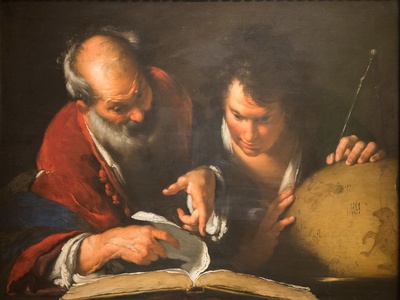
Aristarchus of Samos
Aristarchus argued the Sun-centered model centuries before Copernicus and used geometry to estimate the relative sizes and distances of Sun and Moon. His surviving work shows bold quantitative thinking that influenced later astronomical debate despite ancient skepticism.
Eratosthenes of Cyrene
Eratosthenes compared midday shadows at two Egyptian cities to estimate Earth’s circumference remarkably accurately. He also worked on geography and calendar reform, combining observation and mathematics to produce one of antiquity’s most influential practical measurements.
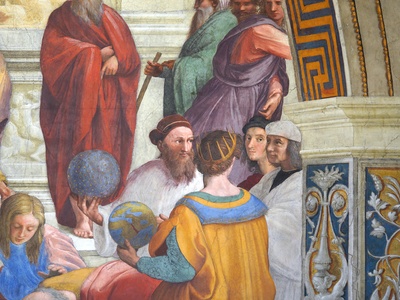
Hipparchus of Nicaea
Hipparchus created the first known comprehensive star catalog, discovered the precession of the equinoxes, and developed trigonometric tools for astronomy. His observations and methods formed a foundation for later astronomers, including Ptolemy.
Claudius Ptolemy
Ptolemy’s Almagest codified ancient observational astronomy into a comprehensive geocentric framework and cataloged over 1,000 stars. His mathematical models for planetary motion dominated astronomical thinking for over a millennium.
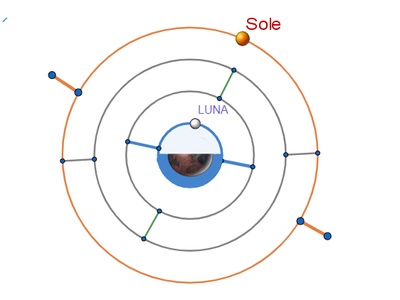
Eudoxus of Cnidus
Eudoxus proposed a nested-spheres system to explain planetary motions mathematically rather than mythically. His homocentric-sphere model was a major early attempt to represent complex celestial motion with geometric devices.
Apollonius of Perga
Apollonius’s systematic study of conic sections gave later astronomers and mathematicians the geometric language to describe trajectories and orbits. His work became essential to both theoretical astronomy and later celestial mechanics.
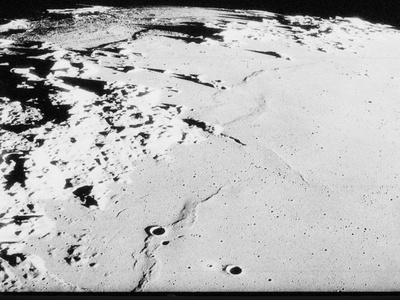
Autolycus of Pitane
Autolycus authored “On the Moving Sphere” and “On Risings and Settings,” the oldest surviving Greek mathematical astronomy works. They present geometric and observational rules for the motions of stars, sunrises, and settings.
Timocharis of Alexandria
Timocharis made some of the earliest systematic positional observations of stars and the Moon from Alexandria. His measurements were later used by Hipparchus to detect precession and to refine ancient star positions.
Aristyllus
Aristyllus produced observational measures of star positions that, though surviving only in fragments cited by later authors, contributed to the development of ancient star catalogs and long-term positional astronomy.
Geminus of Rhodes
Geminus wrote “Introduction to the Phenomena,” a concise handbook that summarized the astronomy of his day for students and readers. His clear explanations helped transmit Hellenistic astronomical concepts to a broader audience.
Menelaus of Alexandria
Menelaus developed spherical trigonometry crucial for solving celestial-sphere problems. His theorem became a standard tool in astronomical calculations involving angles on the sky and for predicting celestial events.
Cleomedes
Cleomedes compiled and explained Hellenistic cosmology and observational lore in a single treatise that preserves many fragments of earlier authors. His work was an important transmission of ancient astronomical ideas into later centuries.
Sosigenes of Alexandria
Sosigenes was consulted by Julius Caesar on calendar reform and calculations for the Julian calendar. Ancient sources credit him with practical astronomical computations related to the solar year and intercalation.
Posidonius of Apamea
Posidonius combined philosophy with empirical observation, estimating Earth’s size and compiling reports on celestial phenomena. His interdisciplinary approach influenced Roman and later Hellenistic scientific thought.
Pappus of Alexandria
Pappus gathered and summarized Greek mathematical knowledge, including material relevant to astronomy and instrument design. His commentaries preserved many results otherwise lost and guided later scholars through prior techniques.
Theon of Alexandria
Theon produced influential commentaries and an edition of Ptolemy’s Almagest, taught astronomy in Alexandria, and authored practical works on astronomical instruments, helping preserve classical observational techniques.
Hypatia of Alexandria
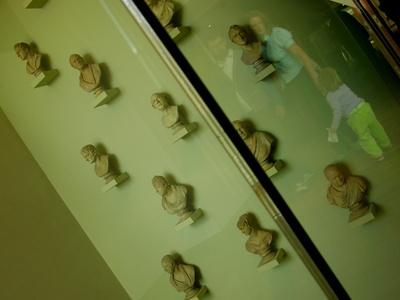
Hypatia was a respected teacher and editor of mathematical and astronomical texts, including parts of the Almagest. She lectured on astronomy and is associated with instrument-making and the transmission of technical knowledge in Alexandria.
Meton of Athens
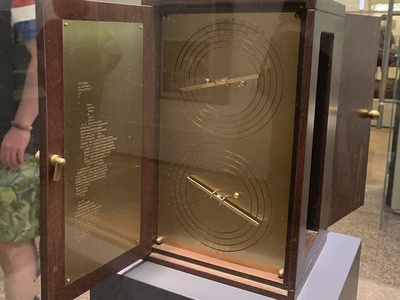
Meton established the 19-year cycle that aligns lunar months with the solar year, used for calendrical calculations and festival timing in Athens. His observational work improved civic and agricultural scheduling tied to the heavens.
Euctemon
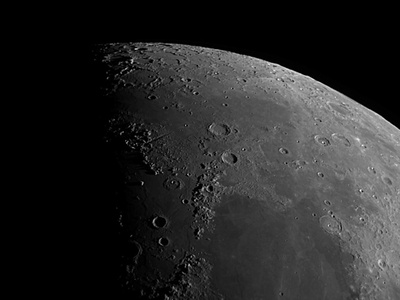
Euctemon worked with Meton and others on solar and lunar observations that underpinned the Metonic cycle and early Greek calendrical astronomy, contributing empirical data for civic timekeeping.
Marinus of Tyre
Marinus compiled geographic coordinates and positional data that influenced Ptolemy’s maps and catalogs. His systematic approach to positions and longitudes informed celestial mapping practices.
Hero of Alexandria
Hero invented and described instruments and automata, including devices applicable to observational astronomy such as the dioptra and mechanical models. His practical engineering aided precise measurement and demonstration.
Philo of Byzantium (Philo Mechanicus)
Philo produced technical manuals on mechanics and measuring devices, including descriptions of instruments useful in astronomy. His work reflects the practical side of Hellenistic observational science.
Gregory Choniades
Choniades studied in Persia and brought back Zij tables, planetary models, and observational methods. He helped revive precise astronomical computation in Byzantine scholarly circles and translated important technical material.
Maximus Planudes
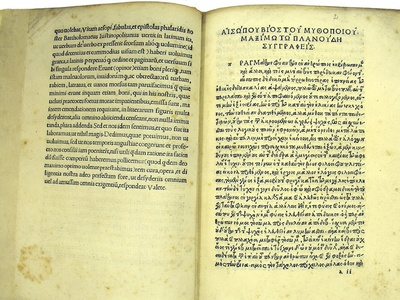
Planudes collected, translated, and adapted astronomical knowledge—including tables and computational aids—making Islamic and classical material accessible in Byzantium and influencing later Greek scholarship.
Theodore Metochites
Metochites was a statesman and scholar who wrote on astronomy and mathematics, supported observatory practice, and promoted the study of the heavens within Byzantine intellectual life.
Demetrios Eginitis
Eginitis modernized Greek astronomy as director of the National Observatory of Athens, improved observational practices, worked on calendar and timekeeping issues, and promoted scientific institutions and education in Greece.
John S. Paraskevopoulos
Born in Greece, Paraskevopoulos became an accomplished observational astronomer and director at the Boyden Observatory, leading surveys of southern-hemisphere stars and contributing to international observational programs.
Stavros Plakidis
Plakidis advanced the study of variable stars in Greece, taught generations of astronomers, and helped build modern observational programs. His publications and leadership strengthened Greek astrophysical research.
Enjoyed this article?
Get daily 10-minute PDFs about astronomy to read before bed!
Sign up for our upcoming micro-learning service where you will learn something new about space and beyond every day while winding down.