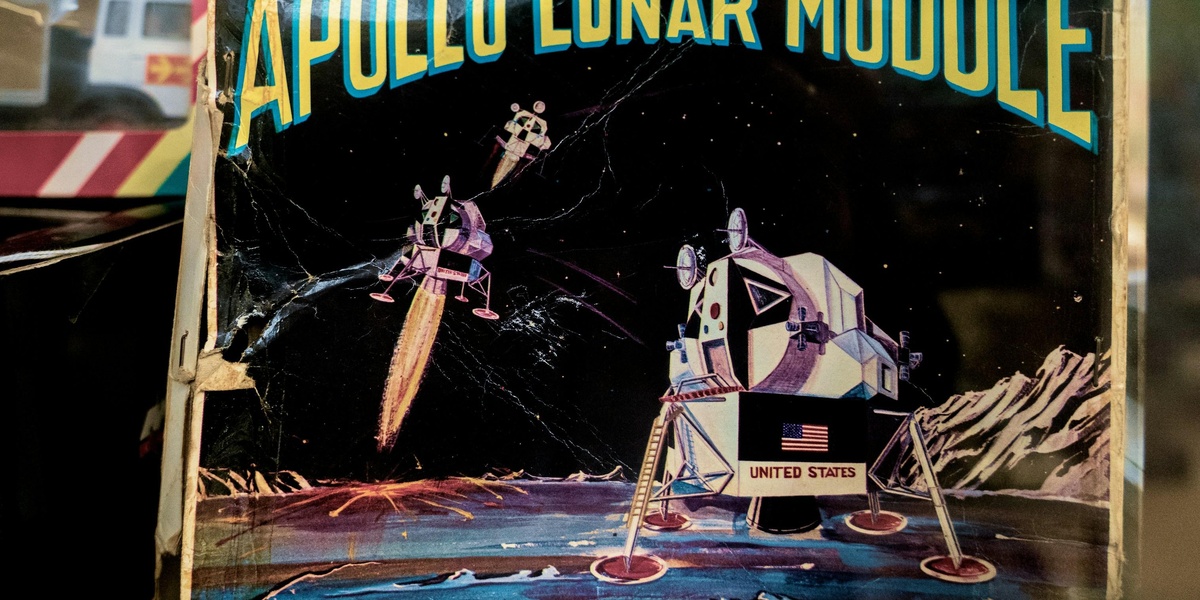
On July 20, 1969, Neil Armstrong became the first human to step onto the lunar surface. That single moment — captured by television and radio around the world — crystallized years of testing, risk and national resolve.
Decades later, landings on the Moon still matter because they deliver hard science, unlock resource prospects, and shape geopolitics. Robotic probes and human crews have returned rocks, mapped volatile deposits, validated landing systems and created datasets used by generations of planetary scientists.
The 10 most famous lunar landings include pioneering Soviet probes, the Apollo crewed missions that returned hundreds of kilograms of samples, and recent robotic returns and national firsts — each entry explained for its technical, scientific and historical importance. The article is organized into sections on pioneering firsts, crewed missions, robotic sample returns, and recent national and commercial milestones.
Pioneering Landings and Firsts
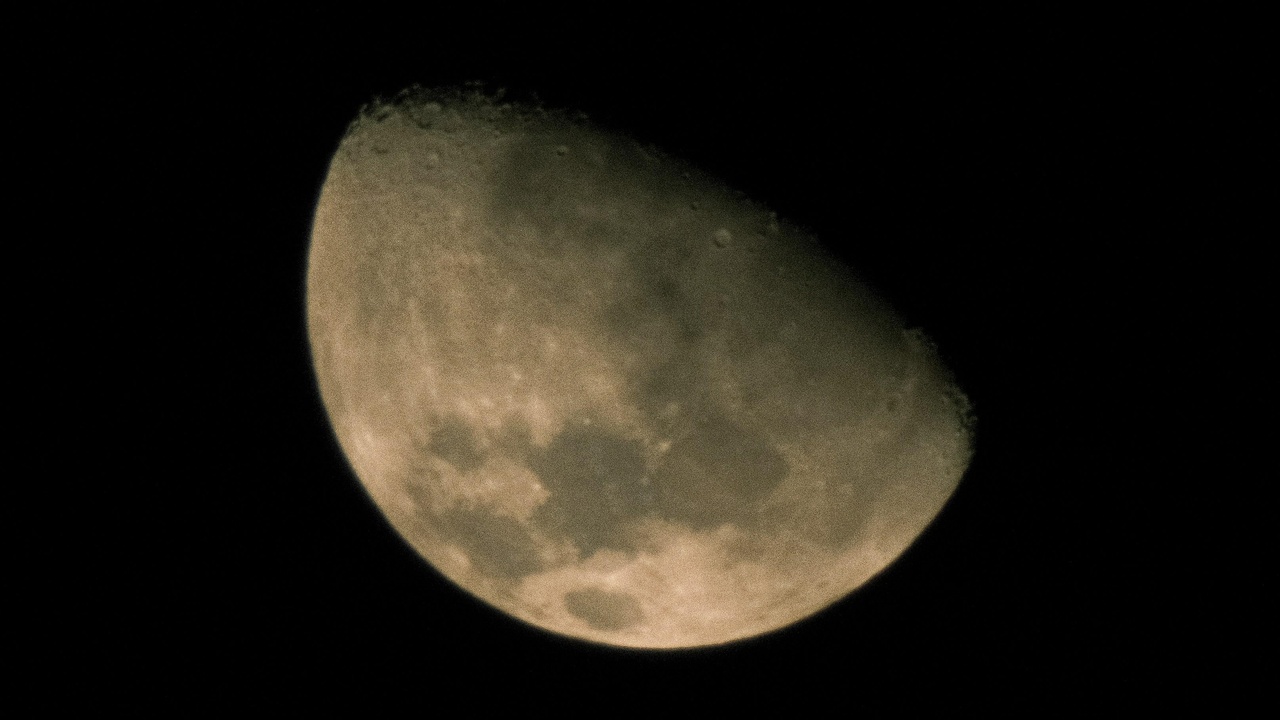
The earliest lunar missions — primarily Soviet Luna flights and the U.S. Surveyor series — established whether spacecraft could reach the Moon, survive arrival, and return useful data. In the heat of the Space Race those first impacts and soft touchdowns had obvious political weight, but their technical value was just as important: they proved translunar trajectories, validated descent and landing sensors, and produced surface imagery that reduced risk for later crewed missions.
By demonstrating controlled approaches, altimeters and landing legs, these probes turned theoretical designs into proven hardware. Their successes and failures directly shaped Apollo engineering and site selection, and they provided the first direct observations of lunar regolith and bearing strength — knowledge that would make human surface operations viable.
1. Luna 2 (1959) — First human-made object to reach the Moon
Luna 2 impacted the Moon on September 14, 1959, striking the Sea of Serenity and becoming the first human-made object to touch another world. The Soviet probe carried scientific instruments and a small pennant; its impact proved that a translunar trajectory could be achieved and aimed accurately.
Beyond prestige, Luna 2 demonstrated guidance and tracking techniques that informed later attempts at soft landings and telemetry strategies. Its success signaled a Soviet lead in the earliest phase of lunar exploration and prompted engineers on both sides of the Iron Curtain to accelerate lander testing.
2. Luna 9 (1966) — First soft landing and transmission from the lunar surface
Luna 9 achieved the first controlled, soft landing on the Moon on February 3, 1966, then transmitted the first panoramic surface images back to Earth. Those low-resolution panoramas showed a relatively firm surface strewn with small rocks rather than a dangerous sea of powdery dust.
The photos were a turning point for lander designers: they reduced fears of a craft sinking on touchdown and guided decisions about landing-leg strength and footpad sizing. Luna 9’s telemetry and imaging directly influenced how engineers planned descent profiles and instruments for subsequent U.S. and Soviet soft-landing attempts.
3. Surveyor 1 (1966) — U.S. proof of soft-landing technology
Surveyor 1 became the first U.S. spacecraft to make a soft landing on the Moon on June 2, 1966, transmitting more than 11,000 images back to Earth. Its radar altimeter, deployment of landing legs and surface-contact demonstrations validated approaches that would be used for crewed missions.
Surveyor data helped engineers refine the lunar module’s descent computer logic, landing leg damping and contact sensor timing. The mission’s engineering images and soil mechanics tests gave mission planners confidence that Apollo landings could be executed with acceptable margins.
Crewed Apollo Landings: Triumphs and Scientific Returns

Apollo combined national objectives with ambitious scientific goals: land crews, return samples and leave long-term instruments on the surface. Between 1969 and 1972 six missions actually touched down (Apollo 11–17 excluding the injured Apollo 13), returning large sample masses and deploying experiments that monitored the Moon for years.
The program’s legacy is both cultural and scientific. Apollo crews trained to collect context-rich geology, ALSEP packages recorded seismic and heat-flow data, and the returned rocks — hundreds of kilograms in total — provided the chronological backbone for lunar history and comparative planetology.
4. Apollo 11 (1969) — First humans on the Moon
Apollo 11 landed on July 20, 1969, and Neil Armstrong became the first human to walk on the lunar surface while Buzz Aldrin joined him outside the Lunar Module Eagle; Michael Collins remained in lunar orbit. The crew returned roughly 21.6 kg of rocks and regolith to Earth.
Beyond the famous line “one small step,” Apollo 11’s samples established baseline ages for highland and mare materials and set priorities for more targeted fieldwork on later missions. The mission’s simple but historic geology collection demonstrated that even short surface stays could yield high-value science.
5. Apollo 12 (1969) — Precision landing and expanded science
Apollo 12 touched down on November 14, 1969, demonstrating pinpoint landing accuracy by touching down near the Surveyor 3 spacecraft. The crew returned about 34.4 kg of samples and deployed an advanced set of ALSEP experiments for longer-term surface monitoring.
Apollo 12’s retrieval of Surveyor 3 hardware provided a rare engineering study of long-duration exposure to the lunar environment. The mission proved that targeted landings could enable precise geological sampling at known features — a capability that remains central to modern exploration planning.
6. Apollo 17 (1972) — The last Apollo mission and major geological haul
Apollo 17, in December 1972, was the final crewed lunar landing and included Harrison Schmitt, a professional geologist, on the surface. The mission returned about 110.4 kg of samples after three extensive EVAs and long traverses with a lunar rover.
Those samples — including deep-core sections and fresh volcanic rocks — revised ideas about the Moon’s volcanic history and crust formation. Apollo 17 remains the richest single source of field-context geology for modern lunar science.
Robotic Sample Returns and Scientific Advances
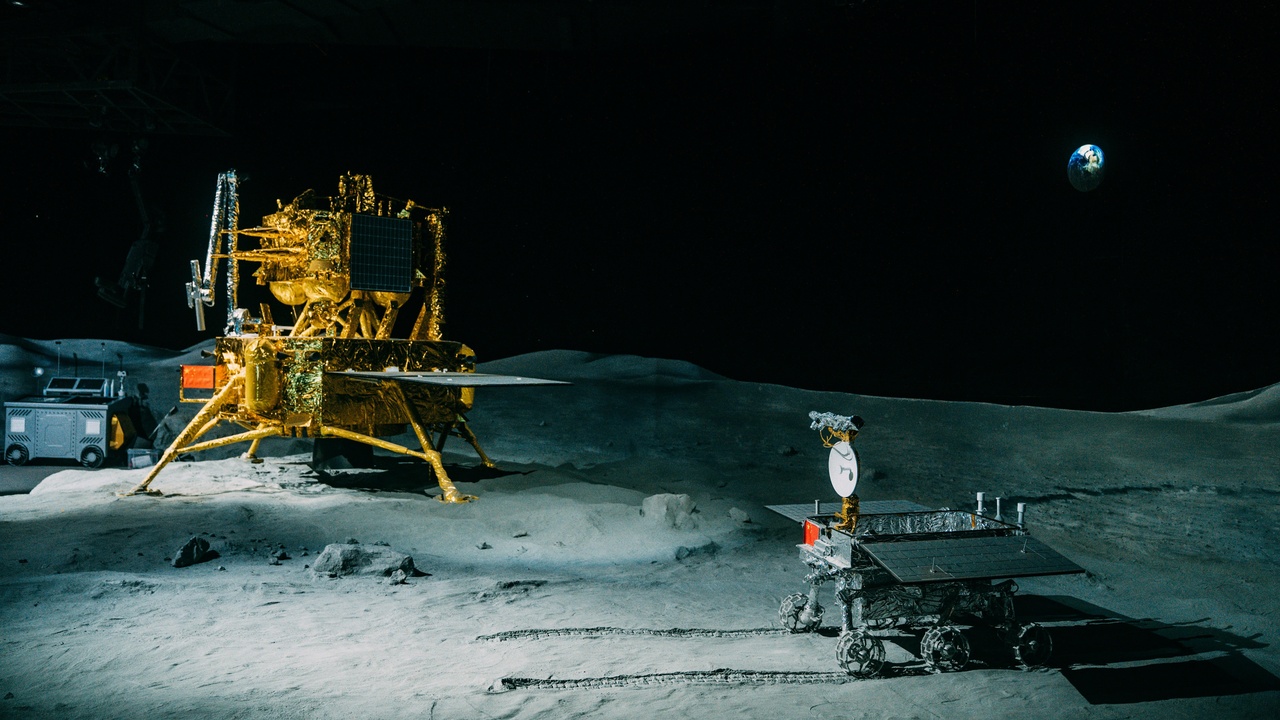
Robotic sample-return missions show that high-value geology can come without a human on the surface. By using automated drilling, ascent stages and precision rendezvous, these missions have brought back material from targeted terrains at much lower cost and risk than crewed sorties.
Robotic returns provide fresh samples for modern labs, which use techniques unavailable in the 1970s to refine age dating and compositional analysis. Those results fill crucial gaps in the lunar timeline and guide landing-site selection for future human and robotic explorers.
7. Luna 16 (1970) — First robotic sample return
Luna 16 returned to Earth in September 1970 with about 101 grams of lunar soil, becoming the first robotic mission to deliver samples. The probe drilled into the regolith, transferred material to an ascent stage and sent a return capsule home — a complex sequence performed without a crew.
The returned soils were immediately valuable for early geochemical studies, and Luna 16 demonstrated that automated drilling and ascent were technically feasible. Those engineering lessons informed later sample-return concepts worldwide.
8. Chang’e 5 (2020) — Modern sample return after a 45-year gap
China’s Chang’e 5 mission in December 2020 returned about 1,731 grams of lunar material — the first lunar samples returned to Earth since the 1970s. The mission executed a lander ascent, orbital rendezvous and Earth return, demonstrating advanced robotic capabilities.
The samples came from a relatively young basalt region and helped identify more recent volcanic activity than previously recognized, forcing adjustments to models of the Moon’s thermal and volcanic evolution. Chang’e 5 also showed that modern automation and mission planning enable complex sample-return profiles.
Recent Milestones: Far Side, National Firsts, and New Players

The 2010s and 2020s have seen a steady increase in lunar activity, with new national players and innovative mission architectures. Notable achievements include the first soft landing on the lunar far side and precision landings aimed at volatile-rich polar regions.
These missions expand scientific priorities beyond a single political agenda: studying far-side geology, scouting resources near the poles, and proving lower-cost ways to reach and operate on the surface. They also show that a broader range of agencies and companies can now participate in lunar exploration.
9. Chang’e 4 (2019) — First soft landing on the lunar far side
Chang’e 4 achieved the first soft landing on the Moon’s far side on January 3, 2019, using the Queqiao relay satellite to maintain communications with Earth. The lander deployed the Yutu-2 rover, which has carried out long-term geological and mineralogical studies.
Because the far side is radio-quiet, it offers unique opportunities for low-frequency radio astronomy and for studying a crustal environment not directly affected by near-side volcanic resurfacing. Chang’e 4’s instruments — including ground-penetrating radar and spectrometers — have produced new data on far-side composition and structure.
10. Chandrayaan-3 (2023) — India’s precision soft landing and national milestone
Chandrayaan-3 soft-landed successfully on August 23, 2023, making India the fourth country to achieve a powered lunar touchdown. The mission deployed the Pragyan rover near a region of interest toward the lunar south pole to study surface composition and signs of volatiles.
Chandrayaan-3 showcased ISRO’s capability to execute precision navigation and a cost-efficient mission design. The success adds another capable actor to lunar operations and increases international opportunities for collaboration in polar science and resource prospecting.
Summary
- The earliest missions — Luna 2 (1959), Luna 9 (1966) and Surveyor 1 (1966) — proved we could reach the Moon, perform soft touchdowns and gather surface data.
- Apollo’s six crewed landings delivered the largest scientific haul: Apollo 11 returned ~21.6 kg, Apollo 17 ~110.4 kg, and the program left long-term experiments that reshaped lunar science.
- Robotic sample returns reopened geologic inquiry: Luna 16 (Sept 1970) brought back ~101 g, and Chang’e 5 (Dec 2020) returned ~1,731 g that revised ideas about young volcanism.
- Recent milestones such as Chang’e 4 (first far-side landing, Jan 3, 2019) and Chandrayaan-3 (soft landing, Aug 23, 2023) show more countries and techniques are now part of lunar exploration.
These famous lunar landings together map a path from basic capability to scientific maturity and hint at what comes next as Artemis, commercial teams, and international partners prepare new surface missions.
Enjoyed this article?
Get daily 10-minute PDFs about astronomy to read before bed!
Sign up for our upcoming micro-learning service where you will learn something new about space and beyond every day while winding down.