From ancient sky-watchers in Mesopotamia to 19th-century observatories, the study of the heavens has been shaped by place, tools and curiosity. This list brings together astronomers whose observations, instruments and theories shifted how we understand the cosmos.
There are 38 Famous Astronomers, ranging from Al-Battani to William Herschel. For each person you’ll find Lifespan (years), Region, and Main contribution (≤15 words) listed — you’ll find below.
How were the names chosen for this list?
The selection focuses on individuals with well-documented, influential contributions across history and regions—observers, theorists and instrument makers—aiming for a representative spread rather than an exhaustive catalog; primary sources are recommended for deep research.
Can I use this list for teaching or further research?
Yes — it’s a concise starting point for lessons or bibliographies, but verify dates and attributions with original publications or trusted histories before citing in formal work.
Famous Astronomers
| Name | Lifespan (years) | Region | Main contribution (≤15 words) |
|---|---|---|---|
| Aristarchus | c.310–c.230 BC | Ancient Greek | Early heliocentric model and lunar distance estimates |
| Hipparchus | c.190–c.120 BC | Ancient Greek | Founder of trigonometry and stellar catalog; discovered precession |
| Ptolemy | c.100–c.170 AD | Roman Egypt (Greco-Roman) | Almagest geocentric model and planetary theory |
| Al-Battani | 858–929 | Abbasid Caliphate (Mesopotamia) | Precise solar and lunar observations; refined year and obliquity |
| Ulugh Beg | 1394–1449 | Timurid Empire (Samarkand) | Samarkand Observatory founder and precise star catalog |
| Copernicus | 1473–1543 | Polish (Royal Prussia) | Heliocentric model replacing Earth-centered universe |
| Tycho Brahe | 1546–1601 | Danish | Precise pre-telescopic observations; hybrid geoheliocentric model |
| Johannes Kepler | 1571–1630 | German | Laws of planetary motion (elliptical orbits) |
| Galileo Galilei | 1564–1642 | Italian | Telescopic observations supporting heliocentrism; Jupiter’s moons |
| Isaac Newton | 1643–1727 | English | Universal gravitation and laws of motion underpinning celestial mechanics |
| Christiaan Huygens | 1629–1695 | Dutch | Discovery of Saturn’s rings and Titan; wave theory contributions |
| Edmond Halley | 1656–1742 | English | Predicted periodicity of Halley’s Comet and cataloged southern stars |
| William Herschel | 1738–1822 | German-born British | Discovered Uranus; deep-sky surveys and infrared observations |
| Caroline Herschel | 1750–1848 | German-born British | Discoverer of comets; early professional woman astronomer |
| John Herschel | 1792–1871 | English | Extended surveys; photographic astronomy and southern sky cataloging |
| Charles Messier | 1730–1817 | French | Compiled Messier catalog of deep-sky objects to aid comet hunters |
| Henrietta Leavitt | 1868–1921 | American | Cepheid period-luminosity relation enabling distance measurements |
| Annie Jump Cannon | 1863–1941 | American | Harvard spectral classification (OBAFGKM) system developer |
| Cecilia Payne-Gaposchkin | 1900–1979 | British-American | Demonstrated stellar composition dominated by hydrogen and helium |
| Harlow Shapley | 1885–1972 | American | Measured Milky Way size; located Sun away from center |
| Edwin Hubble | 1889–1953 | American | Established galaxies beyond Milky Way; Hubble’s law of expansion |
| Subrahmanyan Chandrasekhar | 1910–1995 | Indian-American | Chandrasekhar limit for white dwarf mass and stellar structure |
| Fritz Zwicky | 1898–1974 | Swiss-American | Proposed dark matter from galaxy cluster dynamics; supernovae research |
| Margaret Burbidge | 1919–2020 | British-American | Co-author of B2FH nucleosynthesis paper; galaxy spectroscopy |
| Karl Jansky | 1905–1950 | American | Founder of radio astronomy; detected cosmic radio waves |
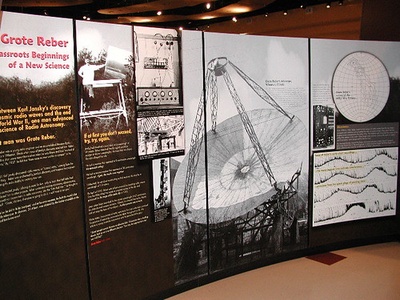
| Grote Reber | 1911–2002 | American | Built first dedicated radio telescope; mapped radio sky |
| Jocelyn Bell Burnell | 1943–present | Northern Irish | Discovered pulsars as a graduate student |
| Vera Rubin | 1928–2016 | American | Galaxy rotation curves evidence for dark matter |
| Maarten Schmidt | 1929–2022 | Dutch-American | Identified quasars’ large redshifts; distant active nuclei |
| Arno Penzias | 1933–present | German-American | Co-discovered cosmic microwave background radiation |
| Robert Wilson | 1936–present | American | Co-discovered cosmic microwave background radiation |
| Carl Sagan | 1934–1996 | American | Planetary atmosphere studies; popularized astronomy |
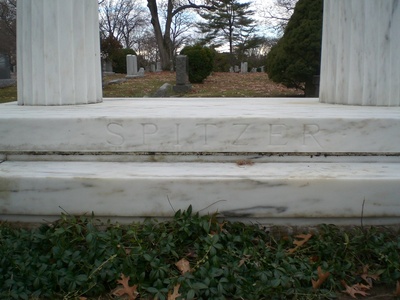
| Lyman Spitzer | 1914–1997 | American | Advocated space telescopes; interstellar medium studies |
| Arthur Eddington | 1882–1944 | English | Tested general relativity; Eddington limit and stellar structure |
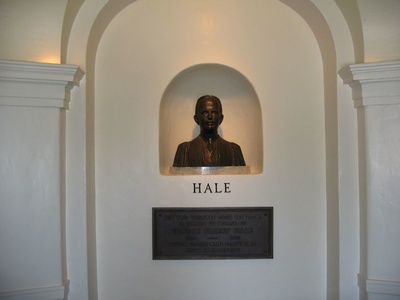
| George Ellery Hale | 1868–1938 | American | Founded major observatories; solar physics leadership |
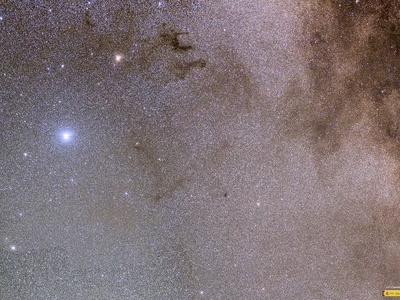
| E. E. Barnard | 1857–1923 | American | Discoverer of comets and Barnard’s Star; astrophotography |
| Jan Oort | 1900–1992 | Dutch | Oort constants and cloud; measured Milky Way rotation |
| Walter Baade | 1893–1960 | German-American | Resolved stellar populations; revised cosmic distance scale |
Images and Descriptions
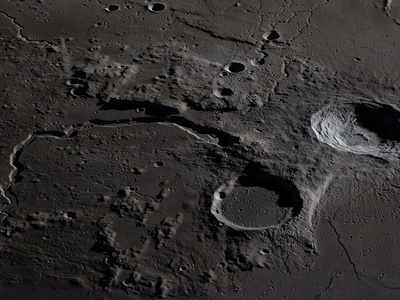
Aristarchus
Ancient Greek astronomer who proposed an early heliocentric model and estimated sizes and distances of the Sun and Moon. His methods anticipated later observational geometry and influenced Hellenistic astronomy despite limited surviving writings and later overshadowing by geocentric models.

Hipparchus
Greek astronomer who compiled an influential star catalog, developed trigonometry for astronomy, and discovered the precession of Earth’s axis. His precise observations and methods laid foundations for later Hellenistic and medieval astronomy and influenced Ptolemaic models.
Ptolemy
Claudius Ptolemy compiled the Almagest, codifying geocentric planetary models and astronomical tables that dominated for fourteen centuries. His mathematical models predicted planetary positions but ultimately delayed acceptance of heliocentrism until the Renaissance.
Al-Battani
Al-Battani (Albategnius) made precise solar and lunar observations, refined the length of the solar year and obliquity of the ecliptic, and improved astronomical tables. His work influenced medieval Islamic and later European astronomers, feeding into the development of celestial mechanics.
Ulugh Beg
Timurid prince and astronomer who founded the Samarkand Observatory and produced a highly accurate star catalog and astronomical tables. His observational work represented a peak of medieval Islamic astronomy and influenced later Central Asian and Ottoman astronomers.
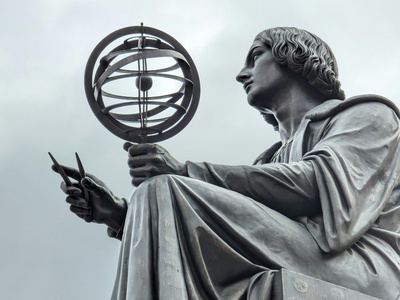
Copernicus
Polish Renaissance astronomer who formulated a heliocentric model placing the Sun near the center of the universe, challenging geocentric orthodoxy. His De revolutionibus initiated the Copernican Revolution and reshaped scientific approaches to planetary motion and cosmology.
Tycho Brahe
Danish nobleman and observer whose extremely precise naked-eye measurements of planetary positions improved celestial tables and enabled Kepler’s laws. He proposed a geoheliocentric model and built Uraniborg, a major observational and instrumental center in late Renaissance astronomy.
Johannes Kepler
German astronomer and mathematician who formulated three laws of planetary motion, demonstrating planets orbit the Sun in ellipses with varying speeds. Kepler’s laws provided a physical basis for celestial mechanics and paved the way for Newtonian gravity.
Galileo Galilei
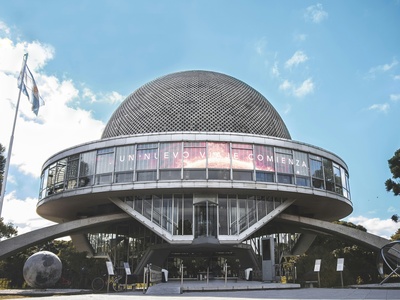
Italian astronomer and physicist who used telescopes to discover Jupiter’s moons, lunar topography, and sunspots, providing strong observational evidence for heliocentrism. His conflict with church authorities and improvements in experimental methods shaped modern science’s empirical approach.
Isaac Newton
English mathematician and natural philosopher whose laws of motion and universal gravitation explained planetary motion and founded classical celestial mechanics. Newton’s work unified terrestrial and celestial physics and revolutionized predictive astronomy and instrumentation like reflecting telescopes.
Christiaan Huygens
Dutch scientist who discovered Saturn’s ring system’s true shape and the moon Titan, constructed accurate clocks for navigation, and advanced wave theories of light. Huygens combined observational skill with theoretical physics, influencing planetary astronomy and optics.
Edmond Halley
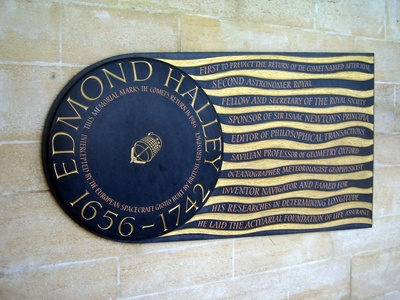
English astronomer who determined the periodicity of the comet later named for him and produced influential star catalogs and studies of Earth’s magnetic field. Halley supported Newton’s work and served observationally and administratively in the Royal Society.
William Herschel
German-born British astronomer who discovered Uranus, its moons, and conducted extensive surveys of nebulae and star clusters. He pioneered telescope making, infrared observations, and expanded knowledge of our galaxy’s structure and deep-sky objects.
Caroline Herschel
German-born British astronomer who discovered several comets, assisted William Herschel’s surveys, and compiled astronomical catalogs. As one of the first professional female astronomers, she broke gender barriers and received medals and pensions for her observational work.
John Herschel
English astronomer and polymath who extended his father’s surveys to the southern hemisphere, promoted astronomical photography, and compiled catalogs of nebulae and stars. His work helped standardize observational practices and supported Victorian-era expansion of astronomy.
Charles Messier
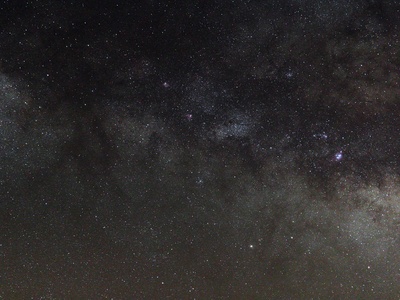
French astronomer who compiled the Messier catalog of nebulae and star clusters to help comet hunters avoid confusion with fixed deep-sky objects. His list remains a popular observing target set and is foundational in observational astronomy.
Henrietta Leavitt
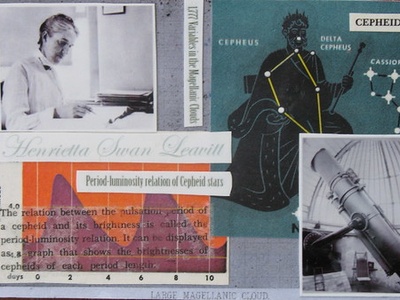
American astronomer who discovered the period-luminosity relation for Cepheid variable stars, providing a reliable “standard candle” to measure cosmic distances. Her discovery was crucial for determining the scale of the universe and underpinned later distance measurements by Hubble.
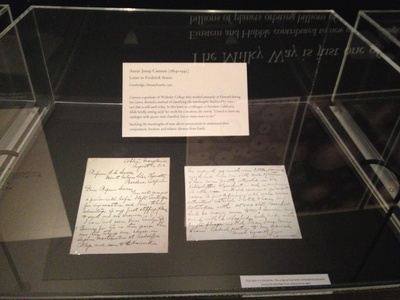
Annie Jump Cannon
American astronomer who developed the Harvard spectral classification sequence and classified hundreds of thousands of stellar spectra. Her systematic work standardized stellar taxonomy and enabled statistical studies of stars’ properties across the Hertzsprung-Russell diagram.
Cecilia Payne-Gaposchkin
British-American astronomer who showed that stars are primarily composed of hydrogen and helium, overturning previous assumptions about stellar composition. Her doctoral thesis and later work transformed astrophysics and influenced theories of stellar structure and evolution.
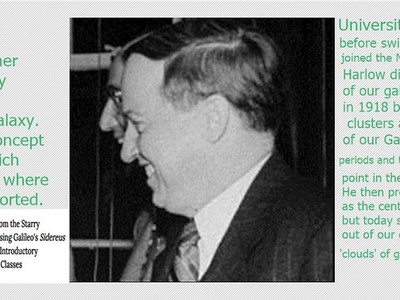
Harlow Shapley
American astronomer who used Cepheid variables to estimate the size of the Milky Way and showed the Sun is not at its center. His work redefined our Galactic perspective and contributed to debates about the scale of the universe.
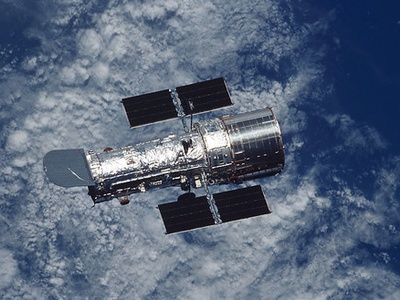
Edwin Hubble
American astronomer who demonstrated that many “nebulae” are separate galaxies beyond the Milky Way and established the redshift-distance relation (Hubble’s law), providing observational evidence for cosmic expansion and shaping modern cosmology.
Subrahmanyan Chandrasekhar
Indian-American astrophysicist who calculated the Chandrasekhar limit for white dwarf masses, fundamentally influencing understanding of stellar evolution, supernovae, and compact objects. His rigorous mathematical work bridged theory and observations in twentieth-century astrophysics.
Fritz Zwicky
Swiss-American astronomer who inferred unseen ‘dark matter’ from galaxy cluster dynamics and pioneered studies of supernovae and compact objects. Zwicky’s provocative ideas anticipated major developments in cosmology and high-energy astrophysics despite initial skepticism.
Margaret Burbidge
British-American astronomer who co-authored the influential B2FH paper on stellar nucleosynthesis, advanced galaxy spectroscopy, and advocated for women in science. Her observational and theoretical work clarified how elements form in stars and shaped astrophysics.
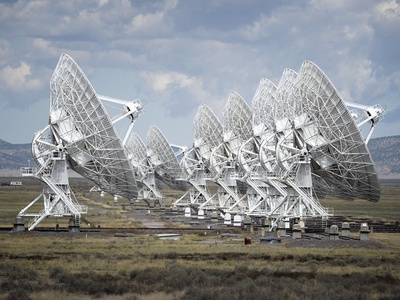
Karl Jansky
American engineer-turned-astronomer who discovered persistent radio emission from the Milky Way, founding the field of radio astronomy. Jansky’s detection opened new wavelengths for observing cosmic phenomena and led to the development of radio telescopes and interferometry.
Grote Reber
American amateur radio engineer who built the first purpose-built radio telescope, mapped the radio sky, and confirmed Jansky’s discoveries. Reber’s pioneering work established techniques for radio astronomy and inspired later large-scale radio observatories.
Jocelyn Bell Burnell
Northern Irish astrophysicist who discovered the first radio pulsars during her PhD observations, identifying a new class of rapidly rotating neutron stars. Her discovery transformed stellar astrophysics and remains a cornerstone in studies of compact objects and neutron-star physics.
Vera Rubin
American observational astronomer who measured galaxy rotation curves showing flat velocities at large radii, providing strong evidence for unseen dark matter. Her meticulous observations revolutionized our understanding of galaxy dynamics and the matter content of the universe.
Maarten Schmidt
Dutch-American astronomer who recognized that certain “quasi-stellar” objects have large redshifts, identifying them as extremely distant and energetic active galactic nuclei (quasars). His work opened studies of high-redshift universe and supermassive black hole activity.
Arno Penzias
German-American radio astronomer who co-discovered the cosmic microwave background radiation with Robert Wilson, providing strong observational support for the Big Bang theory. Their accidental detection became a cornerstone observation in cosmology and won the Nobel Prize.
Robert Wilson
American radio astronomer who, with Arno Penzias, discovered the cosmic microwave background radiation, providing empirical confirmation of the Big Bang model. Their work marked a turning point in observational cosmology and earned wide recognition including a Nobel Prize for the discovery.
Carl Sagan
American astronomer and planetary scientist known for research on planetary atmospheres, seasonal changes on Mars, and contributions to the Viking mission. Sagan became a major popularizer of science through books and the Cosmos series, inspiring public interest in astronomy.
Lyman Spitzer
American theoretical and observational astronomer who advocated for and planned space-based telescopes, including the Hubble Space Telescope, and studied the interstellar medium. Spitzer’s vision shaped observational astronomy by enabling high-resolution observations above Earth’s atmosphere.
Arthur Eddington
English astronomer who led the 1919 eclipse expedition confirming Einstein’s general relativity prediction, formulated the Eddington limit for stellar radiation pressure, and advanced theories of stellar structure. Eddington shaped theoretical astrophysics and public understanding of modern cosmology.
George Ellery Hale
American solar astronomer and institution builder who founded the Mount Wilson and Palomar Observatories, promoted large telescopes, and advanced solar physics. Hale’s leadership established infrastructure enabling key twentieth-century discoveries in stellar and extragalactic astronomy.
E. E. Barnard
American observational astronomer and skilled observer who discovered numerous comets, identified Barnard’s Star with high proper motion, and advanced astrophotography. His precise observations and images expanded knowledge of nearby stars and nebulae in the late nineteenth and early twentieth centuries.
Jan Oort
Dutch astronomer who measured the Milky Way’s rotation, formulated Oort constants describing local Galactic kinematics, and proposed the Oort cloud as a reservoir of comets. Oort’s work fundamentally shaped Galactic astronomy and cometary science.
Walter Baade
German-American astronomer who resolved stellar populations in nearby galaxies, distinguished population I and II stars, and recalibrated distance scales leading to revisions of the Hubble constant. Baade’s high-resolution work improved understanding of galaxy structure and evolution.
Enjoyed this article?
Get daily 10-minute PDFs about astronomy to read before bed!
Sign up for our upcoming micro-learning service where you will learn something new about space and beyond every day while winding down.