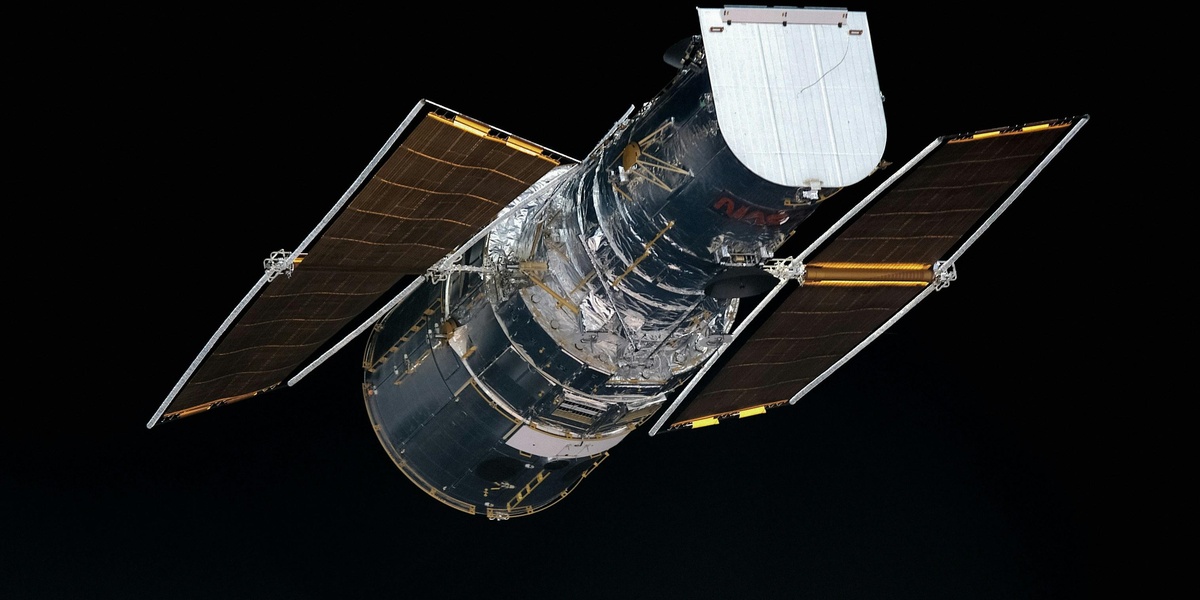
From humble science payloads probing near-Earth space to instruments that mapped the cosmic microwave background, small, focused missions have often delivered big discoveries. Looking across decades of launches shows how priorities, technology and agencies shifted while keeping tight science goals and lean budgets.
There are 14 Explorer Missions, ranging from ACE to WMAP. For each mission, the entries list Launch date (YYYY-MM-DD),Agency,Objective (<=15 words) so you can quickly compare timelines, responsible organizations and core goals — all of which you'll find below.
How were these Explorer Missions selected and run?
Most were chosen through competitive, principal-investigator-led proposals or agency-directed priorities focused on specific science questions; they emphasize lower cost, faster development and targeted instruments, with launch and operations often handled by the responsible agency named in the table.
Can data from ACE and WMAP be compared usefully?
They address very different science—ACE measures the solar wind and near-Earth environment, WMAP mapped the early universe—so direct scientific comparison is limited, but the table and metadata let you trace methods, timescales and agencies for any cross-mission context.
Explorer Missions
| Name | Launch date (YYYY-MM-DD) | Agency | Objective (<=15 words) |
|---|---|---|---|
| Explorer 1 | 1958-01-31 | NASA | Detect cosmic rays and measure Earth’s radiation |
| Explorer 3 | 1958-03-26 | NASA | Confirm charged-particle regions around Earth |
| Explorer 6 | 1959-08-07 | NASA | Study Earth’s magnetosphere and image Earth from orbit |
| Explorer 7 | 1959-10-13 | NASA | Measure Earth’s radiation budget and atmospheric effects |
| ISEE-3 (ICE) | 1978-08-12 | NASA/ESA | Study solar wind at L1; later intercept a comet |
| SAMPEX | 1992-07-03 | NASA | Measure energetic particles and cosmic rays in low Earth orbit |
| ACE | 1997-08-25 | NASA | Measure solar wind composition and energetic particles at L1 |
| FUSE | 1999-06-24 | NASA | Far-ultraviolet spectroscopy of astronomical targets |
| WMAP | 2001-06-30 | NASA | Map CMB to determine universe’s age and composition |
| RHESSI | 2002-02-05 | NASA | Observe solar flares in X-rays and gamma-rays |
| GALEX | 2003-04-28 | NASA | Ultraviolet survey to study star and galaxy evolution |
| Swift | 2004-11-20 | NASA/UK/Italy | Detect and study gamma-ray bursts rapidly |
| IMAGE | 2000-03-25 | NASA | Image Earth’s magnetosphere and monitor global responses |
| NuSTAR | 2012-06-13 | NASA | Focused high-energy X-ray imaging of energetic sources |
Images and Descriptions

Explorer 1
Explorer 1 was the United States’ first successful satellite; it discovered the Van Allen radiation belt and launched the long-running Explorer series. Launched into low Earth orbit, it carried a cosmic-ray detector and marked America’s entry into scientific spaceflight.
Explorer 3
Explorer 3 confirmed the charged-particle zones seen after Explorer 1 and provided early geophysical measurements. Its instruments recorded cosmic rays and radiation, helping scientists map Earth’s radiation belts and refine early space environment knowledge during the 1958 launch era.
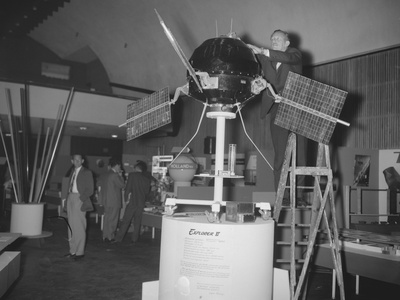
Explorer 6
Explorer 6 carried early Earth-imaging equipment and magnetospheric instruments, returning the first crude picture of Earth from orbit. Its data advanced understanding of Earth’s radiation environment, atmospheric heating, and space weather during the late 1950s.

Explorer 7
Explorer 7 studied Earth’s radiation budget and cosmic rays, pioneering spaceborne climate measurements. Its observations of atmospheric heating and solar effects contributed to early atmospheric science and validated instruments used on later climate and Earth-observing missions.
ISEE-3 (ICE)
ISEE-3 launched to study the solar wind and Earth’s magnetosphere at libration point L1, later retargeted and renamed International Cometary Explorer (ICE) to encounter Comet Giacobini–Zinner. It pioneered spacecraft repurposing and deep-space trajectory maneuvers.
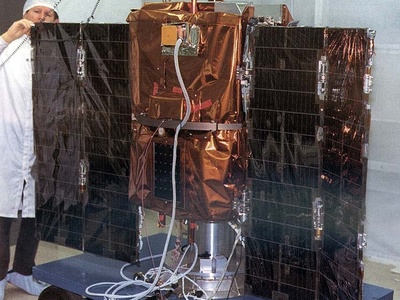
SAMPEX
SAMPEX (Solar Anomalous and Magnetospheric Particle Explorer) measured energetic particles and cosmic rays from low Earth orbit, mapping trapped and solar energetic particles. It provided long-term data on radiation hazards and particle populations, operating far longer than its planned lifetime.

ACE
ACE collects high-resolution composition and energy spectra of solar wind, interplanetary particles, and cosmic rays from the Sun–Earth L1 point. Its continuous data help space weather forecasting and studies of solar particle events for decades beyond its design life.
FUSE
FUSE performed high-resolution far-ultraviolet spectroscopy of stars, interstellar gas, and galaxies, revealing chemical abundances and the physical state of hot gas. Its sensitive spectra improved understanding of star formation, gas flows, and the interstellar medium.
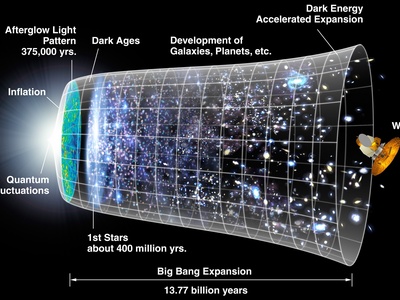
WMAP
WMAP mapped tiny temperature variations in the cosmic microwave background across the whole sky, producing precise measurements of the universe’s age, composition, and geometry. Its results transformed cosmology, establishing the standard Lambda-CDM model and measuring parameters to high precision.
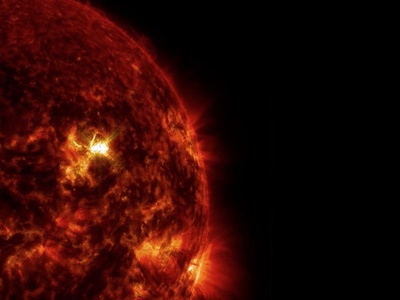
RHESSI
RHESSI observed high-energy X-rays and gamma-rays from solar flares, delivering unprecedented views of particle acceleration and energy release on the Sun. Its high-resolution spectroscopy and imaging reshaped understanding of flare physics and solar energetic particle production.
GALEX
GALEX conducted wide-field ultraviolet surveys to trace star formation and galaxy evolution over billions of years. By cataloging millions of galaxies in UV light, GALEX revealed star-formation rates, merger histories, and helped link ultraviolet signatures to galaxy lifecycles.
Swift
Swift autonomously detects gamma-ray bursts, rapidly repoints to capture X-ray and optical afterglows, and shares data globally. Its multiwavelength instruments revolutionized GRB science, identified host galaxies, and enabled afterglow follow-ups, profoundly improving understanding of cosmic explosions.
IMAGE
IMAGE (Imager for Magnetopause-to-Aurora Global Exploration) imaged plasmas in Earth’s magnetosphere using multiple cameras, providing the first global views of auroral and magnetospheric dynamics. Its global images helped link solar wind inputs to magnetospheric responses.
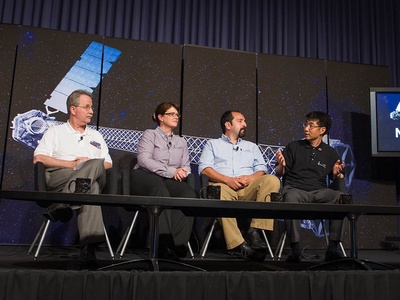
NuSTAR
NuSTAR provides the first focused high-energy X-ray images, revealing hidden black holes, mapping supernova remnants, and probing energetic processes in active galaxies. Its sensitive observations opened a new hard X-ray window and clarified sources of cosmic high-energy emissions.
Enjoyed this article?
Get daily 10-minute PDFs about astronomy to read before bed!
Sign up for our upcoming micro-learning service where you will learn something new about space and beyond every day while winding down.