In 1610 Galileo trained his small telescope on the Milky Way and showed that the cloudy band was made of countless individual stars, overturning centuries of assumptions.
Understanding the differences between stars and galaxies helps both curious skywatchers and professional astronomers make sense of what they see — from basic navigation and astrophotography to research that maps the cosmos.
Stars and galaxies both light the night, but they differ in physical makeup, scale and dynamics, and lifespan and cosmic role; the six clear distinctions below are grouped into those three categories to make the contrasts easy to follow. The Milky Way alone contains roughly 100–400 billion stars, which gives a sense of the scale we’re comparing.
Fundamental Physical Differences

Alt text suggestion: “Diagram comparing the composition of a star (core fusion) with the mixed components of a galaxy (stars, gas, dust, dark matter).” This image (credit: Hubble/ESO) shows the contrast between a single star’s structure and the multi-component nature of a galaxy.
This category covers what a star actually is and how a galaxy differs as a system. In short: a star is a self-contained, self-gravitating ball of plasma that produces energy in its core, while a galaxy is an extended system made of many stars plus gas, dust, and a dominant dark-matter halo. Below are two concrete ways those differences show up.
1. Composition and Energy Source: Nuclear fusion in stars vs mixed components in galaxies
Stars generate light and heat by fusing hydrogen into helium in their cores; that fusion pressure balances gravity in a state called hydrostatic equilibrium.
The Sun, a G-type main-sequence star about 1.4 million kilometers across, converts roughly 600 million tons of hydrogen into helium every second in its core, powering sunlight and the heliosphere that surrounds our planet.
By contrast, a galaxy does not “burn” as a single engine. It contains stellar populations at many ages, clouds of interstellar gas and dust (the raw material for new stars), and typically far more mass in dark matter than in visible material — a fact inferred from spectroscopy and other observations (see Hubble and NASA summaries for examples).
Knowing stellar fusion rates underpins solar models used in space-weather forecasting and guides laboratory fusion research aimed at clean energy on Earth.
2. Size and Scale: From single suns to billions of stars
The scale difference is enormous: a typical star such as the Sun is about 1.4 million kilometers across, while a large spiral galaxy like the Milky Way spans roughly 100,000 light-years and holds on the order of 100–400 billion stars.
Distances matter too. Andromeda, our nearest large spiral neighbor, is about 2.5 million light-years away, so even its bright core looks like a fuzzy patch to the unaided eye. That separation means instruments and techniques differ: we study individual stellar spectra within the Milky Way with missions like Gaia, while whole-galaxy properties come from surveys such as Hubble imaging or the Sloan Digital Sky Survey.
Practical consequence: resolving a star’s surface (rare) requires very high angular resolution, while mapping a galaxy’s structure is a problem of large-scale imaging and integrated light measurements.
Structure and Dynamics
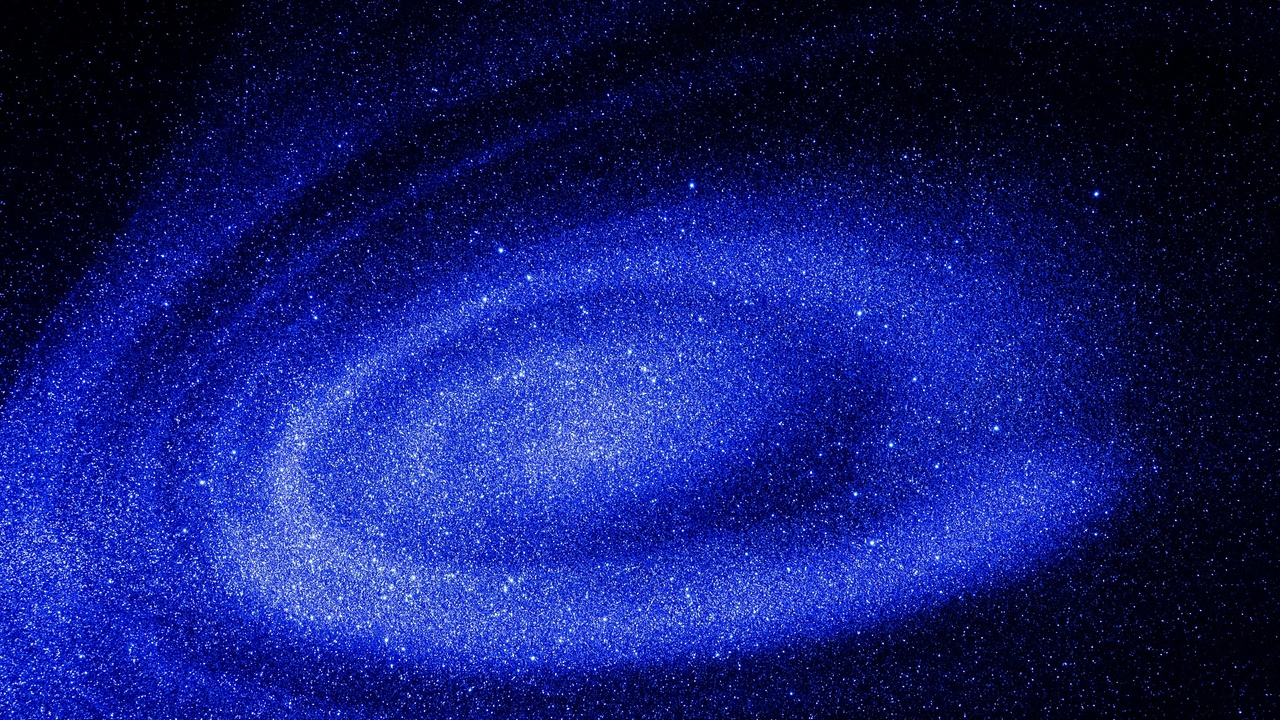
Alt text suggestion: “Composite showing galaxy rotation curves and binary star systems to illustrate different scales of motion and gravitational effects.” The image (credit: Vera Rubin studies, Hubble) highlights how motions reveal distinct physics on stellar and galactic scales.
Gravity rules both stars and galaxies, but it produces different behaviors. Inside a star, pressure from fusion balances gravity; across a galaxy, vast numbers of objects orbit inside a gravitational potential dominated by visible and invisible mass. Studying motion has taught us about stellar lifecycles, galaxy structure, and even the existence of dark matter.
3. Gravity and Motion: Hydrostatic balance in stars vs orbital dynamics in galaxies
A star’s interior sits in hydrostatic equilibrium: outward pressure from nuclear fusion balances inward pull from gravity. Disrupt that balance and the star moves into a new phase of its life cycle.
On galactic scales, stars orbit within a gravitational potential shaped by the distribution of stars, gas, and — crucially — dark matter. Vera Rubin’s rotation-curve observations in the 1970s showed that outer parts of spiral galaxies rotate faster than expected from visible mass, implying that roughly 85% of a galaxy’s matter is non-baryonic dark matter in cosmological models.
Illustrative figure: the Sun orbits the Milky Way at about 220 km/s, a speed measured by stellar spectroscopy and radio observations and cataloged in surveys such as SDSS.
4. Interactions: Stellar encounters and deaths vs galaxy mergers and environments
Stars commonly interact on small scales: a large fraction are in binary or multiple systems, which can produce novae, Type Ia supernovae, or compact-object mergers that LIGO detects as gravitational waves.
Galaxies interact on much longer timescales. Tidal forces during close passages and outright mergers can trigger starbursts, rearrange morphology, and funnel gas to galactic centers. The Antennae Galaxies are a vivid nearby example of an ongoing merger with intense star formation.
Our own Milky Way and Andromeda are on a collision course, with current estimates putting their merger in roughly 4.5 billion years — slow on human timescales, but transformative for the galaxies involved. Stellar events recycle elements rapidly into the interstellar medium; galactic events redistribute those elements and reshape future star formation.
Lifespan and Cosmic Role
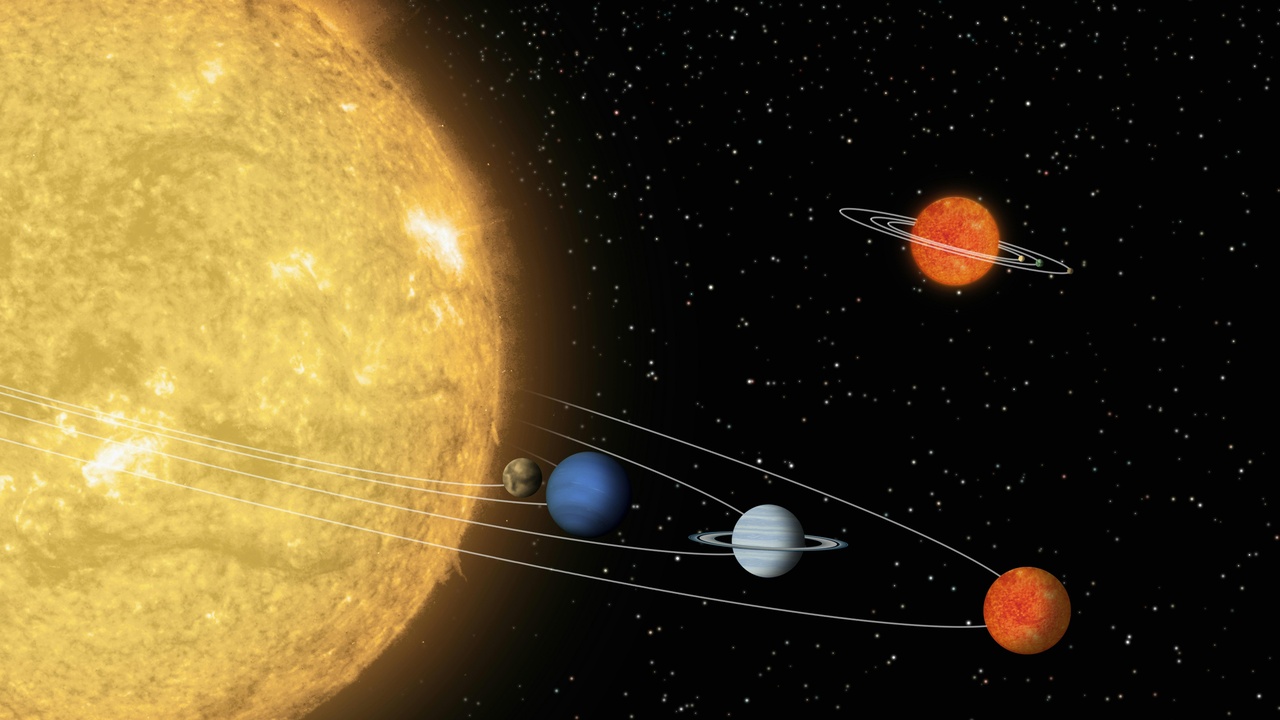
Alt text suggestion: “Stellar life-cycle diagram next to a timeline of galaxy evolution, illustrating how stars create elements while galaxies host repeated generations of star formation.” The image (credit: Hubble/NASA) underscores how the two scales collaborate over cosmic time.
Stars and galaxies evolve on very different clocks and with complementary roles. Stars build the periodic table through fusion and explosive deaths; galaxies assemble these stars, cycle their gas and metals, and record the history of star formation across cosmic time.
5. Lifetimes: Stellar birth, maturity, and death vs gradual galactic evolution
Individual stellar lifetimes depend strongly on mass. Massive stars burn hot and fast and may die in a few million years, while low-mass red dwarfs can burn for tens to hundreds of billions of years in theory.
The Sun’s main-sequence lifetime is about 10 billion years; it’s roughly halfway through that span. Galaxies, by contrast, evolve over billions to trillions of years through cycles of star formation, gas accretion, and mergers, though they can “quench” and stop forming new stars if gas is exhausted or heated.
Why it matters: stellar ages influence exoplanet habitability windows, while a galaxy’s star-formation history shapes the metallicity and environments where planets form.
6. Role in Cosmic Evolution: Element factories vs ecosystems of star formation
Stars are the factories of heavy elements. Through successive fusion stages and explosive events, they build elements up to iron in cores and produce heavier elements via supernovae and neutron-star mergers.
Core-collapse supernovae and related processes synthesize and disperse elements heavier than iron into the interstellar medium; a famous nearby example is SN 1987A, which provided rich observational data on nucleosynthesis and ejecta mixing.
Galaxies serve as the ecosystems that host multiple generations of stars, increasing overall metallicity over time. Observationally, cosmic star formation peaked roughly 8–11 billion years ago, after which many galaxies gradually changed their star-forming behavior. The elements in the Earth and in our bodies are products of that long chain of stellar births and deaths inside galaxies.
Summary
- Stars are individual nuclear furnaces with well-defined internal structure; galaxies are complex systems of stars, gas, dust, and dominant dark matter.
- Scale matters: single suns measure millions of kilometers across; galaxies span tens to hundreds of thousands of light-years and host hundreds of billions of stars.
- Motion and dynamics differ — hydrostatic balance inside stars versus orbital dynamics and flat rotation curves in galaxies, which pointed to dark matter.
- Stellar processes create the periodic table; galaxies assemble, cycle, and redistribute those elements across generations of star formation.
- Observationally and practically, the differences between stars and galaxies show up in the instruments and surveys we use — from Gaia mapping individual stars to Hubble and SDSS revealing galaxy structure and evolution.
Want to explore this visually? Try viewing the Milky Way under dark skies with a star chart, browse NASA’s image galleries or the Hubble site, or join citizen science projects such as Galaxy Zoo.
Enjoyed this article?
Get daily 10-minute PDFs about astronomy to read before bed!
Sign up for our upcoming micro-learning service where you will learn something new about space and beyond every day while winding down.