The Milky Way holds a surprising variety of compact objects, and cataloging them helps us understand how stars live and die across the galaxy. This list focuses on confirmed and well-studied stellar-mass black holes rather than speculative candidates or supermassive objects at the center.
There are 12 Black Holes in the Milky Way, ranging from A0620-00 to XTE J1550-564. For each entry you’ll find below the key details organized as Type,Mass (M☉),Distance (ly) so you can quickly compare their classifications, estimated masses, and distances.
How are these black holes identified and measured?
Most are found in X-ray binaries where a companion star feeds material onto the black hole, producing X-rays; follow-up optical and radio observations let astronomers measure orbital motion and estimate mass, while spectral and timing analysis refine the classification.
Could any of these black holes affect Earth?
No — the listed objects are many light-years away, and their gravitational influence is effectively local to their stellar neighborhoods; they pose no measurable risk to Earth beyond scientific interest.
Black Holes in the Milky Way
| Name | Type | Mass (M☉) | Distance (ly) |
|---|---|---|---|
| Sagittarius A* | supermassive / confirmed (stellar orbits & radio imaging) | 4,150,000 | 26,000 |
| Cygnus X-1 | stellar / confirmed (dynamical mass & X‑rays) | 21.20 | 6,070 |
| V404 Cygni | stellar / confirmed (dynamical mass & X‑rays) | 9.00 | 7,800 |
| A0620-00 | stellar / confirmed (dynamical mass & photometry) | 6.60 | 3,500 |
| GRS 1915+105 | stellar / confirmed (dynamical & X‑ray timing) | 12.40 | 36,000 |
| GRO J1655-40 | stellar / confirmed (dynamical mass & X‑rays) | 5.40 | 11,000 |
| XTE J1118+480 | stellar / confirmed (dynamical mass & optical) | 7.60 | 5,500 |
| XTE J1550-564 | stellar / confirmed (dynamical & X‑ray) | 9.10 | 17,000 |
| MAXI J1820+070 | stellar / confirmed (X‑ray timing & dynamical candidate) | 8.50 | 9,900 |
| SS 433 | stellar / probable (X‑rays, jets; mass uncertain) | 10.00 | 18,000 |
| OGLE-2011-BLG-0462 | stellar / high‑confidence isolated candidate (microlensing & astrometry) | 7.10 | 5,200 |
| Gaia BH1 | stellar / confirmed candidate (astrometry + spectroscopy) | 9.80 | 5,100 |
Images and Descriptions
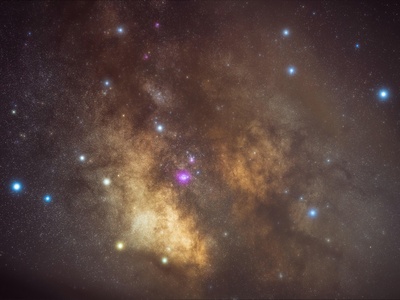
Sagittarius A*
The Milky Way’s central black hole; mass measured from star orbits and VLBI radio imaging. It’s the Galaxy’s dynamical center and best-studied SMBH, confidence very high from decades of precise astrometry and spectroscopy.

Cygnus X-1
Historic X‑ray binary first strong BH candidate; mass from optical companion motion and radio astrometry. Bright X‑ray source with relativistic jets; one of the best-established stellar black holes with high confidence.
V404 Cygni
Transient X‑ray binary with dramatic outbursts; black hole mass measured from companion’s orbit. Notable for bright 2015 flare and radio jets, well-supported by dynamical evidence.
A0620-00
One of the nearest stellar black holes in a binary; mass derived from companion velocity and ellipsoidal light curves. Long-known X‑ray nova, frequently cited as a textbook dynamical confirmation.
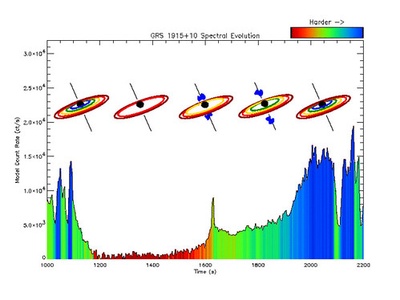
GRS 1915+105
A famous microquasar with superluminal radio jets and complex X‑ray variability. Dynamical measurements and timing link it to a massive stellar black hole; notable for extreme variability and long outbursts.
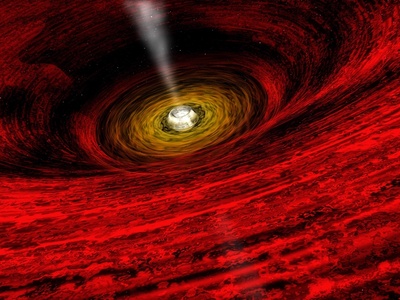
GRO J1655-40
X‑ray nova discovered in 1994 with relativistic jets; companion motion gives a solid mass measurement. Important for studies of black-hole spin and accretion, strong dynamical evidence.
XTE J1118+480
High‑latitude X‑ray binary whose orbital motion of the companion yields a robust black hole mass. Notable for proximity, unusual trajectory above the Galactic plane, and multiwavelength studies.
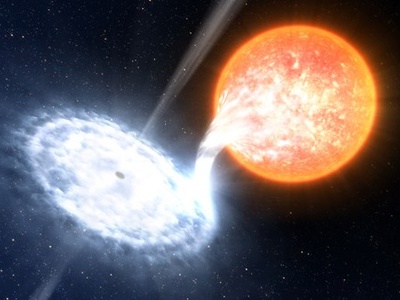
XTE J1550-564
Transient black hole binary with strong X‑ray jets and quasi‑periodic oscillations; mass estimated from companion dynamics. Important for accretion and jet studies, classified as a secure stellar black hole.
MAXI J1820+070
Bright 2018 X‑ray transient studied across the spectrum; mass constrained by optical/IR dynamics and X‑ray timing. Valuable recent target for jet and accretion physics, strong evidence though some parameters remain refined.
SS 433
Unique microquasar with persistent relativistic jets and moving emission lines; compact object mass inferred but uncertain. Strong evidence for a black hole but some models allow a massive neutron star, so confidence is moderate.
OGLE-2011-BLG-0462
Detected via gravitational microlensing and HST astrometry as a dark lens with multi‑year monitoring; one of the strongest isolated stellar‑mass black hole candidates, notable for being non‑accreting and isolated.
Gaia BH1
Nearby dark companion detected by Gaia astrometry with spectroscopic follow‑up showing a single Sun‑like star orbiting an unseen ~10 M☉ object. Clean dynamical detection of a non‑accreting black hole, high confidence.
Enjoyed this article?
Get daily 10-minute PDFs about astronomy to read before bed!
Sign up for our upcoming micro-learning service where you will learn something new about space and beyond every day while winding down.